Dog Arthritis: Early Signs, Mobility Support and Vet Care
Dog arthritis is often noticed late because the first signs do not always look like obvious limping. A dog may hesitate before jumping into the car, sleep more, stop following the family upstairs, lag behind on walks, sit awkwardly, lick a joint, or become irritable when touched. Owners sometimes call this “just getting old,” but pain and loss of mobility deserve a medical plan at any age.
Osteoarthritis is a chronic degenerative joint disease. Management is usually multimodal: keep the dog lean, maintain safe muscle and movement, use veterinarian-prescribed pain control when needed, modify the home, and monitor whether the dog can still perform important daily activities comfortably. No single supplement, injection, bed, or exercise replaces the whole plan.
Early Signs Are Often Behavioral
Reluctance to rise, shortened walks, slower stairs, restlessness at night, reduced play, changes in posture, or new sensitivity to handling can reflect pain before a dramatic limp appears. Video of the dog rising and walking at home can help the veterinarian see changes that disappear in the clinic.
An owner may notice the problem first at the kitchen door. A dog who used to rush outside pauses before stepping over the threshold; later, the same dog stops jumping into the car. Because the change is gradual, it can look like ordinary aging or a loss of enthusiasm. Compare today's behavior with what was normal six months ago. Video of getting up after sleep, negotiating a step, and walking in a straight line can be more useful to the veterinary team than a broad statement that the dog is “slowing down.” Record whether hesitation happens on one side, after strenuous activity, or every morning.
Pain may also appear as irritability during grooming, withdrawing from family games, reluctance to squat for toileting, or choosing a quieter sleeping place. None of these signs proves osteoarthritis; dental pain, spinal disease, neurologic disorders and other illnesses can produce overlapping behavior changes. Conversely, a dog can have meaningful joint discomfort without dramatic limping. The sensible next step is an examination, not a trial of human pain medicine. Bring the videos, approximate onset, current medicines and a list of activities the dog has stopped doing.
A useful baseline is deliberately simple: time how long the dog takes to stand after a normal nap, note whether assistance is needed for a familiar step, and record willingness to complete a comfortable short walk. Repeat these observations under similar conditions, rather than comparing a rainy evening to an energetic morning. The AAHA pain-management guidance emphasizes the owner's role in recognizing chronic pain. Treat behavioral changes as information worth investigating, not evidence that a once-active companion has become stubborn.
Arthritis Can Follow Developmental Disease or Injury
Hip dysplasia, elbow dysplasia, cruciate ligament injury, patellar problems, joint trauma, and aging can all contribute to degenerative change. Understanding the underlying joint problem helps guide treatment and prognosis.
Joint degeneration does not always begin in old age. A dog with hip or elbow dysplasia may develop abnormal loading before obvious stiffness appears. An earlier cruciate ligament injury, patellar instability, fracture or joint dislocation can alter the forces passing through a joint for years. Even after technically successful injury treatment, long-term follow-up and conditioning may matter. When visiting a new clinic, explain any past lameness episodes, operations, growth problems or periods of restricted activity, including the limb affected and approximate date.
Age, body condition and genetics contribute to risk, but they are not interchangeable causes. A young large-breed dog with an abnormal joint deserves an orthopedic assessment rather than reassurance based only on age; an older small dog with a sudden limp deserves evaluation for an acute problem rather than an assumption of arthritis. The American College of Veterinary Surgeons describes osteoarthritis as a whole-joint process involving cartilage, bone, joint capsule and inflammation. That explains why changes in movement, muscle mass and pain can develop together, rather than one structure failing in isolation.
Owners cannot reverse a developmental condition by buying a supplement. They can, however, reduce avoidable joint stress, help maintain lean body condition, provide consistent appropriate exercise and act promptly when pain becomes apparent. Ask the veterinarian whether an underlying mechanical problem needs treatment of its own. The answer may differ for a stable arthritic joint and an unstable ligament injury. A personalized plan begins by identifying which joint is affected, what caused the altered loading and which activities still allow comfortable function.
Diagnosis Is More Than an X-Ray
Veterinarians combine history, gait, joint range of motion, pain response, muscle mass, orthopedic examination, and sometimes imaging. Radiographic severity does not always match how painful a dog feels, so treatment should follow the patient, not the picture alone.
A careful arthritis appointment starts before the dog reaches the examination table. How does the dog enter the room? Does the gait look different after a short walk, or after resting? A clinician may compare muscle bulk, assess range of motion, test joint stability and look for pain on particular movements. The owner contributes the timeline and home videos because an anxious dog may move differently in a clinic. A list of previous injuries, supplements and pain medicines helps prevent false conclusions about what has already been tried.
Radiographs help reveal some bony changes and may clarify dysplasia or prior injury, but a photograph of a joint is not the same as measuring the dog's lived pain. Two dogs with similar images can show different levels of disability. Soft tissues, nerves, inflammatory disease and other conditions may require different investigations. For certain cases, the veterinarian may recommend blood tests, additional imaging, a neurologic evaluation or referral to a veterinary surgeon. Ask which diagnosis is being investigated and how each proposed test could change the treatment plan.
At the end of the consultation, request a plain-language summary: the suspected or confirmed problem, which joints are involved, what findings support it, what other conditions remain possible and what to watch for at home. If medication begins, ask what improvement is realistic and when the clinic wants an update. The Cornell osteoarthritis resource and AAHA chronic-pain guidance both place clinical assessment alongside owner observations. A diagnosis is useful when it creates a measurable, individualized plan—not merely when it names a condition.
Weight Control Is One of the Highest-Value Treatments
Extra body fat increases mechanical load and contributes metabolically active inflammatory tissue. Even modest weight loss can improve mobility in overweight arthritic dogs. Feed measured calories and use low-calorie training rewards rather than relying on exercise alone for weight reduction.
For an arthritic dog, weight management is not cosmetic. Every repeated movement loads painful joints, and excess body fat has metabolic effects that can contribute to inflammation. The American College of Veterinary Surgeons identifies keeping dogs lean as a central part of osteoarthritis care. Ask the veterinary team for a body-condition score and a target weight range based on the dog's frame and muscle mass. A number copied from a breed chart cannot distinguish a lean, well-muscled individual from one carrying excess fat.
If weight loss is recommended, start with measurement rather than guesswork. Weigh the complete daily food ration, include treats and chews, and record extra food given by family members. Ask whether a veterinary weight-management diet is suitable, particularly if appetite, kidney function or other conditions complicate feeding. Sudden severe calorie restriction is not the goal. The plan should preserve muscle while reducing excess fat, since weakened muscles can leave joints less supported. Periodic weigh-ins and veterinary reassessment are more helpful than judging progress by appearance alone.
A household example illustrates the practical side. If three people reward the dog independently, each may believe they are giving only a small snack. Together those extras can undermine the calculated ration. Agree on a daily treat allowance and set it aside in one container. Use part of the measured meal for training if appropriate. Track energy, appetite and mobility alongside weight. A dog who becomes lighter but loses strength or appears unwell needs the plan reconsidered, not simply fewer calories.
Exercise Should Continue—but Change
Complete inactivity weakens muscle and worsens function. Many dogs do best with regular controlled walking, gentle slopes, rehabilitation exercises, and lower-impact activity. Sudden weekend sprints after a sedentary week often create flares.
The objective is comfortable, repeatable movement. A dog who rests for days and then makes one exhausting weekend hike often fares worse than a dog taking several predictable, manageable walks. Short lead walks on even, nonslip ground can support mobility and preserve routine. Starting duration depends on the animal's current function, not a universal prescription. A veterinarian or rehabilitation clinician can help distinguish ordinary muscle effort from pain that indicates the activity is too demanding.
Watch both during exercise and later. A dog may complete a walk willingly but rise more stiffly that evening or struggle the next morning. That delayed response matters. Reduce intensity, distance or uneven terrain if the pattern repeats, then discuss the change at follow-up. Avoid sudden games involving hard stops, repeated leaps, ball chasing or twisting until a professional has assessed safety. Swimming may suit some dogs, but entry, exit, supervision and fatigue remain important; an underwater treadmill program is different from letting a tired dog paddle in open water.
Try a simple pacing diary: date, surface, approximate duration, notable obstacles and comfort later that day. Keep improvements small and sustainable. If the dog stops bearing weight, develops sudden severe pain, falls repeatedly or shows new weakness, do not treat that as a normal arthritis flare. Contact a veterinarian promptly. Exercise is part of a wider treatment plan, not a substitute for pain relief, diagnostics or treatment of an unstable orthopedic problem.
Pain Medication Can Restore Function
Veterinary nonsteroidal anti-inflammatory drugs and other pain-control options can meaningfully improve comfort and mobility. These medications require appropriate screening and monitoring because side effects and contraindications exist; never substitute human painkillers unless specifically directed by a veterinarian.
Effective pain control can give a dog the freedom to move, rest and participate in family life again. Veterinarians commonly use dog-approved nonsteroidal anti-inflammatory drugs (NSAIDs) for osteoarthritis, sometimes alongside other therapies when indicated. They weigh benefits against medical history, concurrent medicines and kidney, liver or gastrointestinal concerns. A drug that helped someone else's dog is not automatically appropriate here. Human over-the-counter pain relievers can be toxic or interact dangerously with veterinary medicines; never substitute them without explicit veterinary direction.
Before long-term NSAID use, the FDA recommends veterinary assessment and baseline testing, with follow-up and periodic monitoring as appropriate. Read the client information sheet, give only the prescribed dose and report vomiting, diarrhea, appetite loss, black stools, lethargy or other concerning changes promptly. Do not combine an NSAID with steroids or another NSAID unless a veterinarian has specifically directed a carefully managed transition. If a dose was missed, ask the clinic what to do rather than doubling it. Keep medicines locked away from children and pets.
The aim is not merely to hide a limp for a day. Define what improvement should look like—more comfortable rising, better sleep, willingness to walk a familiar distance—and reassess whether treatment is delivering it. If the response is incomplete, clinicians may discuss a different pain-management strategy, rehabilitation or specialist input. Some newer options are available in particular markets, but availability, eligibility and safety information vary. Ask for current, patient-specific risks and monitoring rather than choosing treatment from an advertisement.
Rehabilitation and Strength Matter
Certified canine rehabilitation may use targeted strengthening, balance, range-of-motion work, hydrotherapy, manual therapy, or other modalities. The purpose is not simply to “exercise more” but to improve movement quality and preserve muscle around affected joints.
Rehabilitation can bridge the gap between pain relief and real-world function. A dog may feel better after medicine yet still have weak hindlimb muscles, poor balance or habits developed while protecting a sore joint. A qualified canine rehabilitation professional can examine movement and prescribe exercises that address those deficits. Depending on the dog, a plan might include controlled sit-to-stand practice, gentle weight shifting, carefully graded walking, balance work or a supervised underwater treadmill. These are examples, not a ready-made home routine.
Technique matters more than impressive equipment. Asking an arthritic dog to perform repeated stairs, unstable-platform balancing or deep joint flexion without evaluation can make discomfort worse. Rehabilitation should identify which joints are painful, whether a surgical or neurologic issue is present and which movement patterns are safe. Ask the clinician to demonstrate each activity, explain the intended effect and show signs that mean stop. The dog should be able to recover normally afterward; prolonged soreness is feedback that the task or dosage may be wrong.
Measure progress with daily function, not only with exercise repetitions. Is the dog more confident on a flat floor? Does standing up require less effort? Can the dog toilet without slipping? Recheck muscle condition and gait periodically. If access to specialized rehabilitation is limited, a veterinarian may still help design a conservative home-movement plan. Avoid promising that laser, acupuncture or any single modality will rebuild cartilage. The AAHA and ACVS resources emphasize multimodal care and acknowledge differing evidence across techniques.
Home Modifications Reduce Daily Pain
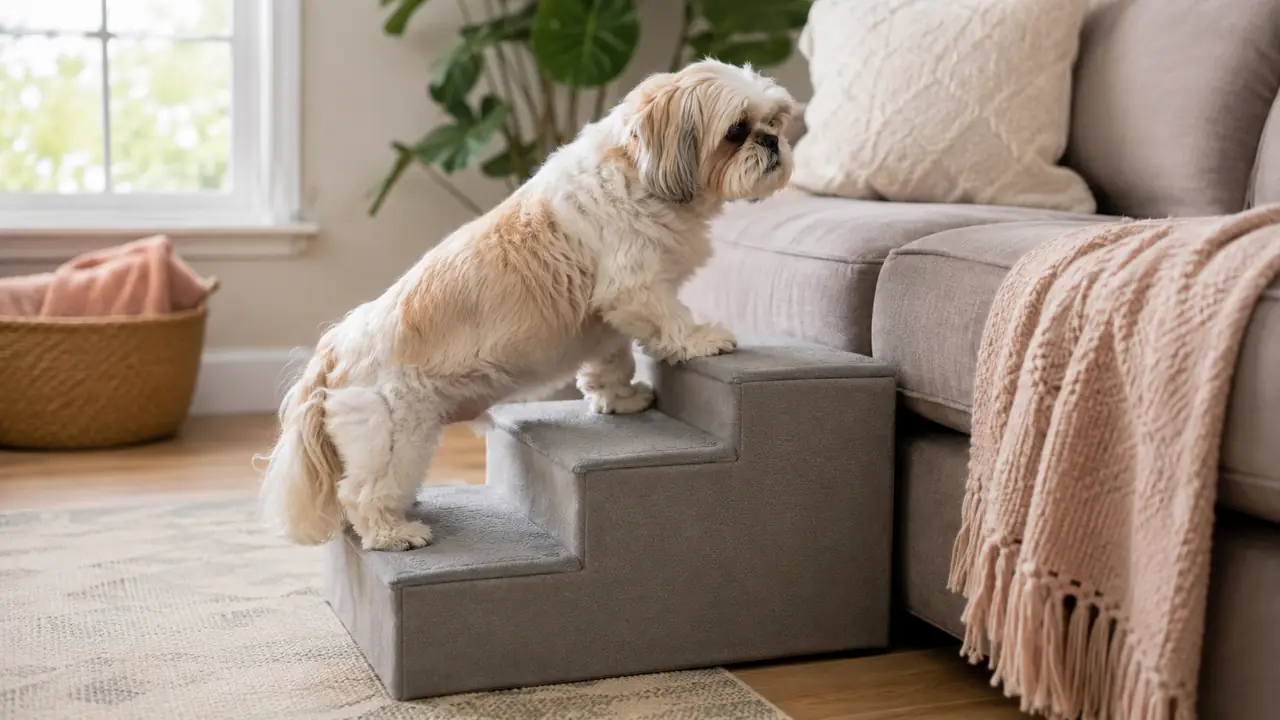
Rugs or runners improve traction, ramps reduce difficult jumps, supportive bedding makes rising easier, raised or strategically placed resources reduce unnecessary stairs, and nail/paw hair maintenance improves grip. Small environmental changes can reduce dozens of painful repetitions each day.
Look at the home from the dog's height. A glossy hallway may demand constant bracing; a tall sofa may turn every nap into a painful jump; a bowl tucked into a narrow corner may make turning difficult. Simple adjustments can help: nonslip runners secured against bunching, a stable ramp with a gentle incline, accessible bedding and clear walking routes. Choose traction that actually works for your flooring. A loose mat that slides is a new hazard, not an improvement.
Prioritize the tasks repeated dozens of times a day. Reaching water, walking to a toilet area, climbing the steps at the entrance and entering the car may together cost more comfort than one long walk. Keep essentials on the same level if possible. Use vehicle assistance only with a properly fitted harness and safe handling technique; never pull forcefully on a painful limb. For a dog with concurrent visual loss or weakness, avoid repeatedly rearranging furniture and consult the veterinarian about suitable aids.
A practical weekend assessment uses a simple route: follow the dog from bed to water, outside, feeding area and favorite resting place. Note each jump, sharp turn and slippery patch. Fix the most troublesome transition first, then observe whether it genuinely helps. Home modifications do not cure the underlying joint disease, and dogs still need medical assessment and appropriate conditioning. They make treatment easier to live with and reduce avoidable stress while a longer-term plan takes effect.
Supplements Are Adjuncts, Not Rescue Plans
Omega-3 fatty acids and some joint-support products may contribute to a multimodal plan, but evidence and product quality vary. If a dog is clearly painful, do not spend months cycling supplements while avoiding effective veterinary pain management.
The supplement shelf can make arthritis seem like a shopping problem. Products marketed for joints often contain glucosamine, chondroitin, omega-3 fatty acids or mixed herbal ingredients, but the quality of evidence differs and finished products are not interchangeable. A label claiming “mobility support” is not proof that the particular product reduces pain in dogs. Discuss proposed supplements with the veterinarian, including dose, product quality, possible interactions and whether a benefit can be assessed objectively.
Nutrition may still support a broader plan. A complete diet appropriate to life stage and medical condition helps maintain body weight and muscle. Some veterinary diets include therapeutic omega-3 formulations, but switching diets should be based on the dog's needs, tolerance and calorie budget. Adding fish oil independently can increase calories and may have adverse effects, so ask about total intake rather than using a human capsule's serving suggestion. Supplements should not replace effective analgesia or delay investigation of increasing pain.
If a product is chosen, create a fair trial: document baseline movement and comfort, keep other treatment variables as stable as practical and agree on a realistic review date with the clinician. If there is no observable improvement, question whether it earns its place in the budget. Prioritize interventions with a clearer benefit first, such as weight management, controlled activity and prescribed treatment when indicated. The ACVS overview notes uncertainty in joint-supplement mechanisms and mixed evidence for several adjunctive modalities.
Cold, Weather and Activity Flares
Some dogs appear stiffer after long rest, cold weather, or unusually hard activity. Adjust warm-up, walk length, and footing rather than abandoning exercise. A persistent new flare can also signal a fresh injury rather than “normal arthritis.”
Owners sometimes notice more stiffness during a cold spell or after a long day outdoors. The observation may be real for that individual dog, but weather alone cannot tell you which joint is worsening or whether a new injury occurred. Keep a short record: where the walk took place, how long it lasted, how much running or climbing occurred, and how the dog moved the following morning. A supposed “rain problem” may actually follow slippery paths or an unusually long outing.
During a flare, lower the demands temporarily while maintaining basic comfort and safe movement. A warm, draft-free resting area and easier access to water and outside can reduce the practical burden of stiffness. Do not apply a heating pad directly to a dog who cannot move away or sense overheating reliably. Ice or heat treatments should follow veterinary guidance, especially when a joint is newly swollen, a wound is present or neurologic sensation is reduced. Never increase pain medicine or add a human anti-inflammatory on the basis of the weather forecast.
A predictable recovery routine is more useful than a dramatic intervention: shorten the next walk, avoid abrupt high-impact games and watch whether function returns to the usual baseline. A new refusal to bear weight, marked swelling, fever or severe distress needs prompt assessment rather than another day of observation. Chronic arthritis and acute injury can coexist. Your notes help a veterinarian distinguish a manageable activity-related setback from a change that requires new diagnostics or treatment.
Monitor Function With Simple Household Tasks
Track how the dog rises, uses stairs, gets into the car, walks on slippery floors, squats to toilet, plays, and sleeps. A monthly score or short video is more useful than asking vaguely whether the dog “seems okay.”
A mobility diary should take minutes, not become a research project. Choose three tasks the dog performs routinely: rising after rest, crossing a smooth floor and negotiating one step or car entry. Score each in plain terms such as comfortable, hesitant, needs help or unable. Add one sentence about sleep and enthusiasm for normal activities. Consistent observations can reveal gradual improvement or deterioration that is easy to miss when living with a dog every day.
Short videos are especially useful when taken from the same angle and on the same surface. Record natural movement without forcing the dog to perform a painful task. Note medication changes, unusual exertion, appetite and any new illness because these can affect function. If two caregivers observe the dog, use the same simple definitions. A dog may hide pain differently around visitors or in the clinic, making home records a valuable companion to the veterinary examination.
At recheck appointments, bring a focused summary instead of a pile of unorganized notes. For example: “Before treatment, rising took several attempts; now it usually happens on the first try, but stairs remain difficult.” Ask whether the functional goals should change and when to reassess. AAHA describes owner questionnaires as tools that support clinical chronic-pain assessment. The purpose is to recognize a trend and guide decisions, not to assign a diagnosis or medicine dose from a home score.
Quality of Life Is About More Than Walking Distance
Comfort includes sleep, appetite, social engagement, toileting, grooming tolerance, ability to rest, and interest in favorite activities. Pain plans should be adjusted when those functions decline, even if the dog can still technically walk.
It is tempting to judge success by whether an arthritic dog can still complete a long walk. Yet comfort is broader than distance. A dog may walk farther while struggling to settle at night, resist affectionate touch or avoid the family room because rising from that floor hurts. Talk with the veterinary team about sleep, appetite, toileting, social interaction, anxiety and opportunities to engage in favorite low-impact activities. These details often reveal whether the dog is genuinely feeling better.
Create achievable goals that fit the individual. For one dog, success may mean stepping outside comfortably to toilet. For another, it may be walking to a familiar shaded bench and sniffing for a few minutes. Maintain mental stimulation without asking for high-impact athletic performance: gentle scent games, slow exploration and calm interaction can support well-being when physical limits have changed. Avoid measuring your dog's life against an internet video of a different animal with a different medical history.
When the disease becomes difficult to control, ask for a candid quality-of-life discussion rather than waiting for a crisis. The veterinarian can review treatment choices, adverse effects, pain scoring and support for daily tasks, and help the family recognize suffering that may not be obvious as a single symptom. Compassionate decisions need not be made from guilt or on a fixed timeline. They should reflect the dog's comfort and interests, the caregiver's realistic ability to provide care and qualified medical guidance.
Common Mistakes to Avoid
- Calling mobility decline normal aging
- Letting an overweight dog remain heavy
- Using human ibuprofen or naproxen
- Stopping all exercise
- Relying only on supplements for obvious pain
- Ignoring slippery floors and difficult stairs
- Waiting for severe lameness before evaluation
One common mistake is waiting until a dog cannot rise before asking about pain. Smaller changes in posture, routine or willingness to play are worth discussing early. A second is turning a good day into a long hike, then assuming the next day's stiffness is unavoidable. Consistent low-impact movement and a written pacing plan are usually easier to evaluate than alternating inactivity and intense exercise. A third is giving human pain medicine or changing a prescription without contacting the veterinarian; adverse drug effects can be serious.
Do not use a supplement label as a substitute for a treatment plan. Keep track of what the dog actually does at home, including whether sleep and toileting remain comfortable. If medications, weight management and exercise adjustments are not helping, request reassessment rather than adding a succession of untested products. An abrupt inability to bear weight, collapse or marked pain warrants urgent care, not an ordinary follow-up date.
A Practical Decision Checklist
- Veterinary diagnosis obtained
- Body condition optimized
- Medication monitoring current
- Daily controlled exercise maintained
- Home traction improved
- Mobility tracked objectively
- Pain plan adjusted when function declines
Before the next appointment, identify the three movements your dog finds most difficult and bring short videos showing them naturally. Record the current diet, measured food portion, body weight if known, medications, supplements, previous injuries and any recent fall. Ask the veterinary team which findings support the diagnosis, what improvement to expect from each part of the plan and how to recognize a side effect. Keep the original checklist on this page as a prompt; it is not a substitute for the clinician's patient-specific recommendations.
After the appointment, choose a few achievable home goals and write down when to review progress. Confirm the safe exercise range, the next checkup date, whether laboratory monitoring is needed and whom to contact if pain suddenly increases. A plan that names concrete functional goals—rising comfortably, walking to the toilet area and sleeping through the night—is easier to adjust than an instruction simply to “keep the dog active.”
Frequently Asked Questions
Can arthritis be cured? Degenerative arthritis is usually managed rather than reversed, but many dogs maintain good comfort and function for years with a well-adjusted multimodal plan.
Should an arthritic dog still walk? Usually yes, with controlled, regular, lower-impact exercise matched to the dog’s comfort and veterinary advice.
Is limping always arthritis? No. Injury, paw problems, neurologic disease, infection, cancer, and other conditions can cause lameness. New or severe lameness should be evaluated.
Can my dog take human pain medicine? Do not give human NSAIDs or acetaminophen unless a veterinarian specifically prescribes an appropriate product and dose; common human painkillers can be dangerous to dogs.
Are ramps helpful? Yes when they are stable, non-slip, and introduced gradually. A steep slick ramp can be harder than the jump it replaces.
Does cold weather worsen arthritis? Some dogs appear stiffer in cold conditions. Warm bedding, gentle warm-up, and adjusted activity may help, but new marked pain still deserves evaluation.
When should I consider rehabilitation? Any time weakness, gait change, recovery from orthopedic injury, or chronic arthritis limits function. Earlier support can help preserve muscle and movement quality.
The Bottom Line
Arthritis care is a long-term comfort strategy: keep the dog lean, maintain controlled movement, use effective veterinary pain relief, strengthen safely, and redesign the home to reduce painful effort. Small improvements across the whole day often matter more than one dramatic treatment.
Evidence and further reading (editorial references; not a claim of veterinarian review): AAHA 2022 Pain Management Guidelines | AAHA: Chronic Pain Assessment in Dogs | FDA: NSAID Safety for Pets | ACVS: Osteoarthritis in Dogs | Cornell Veterinary Medicine: Osteoarthritis