Dog First Aid: What Every Owner Should Know in an Emergency
First aid does not replace a veterinarian. Its purpose is to keep a dog alive, reduce additional injury, and get the dog to professional care as safely as possible. In a real emergency, owners lose time when they search for perfect home treatment. A better plan is to recognize danger quickly, protect breathing and circulation, control what can be controlled, call the clinic, and transport.
The most important preparation happens before the emergency: know the nearest 24-hour hospital, save its number, know how to transport your dog, keep a basic kit, and understand that frightened or painful dogs can bite even when they are normally gentle. Human safety is part of canine first aid because an injured owner cannot help the dog.
Start With Scene Safety
Before touching the dog, check traffic, electricity, fire, water, aggressive animals, toxins, or unstable structures. Move the dog only when remaining in place is more dangerous, and use a leash, blanket, board, or another safe restraint method when possible.
A dog may be injured beside a busy road, under unstable furniture, near a live electrical cable or in an area contaminated by chemicals. Your first decision is whether you can approach without adding another casualty. Stop traffic if this can be done safely, isolate other animals, and ask a second adult to call emergency veterinary care while you assess the surroundings. Do not enter moving traffic, floodwater or a smoke-filled space to make a rescue. Professional emergency services may be needed before anyone can safely reach the animal. Once the scene is secure, speak calmly and move deliberately.
Pain and fear can cause an injured dog to bite someone it normally trusts. Keep your face away from the mouth and do not hug or restrain an animal in a way that restricts breathing. A muzzle may be appropriate for a conscious dog that can breathe freely and is not vomiting, but it should never be used on a dog with breathing distress, repeated retching or impaired consciousness. If possible, have one person calmly control the surroundings while another prepares a blanket or secure carrier. Human safety comes first, because an injured caregiver cannot assist an animal.
For example, a dog hit by a bicycle may be trying to stand while cars continue passing. Rather than rushing into the lane, first arrange a safe perimeter and request help; then minimize the dog's movement until transport is ready. Note the mechanism of injury because internal damage can exist even if external bleeding is modest. A fall, crushing event or vehicle strike merits urgent veterinary assessment. First aid is the short bridge from immediate danger to professional treatment, not an invitation to attempt surgery, fracture reduction or repeated examination at home.
Check Responsiveness, Airway, Breathing and Circulation
Look for chest movement, airflow, gum color, pulse if you know how, and severe bleeding. A collapsed non-breathing dog needs immediate CPR if you are trained while someone contacts emergency veterinary care. Learning hands-on pet CPR from a reputable course before an emergency is far better than trying to learn from text during one.
Begin with responsiveness and breathing: does the dog react to your voice, move normally and take effective breaths? Look for chest movement and signs of marked respiratory effort; abnormal gasping should not be treated as normal breathing. If the dog is unconscious and not breathing normally, an emergency veterinary service should be contacted immediately and cardiopulmonary resuscitation may be indicated. Pet CPR is best learned through an accredited practical course because technique varies with the animal's size and chest shape. A printed checklist can help under stress, but it cannot replace hands-on training.
While assessing a conscious animal, keep the airway unobstructed without forcing the head into an unnatural posture or placing fingers blindly into the mouth. Gum color, temperature of extremities and mental state can support an assessment of shock, but these signs are not definitive and must not delay transport. A dog in serious trouble may have pale or blue-tinged gums, weak pulses, collapse or labored breathing. Do not keep checking minor parameters for several minutes while a critical animal needs immediate care. Ask another person to phone ahead with the symptoms, suspected cause and estimated arrival time.
Consider a collapsed dog that is still breathing but will not stand. That is an emergency even if the owner cannot identify the cause. Avoid offering water, food or oral medication; an animal with reduced awareness can aspirate. If the dog is stable enough to move, use a blanket or rigid support depending on possible injury and keep the head and neck supported. If CPR is necessary, use current veterinary-trained procedures and get to the nearest emergency facility as quickly as safely possible. The priority is oxygenation, circulation and professional help, not completing every step of a long home checklist.
Control Severe Bleeding With Direct Pressure
Use clean cloth, gauze, or another absorbent material and apply firm continuous pressure. Do not keep lifting the pad to check every few seconds. If blood soaks through, add material on top. Life-threatening limb hemorrhage may require a tourniquet when trained to use one, but incorrect use can cause harm.
Uncontrolled bleeding can become dangerous quickly. Cover the wound with a clean cloth or sterile gauze and apply firm, steady direct pressure while arranging urgent veterinary transport. Repeatedly peeling back the dressing to see whether bleeding has stopped can disrupt a forming clot. If blood soaks through, add more clean material over the first layer rather than removing it. Protect yourself with gloves where possible, particularly if the injury involved another animal or contaminated materials. A wound can be significant even when the surface opening appears small.
A lightly secured temporary dressing may help hold the gauze for transport, but a wrap that is too tight can compromise blood flow. Check for swelling, coldness or severe pain below a bandage. Do not attempt to stitch wounds, probe deeply, remove an embedded object or apply caustic powders. If an object is still lodged, stabilize the area and seek professional handling. Special techniques such as tourniquets require specific training and context; ordinary first aid should not improvise one from rope or wire. Continued heavy bleeding, weakness, pale gums or collapse requires emergency treatment.
Picture a dog with a torn paw pad after stepping on glass. Even if the animal still wants to walk, place a clean pad over the bleeding area, limit walking and call the veterinarian. A pad wound can reopen with every step, and deeper structures may be involved. Tell the clinic when the injury happened, what the dog stepped on and whether medication has been given. Once the bleeding is under control, evaluation for pain management, deeper tissue damage and appropriate wound care remains necessary; success is not just a dry bandage.
Choking Requires Fast but Careful Action
A conscious dog that can cough or breathe may still move air. Do not blindly sweep the mouth or push an object deeper. If the dog cannot breathe, open the mouth only when safe, remove a clearly visible accessible object, and seek emergency care immediately. Even after the object is removed, throat or lung injury may remain.
Suspected choking is an emergency, especially if a dog cannot move air, develops blue-tinged gums or collapses. A dog that can still cough may have partial airflow but also needs urgent veterinary guidance. Do not put fingers blindly into the mouth; you could push an object deeper or be bitten. Follow emergency airway procedures only if appropriately trained or directed in real time by a veterinary professional. Arrange veterinary assessment even if the obstruction appears to clear.
If the dog cannot breathe, follow pet-specific emergency training and contact an emergency veterinarian while preparing transport. Techniques taught for canine choking vary with dog size and position, and performing a forceful maneuver without knowing when it is indicated can cause injury. The safest long-term preparation is to learn a current accredited pet first-aid course before any emergency happens. Do not pour oil, water or food into the dog's mouth to 'wash down' an obstruction. Trying to pull at string or line that disappears into the throat or gut can also cause harm.
After apparent resolution, the dog may still need a veterinary examination. A traumatic obstruction can injure the throat, cause swelling or allow material to enter the lungs. Tell the clinic what was being chewed, how long the episode lasted and whether the dog ever became unresponsive. If coughing, breathing noise, distress or weakness continues, treat this as urgent rather than waiting to see if symptoms disappear. Prevention means supervision with appropriate chew items, safe-sized toys and secure storage of small objects, but no toy size or material is completely risk-free.
Poisoning: Do Not Induce Vomiting by Default
Some substances cause more damage coming back up, and aspiration risk changes with the toxin and dog. Contact a veterinarian or animal poison service with the product name, amount, time, dog weight, and symptoms. Never give hydrogen peroxide, salt, milk, oil, activated charcoal, or another home antidote unless specifically instructed.
A possible poisoning is a race for accurate information, not a test of household remedies. Remove the dog from further exposure when it is safe and save the product package or photograph the full label. Estimate what may have been swallowed, the approximate time, the dog's weight and any symptoms; the veterinarian or poison-control specialist will need these details. Many household hazards are not obvious: certain medications, food ingredients, garden products and cleaning chemicals may all require different responses. The absence of immediate symptoms does not mean exposure is harmless.
Do not induce vomiting unless a veterinarian or animal poison-control professional tells you to do so for that particular substance and dog. Vomiting can increase injury after ingestion of caustics or petroleum products and may be unsafe in a dog that is weak, sleepy, seizing or having difficulty breathing. Salt, concentrated peroxide, fingers down the throat and other internet 'detox' methods are not reliable general first aid. Do not administer activated charcoal or human medication without specific professional guidance either. Follow the clinician's instructions for skin or eye contamination rather than choosing an arbitrary rinse or solvent.
Suppose a dog tears open a blister pack of tablets. Count missing tablets if you can do so safely, preserve the packaging and call the nearest veterinary emergency service or animal poison service right away. Do not wait for vomiting or shaking before seeking advice. Tell the responder about any underlying conditions and medications, because these change risk. In the United States the ASPCA Animal Poison Control Center is one resource, but local poison services and the emergency veterinary hospital may be more appropriate elsewhere. Write the advice down so everyone transporting the dog follows one consistent plan.
Heatstroke Is an Emergency
Move the dog out of heat, begin active cooling with cool—not ice-cold—water and airflow, and transport to emergency veterinary care. Do not wrap the dog in wet towels that trap heat and do not wait for the temperature to become “normal” before leaving. Internal complications can continue after the dog appears improved.
Heatstroke occurs when a dog cannot dissipate enough heat, and it can damage organs even if the animal looks temporarily better after cooling. Excessive panting, staggering, weakness, vomiting, abnormal gum color, confusion, seizures or collapse after heat exposure are serious warning signs. Risk rises with hot and humid weather, confined vehicles, intense exercise, obesity and breathing-limiting conditions. Brachycephalic dogs and animals with heart or respiratory disease require particular caution. Do not assume that shade or the presence of water guarantees safety during extreme heat.
Move the dog away from the heat and contact emergency veterinary care immediately. Begin safe cooling promptly with cool water and airflow while preparing transport, following current veterinary advice; avoid delaying departure to complete a long home treatment. Do not force an impaired dog to drink. Very cold immersion and prolonged wrapping in heavy wet materials may be inappropriate or interfere with effective cooling depending on circumstances. If a temperature is available it can help clinicians, but do not spend critical time wrestling a distressed animal for repeated readings. Inform the clinic that heat illness is suspected even if the dog seems more alert during the drive.
Imagine a dog that collapses after running on a humid afternoon. A few minutes of rest may reduce panting while internal complications are still developing. The correct endpoint is professional assessment and appropriate monitoring, not merely the return of normal behavior. For prevention, schedule activity for cooler hours, plan shaded breaks, avoid enclosed hot cars and watch the individual animal rather than applying one walking rule to every breed. Owners should develop a heat plan before traveling, particularly where emergency care may be far away.
Seizures: Protect, Time and Observe
Move hard objects away, keep hands out of the mouth, reduce light and noise, and time the seizure. Dogs do not swallow their tongue. A prolonged seizure, repeated seizures without full recovery, first seizure with severe signs, toxin concern, or seizure in a medically fragile dog requires urgent veterinary guidance.
During a seizure, make the immediate area safer by moving sharp or hard objects away and preventing the dog from falling down steps. Do not place your hands in the mouth, try to pull the tongue or hold the limbs still. Dogs do not need an object between their teeth; such attempts can injure the dog and caregiver. If possible, start timing the episode and record a short video without interfering with safety. Notice whether the dog is responsive before and after the event, whether more than one seizure occurs and whether there was possible toxin exposure.
A seizure lasting several minutes, repeated episodes without normal recovery, collapse with breathing trouble or a first seizure accompanied by severe illness warrants urgent veterinary guidance. Dogs with a known seizure disorder may have a written rescue-medication plan; follow that specific plan, not another owner's dosing advice. After the movements stop, a dog can be disoriented, temporarily visually impaired or unsteady. Keep lights and noise low and prevent falls while maintaining safe distance from the mouth. Do not force food or water until the dog is sufficiently alert to swallow normally.
Suppose a dog has a brief convulsive episode late at night and seems restless afterward. Write down the start and end times, the pattern of movements, medications and any unusual exposures, and call the veterinary service for triage. A home video can help distinguish seizure activity from fainting, pain or other neurologic events, but it is not proof of diagnosis. If there is any question about ongoing status, safety of transport or repeated attacks, seek emergency care. The goal is to provide reliable observations and avoid injury while veterinary treatment addresses the cause.
Fractures and Spinal Injury
Minimize movement, especially after major trauma or when the dog cannot use limbs normally. A rigid board or blanket can help transport a large dog. Do not try to straighten a limb or push exposed bone back into place.
A dog that has been struck by a car, fallen from height or become unable to use a limb may have a fracture, joint injury, spinal trauma or internal damage. Severe pain can make even a friendly animal defensive. Avoid straightening a crooked limb, pushing visible bone back under the skin or repeatedly testing whether the dog can walk. Keep movement limited and protect the animal from another fall. If a spinal injury is possible, unnecessary twisting or bending during lifting may cause further harm, so request advice and use a suitable rigid support or blanket transfer with help.
For a small dog, a secure carrier with supportive bedding may reduce sudden movement. A large dog may require several people and a stretcher or firm board; coordinate before lifting rather than allowing the front and hindquarters to move in opposite directions. Keep the airway accessible and do not apply a muzzle when breathing is compromised. Splints are not always helpful outside a clinical setting and can worsen circulation or create pressure injuries if incorrectly placed. A protruding bone, absent limb use, severe swelling or traumatic collapse requires prompt veterinary assessment.
Consider a dog that jumps from a balcony and then seems able to take a few steps. That movement does not rule out chest or abdominal injury, nor does it prove the spine is intact. Note the height and mechanism of the fall and tell the receiving hospital immediately. Protect visible wounds with clean material, control severe bleeding if present and transport without unnecessary handling. Pain medication should be selected by a veterinarian; human anti-inflammatory tablets can create additional serious risks in injured animals.
Burns and Chemical Exposure
For thermal burns, cool the area with cool running water when safe and seek veterinary advice. For chemicals, protect yourself, prevent licking, and follow product-specific decontamination instructions from professionals. Some substances react dangerously with water, so identify the product first.
Thermal burns from hot surfaces, scalding liquids, flames and electrical cords can damage tissue below an apparently modest surface mark. Electrical injury may also cause breathing or heart problems even if the dog appears conscious afterward. Before touching an animal near electrical equipment, ensure the power source is safely disconnected; never handle a dog still in contact with a live wire. For a safe superficial thermal exposure, cool the affected area with cool running water while arranging veterinary guidance, avoiding ice directly against damaged skin. Extensive or deep burns require emergency treatment.
Chemical exposures present different hazards because a substance may keep damaging skin or eyes until removed. Protect your own hands, stop the dog licking the area and obtain product-specific decontamination instructions from a veterinary or poison-control professional. Some powders need handling considerations before water is applied, so do not assume the same rinse works for every chemical. Do not use vinegar, baking soda, solvents, oils or neutralizing chemicals based on guesses; reactions or absorption can worsen injuries. Eye exposure with significant pain, squinting or cloudiness needs urgent professional advice and prompt appropriate irrigation instructions.
If a dog walks through a spilled household cleaner, move it from the contaminated area, keep the bottle and call the veterinarian immediately. Mention whether the material was a concentrated product, whether it touched the eyes and whether the dog may have swallowed it while grooming. After first aid, changes in appetite, breathing, behavior or pain still matter. Burns may evolve over hours, and veterinary assessment may be required even after the surface looks clean. Store caustics and electrical cords so that accident prevention is part of the eventual recovery plan.
Bloat/GDV: Know the Pattern
Unproductive retching, a distended or tight abdomen, drooling, restlessness, weakness, and collapse—especially in a large deep-chested dog—can signal gastric dilatation-volvulus. There is no effective home treatment. Go to an emergency hospital immediately.
Gastric dilatation-volvulus, commonly called GDV, is a rapidly progressing emergency in which the stomach becomes distended and may twist. Deep-chested breeds are at greater risk, but no dog is entirely immune. Signs include repeated unproductive retching, anxious pacing, drooling, a tense or enlarged abdomen, weakness and collapse. Some dogs deteriorate before a dramatic swollen belly is obvious. Owners sometimes mistake the first signs for ordinary indigestion, but waiting to see whether a dog sleeps comfortably can squander critical time. This condition requires immediate veterinary attention.
Do not give food, water, gas-relief products or attempt to massage the abdomen. There is no safe home method to untwist a stomach. Call an emergency hospital while arranging immediate transport, and explain that GDV is suspected so the team can prepare for rapid assessment. Stabilization, imaging and surgery may be required. Even a dog that seems briefly more comfortable still needs examination if the characteristic signs are present. Owners of predisposed dogs can discuss risk-reduction and the potential role of preventive gastropexy with their veterinarian long before an emergency.
Picture a Great Dane pacing after dinner, gagging repeatedly without producing vomit. That is not an occasion to wait an hour for a home remedy to work. Leave for emergency care and provide the time when the symptoms began, what was eaten and whether the dog has had prior abdominal surgery. Keep the dog as calm as practical during transport. After any acute episode, follow the veterinary team's instructions on recovery, feeding and long-term risk management rather than general advice intended for uncomplicated stomach upset.
Eye Injuries Need Protection, Not Experimentation
Squinting, a protruding eye, penetrating injury, chemical exposure, or sudden cloudiness can be vision-threatening. Prevent rubbing, avoid human eye medications unless directed, and seek prompt veterinary care.
A painful eye can deteriorate quickly, and many eye problems look similar to an owner. Squinting, holding an eye shut, sudden cloudiness, blood, a visibly protruding eye or severe swelling after trauma should prompt rapid veterinary assessment. A dog rubbing the face on carpets may cause additional injury, so prevent self-trauma if this can be done gently and safely. Do not press on an eye, try to remove an embedded object or insert tweezers into the eyelids. Do not apply leftover steroid eye drops; certain conditions such as corneal ulcers can be worsened by inappropriate medication.
If the exposure involves a chemical, telephone the veterinarian or poison service immediately for the correct irrigation procedure and urgency. Do not attempt to neutralize a chemical with another chemical. A protective collar may help keep paws away from the eye, but it must fit and should not delay transport. Eye injuries can occur with bites, plant debris and high-speed play; owners should note the time and likely mechanism. Even if the eye looks normal again after a rinse, persistent squinting or changed vision still deserves a professional examination.
A dog that suddenly closes one eye after running through long grass may have a foreign body or scratch, not necessarily a mild allergy. Avoid forcing the lids apart or assuming it will resolve overnight. Take the animal to a clinician who can examine the cornea and other eye structures with proper equipment. An early check can help preserve comfort and sight. If travel is difficult, ask the emergency service how to protect the eye during the journey rather than experimenting with products found in a human medicine cabinet.
Transport Is Part of First Aid
Call ahead, keep the dog warm unless overheating, use a secure carrier for small dogs, and use a blanket or improvised stretcher for large dogs. Drive safely; a second person should monitor the dog when possible instead of the driver trying to provide care.
A well-executed rescue can be undermined by unsafe transport. Call the receiving clinic before departure if someone else can drive or place the call; report the dog's approximate size, breathing status, consciousness, major injuries, suspected toxin and estimated arrival. A small dog may travel in a secure, ventilated carrier, while a large injured dog may need a carefully supported blanket or stretcher transfer. Avoid unnecessary movement after serious trauma and keep the head and airway accessible. The driver should focus on traffic rather than trying to assess the patient continuously.
Have one passenger monitor the dog when possible and keep the cabin appropriately ventilated. Overheated animals need cooling and airflow; a dog with suspected shock may require gentle warmth unless this would worsen overheating. Do not force water, medicine or food into the mouth of an animal that may be unresponsive, vomiting or awaiting anesthesia. Bring medication packaging, relevant veterinary records, photographs of the original hazard or injury, and contact details for the pet's owner if you are a caregiver. A time-stamped note of first-aid actions helps the clinical team avoid duplicating potentially harmful treatments.
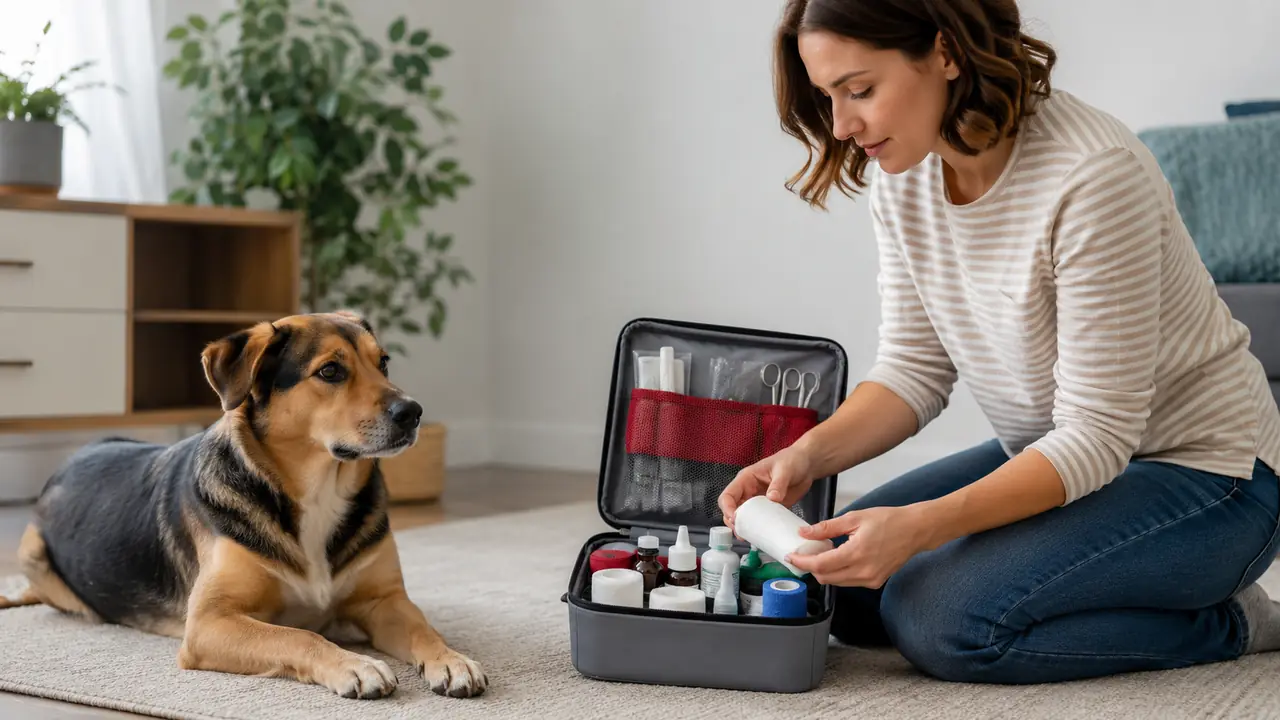
Preparation makes this easier. Store the closest 24-hour veterinary number offline, identify a backup hospital, practice fitting a carrier and know who can safely help lift a large dog. Keep basic supplies such as gauze, gloves, a towel and a leash available, but do not mistake a packed kit for training. A pet first-aid class and a conversation with your own veterinarian about underlying conditions are more useful than buying gadgets whose use you have not practiced. After the incident, ask for written discharge guidance, medication instructions and urgent recheck signs before leaving the hospital.
Common Mistakes to Avoid
- Giving human painkillers
- Inducing vomiting without instructions
- Putting hands into the mouth of a seizing dog
- Using ice water for heatstroke
- Repeatedly removing pressure dressings to check bleeding
- Trying to set fractures at home
- Waiting on GDV signs to see if they improve
First-aid mistakes often begin when a frightened owner tries to treat a diagnosis that has not been established. Common hazards include delaying an emergency visit to search for home remedies, offering food or water to an unresponsive animal, giving a human painkiller, forcing a painful dog to walk, repeatedly lifting a bleeding dressing and reaching blindly into a choking dog's mouth. A second person can help by phoning ahead, gathering supplies and managing traffic or children while the caregiver focuses on immediate safety.
Do not mistake brief improvement for recovery after severe heat exposure, a fall, swallowing a toxin or suspected GDV. An animal may compensate for internal injury before deteriorating. Record what happened and what you gave or did; disclose imperfect attempts without embarrassment because the clinical team needs an accurate history. First aid buys time. Its purpose is to prevent additional injury and bridge the distance to trained veterinary care, not to avoid that care.
A Practical Decision Checklist
- Emergency hospital number saved
- Carrier/transport plan ready
- Basic first-aid kit stocked
- Toxin packaging brought to clinic
- Seizure time recorded
- Direct pressure used for bleeding
- Heatstroke cooled and transported promptly
- Owner safety protected around painful dog
Before any emergency, identify a local 24-hour veterinary hospital, a backup provider and a safe transport option for your dog's size. Learn pet CPR and choking response from qualified instruction rather than trying to memorize maneuvers in the moment. Keep a basic kit with gloves, gauze, clean cloths, a spare leash, a carrier or blanket, medication information and poison-control details appropriate for your country. Check that supplies remain usable and that all household caregivers know where to find them.
When trouble occurs, check the scene, look for breathing or major bleeding, call for professional help and follow condition-specific first-aid guidance. Avoid forcing anything by mouth into a weak or unconscious dog. Use simple observations: time, suspected exposure, temperature/heat situation, bleeding location, seizure duration or retching pattern. Ask the clinic where to go, how to handle the animal safely and what not to give. Continue to reassess breathing and awareness during transport without distracting the driver.
Frequently Asked Questions
What belongs in a dog first-aid kit? Gauze, nonstick pads, cohesive bandage, tape, saline, disposable gloves, blunt scissors, tweezers, digital thermometer, towels, leash, muzzle if appropriate, emergency numbers, medication list, and copies of records are useful basics.
Should I keep hydrogen peroxide to make my dog vomit? Do not induce vomiting unless a veterinarian or poison professional specifically tells you to for that exposure and gives instructions.
Can I give aspirin for pain? Do not give human pain medicines without veterinary direction. Common medications can cause gastrointestinal bleeding, kidney injury, liver injury, or dangerous interactions.
What gum color is concerning? Very pale/white, blue/gray, or intensely abnormal gums alongside illness can indicate poor oxygenation or circulation and warrant urgent assessment.
How do I muzzle an injured dog? Only if the dog is breathing normally and not vomiting, overheated, or suffering facial trauma. A basket muzzle is safer than improvised tight wrapping for many situations, but do not delay lifesaving care.
Should I remove an object stuck in a wound? Usually no. An embedded object may be limiting bleeding. Stabilize it for transport and let veterinary professionals remove it.
When should I call before driving to the ER? Call whenever possible so the team can prepare and give immediate instructions, but do not let a long phone conversation delay transport for obvious life-threatening emergencies.
The Bottom Line
Good dog first aid is simple under pressure: protect yourself, assess breathing and circulation, control severe bleeding, avoid unsafe home treatments, call the veterinary team, and transport. Preparation and fast recognition save more time than improvising a complicated treatment at home.
Independent reading and guidance for this topic (editorial references, not a claim of veterinary review): AVMA pet first-aid guidance (2025) | American Red Cross: dog bleeding first aid | ASPCA Poison Control: dangers of inducing vomiting | Cornell Veterinary Medicine: canine heatstroke | ACVS: gastric dilatation-volvulus