Dog Training Tips: 15 Practical Rules for Better Everyday Training
Good dog training is less about collecting tricks and more about creating a communication system the dog can understand under ordinary life pressure. The most useful rules are simple enough to repeat every day, clear enough for the whole household, and flexible enough to change when a dog is frightened, tired, adolescent, distracted, or physically uncomfortable.
These 15 rules cover the mechanics that make training work across puppies, adult dogs, rescues, and seniors. They are deliberately practical: reward timing, environmental management, difficulty progression, household consistency, and the difference between a dog who will not respond and a dog who cannot respond in the current situation.
1. Reward What You Want More Of
Dogs repeat behaviors that work. Notice calm, ordinary good choices—lying quietly, checking in, walking near you, keeping four paws on the floor—not only the moments when the dog makes a mistake.
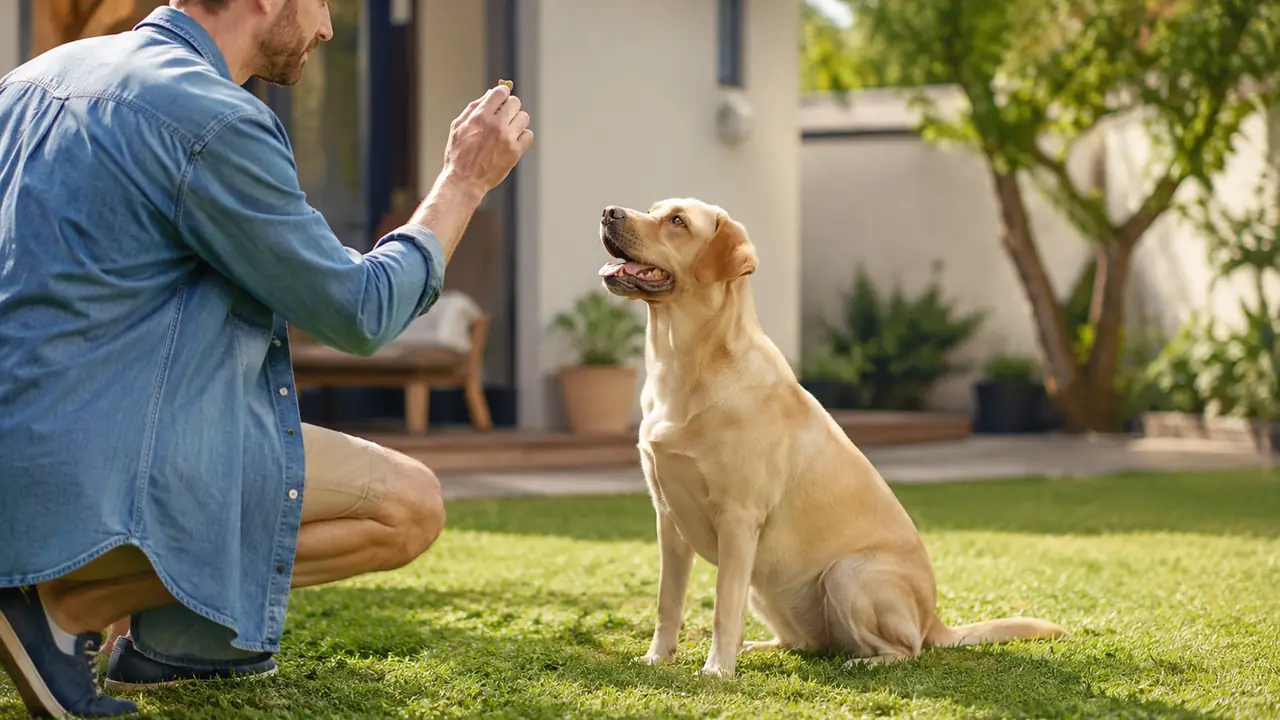
Begin by catching choices that usually go unnoticed. If your dog waits while you open a cupboard, quietly follows you down the hall, or relaxes instead of demanding attention, those moments can be reinforced. Rewards need not always be edible: permission to sniff a patch of grass, a brief game, access to the garden, or calm affection can be meaningful. The crucial question is whether the dog actually wants that consequence in that moment. A dog absorbed in sniffing may prefer another second of exploring to a piece of dry kibble. Name the behavior you want to strengthen, then deliver the reward soon enough that the connection is understandable.
For a simple experiment, spend one ordinary walk reinforcing a loose leash before tension develops. Pause when the line tightens without jerking or dragging, and reward the dog for returning toward you; then allow forward progress while the line stays comfortable. At home, offer attention when four paws remain on the floor during an easy greeting. Avoid waiting for a jump and then creating a long lecture about jumping. Keep food rewards appropriate to the dog's dietary needs and account for them in daily intake. As skills become reliable, vary how you reward them, but do not remove meaningful reinforcement from a task the dog still finds difficult.
2. Make the Right Behavior Easier
Management is training support. Use gates, leashes, distance, closed doors, covered windows, toy rotation, and planned routines so the dog can practice the behavior you want instead of rehearsing the unwanted one.
Good training often begins with rearranging the room. A gate can keep a puppy from repeatedly charging the front door. Closed cupboards remove tempting items; a non-slip mat helps a dog maintain a settled position; extra walking space makes a loose leash possible. These environmental changes are not cheating. They reduce opportunities to practice a habit while making a useful alternative easier to notice and reward. Think about what the dog can realistically do at the exact moment the problem appears. Asking for a calm sit while three excited visitors crowd the doorway may be too difficult, even if the dog sits beautifully when the house is quiet.
Choose the easiest safe version of the behavior and rehearse it there first. Before visitors arrive, let the dog learn that moving to a mat earns treats in an empty hallway. Before a dog approaches the outdoor gate, practice a pause behind an additional secure barrier. On walks, keep enough distance from exciting activity that your dog is able to think and move comfortably. Remove tempting household objects during the early stages rather than repeatedly testing impulse control. Management supports teaching, but it does not replace teaching: gradually introduce ordinary real-life situations after the dog can succeed. For fear, guarding, or risk of aggression, use qualified professional guidance rather than exposing the dog to increasingly intense tests.
3. Keep Sessions Short
Several focused three- to five-minute sessions usually outperform one long drill. End while the dog is still engaged and successful.
Training works best when the dog is willing to participate and can understand what is being asked. A brief session makes it easier to notice success, pay accurately, and end before frustration rises. The original suggestion of three to five minutes is a practical starting point for many dogs, not a universal requirement. A very young puppy or an anxious dog may benefit from just a handful of easy repetitions; a practiced adult may enjoy a longer game. Notice whether the dog returns eagerly after a pause, or instead turns away, scratches, sniffs the floor, or becomes mouthy. Those changes can signal that the task is too long, confusing, or distracting.
Plan each session around one small objective, such as touching a target three times or lying on a mat while you move one step away. Stop after a successful easy repetition rather than waiting for repeated errors. You can fit tiny practices into daily life: one recall in the hallway, a release cue before the garden door, or a loose-leash reward near the driveway. Do not pile fifteen new cues into a single exercise. If progress stalls, take a break and reconsider the difficulty, reward, or setup. Record a simple observation, such as "responded first time in four of five quiet-room attempts," rather than measuring success by how tired the dog appears afterward.
4. Train in Easy Places Before Hard Places
A cue learned in the kitchen is not automatically understood at a busy park. Increase distraction, distance, and duration gradually.
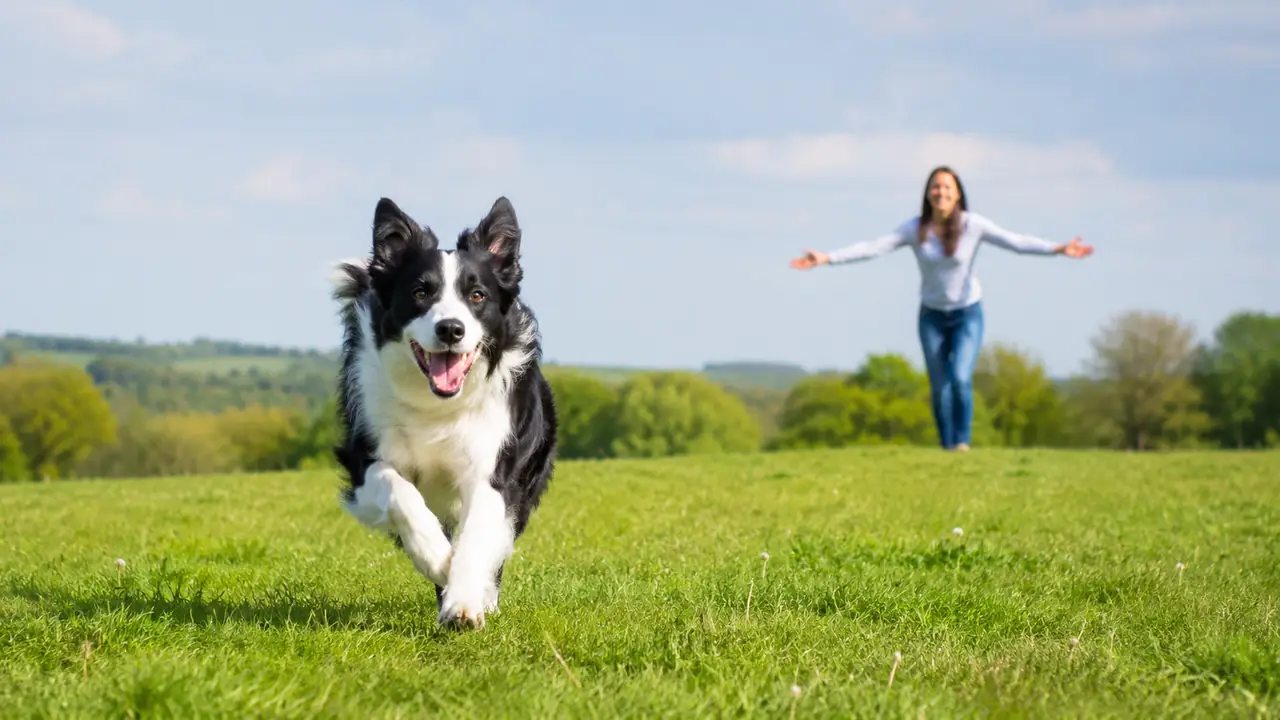
A cue is learned in a particular context before it becomes dependable across contexts. "Come" near a quiet kitchen counter is not the same challenge as "come" beside a playground, squirrel, or dog park entrance. Dogs notice smells, movement, surfaces, and competing activities that people may overlook. Start in a familiar indoor space, then try another room, a quiet garden, and a low-distraction outdoor location. Keep rewards worthwhile and expectations modest at every new stage. Practice recall outdoors on an appropriately secured long line, not as an off-leash experiment near roads or wildlife. A dog that fails outdoors is giving information about the lesson, not necessarily refusing to cooperate.
Increase difficulty in carefully chosen increments. If your dog sits readily at the back door, try one quiet repetition on the porch before practicing at the street corner. If another dog appears and attention disappears, increase the distance instead of shouting the cue again. Change one factor at a time so you know what caused difficulty; a new setting with noise, longer duration, and greater distance from you is really three new tasks. When the response becomes fluent under the easier condition, move forward. Periodically revisit familiar settings to maintain confidence. Generalization is a process of teaching the same useful signal in many manageable places, not a test the dog should pass on the first attempt.
5. Use a Clear Marker
A clicker or consistent short word can tell the dog the exact instant they got it right, making reward timing much clearer.
A marker is a brief, consistent signal that identifies the exact action the dog got right. It can be a click or a short word such as "yes." Introduce it in a quiet place: say the marker, then immediately deliver a small reward, several times, without asking for complicated behavior. Next, mark a naturally occurring sit or a nose touch as it happens. The marker helps bridge the small delay between the behavior and the reward. Use one recognizable sound and keep its meaning reliable. If the dog sits, stands, and then receives a treat without a marker, it may be less clear which movement earned the reward.
Timing matters more than theatrical enthusiasm. Mark while the dog's paws are on the floor, not after it springs toward your hand. For a stay, mark the duration you intended to reinforce while the dog is still holding the position; use a separate release cue when the exercise is over. Do not click repeatedly while searching for treats, and do not use the marker as a threat or a recall command. The reward must follow a teaching marker, even if you clicked at the wrong moment; improve your timing on the next attempt. A verbal marker is often easier than a clicker when both hands are occupied. Choose a system your household can use calmly and consistently.
6. Pay More for Harder Work
Use higher-value rewards when distractions, fear, distance, or difficulty increase. Reinforcement should match the challenge.
The value of a reward changes with the situation. Regular kibble may be exciting in a quiet room yet uninteresting near a park full of smells. Before training outside, find out whether the dog prefers soft food pieces, a tug toy, a brief chase game with you, or access to sniffing. Use the strongest appropriate reward for the hardest achievable version of the lesson, rather than using the same payment for every task. Consider the animal's health, diet, and appetite; rewards must be safe and measured within the daily feeding plan. A nervous dog refusing food is not always being picky. It may be telling you that the environment is too stressful.
Imagine a dog that reliably turns when called in the garden but ignores a cue beside another dog. Moving closer and offering a larger treat may not solve the problem, especially if the dog is fearful or over-aroused. Begin much farther away, reward an easy turn, and gradually approach only if the dog remains comfortable. Sometimes the desired reward is permission to move away from a trigger. Give high-value reinforcement promptly for difficult decisions, but prevent bribery in which food is waved in front of the nose to lure a dog through something frightening. The dog should be free to succeed, and the reward should follow a choice the dog was capable of making.
7. Say the Cue Once
Repeating “sit, sit, sit” teaches the dog that the first cue is optional. If the dog cannot respond, make the task easier instead of turning the cue into background noise.
A cue should be a useful, recognizable signal rather than background noise. If you say "sit" five times in rapid succession, your dog may learn that responding after the fourth repetition works as well as responding after the first. Choose one word or gesture, present it clearly, and allow a brief moment for processing. If the dog does not respond, do not keep repeating it louder. Ask whether the dog understands the behavior in that location, whether your position has changed, and whether a distraction is overwhelming the lesson. Quietly reset to an easier situation, prompt an action the dog already knows, and reinforce the success.
Different people often change a cue unintentionally by adding extra words or gestures. One person says "down," another says "lie down now," and a third points toward the floor; a puppy may treat those as unrelated signals. Agree on a consistent cue and teach it after the behavior itself has been shaped. Do not use recall cues repeatedly while the dog is engaged in something too exciting to leave; set up a short, safe practice where the dog can succeed and earn a worthwhile reward. For a dog with hearing or vision limitations, modify the signal with veterinary and training guidance rather than assuming that nonresponse is defiance.
8. Build Duration in Tiny Pieces
Ask for one second of a stay before ten seconds, and ten seconds before a minute. Release the dog before failure whenever possible.
Duration means remaining in a behavior, not merely performing it once. A dog can lie down immediately and still have no idea that you want it to remain there. Start with a moment of success, reward while the dog is still in position, and use an unambiguous release word. Build a stay from one calm second to a few seconds in a quiet room before asking for longer intervals. Give the dog predictable opportunities to succeed. If it repeatedly leaves after five seconds, your current lesson might be three comfortable seconds, followed by a release and reward. Do not force a dog to hold an uncomfortable posture, especially when mobility or pain may be involved.
Add time unevenly rather than making each repetition harder. After a successful five-second stay, reward a two-second stay; then try four, then six if the dog is relaxed. This prevents the dog from predicting that every attempt will be longer and more demanding. Avoid walking out of sight at the same moment you extend the duration. Also remember that a settled dog can shift position naturally; calm stationing on a mat is different from a formal obedience stay. If the practical goal is a relaxed dog during dinner, reinforce genuine comfort on the mat, not rigid stillness. End the exercise with a clear release rather than calling the dog out of position every time.
9. Add Distance and Distraction Separately
Do not make a new exercise longer, farther away, and more distracting at the same time. Change one variable at a time so the dog can succeed.
Duration, distance, and distraction each alter the difficulty of a skill. A dog that stays beside you for thirty seconds may be unable to stay when you take three steps away. A dog that can handle those steps in an empty room may rise when a visitor walks past. The fix is to separate the challenges. When you begin teaching distance, shorten duration to a second or two. When you introduce a mild distraction, work close to the dog and return to a brief repetition. Reward success under each new condition, then combine elements gradually. This prevents the familiar pattern of making the exercise much harder and then blaming the dog for failing.
For a door-wait exercise, practice in a quiet interior doorway with the door closed, then with a tiny movement of the handle, then with the door opened a little while a second barrier keeps the environment safe. Add someone walking nearby only after the basic pause is secure. If the dog moves forward unexpectedly, close the door calmly and return to the preceding level. Do not use an open door onto a road as the first test. The same principle applies to recalls and loose-leash walking: first teach the response, then add distance, then distractions in a sequence that preserves high success. A long line and appropriate supervision allow practice without gambling on safety.
10. Reinforce Calm, Not Just Action
Settle training, mat work, quiet waiting, and relaxed observation are real skills. They prevent a dog from learning that training always means high arousal.
Fast tricks and high-energy games are fun, but ordinary life also asks a dog to wait while people work, eat, or speak with visitors. Teach calm as a behavior worth rewarding, not merely the absence of mischief. Place a comfortable mat in a quiet spot and reinforce voluntary approaches. Offer a reward for lying down, then for remaining settled while you sit nearby. Use a low-key voice and rewards that do not excite the dog into repeatedly jumping up. Watch for relaxed breathing, loose posture, and the ability to shift position rather than demanding absolute stillness. A calm dog should retain the choice to stand, drink, and move away.
Practice with ordinary household activity before adding a crowded dinner party. When your dog settles while you prepare a drink, deliver a quiet reward to the mat. Later, take a few steps around the room and return to reinforce another easy interval. If the dog begins pacing or whining, lower the challenge; it may need toileting, exercise, rest, or more distance from a distraction rather than stricter rules. Make sure the mat is not used as punishment. Some dogs find chewing, sniffing games, or a separate resting place easier than formal settle training. The aim is a predictable way to decompress while normal family life continues around them.
11. Protect the Dog From Fear
Fear is information, not disobedience. Increase distance from a trigger, reduce intensity, and use gradual counterconditioning rather than forcing the dog to endure something overwhelming.
Training becomes unfair when the lesson asks a dog to endure something it finds terrifying. A dog that freezes at a clinic door, retreats from a stranger's hand, or stiffens near another dog may be struggling emotionally rather than refusing a command. Increase distance, give an exit route, and work with a less intense version of the event. Reward voluntary approaches without dragging or cornering the dog. A frightened dog may still accept food, so look beyond appetite: posture, movement, attempts to leave, and ability to recover are important. Avoid intimidation, leash jerks, coercive flooding, or equipment designed to cause pain; these can worsen fear and defensive behavior.
In a low-stress practice visit to a veterinary clinic, the first goal may be walking toward the building and leaving calmly before an examination is even considered. Coordinate with the clinic about quiet times and handling options. At home, let a shy dog observe visitors from a secure, comfortable distance rather than requiring greetings. Repeated panic, escalating guarding, or threatened bites need veterinary and specialist behavioral assessment, not unsupervised exposure exercises. If the dog becomes unable to take part, stop the lesson and restore safety. A successful training plan should improve the dog's willingness to engage, not merely make its outward warnings less visible.
12. Prevent Unwanted Behavior From Paying
If jumping reliably earns attention, pulling reliably reaches smells, or barking reliably opens a door, those behaviors are being reinforced. Change the consequence while teaching a better alternative.
Many common training problems make sense once you examine their consequences. A dog jumps because people speak to it, pulls because movement brings a fascinating smell closer, or scratches because the door opens. Some of those payoffs happen accidentally. Change the setup so the old response is less likely to achieve the result, and teach a replacement that works better. For greetings, ask a visitor to pause while you reinforce feet on the floor. For pulling, make forward movement available when the leash loosens. For bolting, keep a second physical barrier closed while teaching the dog to wait. These routines work best when the dog can easily understand how to succeed.
Do not apply a simplistic "ignore it" rule to every behavior. A dog barking in fear, growling over a resource, or showing separation distress needs a different assessment from a dog pawing for casual attention. Some behaviors are reinforced by relief from a frightening situation; removing that relief can increase risk. When a pattern is harmless, reduce accidental reinforcement and immediately offer a realistic alternative. When the behavior creates danger, manage access and consult qualified help. A diary showing what happened just before and after each episode can distinguish unwanted attention seeking from stress, avoidance, or unmet needs. The objective is a safer routine, not winning a standoff.
13. Train the Whole Household
The dog cannot follow five different rulebooks. Agree on cues, door rules, feeding rules, and how everyone responds to common behavior.
Dogs cannot read a family meeting, so everyone must make the signals and consequences as predictable as possible. Decide which words mean sit, come, wait, go to mat, and release. Agree on whether the dog is invited onto furniture, how greetings will happen, and what to do when an exercise fails. If one person rewards jumping with delighted attention while another pushes the dog away, the result can be confusing and persistent. Write down a few practical rules in ordinary language, such as "guests wait while the dog earns a calm greeting" instead of a long chart no one follows. Be especially clear about gates and doors, where inconsistent routines create real hazards.
Rehearse the agreed response without making the dog the center of a family argument. One adult can practise greeting with treats while another quietly enters the room; then swap roles. Children should not be responsible for managing a dog that may guard items, react fearfully, or bite. An adult must maintain supervision and physical separation when needed, and no training exercise replaces those protections. Check that family members are not inadvertently rewarding the old habit with chasing, shouting, or access to something exciting. When progress is uneven, compare the setup each person uses before concluding that the dog favors one handler. Consistent timing and expectations are easier for a dog to learn.
14. Know When a Behavior Problem May Be Medical
Sudden irritability, house-soiling, sleep change, reluctance to move, new fear, or loss of training can reflect pain or illness. A veterinary check belongs early in the plan when behavior changes suddenly.
A dog that suddenly stops responding, resists grooming, soils indoors, growls during handling, or becomes unusually restless may have a health concern rather than a gap in obedience. Pain can alter tolerance for touch and movement. Hearing loss can interfere with verbal cues; visual change can make familiar environments unsettling. Illness, medications, and changes in sleep or cognition may also affect behavior. These signs are not a reason to diagnose the dog at home, but they are reasons to describe the change to a veterinarian before increasing training pressure. Record when the problem started and whether appetite, mobility, drinking, toileting, or other routines changed at the same time.
While waiting for an assessment, adapt familiar cues and minimize demands that might hurt or startle the dog. Do not repeatedly test whether an older dog can climb stairs, jump into a vehicle, or hold a long down. Ask the veterinary team whether a physical issue needs management before training resumes and whether a certified behavior professional should be involved. If the behavior is long-standing and a veterinary examination does not identify a medical cause, that still does not justify punishment. Revisit the learning environment, rewards, and emotional context. Sudden aggression, severe distress, collapse, disorientation, or rapidly worsening function warrants prompt veterinary advice rather than an internet training challenge.
15. Get Qualified Help Before Safety Becomes a Crisis
Biting, severe aggression, panic, compulsive behavior, or high-risk reactivity should not be treated as a DIY challenge. Veterinary and qualified behavior support can make the plan safer and more humane.
Ordinary skills often respond to clear practice and a good reward-based instructor. Repeated biting, serious aggression, dangerous resource guarding, severe separation distress, compulsive behavior, or panic around people and dogs require a different level of care. Begin by discussing the behavior and possible medical factors with a veterinarian. Ask about referral to a board-certified veterinary behaviorist or a qualified consultant who collaborates with veterinary services. Check what credentials and continuing education the professional holds, how they teach alternatives, what tools they use, and how they handle setbacks. Beware of anyone promising an instant permanent cure or insisting that fear and warning growls must be suppressed.
Do not try to recreate a bite incident to demonstrate the problem. Instead, provide a written timeline, descriptions of triggers, and any video recorded safely during natural activity. Keep children and vulnerable visitors physically separated from a dog with an identified risk until a professional plan says otherwise. Avoid forced greetings, busy classes, or punishment-based demonstrations while the safety assessment is pending. A good specialist should explain management, training steps, welfare monitoring, and when the plan should be reassessed. Getting professional help early can reduce unsafe experimentation and give the household a realistic, humane course of action that goes beyond a list of general training tips.
Common Mistakes to Avoid
- Training only when there is a problem
- Making cues harder faster than the dog can learn
- Using punishment to suppress fear signals
- Allowing family members to use conflicting rules
- Repeating cues until they lose meaning
- Expecting a dog to generalize a skill automatically
- Ignoring pain or illness when behavior changes suddenly
Training tends to stall when owners repeat a cue until it loses meaning, increase distractions before the dog understands the task, or reward too late for the dog to connect the action with the outcome. Punishment for barking, fear, or hesitation can also hide distress rather than teach a safer alternative. Work in a low-distraction space, mark the exact behavior you want, and reward promptly with something this dog values. Practice briefly and often; then change only one difficulty factor at a time, such as distance or distraction. If a dog suddenly stops responding or becomes fearful, check comfort and health before assuming stubbornness.
A Practical Decision Checklist
- Desired behavior is clearly defined
- Reward is meaningful to this dog
- Environment is easy enough for success
- Cue is given once
- Difficulty rises one variable at a time
- Calm behavior is reinforced
- Household rules match
- Professional help is used early for safety-critical behavior
For the next short practice session, choose one behavior you can recognize instantly, one cue, and one reward the dog will work for. Arrange the environment so a successful response is likely, decide when the reward will arrive, and stop while the dog is still engaged. Note whether the dog can repeat the skill in that setting before adding a harder distraction or longer duration. Ask every family member to use the same cue and reward rule. Seek reward-based professional help for guarding, fear, aggression, or other situations where mistakes could put someone at risk.
Frequently Asked Questions
How long should I train each day? Short sessions spread through the day are usually more productive than one long block. Five minutes before meals, on walks, and around doorways can add up to meaningful practice.
Should I correct my dog for mistakes? First ask why the mistake happened. If the skill is not fluent, reduce difficulty and reinforce success. If the dog is fearful or overwhelmed, increasing pressure can make learning worse.
How many words should a dog know? There is no useful target number. A small set of reliable cues used in real life is more valuable than dozens of half-learned tricks.
Why does my dog listen at home but not outside? Outside adds smells, movement, distance, and competing rewards. Rebuild the cue in gradually harder environments instead of assuming the dog is choosing to ignore you.
Is a clicker necessary? No. A clicker can improve timing, but a consistent marker word works well when used precisely.
Can older dogs learn new skills? Yes. Learning continues throughout life, though hearing, vision, mobility, and cognitive change may require shorter sessions and modified cues.
When should I hire a trainer? Any time progress stalls or you want coaching, and especially early for biting, aggression, severe fear, or reactivity where mistakes carry safety risk.
The Bottom Line
Better training comes from clearer information, easier practice, and reinforcement that makes sense to the dog. Apply these 15 rules consistently and most everyday skills become simpler to teach, easier to maintain, and less dependent on correction.
Editorial reference material: Dogs Trust: Positive Reinforcement Training With Rewards; AVSAB: Humane Training and Trainer Selection; AKC: Duration, Distance, and Distraction; Merck Veterinary Manual: Diagnosing Behavior Problems in Dogs; RSPCA: How to Find the Right Dog Trainer; AAHA: Canine and Feline Behavior Management Guidelines. References support the described principles; individual behavior problems require professional assessment when safety or medical concerns arise.