Dog Training With Treats: How to Reward Good Behavior Without Overfeeding
Treats are powerful because they let you pay a dog immediately for a behavior you want repeated. The goal is not to bribe a dog forever or to carry a chicken breast in your pocket for life. The goal is to use food strategically while the dog is learning, then gradually shift many repetitions to everyday rewards such as access, play, praise, movement, sniffing, and the behavior itself.
The other half of good treat training is calorie control. A “treat” does not have to be a biscuit. One pea-sized piece can be enough information for a dog, and part of the measured daily meal can often become the training budget. That keeps the learning rate high without quietly turning a few five-minute sessions into hundreds of extra calories each week.
Why Food Works So Well in Training
Food is fast, repeatable, easy to deliver in small pieces, and meaningful to most dogs. It allows many successful repetitions without interrupting the flow of a session. Used correctly, food is reinforcement: it appears after the desired behavior and increases the chance that behavior will happen again.
Food rewards can help a dog understand precisely which action you want because they are small, fast and usually easy to repeat. That does not make food a magical reward or mean every dog values the same item. Some dogs prefer a chase game, another wants permission to sniff, and a dog who has just eaten may have little interest in kibble. Before starting, test a few options in a quiet room. Offer a small piece; does the dog take it calmly and immediately, or hesitate and look away? The answer should shape the session, not be treated as a judgment of motivation.
An effective training sequence is simple: wait for the desired action, mark it immediately with a brief sound or word, and deliver the reward. For a puppy learning to sit, that might take less than three seconds. For a dog learning to step onto a mat, it might mean rewarding the first curious glance rather than demanding a full down. The reward helps the dog predict the consequences of its choice. Over repeated successes, the dog learns a reliable cue-action-outcome relationship.
Food is only one part of a good learning environment. Noise, fatigue, fear and discomfort can make even excellent treats irrelevant. A dog that refuses food on a busy sidewalk may need more distance from traffic, not a smellier snack. Avoid using hunger as leverage or withholding normal meals to force performance. Learning should be safe, voluntary and enjoyable.
Reward Timing Matters More Than Treat Size
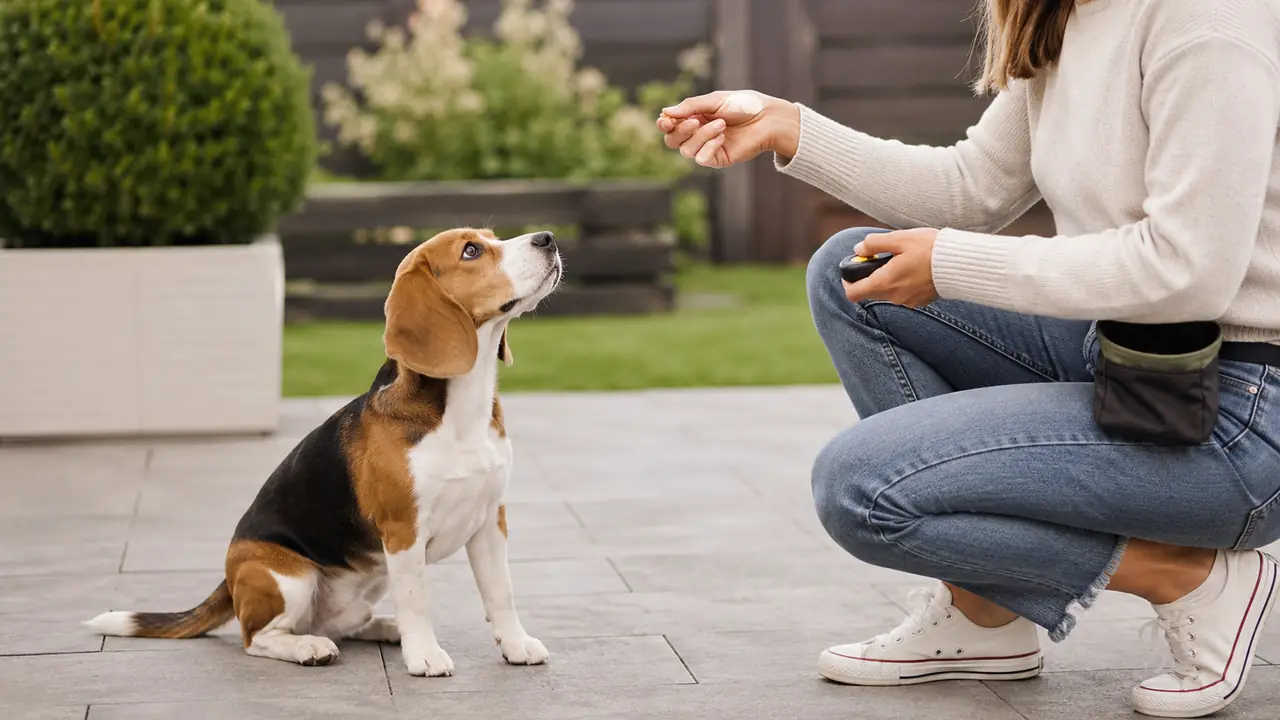
The dog needs to understand exactly which action earned the reward. Mark the correct behavior with a clicker or short marker word and deliver food promptly. A delayed treat can accidentally reinforce the next behavior the dog performs, such as jumping up after a sit.
The most useful treat is often the one delivered at the right moment. If you say “good” while the dog is sitting but deliver food after it jumps, the dog may learn that jumping earns the reward. A marker bridges that delay. Teach one by saying a consistent word such as “yes,” then giving a tiny piece of food immediately; after a handful of repetitions, the sound begins to predict a reward. Use the marker for the exact behavior you want, then pay promptly. You do not need an expensive clicker, but consistency matters.
For leash walking, mark the moment tension disappears and the dog is beside you, not after it forges ahead. For a recall, mark when the dog turns toward you, then reward lavishly when it arrives. For a chin-rest cooperative-care exercise, mark the decision to maintain contact before touching the ear. If you cannot deliver food right away, simplify the handling so you are ready. Treats hidden in a pouch can work well once your marker is learned; holding food visibly all the time encourages following your hand rather than thinking about the cue.
Remember that rewards affect future behavior, not just mood. If a barking dog gets food every time it jumps at the window, you may accidentally reinforce jumping. Instead, notice and reward a calmer choice before the dog escalates. The central habit for the human is careful observation: what exactly did the dog do in the second before the marker sounded?
Use Tiny Pieces
For most training, a reward only needs to be large enough for the dog to notice and swallow quickly. Soft treats can be cut into very small pieces. Large biscuits slow training, add unnecessary calories, and make it harder to complete enough repetitions to build a fluent skill.
Treat size influences how long a dog stays engaged and how much extra food accumulates during a session. Many dogs are happy with pieces smaller than a pea for easy repetitions, adjusted for body size and chewing ability. Soft food that can be swallowed without lengthy crunching is often convenient because the lesson can continue at a natural pace. The aim is not to starve the reward; it is to make one clear success possible without adding a meal's worth of calories. Avoid hard pieces that a dog could choke on while moving quickly, and supervise every food reward.
Prepare rewards before the dog appears. Cut them into suitable sizes, count or weigh the approximate amount and put them in an easy pouch. If you are working with a small puppy or a dog whose weight must be managed, reserve part of the day's complete food ration for simple lessons. For a harder task such as ignoring another dog at a safe distance, you may need a small amount of higher-value food. Use several tiny rewards in sequence instead of one large treat; this can create a longer, calmer payoff while keeping quantities controlled.
Food hygiene matters, too. Wash hands after handling raw meat or pet food, keep perishable treats chilled until needed and discard food that has been sitting warm in a car. For dogs with swallowing issues, dental problems or gastrointestinal disease, ask your veterinarian what texture and amount are appropriate. A great treat is safe, easy to deliver and leaves the dog ready for the next repetition.
Create a Reward Hierarchy
Not every environment needs the same reward. Kibble may work in a quiet kitchen, while a busy sidewalk may require something more valuable. Test what your dog genuinely values and save the highest-value food for the hardest situations rather than using it for every easy cue.
A reward hierarchy is a short list of things the individual dog prefers in different contexts. Try a few safe choices at home and observe: regular kibble, a tiny piece of compatible soft food, a favorite toy, a brief tug game or permission to sniff a particular patch. The same dog may work enthusiastically for kibble in the kitchen but need much stronger reinforcement near squirrels. Rather than assuming “high-value” means a specific expensive product, watch what your dog chooses and how quickly it returns to training after receiving it.
Reserve more interesting rewards for genuinely harder circumstances. A quiet hallway may be perfect for practising a hand target using ordinary food. In the garden, movement and scent compete for attention, so a favorite soft treat or a few seconds of play may work better. Outdoors near a dog that causes fear, even the best snack is no substitute for adequate distance; if the dog cannot eat, sniff or respond to familiar cues, retreat until it is comfortable. Learning requires a manageable level of arousal.
Change rewards without making every repetition a surprise lottery for a beginner. New behavior needs predictability; the dog should feel confident that a correct response is worthwhile. Only after a skill is fluent should you sometimes substitute play, environmental access or intermittent food. A hierarchy is a flexible decision tool, not a rigid chart of what every dog ought to like.
Use Part of the Daily Meal
If your dog likes their regular food, weigh or measure the entire day’s ration first and reserve a portion for training. This turns calories that were already planned into learning opportunities and makes it much easier to keep treats within a reasonable share of daily intake.
Training with a measured portion of a complete diet can be especially practical for food-motivated dogs who need many easy repetitions. Set aside a portion before serving breakfast or dinner, then use those pieces for name response, mat work, brief recalls or calm handling. At the end of the day, account for what was earned and feed the balance. This avoids accidentally giving the dog two breakfasts: one from the bowl and another from the treat pouch. If kibble is too dry or distracting to deliver smoothly, ask about suitable alternatives that still fit the dog's dietary plan.
Meal rewards can also build household consistency. One family member can use a small cup for brief morning training while another uses the evening allocation for quiet leash skills. Share a record so the dog does not receive the same full allowance multiple times. Treats given by visitors, chews, training pastes and food used for puzzle toys also count toward total intake. Keep fresh water accessible, and never turn normal meals into prolonged bargaining over obedience.
Some dogs need individualized advice. Puppies require adequate energy and balanced nutrients for growth, while dogs with diabetes, pancreatitis or prescription diets may need consistent feeding routines and closely controlled ingredients. For them, changing the feeding schedule or adding unfamiliar treats should be discussed with the veterinary team. Food is a training tool, but nutrition and medical safety come first.
The 10 Percent Guideline
A common practical guideline is to keep treats and extras to about 10% or less of daily calories so the complete diet remains the main nutritional source. Dogs with medical diets, weight-loss plans, food allergies, or very small calorie budgets may need an even tighter treat plan from their veterinarian.
Many veterinary nutrition resources suggest keeping treats and other extras to around ten percent or less of total daily calories so most nutrients still come from a complete and balanced diet. Treat this as a helpful ceiling, not a target you are supposed to reach. Ten percent of a small dog's calorie allowance can be surprisingly little. For example, if an individual dog's veterinarian-guided daily plan were 400 kcal, a ten-percent ceiling would be about 40 kcal from extras. That number is an illustration, not a feeding prescription. Body condition, age, activity and health must determine the actual calorie target.
Read treat labels for calories per piece, and do not assume tiny-looking chews are low-calorie. A large biscuit broken into pieces still contributes the full biscuit's energy. Peanut butter, cheese and commercial training treats vary greatly in calories and ingredients. Watch for xylitol—sometimes labeled birch sugar—in human products; it is dangerous to dogs. If your dog seems to gain weight despite unchanged meals, record all snacks for several days before deciding the main diet must be reduced.
For a food allergy trial or a therapeutic diet, a standard ten-percent allowance does not mean random treats are acceptable. Even a small incompatible snack can interfere with an elimination trial or disease management. Ask the treating veterinarian how to reward the dog using permitted food. The best training plan builds enthusiasm without undermining long-term nutrition.
Lure, Then Fade the Lure
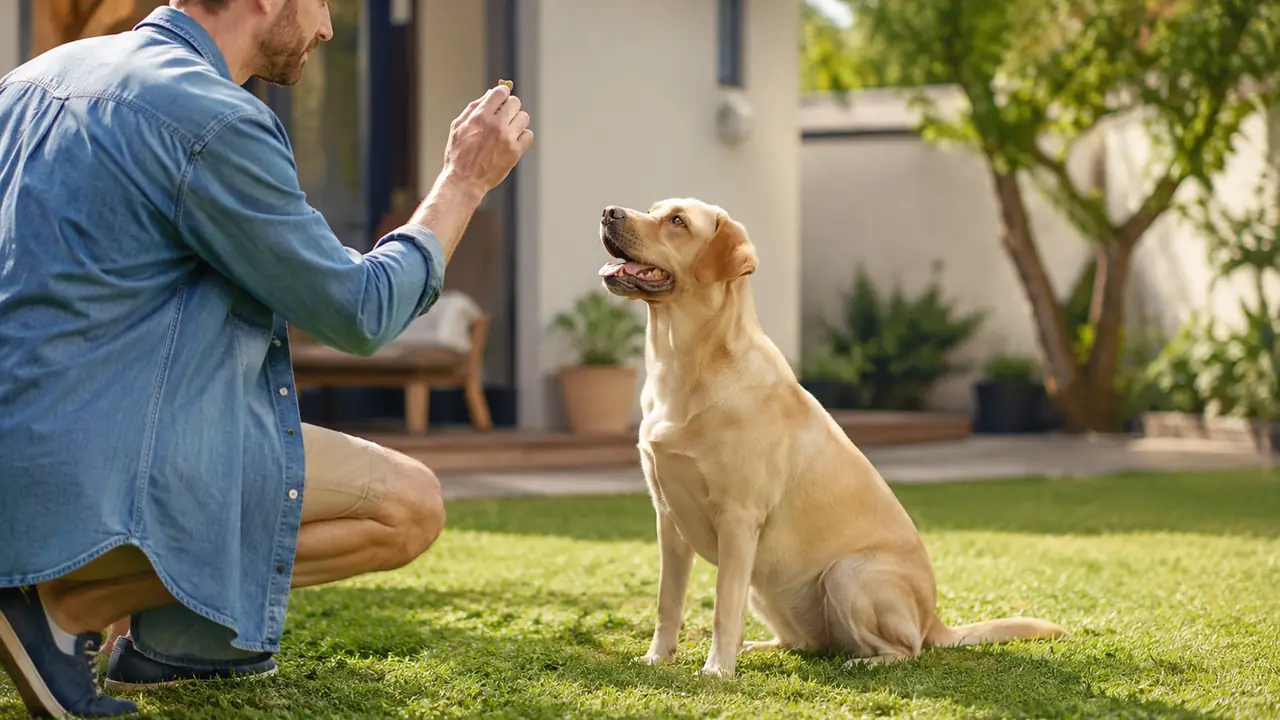
A lure is food used to guide the dog into a position. It is useful at the beginning, but if food remains visibly attached to every cue, the dog may learn to follow the snack rather than respond to the signal. Fade the visible lure quickly while still rewarding successful responses afterward.
A lure is a visible piece of food that guides the dog into a movement. It can quickly teach a sit, spin or hand target, but it is meant to be temporary. After a few successful repetitions, practise the same gesture with an empty hand, mark the behavior and reward from your other hand or a pouch. Gradually make the gesture smaller, then add a verbal cue before the movement. If the dog can perform only when a treat is visible, you have not failed; you simply need a more gradual transition from guidance to understanding.
Consider a puppy learning to lie down. First reward following the food toward the mat. When that movement becomes smooth, remove the visible treat but repeat your hand motion. Reward only after the puppy completes the down. Next say “down” once, pause, use the now-familiar hand signal and reward. Over time you can reduce the hand movement. Keep sessions short enough that the puppy does not become frustrated or rehearse frantic jumping at the food. If the surface is uncomfortable, solve that problem before repeating the exercise.
Avoid making the cue a threat that means “do it or no dinner.” Instead, build fluency with many safe chances to earn food or play. For complex tricks you can use capturing or shaping instead of a lure, rewarding successive approximations. The purpose of fading is to transfer control from the visible snack to a clear cue and a history of good outcomes.
Move From Continuous to Variable Reinforcement
New behaviors benefit from frequent reinforcement. Once the dog understands the skill, begin varying when food appears while still rewarding enough to keep the behavior strong. Difficult environments, new versions of a cue, or big distractions may temporarily require a return to more frequent reinforcement.
When a behavior is new, reward it often. A puppy who has just discovered that looking at you earns food needs clarity, not a test of patience. Once the dog can respond reliably in an easy setting, you can vary the rewards: sometimes food, sometimes a favorite game, sometimes permission to sniff, sometimes several rewards together. Do not remove reinforcement suddenly or on a schedule that is too sparse. If accuracy drops or frustration rises, increase the rate again and revisit the difficulty of the environment.
Variable reinforcement is not permission to ignore good behavior. A dog that comes promptly from play deserves a meaningful outcome, particularly when the distraction is strong. Build reward history for important safety cues generously. You might use ordinary kibble for ten easy sits at home, but a jackpot for the first successful recall past a fascinating smell. The difficulty of the choice matters more than the owner's desire to use fewer treats. Reward calm check-ins on walks throughout life, even after the dog “knows” the concept.
Track behavior as you change the plan. Can the dog perform on the first cue? Is body language relaxed? Does the dog return voluntarily for another session? If the dog becomes slower or starts scanning your hands for food, the transition may be too abrupt or the reward options too weak. Fair reinforcement is a continuing relationship, not a trick for getting work for free.
Use Life Rewards Too
Opening the door, releasing the dog to sniff, tossing a toy, starting a walk, greeting a friend, getting on the sofa, or going through a gate can all reinforce behavior. Ask for a simple skill before access to something the dog wants and training becomes part of ordinary life rather than a separate activity.
Life rewards are access to things the dog already wants: stepping outside, greeting a familiar friend, chasing a toy or spending time sniffing. Used thoughtfully, they help obedience become part of daily life. Before opening a garden door, reward a one-second pause by releasing the dog into the yard. On a walk, reinforce a few loose-leash steps by allowing an extended sniff. During a game of tug, reward a brief release by starting the game again. The dog learns that cooperation is a route to enjoyable activities, not just to treats.
The important detail is that the reward must genuinely matter to the dog. A chance to greet strangers is not a treat for a shy dog. A ball chase may be too intense for a dog recovering from surgery, while a quiet sniff break might be perfect. Avoid using risky environments as prizes. Releasing a dog to run toward an unknown dog or across a road is unsafe even if it would be highly motivating. Use accessible, low-risk options that support the dog's welfare and the skills you are teaching.
Life rewards work particularly well once the dog understands the underlying behavior. For a brand-new cue, food can be clearer and faster. As fluency builds, mix rewards according to context. You can still feed treats for difficult work or big distractions. A flexible reward system makes training more humane and more practical because it respects what the individual dog finds worthwhile.
Training With Treats Around Food Allergies or Sensitive Stomachs
Use a portion of the prescribed diet, compatible hydrolyzed treats, or a veterinarian-approved ingredient that does not interfere with the diagnostic diet. A single flavored chew, pill pocket, or family member’s snack can invalidate a strict elimination trial.
Food rewards require special planning if a dog has a suspected allergy, ongoing diarrhea, pancreatitis, or a prescribed elimination diet. During a veterinary-supervised elimination trial, even a small bit of an unrelated protein can make results difficult to interpret. Ask whether you may use a portion of the prescribed diet, a matching wet formulation or a specially approved treat. Keep family members informed: one shared biscuit during a walk can undermine weeks of careful work. “Hypoallergenic” labels on ordinary retail treats are not a guarantee that ingredients or cross-contact are appropriate for a clinical food trial.
For a dog with a sensitive stomach, a new fatty treat may trigger vomiting or loose stools even when the training session itself went well. Start with a small, familiar food, monitor tolerance and avoid introducing multiple ingredients at the same time. Dry training treats, table scraps and flavored medications can all matter. Keep the number of rewards appropriate and use play, praise or sniff breaks if food volume becomes a problem. Dogs on restricted diets still deserve rewarding training; the reward menu simply needs more creativity and medical guidance.
Persistent vomiting, lethargy, blood in stool, dehydration, pain, or significant appetite changes warrant veterinary assessment rather than experimenting with new treat brands. Training cannot diagnose a food allergy. Work with the veterinarian to separate a medical problem from an ordinary preference for one snack over another. Good treat training protects the dog's health instead of competing with it.
Avoid Creating Frustration Around Food
Dogs who snatch, bark, paw, or jump at the treat pouch often need slower reinforcement mechanics. Deliver food low and calmly, reinforce four paws on the floor, and pause the session if arousal is rising. Training should improve self-control rather than turn the sight of food into chaos.
Food can make dogs excited, and handlers sometimes accidentally reward grabbing, barking or jumping by moving the treat pouch in response. Start with prepared pieces and a calm delivery point near the dog's nose or front paws. Ask for an easy behavior and mark before reaching for the treat. If the dog launches at your hand, briefly pause and reset without scolding or teasing it with the food. Reward the moment the dog's mouth is away from your fingers. A closed hand may help protect treats, but avoid prolonged games that make the dog claw, lick and escalate frustration.
For children and people with limited hand dexterity, tossing the treat onto the floor or using a target mat may be safer than hand-feeding. Teach the dog to collect food from the ground when cued, and avoid doing this in areas with traffic, other competing dogs or dangerous debris. Multi-dog homes need barriers or separate sessions if food triggers crowding or guarding. Do not ask two dogs to compete for one pile of treats. A successful reward system keeps everyone safe and makes the earning rule obvious.
If your dog becomes frantic as soon as food appears, lower the difficulty and rate of arousal. A calm search game or a short sniff break may reset the lesson better than demanding more self-control in that moment. Dogs who growl or bite around food require safety management and qualified professional assessment, not attempts to punish possessiveness. Training should make food interactions more predictable and less tense over time.
When Food Is Not Working
A dog refusing normally loved food may be too stressed, too full, nauseated, in pain, or overwhelmed by the environment. Do not simply escalate to richer treats indefinitely. Reduce difficulty, move farther from the trigger, or address a possible medical problem.
A dog who refuses a familiar treat is communicating something useful. It may be full or simply dislike that food, but it may also be too worried to eat, physically uncomfortable, overheated or nauseated. Observe the rest of the dog: is it stiff, panting despite mild weather, scanning a trigger, turning away from the leash or repeatedly swallowing? In a stressful environment, moving farther from the trigger is often the right first step. Once the dog can explore and take a small reward calmly, the lesson is more likely to succeed.
Do not jump immediately to higher-calorie treats or an empty stomach. First make the behavior easier: reduce the number of repetitions, change location, shorten the leash exercise or choose a familiar cue. Test the same food later in a quiet room. If it works there, the environment was probably contributing. If the dog refuses several foods at home, especially alongside vomiting, drooling, lethargy or pain, seek veterinary advice. A sudden change in appetite is a health signal, not a failure of training motivation.
Some dogs are more interested in toys, movement, affection or permission to sniff than in eating during a session. That is fine if the reward is safe and under your control. You can use a toy chase in a secure space or release a calm dog to investigate a scent. The question is not “How do I make the dog work for food?” but “How can I help this dog practise the behavior comfortably and understand the payoff?”
Common Mistakes to Avoid
- Holding a treat in front of the dog for every cue forever
- Using pieces so large that the dog becomes full quickly
- Rewarding several seconds after the desired behavior
- Training only when the dog is highly distracted
- Assuming praise is equally valuable to every dog
- Ignoring treat calories in a small dog
- Using forbidden foods during a veterinary elimination diet
The biggest errors with treats are easy to make: rewarding after the wrong action, offering pieces so large that training becomes a second meal, and keeping the food visible until the dog will not respond without it. Prepare your rewards before you start, teach a marker, and hide the food once a lure is no longer needed. If a sit turns into jumping, check your timing before deciding the dog is disobedient. If the dog seems bored, check the lesson's difficulty and the reward's value before shopping for another product.
Do not mistake a bribe for the same thing as reinforcement. A bribe is food shown to persuade an unwilling dog in the moment; a planned reward is delivered after the dog makes a correct choice. Lures have a place in early teaching, but they should be faded. Likewise, constant food rewards are appropriate for a brand-new behavior yet can be gradually mixed with play and ordinary life rewards once that skill is reliable. The purpose is a history of success, not permanent dependence on waving snacks.
Finally, protect medical diets, allergies and household safety. Avoid xylitol-containing human foods, account for calorie intake and separate dogs who compete around treats. Never press a frightened or aggressive dog closer to its trigger simply because you have a stronger food reward. Reduce the stressor and seek veterinary or behavior help when appropriate. Reward-based training is humane when the dog can participate comfortably and safely.
A Practical Decision Checklist
- Reward delivered immediately after the correct behavior
- Pieces are very small
- Daily calorie budget considered
- High-value food saved for hard work
- Lures faded quickly
- Life rewards used alongside food
- Sessions stop before the dog becomes frustrated or overfull
Before training, choose one behavior, one clear marker and one reward you know the dog can safely eat. Check how much food has already been given that day, whether any medical diet restrictions apply and whether your training space is free from hazards. Decide where the treat will be delivered: to the mat, beside your knee, low to the floor or directly to the dog's mouth. If several family members are training, agree on the same cue and release signal to avoid conflicting instructions.
During the session, watch three things. First, does the dog understand which behavior earns the reward? Second, is it eager to continue without becoming frantic? Third, is the rate of reward enough for the task? If you are asking a puppy to ignore visitors but only paying once every minute, you may be demanding too much. Lower the distraction or reinforce more frequently. If the dog takes food roughly, arrange a safer delivery method. The session should create repeated clear successes rather than a cycle of failure and correction.
Afterward, record only what matters: the cue, setting, approximate success rate and whether the dog seemed comfortable. A sentence such as “mat: four calm returns in the hallway, distracted by doorbell” is enough to guide tomorrow's practice. Also subtract the treats from the day's planned intake when relevant. Once the easy version is reliable, adjust one variable at a time. That way both the behavior and the dog's welfare improve together.
Frequently Asked Questions
Will treats make my dog dependent on food? Not if you fade visible lures and gradually vary reinforcement after the behavior is learned. Food is a teaching tool, and reliable behaviors can later be maintained with a mix of food and everyday rewards.
Will treats make my dog dependent on food? Not when you teach the behavior clearly and gradually remove the visible lure while continuing to reinforce success. Rewards can later include toys, sniffing and access to preferred activities. What if my dog spits out treats? Try a familiar different texture in an easier environment; if appetite has changed in ordinary life, consult a veterinarian. Are training treats bad for weight control? They can be if uncounted extras accumulate. Plan very small rewards, use some of the complete daily ration and monitor body condition.
How do I train two dogs? Start separately so each dog can respond without crowding or competing for food. Use gates or separate rooms if needed. What should I use for a dog on a prescription diet? Ask the veterinary team whether pieces of the prescribed food, matching treats or non-food rewards are appropriate. Do not guess during an elimination trial. Is praise enough? It depends on the dog and the setting. Reward value is determined by what the animal finds motivating, not by what the owner prefers to offer.
How quickly should I fade food? Fade the lure as soon as the dog understands the movement, but do not abruptly remove all reinforcement. Important safety skills deserve a rich reward history. If performance worsens, simplify the setting and reward more often again. Training with treats is not a contest to see how soon you can stop rewarding the dog; it is a tool for making learning fair and understandable.
The Bottom Line
Treat training is most effective when food is tiny, timely, and planned. Use enough reinforcement to make learning clear, protect the dog’s calorie budget, fade visible bribes, and teach the dog that good choices unlock many kinds of rewards—not just snacks.
Treats are most useful when they support clarity rather than control through hunger or pressure. Choose safe foods the individual dog enjoys, teach accurate reward timing, keep pieces small and count extras within the dog's nutritional plan. Use food frequently when a behavior is new, fade visible lures as understanding grows and later mix in play, sniffing and other natural rewards. If the dog refuses food, first consider stress, comfort, the environment and health rather than assuming stubbornness.
A good treat-training plan is not measured by how many biscuits disappear. It is measured by relaxed participation and practical results: a puppy returns when called in a safe rehearsal, a dog walks a few steps without pulling, or a nervous pet voluntarily rests its chin for a gentle ear check. Protect prescribed diets and use qualified veterinary or behavior support when a medical or safety issue lies beneath the training challenge.
Additional evidence and further reading (these references do not imply veterinary review): American Veterinary Society of Animal Behavior — Humane Dog Training Position Statement (2021) | AAHA — Nutrition and Weight Management Guidelines (2021) | FDA — Xylitol Is Toxic to Dogs