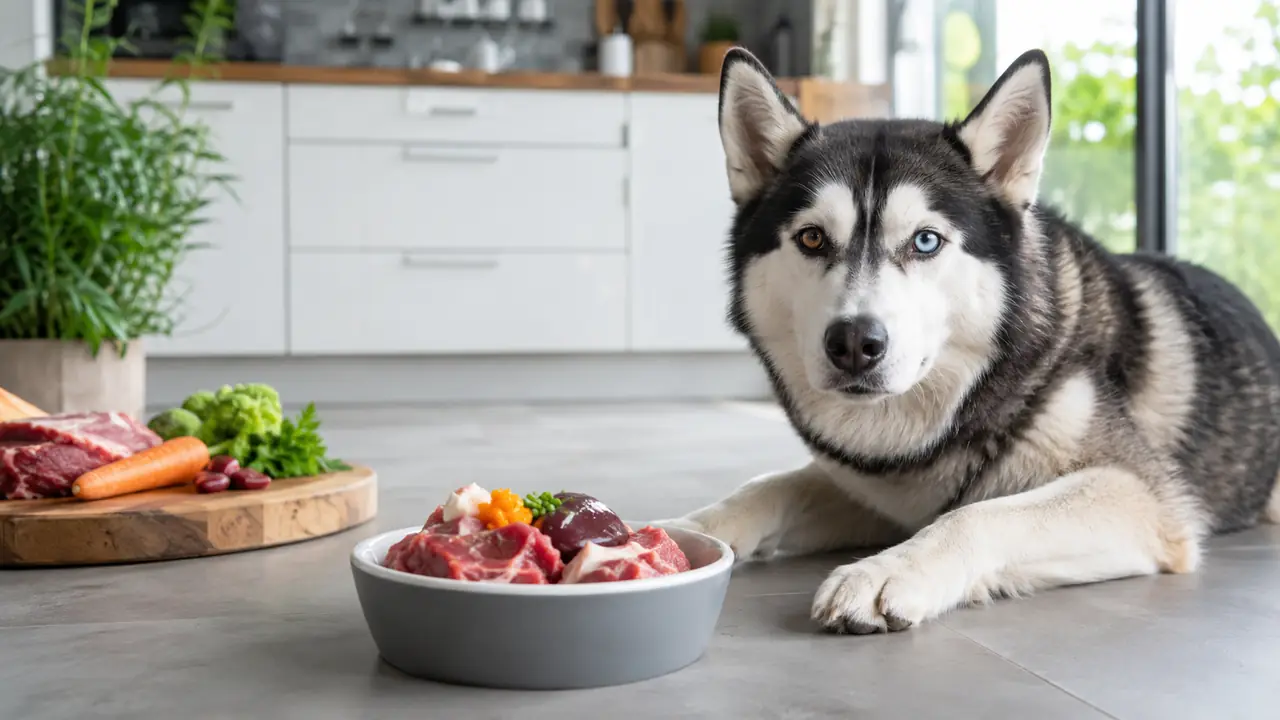
Raw Dog Food: Benefits, Risks and Safe Feeding Questions
Raw dog food is one of the most polarized topics in pet nutrition. Supporters often describe shinier coats, smaller stools, improved appetite, cleaner teeth, or a more natural way of feeding. The problem is that an owner has to separate personal experience from evidence and then weigh those possible benefits against two very practical risks: disease-causing microorganisms in uncooked animal products and nutritional imbalance when a recipe is not professionally formulated.
The CDC does not recommend feeding raw pet food or raw treats because uncooked animal proteins can carry germs such as Salmonella and Listeria that can affect pets and people. That does not mean every dog eating raw food becomes sick, but it does mean raw feeding changes the household’s exposure risk and deserves the same careful food-safety thinking you would apply to raw meat prepared for people.
What Counts as Raw Dog Food
Raw diets may be homemade, commercially frozen, freeze-dried, dehydrated, or sold as raw toppers and treats. Common ingredients include uncooked muscle meat, organs, eggs, bones, and sometimes unpasteurized dairy. Processing methods such as high-pressure processing may reduce microbial load, but a product marketed as raw should still be handled as a raw animal product.
The label describes a method of preparation, not a uniform nutritional formula. One commercial product might be a frozen complete meal; another could be an uncooked meat topper that supplies only a fraction of daily needs. A bag of freeze-dried organs sold as treats should not become the entire diet simply because it resembles a premium raw meal. Identify the role of every product before deciding how much to feed.
Raw feeding also includes practices that differ in their hazards: handling fresh minced poultry is not identical to opening a sealed, processed food; feeding intact bones introduces physical risks that a boneless mixture may not. Products described as gently dried, air dried, freeze dried, or high-pressure processed may still include uncooked animal ingredients. Ask what validated pathogen-reduction steps were actually used rather than assuming dryness equals sterility.
A raw recipe can contain many animal components yet be missing essential nutrients or provide them in excess. Muscles, organs, bones, vegetables, and supplements serve different nutritional roles, and approximate percentages borrowed from a social post cannot verify adequacy. For a main diet, ask for a life-stage statement supported by appropriate formulation or feeding evidence, just as you would for cooked pet food.
Owners comparing formats should write down the complete product name and the manufacturer's preparation and storage instructions. Consider whether the food is a complete meal, a complementary product, or an occasional reward; those are different uses. CDC's raw-pet-food guidance explains why frozen, freeze-dried, and dehydrated animal proteins still require specific caution. CDC: raw pet food.
The Benefits Owners Most Commonly Report
Many raw-feeding owners report strong appetite, smaller stools, coat changes, or easier ingredient control. Some of these outcomes may come from higher digestibility, higher fat, different fiber, fewer ingredients, or simply moving from a poorly tolerated diet to one that suits the dog better. A reported improvement does not by itself prove that uncooked food was the necessary cause.
Owners sometimes report that a raw-fed dog eats more eagerly or passes smaller stools. Those observations are real experiences worth discussing, but they do not automatically demonstrate a superior diet. Changing from one food to another alters multiple variables: fat content, fiber, water, total calories, ingredient sources, and palatability. A change in stool volume may reflect digestibility or fiber amount without proving improved overall health.
A shinier coat or improved skin can also have multiple explanations. A previously poor diet may have been inadequate for that dog, or the new plan may simply provide an appropriate calorie level and fatty acid profile. Neither result shows that uncooked meat was the active factor. Where an owner describes a dramatic improvement, ask what the previous ration contained and whether the dog's medical conditions were evaluated.
Dental-cleaning claims are particularly easy to overstate. Some mechanical chewing action may remove surface material, but hard bones can damage teeth, and chewing does not replace a veterinary dental examination or daily oral care. Better breath alone cannot rule out periodontal disease. If dental health is the goal, discuss brushing and evidence-supported dental products instead of assuming that raw bones are harmless treatment.
When weighing a claimed benefit, ask whether it could also be obtained through a complete cooked food with similar energy, protein, or texture. Compare measurable outcomes, not before-and-after anecdotes, and include any safety trade-offs. CDC notes that a raw preparation is not necessarily healthier and that both raw and cooked diets can vary greatly in nutritional quality. CDC: benefits and risks.
The Main Risk: Foodborne Bacteria
Raw animal protein can contain pathogenic bacteria. A dog may become ill, may carry organisms without obvious illness, or may shed organisms into the home environment. Food bowls, hands, floors, feces, bedding, and the dog’s mouth can become part of the exposure pathway, which matters especially when vulnerable people live in the household.
Uncooked meat and animal products can carry Salmonella, Listeria, and other organisms that cause illness. Contamination cannot be reliably detected by odor, appearance, or a dog's enthusiasm for the food. A purchased product can be contaminated even if it has never been opened in the home. Raw feeding introduces a route of exposure into kitchens, bowls, refrigerators, hands, and floors used by people.
A dog may be infected without displaying the symptoms an owner expects, and contaminated food or feces can still be a hygiene concern. Conversely, vomiting, diarrhea, fever, lethargy, or loss of appetite in a raw-fed dog should not automatically be blamed on bacteria; examination may be needed. Treat significant illness as a clinical problem, not a home experiment involving antibiotics or a dietary cure.
These exposures are not fully removed by freezing. Low temperature keeps food cold but is not a validated kill step for every relevant pathogen. Consumer confidence is better supported by documented controls from the manufacturer and by choosing cooked or otherwise effectively pathogen-reduced alternatives. Hand washing and careful storage reduce risk but cannot make raw meat equivalent to a sterile food. FDA has also identified H5N1 as a hazard that covered manufacturers using uncooked poultry or cattle ingredients must address in safety plans; this does not mean every raw product is contaminated or that canine infection is established in every exposure. FDA: H5N1 safety plans.
Public-health agencies frame this as a risk-benefit decision, not a moral judgment about owners. CDC does not recommend raw food or raw treats for dogs and cats because pet and human illness can result; FDA likewise warns of significant microbial risks. The simplest way to remove the hazard specific to uncooked animal protein is to avoid serving it uncooked. CDC: contamination risk.
Who Has the Most to Lose From a Raw-Food Exposure
Households with very young children, older adults, pregnant people, or people with weakened immune systems deserve particular caution. Puppies, geriatric dogs, and immunocompromised pets may also be less able to handle an infection. In these homes, the downside of a foodborne organism is higher even if the absolute chance of exposure cannot be predicted for one individual meal.
A family's infection risk is not determined solely by whether the dog appears healthy. Young children may touch food bowls or floors and then their mouths; older adults and immunocompromised people may suffer more severe complications from foodborne infections. Pregnant household members also deserve particular care. Visitors, caregivers, and other animals can encounter the same contaminated surfaces without knowing raw food was handled there.
The dog can also be vulnerable. Puppies, animals recovering from illness, and dogs receiving immunosuppressive treatments may be less able to tolerate an infection. A pet undergoing treatment for serious disease should not have its diet changed on the basis of social-media testimonials. Discuss household members' health considerations as well as the pet's medical history before making a decision.
Think beyond the feeding mat. A toddler picking up a dropped chew, a shared sponge used on raw-food bowls, or a thawing package leaking onto ready-to-eat human food creates avoidable exposure. Separate equipment and containment help manage contamination, but no household system is perfect. A household that cannot reliably maintain controls has a compelling reason to select a cooked complete diet instead.
If someone in the home develops significant gastrointestinal illness and a raw diet is being fed, disclose that exposure to a healthcare professional as appropriate; do not assume the pet food was definitely responsible. CDC specifically highlights children under five, older adults, pregnant people, and immunocompromised individuals when discussing raw-pet-food risk. CDC: susceptible households.
Nutritional Balance Is a Separate Problem From Bacteria
A raw diet can be microbiologically clean and still be nutritionally incomplete. Homemade recipes built from meat, organs, vegetables, and bones can miss or oversupply calcium, phosphorus, iodine, trace minerals, fatty acids, or vitamins. Puppies are especially vulnerable to growth problems when mineral and energy balance is wrong.
Food safety and nutritional adequacy are two independent checks. A raw mixture can test negative for certain pathogens yet still lack vitamins or minerals; a nutritionally balanced raw diet can still expose a household to microbes. Neither 'human-grade ingredients' nor a photograph of fresh cuts of meat answers the long-term adequacy question. A main diet should satisfy the dog's needs across calories, amino acids, fatty acids, and micronutrients.
Homemade ratios such as 'mostly muscle meat plus a little liver and bone' sound precise but rarely account for the variability of actual ingredients. Different organs contain very different nutrient concentrations, and the mineral content of bones is difficult to estimate by eye. Calcium-to-phosphorus balance is especially important during growth, when errors may have lasting consequences. Adding random multivitamins can create excesses rather than fixing the formula.
Commercial raw products should be scrutinized too. Check whether the label says complete and balanced for adult maintenance or growth, or whether it is intended only for intermittent or supplemental feeding. Request information about who formulated it, what nutritional profiles or feeding trials substantiate its claim, and whether recipes are retested after ingredient or processing changes. A fancy subscription service is not a substitute for those answers.
For a dog that needs a home-prepared ration, a board-certified veterinary nutrition specialist can formulate a suitable cooked option tailored to the pet, with precisely specified supplements. Following that recipe exactly matters; substitutions can undermine balance. FDA explains the meaning and limits of complete-and-balanced pet-food statements for the primary diet. FDA: nutrition adequacy.
Raw Bones: Dental Claims and Physical Risks
Chewing may mechanically reduce some surface debris, but raw bones can fracture teeth, become lodged, cause choking, irritate or perforate the gastrointestinal tract, or create constipation and obstruction. Bone size, hardness, dog chewing style, and supervision change risk, but there is no way to make a hard bone completely risk-free.
Bones carry several distinct hazards. A hard bone can fracture a tooth even when it does not splinter, while an awkwardly shaped piece may become lodged in the mouth, throat, or digestive tract. Swallowed material can also contribute to constipation or intestinal injury. The fact that one dog chewed bones without incident does not make the next episode predictable or safe.
Raw bones can add the same microbial exposure as other uncooked animal products. Feeding them on a washable surface does not eliminate contamination on hands, fur, or household objects. Children should not handle leftover animal bones, and dogs may guard high-value chews, creating an additional behavioral safety problem. Supervision reduces some risks but cannot guarantee that a tooth or gut injury will not occur.
If your aim is plaque control, ask a veterinarian to evaluate oral health and teach brushing with dog-safe toothpaste. Appropriately selected dental diets and vetted oral-health products may be useful, depending on the individual dog. Bad breath, reluctance to chew, a broken tooth, or bleeding gums are reasons for examination—not proof that the dog needs harder material to gnaw.
If a dog is choking, struggling to breathe, repeatedly retching, or showing severe abdominal pain after chewing a bone, seek urgent veterinary care rather than trying unproven home removal techniques. For routine oral care, choose a safer prevention plan guided by your veterinary team instead of relying on raw bones as treatment. Cornell: dental and bone risks.
Commercial Raw vs. Homemade Raw
A commercial product that carries a complete-and-balanced nutritional adequacy statement is easier to evaluate nutritionally than an improvised homemade recipe. That does not remove the microbial issue, but it separates two questions: whether the diet meets nutrient requirements and whether the raw format creates an acceptable food-safety risk for your household.
Commercial raw and homemade raw are not equivalent categories. A reputable commercial producer may employ qualified nutrition specialists, written formulations, environmental monitoring, and batch records. Those systems can reduce some problems, but the product remains raw unless validated processing controls adequately address relevant hazards. Home preparation adds the burden of sourcing, storage, cross-contamination prevention, and nutrient calculations to the owner.
Ask a company to explain the difference between testing raw ingredients and testing finished product lots. A negative sample from a batch cannot prove that every portion is free of microbes, while validated control measures are generally more meaningful than a vague 'lab tested' slogan. Traceability and recall procedures matter when a contamination issue is found after food has been distributed.
Home recipe advice is often based on animal-part percentages, anecdotes, or computer spreadsheets not tailored to a dog's life stage. A recipe that seems to work for a healthy adult may be unsuitable during pregnancy or growth. If a home-prepared diet is needed, use a veterinary nutrition specialist's individually formulated recipe; for food-safety reasons, discuss whether it can be cooked.
Before buying a subscription, compare the complete-and-balanced statement, caloric density, qualifications of those responsible for formulation, instructions for thawing, and how recalls are communicated. CDC suggests asking raw-food companies about final-product testing, pathogen-control methods, facility sanitation, and veterinary nutrition expertise. CDC: raw-food manufacturers.
Freeze-Dried Raw Is Still Raw
Freeze-drying removes moisture; it is not the same as cooking. Some organisms can survive freeze-drying, so raw freeze-dried foods and treats should still be handled according to the manufacturer’s safety instructions, with hand washing and bowl hygiene rather than being treated as sterile shelf-stable kibble.
Removing water can change shelf life and convenience, but it does not necessarily destroy pathogens. Freeze-drying lowers moisture through sublimation; it is not cooking. Some bacteria can survive and remain a concern when the food is rehydrated or handled. Likewise, a small freeze-dried raw treat may create contamination even when it is offered far from the dog's main feeding area.
Read whether a food has actually undergone a validated pathogen-reduction process and whether it is intended as a full diet. Marketing phrases such as 'gently preserved' or 'minimally processed' do not supply pathogen test results. A product labeled freeze-dried might be cooked before drying, but another might remain truly raw; verify preparation rather than judging by package texture.
Convenience often means these products travel into places where ordinary raw meat would never go: pockets, treat pouches, carpet, the car, and children's hands. Keep food packages sealed, follow storage instructions, clean surfaces used for portioning, and wash hands after handling. Do not use raw treats during activities where hygienic handling is impractical, particularly around vulnerable people.
For an owner who wants lightweight rewards, a cooked, shelf-stable treat may serve the same training purpose with less raw-animal microbial exposure. Treats still need to fit the dog's calorie allowance. CDC's pet-food safety information specifically includes freeze-dried and dehydrated uncooked animal products in its raw-food discussion. CDC: freeze-dried raw.
If You Choose Raw, Build a Real Safety Routine
Use dedicated utensils and storage, thaw food safely, wash hands thoroughly, clean bowls and preparation surfaces after every meal, prevent children from handling raw food, dispose of leftovers promptly, and clean feces from the environment. Do not let a raw-fed dog lick the faces of vulnerable household members immediately after eating.
Public-health guidance recommends avoiding raw diets; hygiene steps are risk reduction for people who nonetheless choose them, not proof that raw feeding is safe. Keep uncooked animal products separated from human food, use sealed containers, and thaw frozen portions in the refrigerator rather than on a countertop. Follow manufacturer storage directions and discard food that has been left unrefrigerated or mishandled.
Use utensils and a preparation area designated for pet food where possible. Clean and disinfect surfaces, equipment, and bowls after use, and wash hands thoroughly with soap and water. Avoid cross-contamination through towels, sponges, mobile phones, and refrigerator shelves. Prevent the dog from dragging raw pieces through living spaces or taking them to bedding shared with people.
Think about what happens after the dog eats. Clean up feces promptly, wash hands after handling waste, and discourage face licking, particularly when people are more vulnerable to infection. Do not allow children to prepare or distribute raw food. Keep packaging and lot information until the food is finished so that recalls or suspected contamination can be investigated.
If someone cannot reliably follow these steps every day, a cooked, complete-and-balanced alternative is a practical safer choice. Even meticulous cleaning does not eliminate all risk because animals can contaminate environments after eating. CDC lists cold storage, hand washing, surface cleaning, and safe disposal as precautions for households feeding raw despite its recommendation against the practice. CDC: handling precautions.
How to Evaluate a Raw-Food Company
Ask who formulates the diet and what their credentials are, whether the product is complete and balanced for your dog’s life stage, what pathogen-control steps are used, how finished batches are tested, whether the company operates its own plant, and how it handles positive pathogen tests and recalls. Specific answers matter more than claims such as human-grade or ancestral.
Ask first whether a product is intended as a complete daily ration or merely a treat, topper, or supplemental feed. If complete, which life stage does its adequacy statement cover? A puppy formula needs a different evaluation from an adult maintenance diet. Look for a nutrition professional whose qualifications and role in the formulation process can be described plainly, not anonymous claims that a recipe was 'vet inspired.'
A company should also be able to explain its food-safety system. Ask about ingredient acceptance standards, preventive controls, environmental sanitation, pathogen testing, traceability, lot records, and recall response. Do not equate a single negative pathogen test with absence of risk. Confirm what 'high pressure processed' means for that particular product and what evidence supports the chosen processing parameters.
Study the label and handling instructions: refrigeration or freezing temperatures, thawing method, time limits after opening, package seal integrity, and instructions for leftovers. A diet that requires rigorous daily handling may not suit travel, shared childcare, a busy work schedule, or family members with heightened infection risk. Practical sustainability is part of food safety, not a minor convenience issue.
If responses are incomplete or evasive, choose a food whose adequacy, quality controls, and processing are clearer. You can still seek a specific ingredient profile or texture in a properly cooked product. The CDC provides a concrete question list for raw-food companies, including finished-product pathogen testing and whether veterinary nutrition specialists are involved. CDC: company quality questions.
Safer Ways to Get Some of the Same Practical Benefits
If the attraction is ingredient simplicity, palatability, or fresh texture, a complete and balanced cooked fresh diet may meet that goal without the same raw-meat microbial exposure. If the goal is dental health, brushing and veterinary dental care are more predictable tools than relying on bones. If the goal is food sensitivity, a veterinary elimination diet is more diagnostic than a self-designed raw recipe.
Start by identifying what you hoped raw food would accomplish. If the dog refuses dry kibble, a suitable wet or gently cooked complete diet may solve a texture preference. If the concern is a specific ingredient, a well-chosen cooked formula can address it without introducing uncooked-meat exposure. If stools are abnormal, veterinary evaluation is more reliable than assuming that 'raw' will repair the gut.
For owners attracted to freshness, compare products on nutritional adequacy and actual quality control, not on whether they look like human meals. Commercial cooked fresh foods vary in formulation, just as raw foods do. A carefully designed home-cooked diet is possible when supervised by a veterinary nutrition specialist, but simply frying meat and adding rice does not make a balanced long-term recipe.
For dental care, tooth brushing and veterinary-recommended dental products address the stated goal more directly than hard animal bones. For exercise and enrichment, an appropriate food puzzle or safe chew may deliver the satisfaction of working for food without uncooked animal ingredients. Try to solve the specific problem while avoiding an unrelated nutritional or microbial trade-off.
When considering alternatives, maintain the dog's present medical plan until a clinician advises otherwise, and transition diets appropriately for the situation. You can ask the veterinarian to compare two specific labels and their feeding statements. FDA's handling guidance identifies avoiding raw animal protein as the most effective way to prevent the foodborne-bacterial risk unique to raw feeding. FDA: safe alternatives.
Talk to Your Veterinarian Before Feeding Raw to a Puppy or Medically Fragile Dog
Growth, pregnancy, kidney disease, pancreatitis risk, immune suppression, gastrointestinal disease, and some medications can change nutritional needs and infection risk. These are situations where professional formulation and veterinary oversight matter more than general internet feeding rules.
Puppies are growing rapidly, which makes persistent calorie and mineral imbalances more consequential. A homemade raw recipe that seems varied may not meet the growth requirements for all nutrients, and oversized bones or contaminated products add avoidable hazards. Pregnant or nursing animals also have specialized nutritional needs. These are not situations for improvising from a general adult dog's ration.
Immune suppression, serious gastrointestinal disease, ongoing chemotherapy, frailty, or other medical conditions can increase the significance of foodborne exposure. Some dogs may also have swallowing or dental limitations that make bone-containing diets unsafe. Share medication lists and the household's vulnerability factors with the treating veterinarian rather than focusing only on the pet's willingness to eat raw food.
A dog with ongoing vomiting, diarrhea, unintentional weight loss, difficulty eating, or abnormal growth needs a clinical assessment. Do not start an unbalanced restricted diet or prescribe home supplements to compensate. A tailored therapeutic diet may be recommended after diagnosis, and a veterinarian can determine whether nutritional referral or additional testing is appropriate.
Discuss cooked, complete alternatives before exposing a vulnerable dog or household to raw meat. If diet changes are recommended, get explicit product and life-stage instructions and arrange follow-up for weight, muscle, and medical status. CDC calls out puppies and pets with compromised health as higher-risk groups when considering raw-food illness. CDC: vulnerable pets.
Common Mistakes to Avoid
- Assuming “raw” automatically means complete and balanced
- Using raw bones as a guaranteed dental-cleaning tool
- Handling raw pet food less carefully than raw meat for people
- Feeding a homemade puppy recipe without professional formulation
- Believing freezing makes raw food sterile
- Ignoring vulnerable people in the household
- Changing to raw to diagnose an allergy without a structured veterinary plan
A raw ingredient list does not show whether a diet meets the dog's complete nutritional requirements or whether pathogens have been controlled. Uncooked meat, organs, and raw treats can carry Salmonella or Listeria; freezing and freeze-drying do not reliably remove every germ. Handling bowls and preparation surfaces as though they were harmless is a risk to people as well as pets, particularly in households with young children, older adults, pregnant people, or immunocompromised individuals. Raw bones can also injure teeth or cause obstruction. Do not infer that a visibly glossy coat proves safety or superiority: discuss safer complete-and-balanced alternatives and any proposed homemade recipe with the veterinary team.
A Practical Decision Checklist
- What exact benefit are you trying to achieve?
- Is the diet complete and balanced for this life stage?
- Who formulated it and what are their credentials?
- What pathogen-control and batch-testing methods are used?
- Is anyone in the household at increased infection risk?
- Can you maintain strict storage and sanitation every day?
- Have you discussed the choice with your veterinarian?
Before considering a raw diet, list the claimed benefit and ask whether a cooked or commercial complete-and-balanced food could meet the same need with fewer microbiological risks. Verify the manufacturer's nutritional adequacy statement, formulation qualifications, pathogen controls, and recall history rather than trusting the word 'natural.' Consider every person and pet who could contact the food, storage container, or dog's saliva. Discuss the plan with a veterinarian, especially for puppies or animals with health conditions. If raw feeding continues despite the risks, strict food handling and storage reduce exposure but cannot make the diet pathogen-free.
Frequently Asked Questions
Does raw food always contain dangerous bacteria? Not every serving will contain a pathogen, but raw animal products can carry disease-causing organisms and the risk cannot be identified by smell or appearance. That is why public-health guidance treats raw pet food as a food-safety concern.
Does freezing kill Salmonella? Freezing can reduce some organisms but does not reliably sterilize raw meat. Frozen raw food should still be handled as raw food.
Are freeze-dried raw treats safer? They may be convenient and lower in moisture, but freeze-dried raw products are not automatically sterile. Follow label handling directions and wash hands after contact.
Can raw diets be nutritionally complete? Yes, a professionally formulated commercial or veterinary-designed raw diet can meet nutrient standards. The raw format and nutritional completeness are separate questions.
Are raw bones safe if they never splinter? Splintering is only one risk. Hard bones can fracture teeth, and any swallowed material can cause choking, constipation, or gastrointestinal injury.
What if my dog clearly does better on raw food? Tell your veterinarian exactly what improved and what the dog is eating. It may be possible to preserve the useful features—ingredient profile, calorie density, palatability—while reducing microbial or formulation risk.
Is a cooked homemade diet safer? Cooking reduces foodborne-pathogen risk, but a homemade cooked diet can still be nutritionally unbalanced unless formulated properly. Veterinary nutrition input remains important for long-term homemade feeding.
The Bottom Line
Raw feeding is not a simple choice between “natural” and “processed.” It is a trade-off involving microbial exposure, nutritional formulation, household risk, cost, convenience, and the individual dog. If you choose raw, do it with a complete diet, strict hygiene, and veterinary input rather than relying on internet recipes or the assumption that uncooked automatically means healthier.