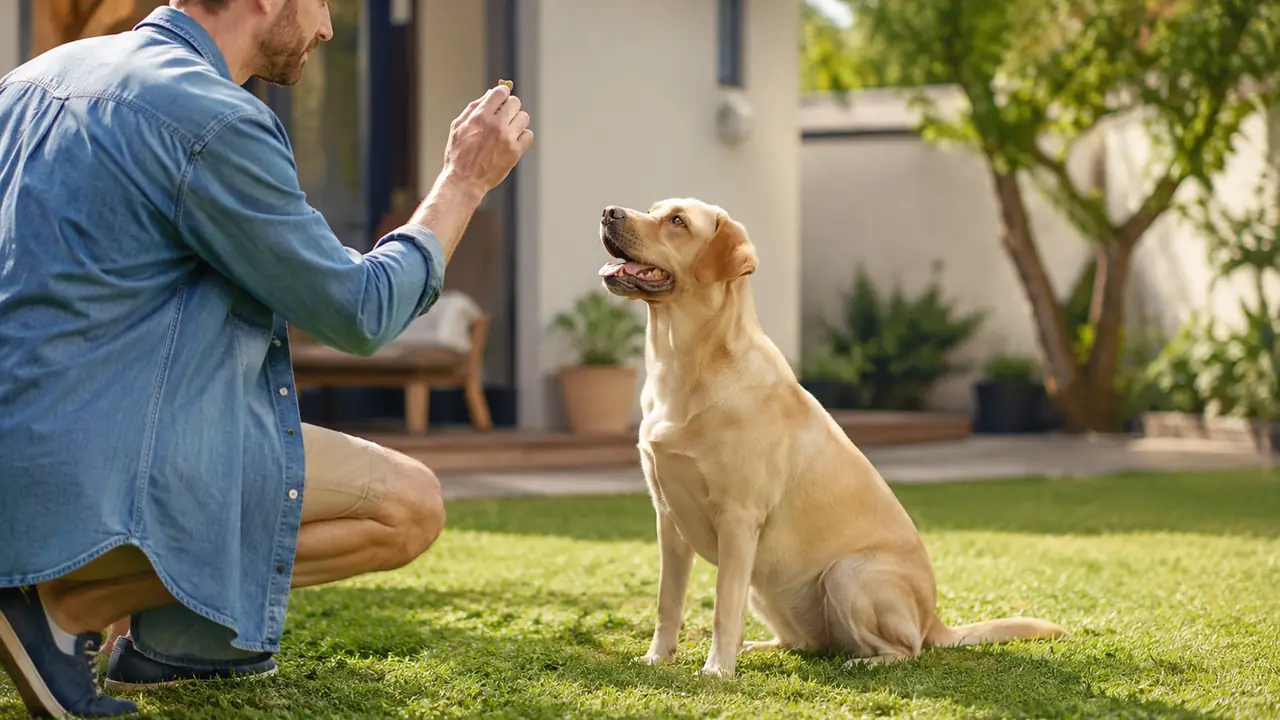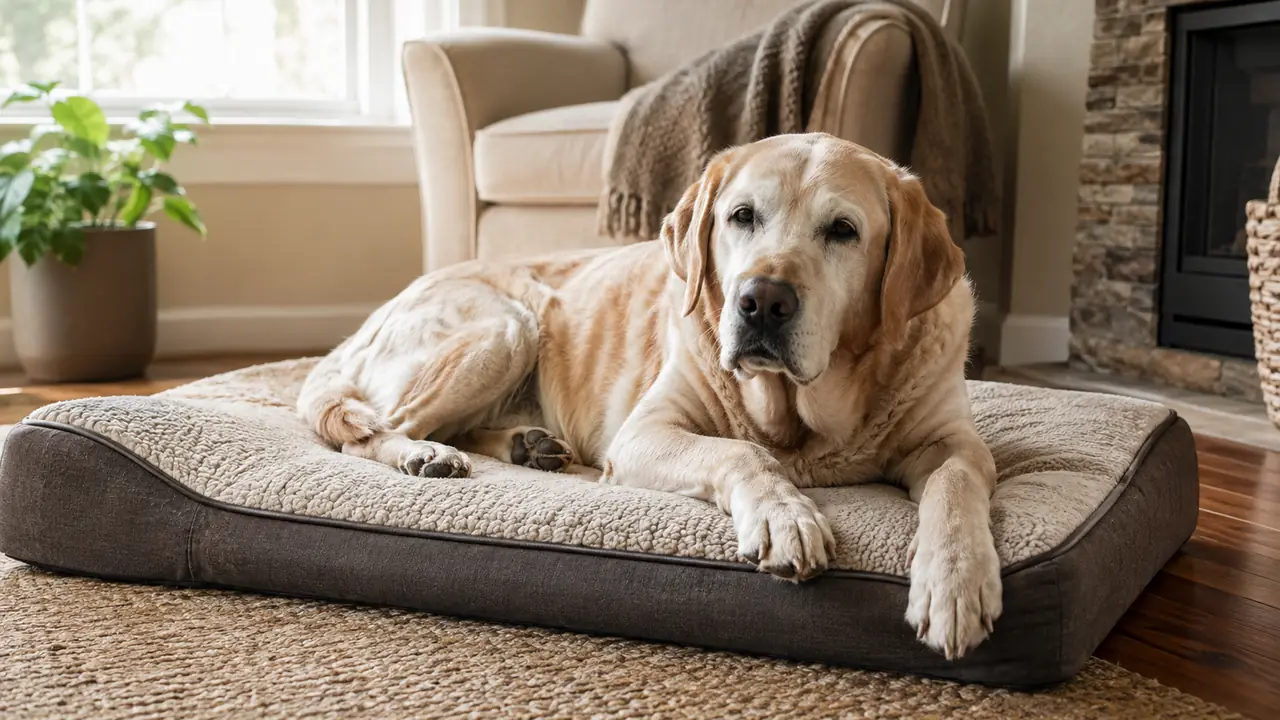
Training Older Dogs: How to Teach New Skills at Any Age
Older dogs can learn. What changes with age is not the basic ability to form new associations, but the body and sensory system the dog brings to the lesson. Hearing may be reduced, vision may be cloudy, joints may hurt, endurance may be lower, sleep needs may rise, and a newly adopted senior may carry years of habits that once made sense in another home.
Good senior training therefore becomes more observant. Sessions are shorter, surfaces are safer, cues may become visual or tactile, food pieces are smaller, repetition is gentle, and the handler stops interpreting slow movement as stubbornness. Training can improve confidence and daily function even when the goal is simply learning where to rest in a new house.
Rule Out Pain Before Calling a Dog Stubborn
Arthritis, dental pain, ear disease, vision loss, neurologic problems, or gastrointestinal discomfort can change willingness to sit, lie down, be touched, or walk. New training difficulty deserves medical context.
A dog that used to jump into the car but now pauses may be reluctant because of discomfort, not because it has forgotten the cue. Arthritis, dental disease, painful ears, reduced vision and hearing, or a changing neurological condition can alter how a familiar task feels. Before increasing demands, note exactly what changed and when. Is the reluctance worse after rest, on stairs, or on slippery flooring? Does the dog still respond to the same cue when already standing? Specific observations help a veterinarian decide what needs assessment. Never test a painful dog repeatedly just to demonstrate the problem.
Training can continue alongside medical care, but the goal may need adjustment. A dog who once performed a quick sit before a meal might now be happier waiting in a stand. A hand target can replace a jump to greet someone; a ramp can replace climbing a high car step. Rewarding those alternatives does not undo years of obedience. It shows the dog that cooperating is still possible. Choose surfaces with good traction and avoid pulling an older dog into a position it seems unwilling to assume.
Sudden behavior changes, unexplained weight loss, collapse, confusion or pain require prompt veterinary advice. Chronic changes deserve attention too, particularly when they affect sleep and willingness to move. Once comfort is addressed, many older dogs remain curious and enthusiastic learners. A slower response should prompt a check of the environment and senses before an assumption about motivation.
Use Short, Successful Sessions
A senior may concentrate well for a few minutes and then fatigue. Stop while performance is still comfortable. Several tiny sessions through the day provide mental work without exhausting the dog.
An older dog may be eager to engage but tire sooner than it did as a youngster. Instead of a demanding twenty-minute drill, try one or two minutes of a familiar skill followed by a pause. A training session can be as small as three comfortable hand targets in the hallway. The important test is whether the dog stays interested and moves easily. Stop before movements become sloppy or the dog begins to lie down, pant, hesitate or walk away. A rested dog often learns more from a few positive repetitions than from a long effort it endures.
Make breaks part of the routine, not a punishment for poor performance. Offer water, a comfortable place to rest and quiet praise. If your dog has just returned from a long walk or physical therapy, skip difficult new behaviors and practise something gentle another time. The same training goal may require a different schedule on hot days, after a poor night's sleep or during a flare of joint pain. Be flexible without abandoning consistency: brief lessons at roughly predictable times can help the dog know what is expected.
Keep a small notebook if you are working on several skills. Record how many easy successes happened before fatigue appeared and whether a particular surface or time of day made a difference. When you notice a gradual decline or new discomfort, share those notes with your veterinary team. Training progress includes maintaining willingness and comfort, not just adding commands.
Change the Cue When Hearing Changes
Pair verbal cues with hand signals before hearing is severely reduced. Use larger visible gestures, lights or floor vibration cautiously when appropriate, and reward orientation so the dog learns how to find information visually.
Hearing changes can look like disobedience because the dog may respond only when facing you or when you are close. Try a simple hand signal paired with an already known cue while the dog can still hear it. Give the gesture just before or with the spoken word, reward the familiar response and gradually make the gesture meaningful on its own. Use larger, distinct movements that are easy to see from your usual working distance. Avoid approaching from behind and touching a dog unexpectedly; startling a senior can damage trust.
A consistent visual release signal matters as much as a command. If you teach a hand signal for “wait,” also teach a recognizable signal for “you may go.” Practise in good light and from several angles, but remember that older dogs may have concurrent vision changes. If visual cues become difficult, gentle floor vibration, scent landmarks or a veterinarian-recommended sensory approach may help, provided it does not frighten the dog. Never use abrupt shocks or startling vibrations as training consequences.
Check whether the dog seems to hear household sounds, notices family members entering and responds differently on one side. Mention asymmetry, ear discharge, head shaking or sudden loss of response to a veterinarian; not every hearing problem is normal aging. The goal is not to demand an instant response to a word the dog may no longer perceive. It is to preserve communication using signals that remain clear and kind.
Adapt for Vision Loss
Keep furniture layout predictable, use scent and texture landmarks, approach without startling, and train with touch or verbal cues the dog can still perceive. A blind dog can learn new routes and behaviors when the environment is consistent.
Dogs with reduced sight often navigate familiar rooms remarkably well, but that apparent confidence may depend on a stable furniture layout. Avoid moving chairs and bowls without need, keep pathways clear and prevent access to stairs or open balconies until the dog can move safely. Teach verbal cues and predictable sounds before approaching or touching. A scent cue placed near a safe resting area may help orientation, but avoid strong fragrances that irritate the nose or compete with ordinary household smells.
Begin training in a small, well-known area where the dog can follow a hand target if it still sees nearby movement or a sound cue if hearing is intact. Mark a small successful step and reward at a consistent location so the dog does not have to search. For a mat exercise, choose a texture that feels different underfoot. For recall inside the home, use a calm, recognizable voice from short range and reward when the dog reaches you. Never turn practice into a game of surprise obstacles or startle tests.
Watch the dog's posture. Hesitation at doorways, bumping into objects or refusal to enter dim rooms can be signs of visual difficulty or other health changes. Seek veterinary assessment rather than assuming the dog needs courage training. In public, a harness, secure leash and predictable routes provide essential safety. Training should give an older dog information and control, not demand that it cope with an increasingly unpredictable environment.
Choose Comfortable Positions
Repeated sits can be difficult for dogs with hip, knee, or back pain. Use stand, chin rest, hand target, mat, or another behavior that is comfortable. Obedience does not require forcing painful postures.
A cue that looks simple can require uncomfortable joint movement. Repeated sits put load on hind limbs; a quick down may hurt elbows or shoulders; holding a prolonged stand can also become tiring. Ask your veterinarian which movements are appropriate if your dog has known orthopedic or spinal disease. Then choose functional alternatives. A hand target can ask the dog to come closer without sitting. A brief stand may serve as a polite pause while you prepare the leash. A chin rest on a padded surface can help with ear checks without twisting the neck.
Look closely at the dog's way of moving. Does it lower the rear slowly, shift weight to one side, place one leg awkwardly or hesitate before standing again? Those patterns are worth recording, not correcting with leash pressure. Provide a non-slip mat, give the dog time to arrange its body and reinforce the comfortable version of the movement. Do not lure the nose so far overhead that the dog strains to balance. The purpose of a cue is safe cooperation with you, not resemblance to a textbook photograph.
A successful older-dog training plan may use fewer positions and more context cues: go to the bed, wait at a doorway, accept a harness, or step onto a stable low platform if cleared by a veterinarian. If a previously comfortable movement suddenly becomes difficult, stop the exercise and seek advice. Pain does not become less meaningful because the animal still tries to please you.
Reinforce Calm Independence in Newly Adopted Seniors
An older rescue may shadow constantly because the environment is unfamiliar. Build predictable routines and brief safe separation gradually rather than assuming clinginess is permanent or punishing it.
An older dog entering a new home has to learn unfamiliar sounds, people, sleeping places and departure routines. Following someone from room to room may be a normal early coping strategy rather than evidence of a permanent separation disorder. Begin with predictable meals, toilet breaks, restful places and gentle invitations to explore. Reward the dog for choosing its bed while you move a few steps away. Return before it shows distress. This gives the dog repeated evidence that brief distance does not mean abandonment.
For a dog who struggles when doors close, use tiny rehearsals while remaining nearby. Touch the door handle, return and reward calm behavior; then try stepping briefly out of sight. The steps should remain easy enough that the dog does not panic. Do not leave a distressed dog to cry it out in hopes it will learn independence. Significant vocalization, escape attempts, drooling or destruction linked to absences can indicate separation-related distress and should be discussed with a veterinarian and qualified reward-based behavior professional.
Avoid crowding a newly adopted senior with visitors who want to meet it immediately. Make space for rest, preserve quiet feeding areas and let the dog decide when to approach. Confidence often grows as routines become predictable. Measure progress in relaxed recovery after normal household events, not in how many hours the dog can be left alone within the first week.
Old Habits Can Be Replaced
A ten-year-old dog that has pulled on leash for years can still learn that a loose leash makes the walk continue. The old behavior has a long reinforcement history, so management and consistency matter more than age.
A senior dog with a decade of leash pulling has had a decade of rehearsal, but that does not make the behavior unchangeable. Begin with a realistic opportunity to do something different. In a quiet area, reward one or two steps beside you with a loose leash, then release the dog to sniff. The dog learns that slack leash, not pressure, moves the walk forward. Repeat at a distance where the task is easy. Pulling in busy places may persist while the new habit develops; use sensible equipment and avoid training next to traffic just to “proof” the skill.
The same principle works for door rushing, begging and attention barking. Identify what the behavior has been earning, then make a calmer replacement rewarding. If jumping has always produced greetings, teach a hand target or a comfortable stand while visitors are at a safe distance. If barking has reliably brought someone to the kitchen, reinforce settling on a mat before dinner preparation. Keep household rules consistent; occasional accidental reinforcement can make an old habit much slower to change.
Expect gradual improvement and occasional setbacks. A senior who does a task reliably in the kitchen may need retraining in the garden, especially if hearing or vision is reduced. Build the context deliberately and keep sessions pleasant. Learning history matters, but so do physical comfort and environmental difficulty. Success is a dog who has more safe choices today, not a dog that has become instantly perfect at an old cue.
Food Rewards Need Calorie Awareness
Senior dogs may have lower energy needs or medical diets. Use tiny pieces, reserve part of meals, and ensure rewards fit kidney, gastrointestinal, allergy, or weight-management plans.
Treats remain useful for older dogs, but the daily food budget may need more attention as exercise and energy needs change. Use tiny pieces of a familiar permitted food, and reserve a measured portion of meals for easy training if the dog enjoys it. A senior who needs several repetitions of a new hand signal can earn many rewards without consuming multiple large biscuits. Check treat calories and account for chews, table scraps and flavored supplements. A veterinarian can help set a suitable nutrition plan based on body condition, muscle condition, appetite and medical history rather than age alone.
Some senior dogs are managing kidney disease, diabetes, pancreatitis or a prescription diet. For them, a random new training treat is not necessarily harmless. Ask the veterinary team whether pieces of the regular therapeutic food or a matching approved treat can be used. If the dog seems less interested in food, consider dental pain, nausea or medication effects instead of escalating to richer snacks. Reward options can also include gentle praise, a short sniff break or a comfortable game, depending on what the dog genuinely enjoys.
Do not restrict meals excessively in an effort to create motivation. Older dogs may already have trouble maintaining muscle, and weight loss without a plan can be concerning. When appetite, drinking, body condition or stool change significantly, seek medical advice. Training should support the dog's overall care plan, not quietly work against it.
Mental Enrichment Supports Quality of Life
Scent games, simple discrimination, target training, toy searches, and new walking routes can provide meaningful cognitive engagement without high physical impact.
Learning need not involve athletic performance. A senior may enjoy finding a few pieces of familiar kibble in a snuffle mat, identifying a named toy, following an easy scent trail or touching a target with the nose. These activities offer choice and mental engagement while allowing you to control physical demands. Start with the object plainly visible, then make the search only slightly harder. Celebrate curiosity and stop if the dog becomes frustrated. A dog with stiff joints should not have to scramble across slippery flooring to finish a puzzle.
Rotate gentle activities rather than running the same demanding routine every day. One afternoon might involve a slow sniff walk along a familiar path; another might be a calm food puzzle with supervision. Dogs with visual changes can still use scent and tactile landmarks, while those with hearing changes may learn clear hand signals. Watch how the dog recovers afterward. If enrichment seems to leave it agitated or exhausted, simplify the task. Enjoyment, not novelty for its own sake, is the goal.
Mental enrichment is not treatment for cognitive dysfunction or chronic pain. If your dog becomes persistently confused, wanders at night, forgets house-training or develops new fear, discuss those changes with a veterinarian. Appropriate activity can improve daily quality of life, but medical evaluation is needed to distinguish ordinary aging, sensory loss, discomfort and disease.
Watch for Cognitive Dysfunction
Disorientation, altered sleep-wake cycles, house-soiling, changed social interaction, anxiety, or repetitive behavior can reflect canine cognitive dysfunction or other medical disease. Training difficulty in this context deserves veterinary evaluation rather than more drilling.
Changes in sleep, orientation, house-soiling, social interaction and activity patterns may be associated with canine cognitive dysfunction, but the same signs can arise from painful joints, urinary disease, hearing loss, medication effects and other medical problems. Record examples rather than deciding on the diagnosis yourself. A note such as “paced for thirty minutes after midnight on four nights this week” is more informative than “seems senile.” Note appetite, drinking, elimination changes and whether the dog responds to familiar family members.
While arranging veterinary assessment, keep the environment predictable. Provide night lighting if vision is reduced, clear a safe path to water and the toilet area and use gentle cues. Avoid moving sleeping places often or insisting on new training challenges when the dog appears disoriented. Reward comfortable routines and give frequent opportunities to go outside if house-training has changed. Punishing accidents is both unhelpful and unfair when a medical cause may be present.
A veterinarian may recommend diagnostic tests, changes to management or specific medical and nutritional interventions. Their appropriateness depends on the individual dog. Training can support familiar skills and reduce stress, but it cannot replace diagnosis. Ask about pain control, sensory support, safe exercise and what changes should trigger follow-up. The most compassionate plan combines practical home adjustments with professional medical assessment.
Teach Cooperative Care
Chin rest, paw presentation, standing on a mat, accepting harnesses, and calm handling can make increasing medical care easier. Voluntary participation is especially valuable for a dog already coping with chronic discomfort.
An older dog may need more frequent physical checks, nail care, medications and veterinary examinations. Cooperative handling gives it ways to participate instead of simply being restrained. Start with a small behavior such as resting the chin in your hand for one second. Mark and reward, then gently touch a shoulder or inspect a paw for a moment while the dog maintains the position. If it withdraws, pause and begin again with an easier step. Over time, the dog can learn that predictable contact leads to rewards and that discomfort will be noticed.
Build handling skills before a procedure becomes urgent. Practise showing a harness, placing a paw on a towel, standing calmly on a nonslip mat and tolerating an empty medication syringe near the mouth without forcing anything. Ask your veterinarian how to give prescribed medication correctly; not every tablet can be crushed or hidden in any food. For nail trimming, teach the sight and sound of clippers separately from actual clipping. If the dog has significant pain or panic, a professional care plan may include medication or different techniques.
Cooperative care has limits. A frightened dog may be physically unable to remain still for a necessary painful treatment. Do not interpret that as a moral failure or insist the dog consent while suffering. Work with the veterinary team to meet immediate medical needs safely while continuing low-stress training for future care.
Celebrate Functional Goals
For a senior, success may be calmly using a ramp, waiting while a harness is clipped, finding a mat, taking medication cooperatively, or coming inside from the yard. These skills can improve daily life more than flashy tricks.
A senior dog benefits most from behaviors that make everyday life safer and more comfortable. Learning to wait beside a car ramp may matter more than performing a new trick. A predictable stand while a harness is clipped, a gentle recall from another room, or a hand target away from a doorway can prevent awkward lifting and unnecessary conflict. Choose a goal by watching where your dog currently struggles. If it hesitates on the way to bed, improve the route before teaching a cue. If it startles when approached from behind, develop a clear greeting signal.
Make the goal measurable without turning it into competition. “Steps onto the stable ramp voluntarily on four calm attempts” is more useful than “better mobility.” “Allows a two-second ear look before withdrawing” is more useful than “behaves at grooming.” Record what worked, what was too difficult and whether comfort changed. Practise only within veterinary guidance for an animal with diagnosed conditions. Progress sometimes means maintaining a reliable skill without forcing greater physical effort.
Celebrate the dog's choices. A senior that walks to its mat and rests after a stressful visitor encounter is displaying a meaningful coping skill. A dog that returns for another short session is telling you the work remains rewarding. Those modest signs may improve household cooperation and quality of life far more than earning a new obedience title.
Common Mistakes to Avoid
- Assuming age prevents learning
- Forcing painful sits or downs
- Training too long
- Ignoring hearing or vision loss
- Using large high-calorie treats
- Punishing confusion
- Changing the home environment unpredictably for a visually impaired dog
One mistake is treating every slow response as cognitive decline or stubbornness. Hearing and vision changes, joint pain, dental problems and medication effects can all alter performance. Rule out discomfort before increasing repetition. A second mistake is insisting on an old movement when a comfortable alternative would serve the same purpose. There is no advantage in drilling sits if a stable stand is safer for the dog's knees. Likewise, a long hike followed by an intense training session may demand more recovery than an older dog can comfortably provide.
Another mistake is changing the environment too quickly. Moving furniture, adding challenging puzzle toys or expecting a new rescue to tolerate hours alone can create confusion and fear. Build predictable routines and add one small challenge at a time. Keep training sessions brief enough that the dog finishes relaxed. Use accessible surfaces and carefully fitted equipment. If a dog is slipping, panting heavily or repeatedly withdrawing, stop and reassess rather than trying to secure one final repetition.
Avoid pretending training replaces medical care. Sudden pain, new disorientation, night wandering, unexplained accidents or appetite changes require veterinary attention. Reward-based instruction is still valuable in later life, but only when it respects health and sensory limits. The aim is dignity and everyday independence, not a demonstration that age never matters.
A Practical Decision Checklist
- Pain/health reviewed
- Surface non-slip
- Sessions short
- Cues adapted to senses
- Food rewards fit diet
- Functional goals chosen
- Cognitive changes reported to vet
- Rest respected
Begin by listing one functional skill that would improve this dog's ordinary day: entering a car safely, accepting a harness, resting on a mat or following a clear hand signal. Then ask whether the dog is physically comfortable enough to practise it. Check flooring, temperature, lighting and the availability of a soft resting place. If a known medical condition affects the movement, agree on suitable exercises with the veterinary team first. Make the initial task so small that the dog can succeed without pushing through discomfort.
Choose a reward compatible with the animal's diet and preferences. Plan several short repetitions rather than one extended session. Decide how you will recognize stress: hesitation, looking away, a tense body, lip licking, loss of appetite or repeated withdrawal may tell you to stop. Note the number of comfortable responses, not simply the number of commands given. Add difficulty only after success becomes predictable. If a skill worked yesterday but fails today, ask about sleep, health, weather and physical fatigue.
Review the plan with the family. Everyone should use the same cue and avoid surprise handling. Keep house paths safe and stable, particularly for dogs with changing sight or hearing. Schedule veterinary follow-up if there is a new symptom or a steady decline. An effective plan is one the dog can enjoy and repeat within its current abilities.
Frequently Asked Questions
Can a 10-year-old dog really learn new commands? Yes. Older dogs can learn new associations; progress may be slower if pain, sensory loss, or long habit history is involved.
Is a dog too old to learn? Age does not automatically end learning. Older dogs can form new associations, though hearing, eyesight, endurance and pain may change the pace and the best teaching method. How long should lessons last? Let the dog's comfort determine it. One minute of cheerful practice may be more useful than ten tiring minutes. Can I still use treats? Often yes, but count calories and respect any prescription diet. If appetite or weight changes unexpectedly, seek veterinary advice.
My dog no longer comes when called. Is it ignoring me? It may not hear you, may be uncomfortable moving or may face more distractions than it can handle. Try a clear visual signal at close range and discuss sudden changes with a veterinarian. Can training help an older rescue settle in? Predictable routines and small rewarded independence exercises can help, but severe separation distress needs professional support. Should I teach new tricks? Choose activities that the dog enjoys and can perform safely, such as scent games or gentle targeting.
What if my dog seems confused at night? Record the pattern and arrange a veterinary assessment. Cognitive dysfunction is one possibility, but pain, sensory impairment and other medical issues can look similar. Training may support predictable routines, but diagnosis and management belong with the veterinary team.
The Bottom Line
Training older dogs is not about proving that age does not matter; it is about respecting how age changes comfort, senses, endurance, and priorities. Adapt the lesson, keep the dog successful, and use training to make daily life clearer, safer, and more engaging.
Older dogs can continue learning, and thoughtful training may help them remain comfortable and independent. Begin with a veterinary reality check when performance changes, then adapt cues to hearing, sight and physical ability. Prefer short, successful lessons and practical household skills over physically demanding drills. Reward willingness, respect withdrawal and give the dog predictable routines that reduce unnecessary stress.
Progress at this life stage is personal. Learning to step onto a ramp, accept a gentle ear check or wait while a harness is fitted can be more valuable than mastering another elaborate trick. When medical or cognitive signs emerge, use professional care alongside humane training. The goal is not to fight aging; it is to make today's life safer, easier and more enjoyable for this particular dog.
Additional evidence and further reading (these references do not imply veterinary review): AVSAB — Humane Dog Training | AAHA — Senior Care Guidelines