Agile, strong, balanced, and built for active routines.
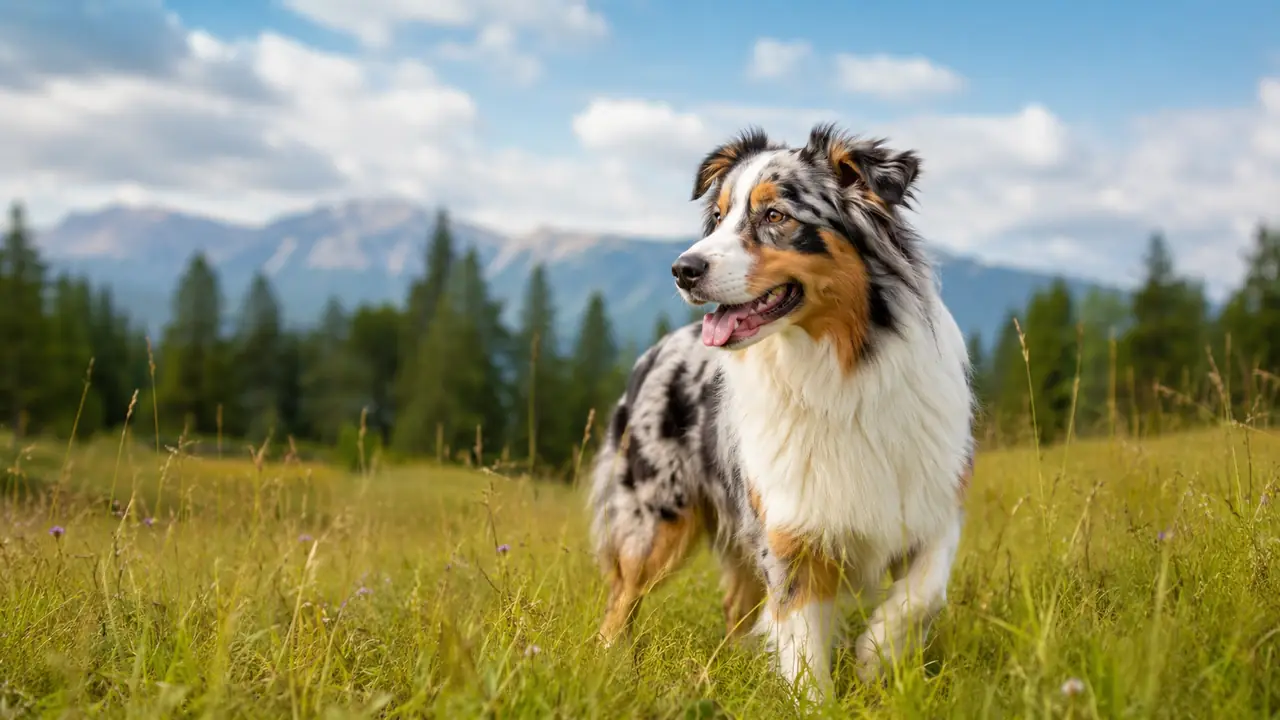
Dog Breed Guide
Australian Shepherd: Personality, Care, and Family Tips
A practical, human-written guide to the Australian Shepherd’s temperament, daily care, exercise, training, grooming, health notes, family life, and useful product ideas.
The Australian Shepherd is a smart, active, people-focused dog that often seems ready to do something before the family has even finished thinking about it.
Many people notice this breed because of the merle coat, bright eyes, athletic movement, and elegant look. But the Australian Shepherd should not be chosen only for appearance.
This is a working-style herding dog with a quick mind, strong awareness, and a real need for meaningful daily life. It usually wants to move, learn, watch, cooperate, and feel included.
An Australian Shepherd can be affectionate, loyal, fun, and deeply connected to family. But if it is left bored, isolated, untrained, or constantly overstimulated, it may become noisy, restless, controlling, or difficult to manage.
This detailed guide explains what daily life with an Australian Shepherd is really like, including personality, family life, children, apartment living, exercise, training, socialization, herding behavior, grooming, shedding, weight control, puppy care, health signs, and product ideas for responsible owners.
Often loyal, observant, energetic, sensitive, and highly trainable.
Needs movement, mental work, training, and calm recovery.
Herding instincts, grooming, socialization, and settle skills matter.
01
Breed Overview
Despite the name, the Australian Shepherd as it is known today was developed in the United States. Many people also call the breed the Aussie.
It is a herding breed, and that explains much of its personality. For generations, dogs like this were valued for working with livestock, responding to people, noticing movement, making quick decisions, and staying focused for long periods.
Even as a family companion, the Australian Shepherd often keeps many of these traits. It may notice small changes, anticipate routines, watch moving children, follow a ball closely, or become very alert when something happens near the home.
The breed is usually medium-sized, agile, and well proportioned. Coat colors may include black, red, blue merle, and red merle, with or without white markings and tan points. Coat color should never be the main reason for choosing a puppy.
Detailed owner fact
An Australian Shepherd is not a passive dog. It usually wants to take part in life, understand routines, learn tasks, and work with its people.
02
Personality and Temperament
The Australian Shepherd is often intelligent, active, affectionate, observant, and strongly attached to its family. Many Aussies want to know where their people are and what they are doing.
Some lie near a desk while someone works. Some wait by the door when they sense a walk is coming. Some learn the family’s habits so quickly that it feels as if they can predict the next step.
This closeness can be wonderful for owners who want a present, responsive companion. But it can be challenging for people who want a dog that is very independent, low-energy, or happy with very little interaction.
Because of the herding background, some Australian Shepherds can be very interested in movement. Running children, bicycles, joggers, balls, livestock, or fast-moving pets may catch their attention.
The goal is not to punish the dog for noticing movement. The goal is to teach safe alternatives: look back at the owner, settle, recall, walk calmly, or play a controlled game.
- 01Often intelligent, alert, and deeply involved in family life.
- 02May be affectionate but not automatically social with every stranger.
- 03Can become focused on movement if not guided early.
- 04Learns routines and habits very quickly.
- 05Needs both activity and calm structure.
- 06Does best with patient, active, consistent owners.
03
Daily Care Needs
Daily care for an Australian Shepherd should include measured meals, fresh water, regular walks, mental work, training, social contact, grooming checks, calm rest, and predictable household rules.
This breed should not be expected to stay content with only a yard and a food bowl. A garden can help, but it does not replace walks, training, exploration, and real time with the family.
A bored Aussie may bark, pace, chase shadows, control movement, chew objects, demand attention, or invent its own jobs. Since this breed learns fast, unwanted habits can become strong if they are practiced daily.
A useful routine gives the dog something meaningful to do, then teaches it to relax. Activity and calm are both important.
- 01Provide daily walks with time to sniff and explore.
- 02Use short training sessions for practical skills.
- 03Offer mental games, scent work, and problem-solving tasks.
- 04Teach calm rest instead of constant stimulation.
- 05Check coat, ears, nails, teeth, paws, skin, and movement.
- 06Avoid long daily isolation without preparation and support.
Practical routine tip
A balanced Australian Shepherd day may include a morning walk, breakfast, rest, short training, a scent game, controlled play, grooming checks, an evening walk, and calm family time indoors.
04
Exercise Needs
The Australian Shepherd is active, but it is not simply an exercise machine. Running alone is not enough if the dog’s mind is still bored.
Many Aussies enjoy long walks, nature routes, fetch with rules, scent games, recall practice, trick training, problem-solving games, and structured dog sports such as agility, rally, obedience, hoopers, or herding-style activities when appropriate.
Not every Australian Shepherd needs to become a competition dog. The important thing is to find healthy activities that match the dog’s age, health, temperament, and family lifestyle.
Puppies should not be pushed into repeated jumping, forced running, or intense workouts. They need sleep, safe exploration, gentle training, and gradual growth.
- 01Use regular walks rather than only yard time.
- 02Add mental enrichment, not only physical activity.
- 03Use controlled games instead of uncontrolled chasing.
- 04Adjust exercise for puppies, adults, seniors, heat, and health.
- 05Avoid keeping the dog overstimulated all day.
- 06Make rest part of the routine.
05
Training Tips
Training should begin early with an Australian Shepherd because this breed learns quickly. That is a strength, but it also means the dog can quickly learn behaviors that the family did not intend to teach.
Important skills include recall, loose-leash walking, waiting at doors, leaving objects, dropping toys, not jumping on guests, settling on a mat, accepting brushing, and staying calm when children, bicycles, or visitors move around.
Australian Shepherds usually respond well to rewards, play, praise, calm voice, and consistent rules. Shouting, confusion, and mixed messages from different family members can make the dog frustrated or push it to make its own choices.
Training should include calm behavior. A dog that is always asked to do more can become even more intense. Teach the dog that resting quietly is also a valuable skill.
- 01Teach recall and leash manners from the beginning.
- 02Redirect herding or chasing into safe, controlled tasks.
- 03Practice “leave it,” “drop,” “wait,” “come,” and “settle.”
- 04Reward calm choices around movement and visitors.
- 05Use short, positive, consistent sessions.
- 06Seek qualified help early if chasing, barking, fear, or overarousal becomes difficult.
Calm training tip
With an Australian Shepherd, teaching “do nothing calmly” can be just as important as teaching tricks, sports, or obedience exercises.
06
Grooming Needs
The Australian Shepherd usually has a medium-length, dense coat that may be straight or slightly wavy. Grooming is not extremely complicated, but it should be consistent.
Regular brushing helps remove loose hair, reduce tangles, check the skin, and keep the coat comfortable. Areas behind the ears, under the front legs, near the tail, and around feathering may need extra attention.
During shedding periods, owners should expect more loose hair on clothing, furniture, rugs, and car seats.
After walks in fields, woods, or tall grass, check the coat, ears, and paws for seeds, dirt, mud, ticks, or irritation.
- 01Brush regularly and more often during shedding periods.
- 02Check behind ears, under legs, tail area, paws, and skin.
- 03Use dog-safe shampoo only when bathing is needed.
- 04Keep the coat clean, dry, and free of painful mats.
- 05Introduce brushing and handling from puppyhood.
- 06Ask a professional groomer for help if the coat becomes difficult to manage.
07
Health and Safety Notes
Health and safety for an Australian Shepherd include weight control, joint comfort, eye checks, dental care, coat and skin checks, safe exercise, and regular veterinary visits.
When choosing a puppy, ask about the parents’ health, temperament, available veterinary records, hip and elbow checks, eye checks, and any breed-relevant genetic testing used by responsible breeders.
Ask about MDR1 status when available. Some dogs can be more sensitive to certain medications, so any test result should be kept and shared with the veterinarian. Do not give medication without veterinary guidance.
Contact a veterinarian if your dog shows limping, pain, difficulty moving, eye problems, loss of balance, appetite changes, repeated vomiting, diarrhea, unusual tiredness, injury, or sudden behavior changes.
Important safety note: Eye injury, collapse, severe pain, sudden weakness, repeated vomiting, breathing difficulty, serious wounds, or sudden behavior changes should be treated seriously. Seek veterinary care promptly.
08
Is This Breed Good for Families?
The Australian Shepherd can be an excellent family dog for active, patient homes that provide time, training, exercise, mental work, grooming, and supervision.
It may suit families who enjoy walking, outdoor activities, training games, and including the dog in daily routines. It is usually less suitable for homes that want a very quiet, low-effort dog that can spend most of the day alone.
With children, supervision matters. Some Aussies may try to follow, control, or chase fast movement. Running children, balls, bicycles, and noisy play can trigger excitement if the dog has not been taught calm alternatives.
Children should not pull the coat, disturb meals, enter the resting area, hug tightly, or provoke chasing. The dog should learn calm behavior, and children should learn respectful behavior.
- 01Best for active families with time for training and daily care.
- 02Needs supervision around young or very energetic children.
- 03Can become focused on movement if not guided.
- 04Needs mental enrichment, not only physical exercise.
- 05Requires brushing and coat checks.
- 06Can become loyal, fun, and deeply bonded with good care.
09
Best Products for This Breed
The best products for an Australian Shepherd are practical items that support safe walking, training, grooming, mental enrichment, controlled activity, and calm rest. Choose products based on your dog’s age, size, coat, energy level, chewing habits, health, and professional advice when needed.
Well-fitted harness and sturdy leash
Useful for daily walks when paired with loose-leash training and calm control.
Long line for recall practice
Allows controlled freedom while building safer recall in open areas.
Scent-game toys or treat puzzles
Support mental enrichment and reduce boredom indoors.
Coat brush and grooming comb
Helpful for managing loose hair, tangles, and regular skin checks.
Training pouch and small rewards
Useful for short, positive training sessions and calm reinforcement.
Washable bed or settle mat
A clear rest area helps teach the dog to relax after activity.
When adding affiliate links, recommend only products that genuinely help Australian Shepherd owners. Avoid products that encourage unsafe chasing, uncontrolled off-leash freedom, overtraining, or constant excitement.
10
Final Thoughts
The Australian Shepherd is intelligent, active, affectionate, observant, and often deeply connected to family life.
But this breed should not be chosen only for the merle coat, bright eyes, or beautiful photos. An Australian Shepherd needs daily exercise, mental work, training, socialization, grooming, calm rules, and a family that truly has time to share life with the dog.
If it is left bored, isolated, untrained, or constantly overstimulated, it may become noisy, restless, or controlling. If it is guided with patience, structure, and meaningful activity, it can become an exceptional companion.
For owners who want a present, clever, energetic dog and are ready for real daily involvement, the Australian Shepherd can be a very special breed.
11
Medical Disclaimer
This article is for general dog-care information only. It is not veterinary advice and does not replace diagnosis, treatment, diet planning, medication advice, grooming assessment, behavior assessment, or guidance from a qualified veterinarian, professional groomer, or certified professional trainer.
If your Australian Shepherd has pain, limping, difficulty walking, eye problems, loss of balance, appetite changes, vomiting, diarrhea, injury, unusual tiredness, or sudden behavior changes, contact a veterinarian.
Important: Always follow your veterinarian’s advice for diet, weight control, medication safety, exercise, eye concerns, vaccines, parasite prevention, and health concerns specific to your dog. For chasing, overarousal, fear, or behavior concerns, seek qualified help early.
13
FAQ
Quick answers for people considering or caring for an Australian Shepherd.
Is the Australian Shepherd good for families?
Yes, it can be a wonderful family dog for active homes that provide exercise, training, supervision, grooming, and mental enrichment.
Can an Australian Shepherd live in an apartment?
It can in some homes, but only with daily walks, training, mental activity, and calm rest. Short toilet breaks are not enough.
Does this breed need a lot of exercise?
Yes. It is an active breed, but it also needs mental work and calm skills, not only running.
Is the Australian Shepherd easy to train?
It is intelligent and can learn quickly, but that does not mean it is automatically easy. Consistency and calm guidance matter.
Can this breed chase children or bicycles?
Some Australian Shepherds may become very interested in movement. Early training should teach calm alternatives and safe behavior.
Does the Australian Shepherd shed?
Yes. Regular brushing helps manage loose hair, especially during shedding periods.
Why is MDR1 status important?
Some dogs can be sensitive to certain medications. Any available test result should be shared with the veterinarian.
What is the biggest mistake with this breed?
Choosing it only for looks while underestimating exercise, training, mental enrichment, herding instincts, grooming, and daily involvement.
Daily Dog Care Guide · Simple tips for a safer, healthier, happier dog.
🐾 Topic-matched picks
Everyday Gear to Compare for This Breed Guide
These are practical grooming, walking, or daily-care examples to compare — not breed-specific prescriptions.
Optional product • paid linkUndercoat Rake for Thick Double Coats
Useful to compare for dense double coats during regular coat maintenance and seasonal shedding.
View on Amazon →Optional product • paid linkSelf-Cleaning Slicker BrushA practical brushing option for coats that need regular detangling and loose-hair removal.
View on Amazon →Optional product • paid linkPortable Dog Water BottleUseful for keeping drinking water available during walks, travel, and warm-weather outings.
View on Amazon →Affiliate disclosure: As an Amazon Associate I earn from qualifying purchases. Always check size, fit, materials, labels, and your dog’s individual needs before buying.
🎨 Color Dogs & Pets
Puppy Breed Color-Along Coloring BookDog-breed inspired color-along fun for creative kids.View book details →A Creative Break for Dog-Loving Kids
Explore puppy coloring and activity books for screen-free creative time, quiet afternoons, travel, and young dog fans.
See all dog-care products & books →Helpful next steps
Continue with a related guide, tool, or product resource.