Hot Weather Dog Safety: Pavement, Walks and Heatstroke Warning Signs
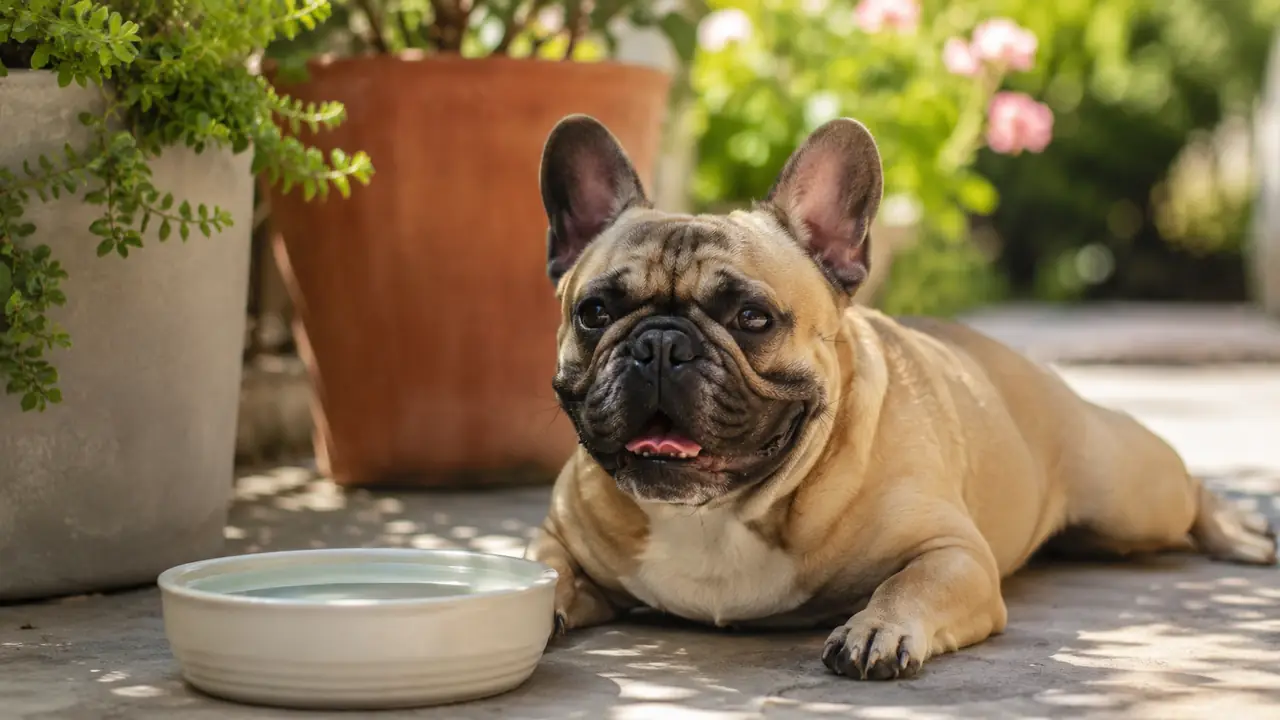
Heat-related illness does not happen only in parked cars. Dogs can overheat during walks, play, running, travel, garden time, or any situation where heat production exceeds their ability to cool. Safer summer care means adjusting activity before the dog becomes distressed, protecting paws from hot surfaces, recognizing early warning signs, and knowing how to begin emergency cooling without delaying veterinary care.
Updated August 13, 2026 · Veterinary heat-related illness sources checked
Brachycephalic, older, overweight, very large, medically compromised, poorly acclimatized, or highly driven dogs may need a more conservative plan.
Collapse, Confusion, Severe Weakness or Breathing Difficulty Should Not Wait
Suspected heat-related illness can progress rapidly. Begin cooling immediately, contact a veterinary hospital, and arrange urgent transport.
- severe or uncontrolled panting with distress
- difficulty breathing
- marked weakness or inability to continue walking
- stumbling or loss of coordination
- confusion or altered responsiveness
- vomiting or diarrhea during a heat event
- collapse
- seizures
- loss of consciousness
Do not wait for a dog to become unconscious before treating heat-related illness seriously.
A beautiful summer day can make the usual routine look perfectly normal.
Your dog brings the leash. The park is open. The sky is clear.
But the dog's body is dealing with more than the number displayed on a weather app.
Exercise generates internal heat. Direct sun adds heat. Humidity can make evaporative cooling less effective. Pavement can become far hotter than the surrounding air. Poor ventilation traps heat.
That means a familiar walk can become a different physical challenge on a warm day.
The safest approach is not to wait until your dog shows severe heatstroke.
Change the activity early enough that heat-related illness never has the chance to develop.
Quick Answer: How Do You Keep a Dog Safe in Hot Weather?
Choose cooler times and shaded routes, reduce exercise intensity and duration, check hot surfaces before walking, provide drinking water, allow rest, avoid parked vehicles, and watch the individual dog's breathing, movement and behavior.
Do not assume a dog is safe simply because it still wants to continue. Highly motivated dogs may keep exercising despite rising heat load.
If excessive panting, breathing difficulty, weakness, poor coordination, vomiting, diarrhea, confusion, collapse or other heat-related illness signs appear, stop the activity immediately.
Begin active cooling and contact a veterinary hospital. Cooling should start before or during transport rather than being postponed until arrival.
Risk differs between dogs, so there is no single air-temperature cutoff or universal walk duration that guarantees safety.
Four Things Matter More Than “Is It Hot Outside?”
In This Hot Weather Dog Safety Guide
1. Heat-Related Illness Is More Than “Feeling Too Warm”
Heat-related illness occurs when heat builds faster than the dog's body can safely dissipate it.
The trigger can be environmental heat, exercise-generated heat, confinement, or a combination of these factors.
Severe hyperthermia can progress from abnormal panting and reduced ability to continue exercising to gastrointestinal, neurologic and other organ dysfunction.
Heatstroke is therefore not simply a comfort problem.
It is a medical emergency.
Early recognition matters because the longer damaging hyperthermia continues, the greater the opportunity for thermal injury to progress.
Back to guide2. Dogs Depend Heavily on Panting to Lose Heat
Dogs do not cool themselves by sweating across most of the body in the same way people do.
Panting and evaporation from the respiratory tract are major parts of canine heat loss.
That makes efficient breathing particularly important.
When environmental heat, humidity, strenuous activity or airway limitations reduce effective heat loss, body temperature can continue to rise.
A dog can therefore become dangerously hot even when the owner feels personally comfortable.
Back to guide3. Dogs Do Not Need to Be Trapped in a Hot Car to Develop Heat-Related Illness
Exercise itself creates heat.
Large VetCompass studies have found exertional heat-related illness to be a major trigger in dogs presented for veterinary care.
Walking, running, ball chasing, dog sports and high-arousal play can all add to internal heat production.
Reduce activity when:
- the day is hotter or more humid than the dog is used to
- there is little shade
- air movement is poor
- the dog has recently been inactive
- the dog is highly excited and unlikely to self-limit
- the dog belongs to a higher-risk group
Do not use the dog's willingness to chase another ball as proof that its body is coping safely.
Back to guide4. Some Dogs Have Less Heat-Safety Margin
Any dog can develop heat-related illness, but risk is not equal.
Puppies and medically fragile dogs may also deserve a more conservative routine.
Ask your veterinarian for individualized exercise advice if your dog has a condition that could affect heat tolerance.
Back to guide5. Air Temperature Alone Cannot Tell You Whether a Walk Is Safe
Two walks at the same air temperature can create very different heat loads.
Surface temperature also matters separately from the weather-app reading.
Asphalt, concrete, sand, metal and artificial surfaces can absorb substantial heat in direct sun.
Back to guide6. Hot Pavement Can Injure Paw Pads Even Before the Dog Develops Heatstroke
Paw protection and whole-body heat safety are related but separate issues.
A dog can burn its paw pads on a hot surface even if it has not yet developed systemic heat-related illness.
Before walking on a sun-exposed surface, assess the ground itself rather than relying only on air temperature.
AAHA recommends a simple screening check: place the back of your hand on the surface for about seven seconds. If you cannot comfortably keep it there, choose another surface or another time.
The hand check is a screening tool, not a guarantee
Surface heat can vary from one part of the route to another and can change with sunlight, material and time of day. Continue watching where your dog is stepping.
Prefer:
- shade
- grass where safe
- dirt or natural paths
- cooler times of day
- shorter exposure to hard sun-heated surfaces
7. Know the Signs of a Possible Paw-Pad Burn
Watch for:
- limping
- reluctance to keep walking
- lifting one or more paws
- repeated paw licking or chewing
- red or unusually dark pad areas
- blistering
- visible raw tissue
- pain when the paw is touched
Move the dog off the hot surface immediately.
Cool injured paws gently with cool water and contact your veterinarian for significant pain, blistering, raw tissue, persistent limping or another concerning injury.
Do not place ice directly against burned paw tissue.
Back to guide8. Plan the Walk Around the Conditions — Not Around the Usual Schedule
Early morning and later evening often provide safer opportunities during hot periods, but check the actual conditions rather than relying on the clock alone.
Pavement may remain hot after the air begins to cool.
Before leaving home, consider:
- air temperature
- humidity
- direct sun
- surface temperature
- route shade
- your dog's health and risk factors
- how intense the planned activity will be
- whether water is available
Shorter walks are a valid safety adjustment.
A gentle sniff walk can provide useful activity without the heat production of running or repetitive ball chasing.
On very difficult days, indoor enrichment can replace part of the outdoor exercise.
Back to guide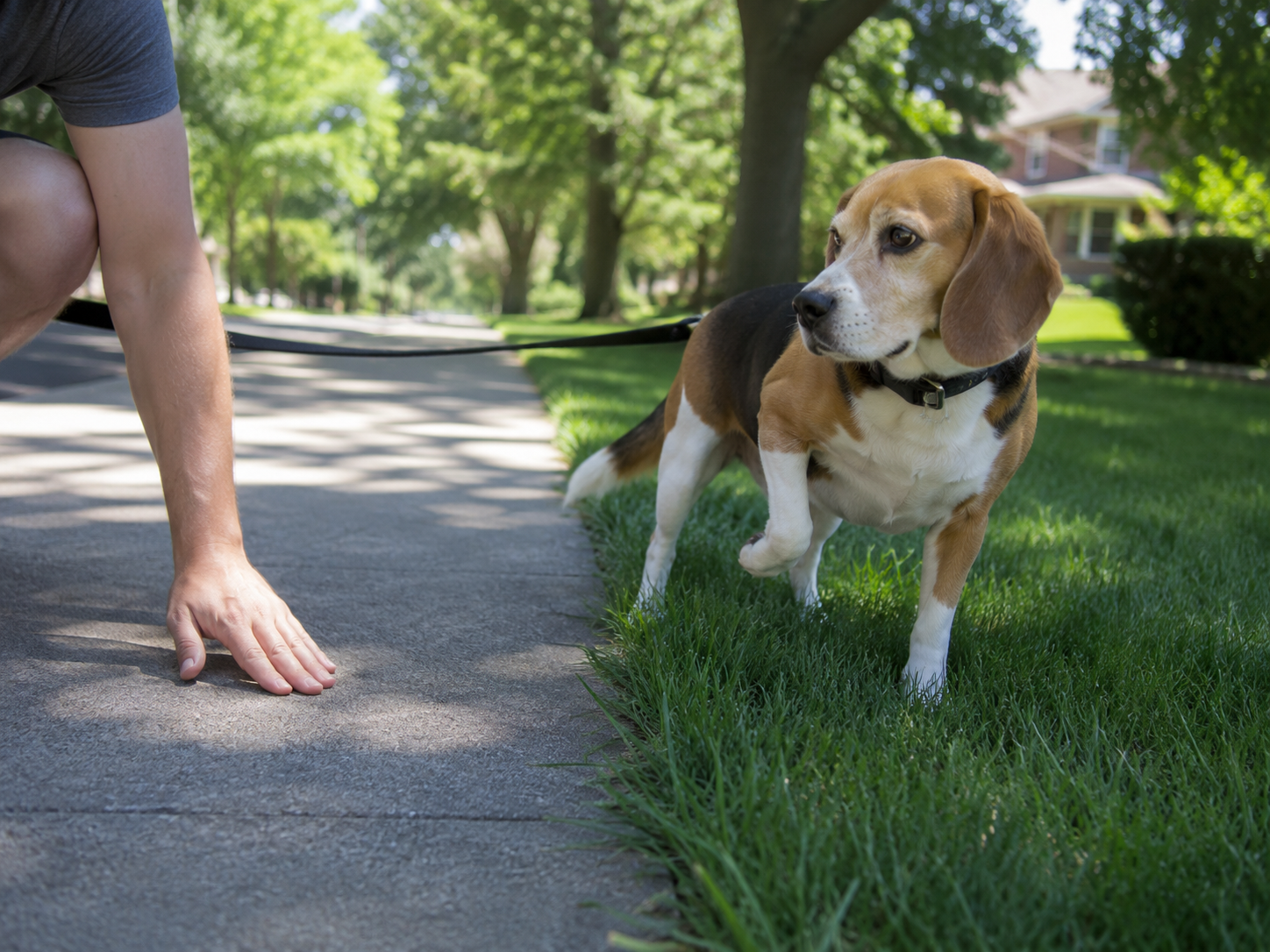
9. Provide Water, Shade and Opportunities to Stop
Dogs should have access to fresh drinking water during hot weather.
Carry water on outings where reliable access is uncertain.
Allow the dog to rest in shade and recover instead of maintaining a fixed walking pace simply to complete a planned route.
Watch during breaks:
- is panting becoming easier?
- is the dog alert and coordinated?
- does the dog appear willing and able to move normally?
- is breathing comfortable?
- is the dog seeking more shade or refusing to continue?
If the dog is not recovering normally, end the activity.
Do not force water into the mouth of a distressed, confused, collapsed or poorly responsive dog.
Back to guide10. Recognize Heat Problems Before Collapse
Heat-related illness is progressive.
Early intervention is easier than treating advanced heatstroke.
Stop exercise at the early signs.
Do not wait for severe neurologic or gastrointestinal symptoms.
Back to guide11. Severe Heat-Related Illness Needs Emergency Veterinary Care
Do not rely on temperature alone
Veterinary diagnosis and severity assessment consider exposure history, temperature and clinical signs. A dog may already have been cooled before temperature is measured.
If the dog has serious neurologic, respiratory or gastrointestinal signs after heat exposure or exertion, seek emergency veterinary care.
12. Suspected Heatstroke: Cool First, Transport Second
“Cool first, transport second” does not mean staying home instead of going to the veterinarian.
It means that active cooling should begin immediately rather than delaying all cooling until the dog reaches the hospital.
Do not spend valuable time trying to make the dog look completely normal at home before leaving for veterinary care.
Back to guide13. Use Effective Cooling Rather Than Waiting for an Ideal Method
Current canine heat-related illness evidence supports rapid active cooling.
A practical general method is to thoroughly wet the dog's body with water that is cooler than the dog and combine that with strong air movement from a fan, breeze or air conditioning.
For young, otherwise healthy dogs with exertional hyperthermia, cold-water immersion has evidence supporting rapid and effective cooling when it can be performed safely.
Older dogs or dogs with underlying health problems may be easier to cool using water poured over the body together with airflow.
Use what is available and start quickly
The priority is to begin reducing heat load promptly rather than spending time searching for a perfect water temperature or special cooling product.
Continue arranging emergency veterinary care even if the dog appears to improve during cooling.
Back to guide14. Avoid Common Heatstroke First-Aid Mistakes
Do not:
- delay cooling until you reach the veterinary hospital
- continue walking because home is “only a few minutes away”
- wrap the whole dog in heavy wet towels and leave them in place
- force water into the mouth of a confused or collapsed dog
- rely only on cooling mats, vests or other products during an emergency
- assume improvement means veterinary assessment is unnecessary
- delay transport while repeatedly checking body temperature
Wet towels left wrapped around the body can warm against the dog and reduce effective evaporation.
If towels are the only water source available temporarily, use them to wet the dog rather than wrapping the dog tightly and leaving the towels in place.
Back to guide15. Never Leave a Dog Unattended in a Warm Parked Vehicle
Vehicle confinement combines heat with limited ability to escape.
The interior can become dangerous even when the outside conditions do not feel extreme to a person standing in open air.
Cracking the windows or parking in partial shade does not turn a hot vehicle into a safe waiting area.
For warm-weather travel:
- cool the vehicle before placing the dog inside
- maintain effective ventilation or air conditioning
- bring water
- use an appropriate secure travel setup
- plan stops so the dog does not need to remain alone in the vehicle
If air conditioning fails or the dog begins showing heat distress, stop the journey somewhere safe and begin cooling.
Back to guide16. Dogs Can Overheat at Home and in the Garden Too
A garden is not automatically cooler or safer than a walk.
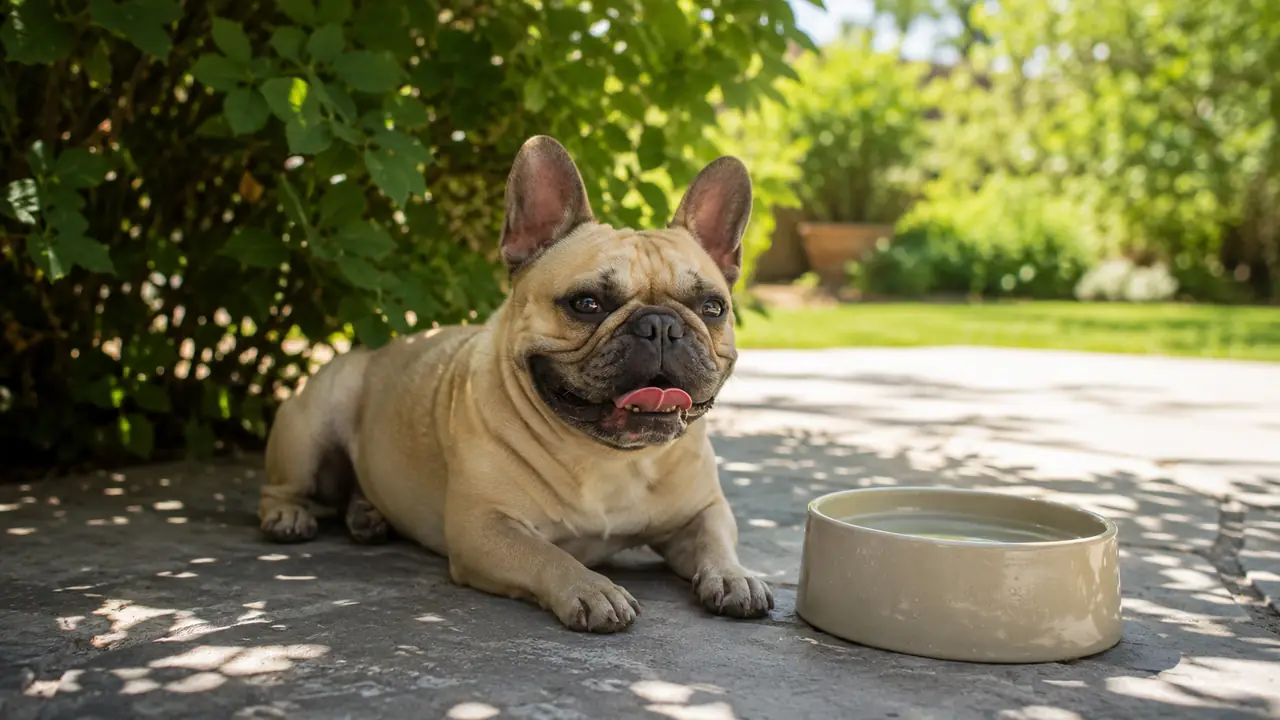
Direct sun, artificial turf, concrete, decking, limited shade and still air can create significant heat exposure.
Provide:
- continuous access to drinking water
- reliable shade
- a cooler indoor resting option
- air movement or air conditioning when conditions require it
- reduced activity during difficult periods
Check artificial turf, patios, balconies and decks just as you would check pavement.
Do not assume the dog will always move itself into shade before becoming too hot.
Back to guide17. Warm-Weather Travel Needs a Backup Plan
Travel can combine excitement, confinement, reduced air movement and unfamiliar environments.
Dogs with respiratory disease or brachycephalic anatomy may need especially conservative travel planning.
Back to guide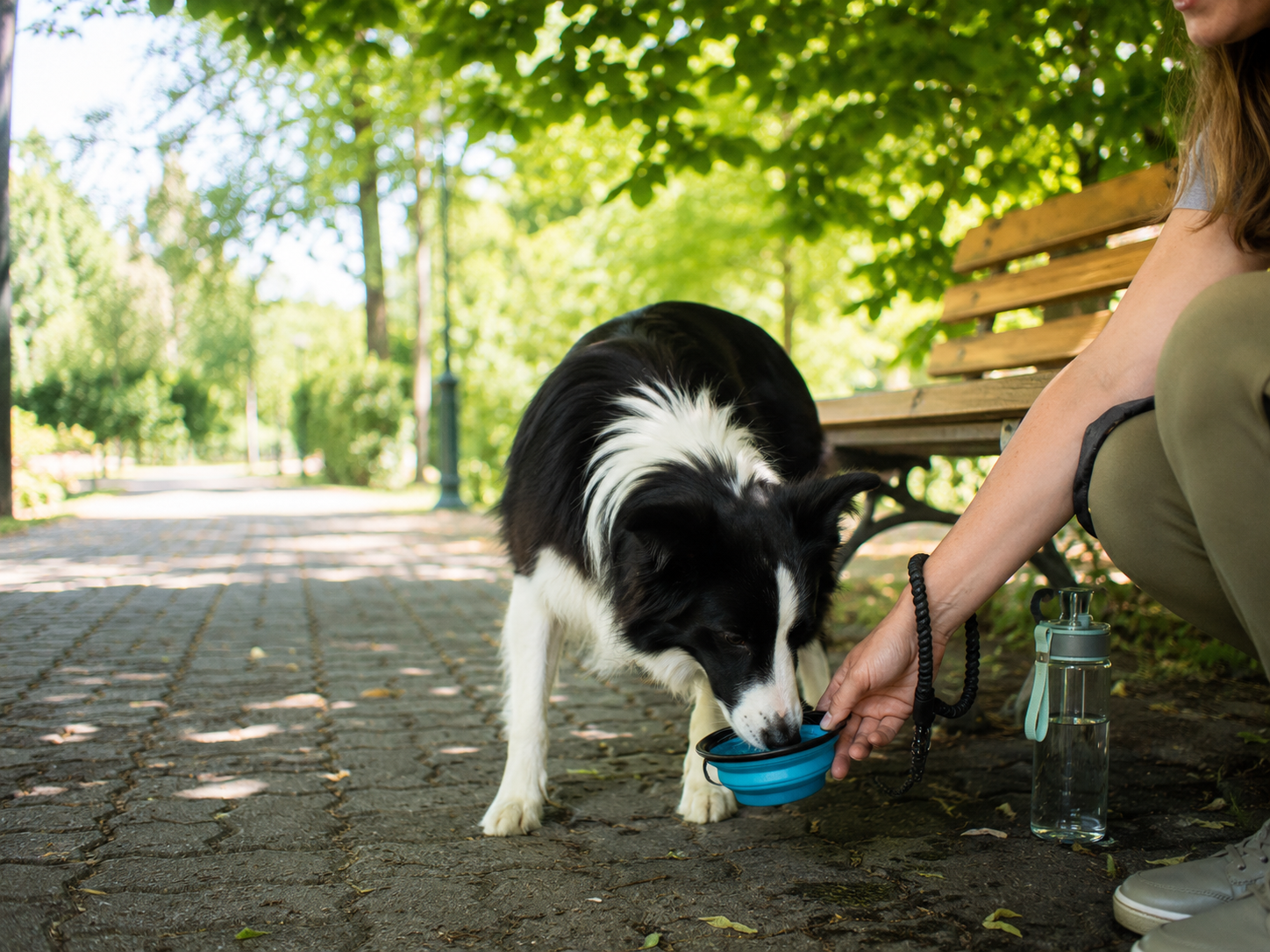
18. Groom the Coat Appropriately — Do Not Assume Shaving Is a Heatstroke Solution
Coat type affects grooming needs, but shaving every thick-coated dog is not a universal summer-safety strategy.
Regular coat care can remove loose hair and prevent matting that interferes with normal comfort and airflow through the coat.
Before closely clipping or shaving a double coat, ask an experienced professional groomer or veterinarian what is appropriate for that coat and the dog's health.
Regardless of coat length, no haircut makes strenuous exercise safe in dangerous heat.
Shade, reduced exertion, ventilation, water and timing remain the important heat-management tools.
Back to guide19. Cooling Products Can Support a Plan, but They Do Not Override the Environment
Cooling mats, cooling vests, portable water bowls and paw protection may be useful in some situations.
They should not be used to justify exercise that would otherwise be too hot or intense.
For dog booties:
- introduce them gradually indoors
- make sure they fit correctly
- check for rubbing
- remove them after activity
- remember that the dog still needs whole-body heat protection
Paw protection can reduce surface contact, but it does not prevent heatstroke.
A dog wearing booties can still become dangerously overheated.
Back to guide20. A Dog That Seems Better After Cooling May Still Need Veterinary Care
Heat-related illness can affect multiple organ systems.
Visible improvement after cooling does not prove that internal injury has not occurred.
Dogs with significant heat-related illness may require veterinary examination, temperature assessment, blood testing, fluid therapy, monitoring or hospitalization depending on severity.
Tell the veterinary team:
- what activity the dog was doing
- environmental conditions
- when symptoms began
- what signs you saw
- how the dog was cooled
- how long cooling occurred
- whether vomiting, diarrhea, collapse or neurologic signs occurred
Do not immediately resume exercise later the same day after a significant overheating episode unless your veterinarian has advised that it is safe.
Back to guide21. A Practical Hot-Weather Routine
Use this as a decision framework rather than a fixed schedule.
Conditions can change from one day to the next.
The correct routine is the one that matches today's weather and today's dog.
Back to guide22. Common Hot-Weather Dog Safety Mistakes
Avoid these common problems:
- judging safety from air temperature alone
- assuming the dog will stop exercising before becoming overheated
- walking on hot pavement because the air feels comfortable
- using the same exercise routine all year
- allowing repetitive ball chasing in difficult heat
- waiting for collapse before stopping activity
- leaving a dog alone in a parked vehicle
- assuming cracked windows make a parked car safe
- using a cooling vest as permission for excessive exercise
- assuming thick-coated dogs should automatically be shaved
- wrapping a heatstroke patient in heavy wet towels
- delaying active cooling until arriving at the vet
- forcing drinking water into a distressed dog
- skipping veterinary care because the dog improves after cooling
Prevention works best when decisions are made before severe symptoms appear.
Back to guide23. When to Call a Veterinarian
Seek emergency veterinary care for:
- difficulty breathing
- collapse
- confusion or reduced responsiveness
- loss of coordination
- seizures
- loss of consciousness
- marked weakness or inability to stand
- vomiting or diarrhea with significant heat illness
- worsening signs despite cooling
Also contact your veterinarian if your dog has experienced a significant overheating episode even if it appears to improve after cooling.
Ask for an individualized hot-weather plan if your dog has brachycephalic anatomy, known airway disease, heart disease, obesity, advanced age, exercise intolerance or another medical condition that may affect heat tolerance.
Severe paw-pad burns also require veterinary care.
Back to guideExplore More Daily Dog Care Guides
24. Frequently Asked Questions
How do I know if it is too hot to walk my dog?
There is no single air-temperature cutoff that guarantees safety for every dog. Consider temperature, humidity, direct sun, surface heat, exercise intensity, shade and your dog's individual risk factors. When conditions are difficult, choose a shorter, gentler or indoor alternative.
How do I check whether pavement is too hot?
AAHA recommends placing the back of your hand on the surface for about seven seconds. If you cannot comfortably keep it there, choose a cooler surface or another time. Continue checking conditions because different parts of the route can heat differently.
Can dogs get heatstroke just from walking?
Yes. Exertional heat-related illness can occur during walking, running, play or dog sports. Exercise creates internal heat, so activity level is an important part of heat safety.
Are flat-faced dogs more vulnerable to heat?
Yes. Brachycephalic dogs have reduced ability to dissipate heat through normal respiratory cooling and have been identified as a higher-risk group in large veterinary studies.
Is heavy panting always heatstroke?
Panting can be normal with activity, excitement and warmth. Excessive panting that does not match the activity, worsens, or occurs with weakness, breathing difficulty, altered behavior, vomiting, poor coordination or collapse is much more concerning.
Should I use cold water on a dog with suspected heatstroke?
Current evidence supports rapid active cooling rather than delaying because water might feel cold. Young healthy dogs with exertional hyperthermia can be cooled effectively with cold-water immersion. Another practical approach is applying water cooler than the dog over the body while using strong air movement. Begin cooling and contact a veterinary hospital.
Should I wrap an overheated dog in a wet towel?
Do not leave the dog wrapped in heavy wet towels. Towels can warm against the body and interfere with evaporation. Wet the dog directly and combine water with air movement when possible.
Should I cool my dog before driving to the emergency vet?
Yes. Begin cooling immediately while arranging veterinary care. The evidence-based message is “cool first, transport second,” meaning cooling should not be postponed until arrival. Do not delay transport for an extended home treatment session.
Can my dog recover from heatstroke without seeing a vet?
Significant heat-related illness can cause internal organ injury even when the dog appears to improve after cooling. Suspected heatstroke should be assessed by a veterinarian.
Can a dog overheat indoors?
Yes. Poor ventilation, high indoor temperature, sun exposure, confinement and lack of access to cooler areas can cause dangerous heat exposure even without an outdoor walk.
Should I shave my double-coated dog for summer?
Do not assume shaving is necessary. Coat maintenance varies by coat type. Ask a professional groomer or veterinarian before closely clipping a double coat, and remember that no haircut replaces appropriate heat management.
Do dog booties prevent heatstroke?
No. Booties can reduce direct paw contact with hot surfaces when correctly fitted, but they do not prevent whole-body overheating. Walking conditions still need to be safe.
When is a heat problem an emergency?
Difficulty breathing, significant weakness, incoordination, confusion, vomiting or diarrhea during a serious heat event, collapse, seizure, inability to stand or loss of consciousness require urgent veterinary care.
25. Veterinary & Research Sources
This educational guide was prepared with reference to veterinary guidance and peer-reviewed research on canine heat-related illness, risk factors, cooling and paw safety. Sources checked August 13, 2026.
- Scientific Reports — Evaluation and Validation of the Revised VetCompass Clinical Grading Tool for Heat-Related Illness in Dogs (2026)
- In Practice — Recognising, Clinically Grading and Managing Heat-Related Illness in Dogs (2026)
- Royal Veterinary College VetCompass — Cool First, Transport Second
- Veterinary Sciences — Cooling Methods Used to Manage Heat-Related Illness in Dogs
- Veterinary Journal — Post-Exercise Management of Exertional Hyperthermia in Dogs
- Animals — Dogs Don't Die Just in Hot Cars: Exertional Heat-Related Illness
- Veterinary Sciences — Risk Factors for Severe and Fatal Heat-Related Illness in Dogs
- American Animal Hospital Association — Protecting Dog Paws From Hot Pavement
- American Animal Hospital Association — Heatstroke Signs and Risk Factors
Veterinary & Emergency Disclaimer
Daily Dog Care Guide provides general educational information for dog owners. This article does not diagnose heat-related illness and does not replace veterinary examination, emergency triage, treatment or an individualized exercise plan.
Heat-related illness can progress rapidly. If your dog develops significant breathing difficulty, weakness, poor coordination, confusion, vomiting or diarrhea during a serious heat event, collapse, seizure, inability to stand, loss of consciousness or another rapidly worsening sign, begin cooling, contact a veterinarian and arrange emergency veterinary care immediately.
Dogs with respiratory disease, heart disease, obesity, brachycephalic anatomy or other medical conditions may require individualized hot-weather advice from their veterinary team.
Final Thoughts
Hot-weather safety is not about taking summer away from your dog.
It is about changing the routine before heat changes the dog's health.
Check the environment and the ground beneath the dog's feet. Reduce exercise intensity when conditions are difficult. Use shade, water and cooler parts of the day. Replace high-energy activity with sniffing or indoor enrichment when necessary.
Remember that exercise itself creates heat, so a dog does not need to be trapped in a parked car to develop heat-related illness.
Watch for excessive panting, declining performance and changes in behavior before collapse occurs.
If heat-related illness develops, stop activity and begin active cooling immediately while arranging veterinary care.
Do not allow outdated fears about cooling to delay action, and do not wrap a dangerously hot dog in wet towels and assume the problem is solved.
The safest summer walk is not the one that reaches the usual distance.
It is the one your dog can finish without being pushed beyond what its body can safely handle.
Back to guideWarm-Weather Walk Essentials to Compare
Cooling products do not make dangerous heat safe. Shorter walks, shade, water, cool surfaces, and stopping early remain the priority.
Useful for keeping drinking water available during walks, travel, and warm-weather outings.
View on Amazon →Optional product • paid linkCooling Vest for Warm WeatherA warm-weather aid to compare, while still prioritizing shade, water, shorter walks, and heat-safety limits.
View on Amazon →Optional product • paid linkCollapsible Travel Dog BowlA compact food or water bowl for walks, travel, and day trips.
View on Amazon →Affiliate disclosure: As an Amazon Associate I earn from qualifying purchases. Always check size, fit, materials, labels, and your dog’s individual needs before buying.
Helpful next steps
Continue with a related guide, tool, or product resource.