Strong, sturdy, athletic, and built for active family life.

Dog Breed Guide
Labrador Retriever: Personality, Care, and Family Tips
A practical, human-written guide to the Labrador Retriever’s temperament, daily care, exercise, training, grooming, health notes, family life, and useful product ideas.
The Labrador Retriever is one of the most loved family dogs because it is usually friendly, social, playful, and eager to be involved in everyday life.
Many people imagine the Labrador as an easy dog that naturally fits every home. A good Labrador can be gentle and joyful, but this breed still needs structure, movement, training, healthy food, grooming, and enough time with people.
A Labrador is often happiest when it has something to do. It may enjoy walks, games, swimming, carrying toys, learning simple tasks, and being part of the family routine.
This guide explains the Labrador Retriever in a clear and practical way so you can understand whether this breed fits your lifestyle and how to care for it responsibly.
Often affectionate, cheerful, people-focused, and eager to join in.
Walks, play, training, and mental enrichment help prevent boredom.
Food control, exercise, and polite behavior matter from the start.
01
Breed Overview
The Labrador Retriever is a medium-to-large sporting breed known for its friendly personality, strong body, soft expression, and love of family life.
Labradors were developed as working retrievers, so many of them enjoy carrying objects, fetching, swimming, searching, and working cooperatively with people.
This background helps explain why the breed often needs both physical activity and mental engagement. A Labrador is usually not happiest when left with nothing to do all day.
02
Personality and Temperament
The Labrador Retriever is usually outgoing, affectionate, social, and eager to spend time with people. Many Labradors enjoy visitors, children, other dogs, and family activity.
This friendly nature is one reason the breed is so popular, but friendliness does not replace training. A young Labrador can be bouncy, mouthy, excited, and very strong.
Without guidance, a Labrador may jump on people, pull on the leash, steal food, chew objects, or become too excited during greetings. These behaviors are easier to prevent early than to fix later.

03
Daily Care Needs
Daily care for a Labrador is built around routine. The dog needs meals, fresh water, toilet breaks, exercise, rest, grooming checks, and time with the family.
Because many Labradors love food, daily care should include portion control and careful use of treats. It is easy to overfeed this breed without realizing it.
A Labrador also needs calm indoor habits. Teaching the dog where to rest, how to settle, and how to greet people politely can make family life much easier.
- 01Provide measured meals and fresh water.
- 02Offer regular toilet breaks and daily walks.
- 03Create a calm resting area.
- 04Check ears, paws, coat, and body condition.
- 05Use short training moments every day.
- 06Give the dog enough family time without allowing chaos.
04
Exercise Needs
The Labrador Retriever usually needs regular daily exercise. Walks, play, fetch, swimming, sniffing, and simple training games can all help meet the breed’s needs.
The exact amount of activity depends on age, health, weight, fitness, and individual temperament. A puppy should not be pushed into extreme exercise, while an adult Labrador often benefits from a consistent active routine.
Exercise should not only tire the dog out. It should also help the dog think, smell, learn, and calm down afterward.
- 01Plan daily walks suited to age and fitness.
- 02Use safe fetch games without overdoing repetitive impact.
- 03Include sniffing and calm exploration.
- 04Offer rest after active play.
- 05Be careful in hot weather.
- 06Ask a veterinarian if you are unsure about exercise limits.
05
Training Tips
Labradors are often eager to learn, especially when training is clear, positive, and consistent. Many are food motivated, which can be useful, but treats should be managed carefully.
Training should focus on real-life manners: coming when called, walking calmly, not jumping, dropping items, leaving unsafe objects, and settling indoors.

- 01Teach recall and name response early.
- 02Practice loose-leash walking before pulling becomes a habit.
- 03Reward calm greetings instead of jumping.
- 04Teach “leave it” and “drop it” for safety.
- 05Use food rewards wisely and reduce portions when needed.
- 06Keep family rules consistent.
06
Grooming Needs
The Labrador Retriever has a short, dense coat that can shed more than some people expect. Regular brushing helps remove loose hair and keeps the coat more comfortable.
Grooming is also a chance to check ears, paws, nails, teeth, skin, and body condition. Labradors that swim or get wet often may need extra attention to ears and coat drying.
- 01Brush the coat regularly to manage shedding.
- 02Check ears for odor, redness, or discomfort.
- 03Dry the dog well after swimming or rain.
- 04Check paws after walks and outdoor play.
- 05Trim nails or ask a professional for help.
- 06Use dog-safe grooming products.
07
Health and Safety Notes
The Labrador Retriever is generally a strong breed, but good health depends on responsible care. Regular veterinary visits, healthy weight, safe exercise, and early attention to changes are important.
Weight control is especially important for this breed. Extra weight can affect comfort, stamina, joints, and long-term wellbeing.
Watch for limping, difficulty rising, unusual tiredness, ear discomfort, skin irritation, repeated digestive problems, increased thirst, appetite changes, or sudden behavior changes.
Safety note: Labradors often enjoy food, water, and outdoor activity. Keep unsafe foods, small objects, sharp items, chemicals, and overheated environments away from your dog.
08
Is This Breed Good for Families?
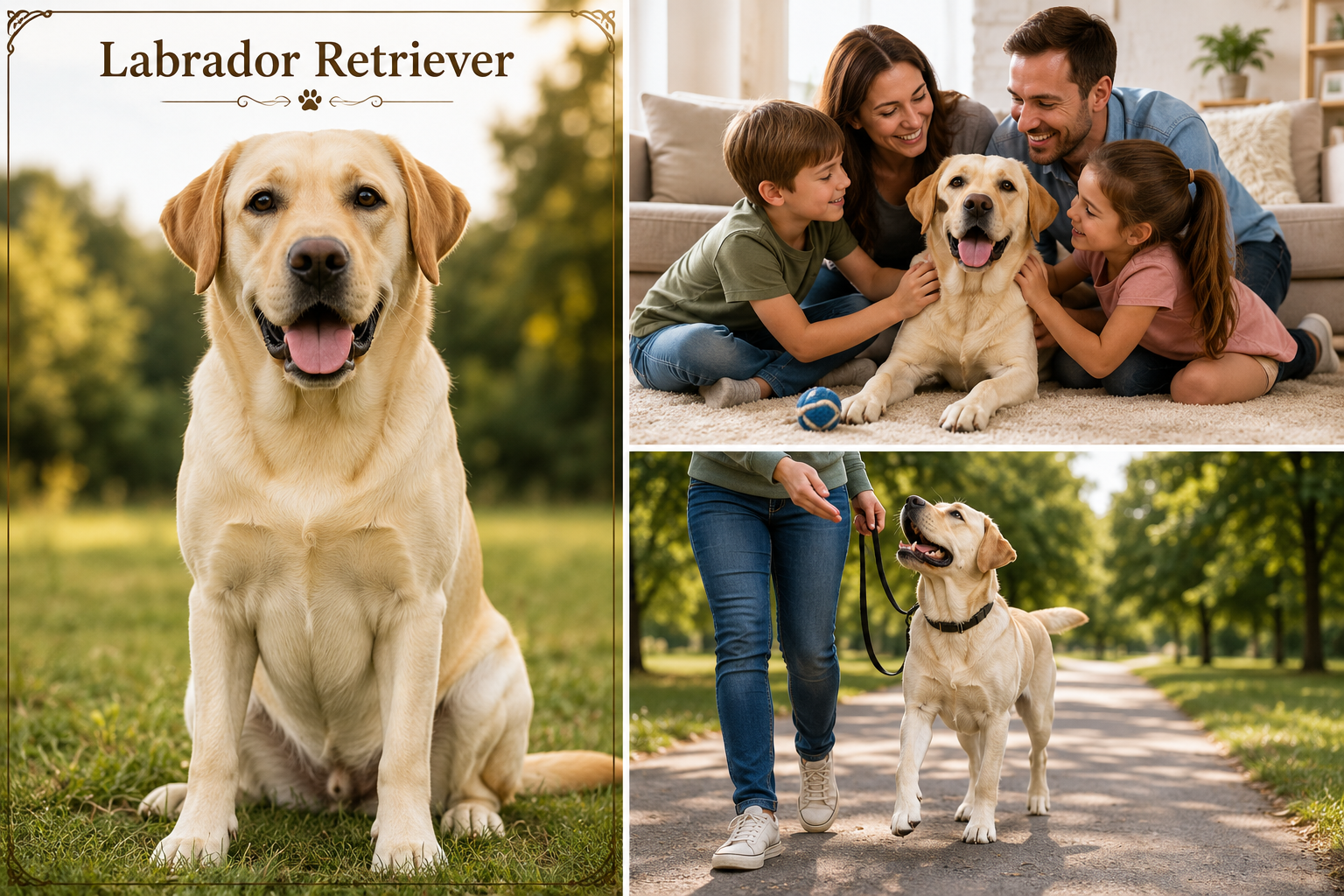
The Labrador Retriever can be an excellent family dog when the family is ready for its energy, strength, appetite, and need for training.
Many Labradors are affectionate with children and friendly with guests, but supervision is still important. A young Labrador may knock over small children simply because it is excited and strong.
Children should learn not to disturb the dog while it sleeps, eats, rests, or moves away. The dog should learn calm greetings, gentle play, and polite manners.
09
Best Products for This Breed
The best products for a Labrador Retriever are usually practical products that support exercise, training, grooming, feeding control, and rest. Choose products based on your dog’s age, size, chewing habits, and veterinary advice when needed.
Comfortable harness and strong leash
Useful for daily walks, especially while teaching loose-leash walking and polite outdoor behavior.
Slow feeder bowl
Helpful for Labradors that eat too quickly or get too excited around food.
Durable chew toys
Good chew options can redirect mouthy behavior and support calm downtime.
Shedding brush
A practical grooming tool helps manage loose hair from the Labrador’s dense coat.
Training treat pouch
Keeps rewards organized during short positive training sessions.
Supportive dog bed
A comfortable resting place helps the dog relax after walks, play, and family activity.
When adding affiliate links, choose products that are genuinely useful for Labrador owners. Avoid recommending products only because they are expensive or popular.
10
Final Thoughts
The Labrador Retriever is friendly, joyful, active, and deeply connected to family life. It can become a wonderful companion for people who can offer time, structure, exercise, and care.
This breed is not difficult because it is unfriendly. It becomes difficult when its energy, food motivation, strength, and need for guidance are ignored.
With healthy routines, positive training, weight control, grooming, veterinary care, and a present family, the Labrador Retriever can live a happy and meaningful life.
11
Medical Disclaimer
This article is for general dog-care information only. It is not veterinary advice and does not replace diagnosis, treatment, or guidance from a qualified veterinarian.
If your Labrador Retriever is sick, injured, limping, overheated, in pain, losing weight, gaining weight quickly, refusing food, drinking much more than usual, or behaving differently, contact a veterinarian.
Important: Always follow your veterinarian’s advice for diet, exercise limits, medication, vaccines, parasite prevention, and health concerns specific to your dog.
13
FAQ
Quick answers for people considering or caring for a Labrador Retriever.
Is the Labrador Retriever good for families?
Yes, it can be excellent for families that can provide training, exercise, supervision, and consistent rules.
Does a Labrador need a lot of exercise?
Most Labradors need regular daily exercise, but the amount should match age, health, weight, and fitness.
Is a Labrador easy to train?
Labradors often learn well with rewards and consistency, but they still need clear rules and daily practice.
Does the Labrador shed?
Yes. The short coat can shed regularly, so brushing helps manage loose hair.
Can a Labrador live in an apartment?
Yes, if the dog receives enough walks, training, activity, and family time.
Do Labradors gain weight easily?
Many Labradors are food motivated, so portions, treats, and weight should be monitored carefully.
What products are useful for a Labrador?
A harness, strong leash, slow feeder, shedding brush, durable chew toys, and supportive bed can be useful.
What is the biggest mistake with this breed?
Assuming friendliness means no training is needed. A Labrador still needs guidance, exercise, and manners.
Daily Dog Care Guide · Simple tips for a safer, healthier, happier dog.
🐾 Topic-matched picks
Everyday Gear to Compare for This Breed Guide
These are practical grooming, walking, or daily-care examples to compare — not breed-specific prescriptions.
Optional product • paid linkGrooming Gloves for Gentle Deshedding
A gentle handling-friendly grooming option for routine coat care.
View on Amazon →Optional product • paid linkNo-Pull Adjustable Dog HarnessA walking harness option to compare for fit, comfort, and everyday leash practice.
View on Amazon →Optional product • paid linkPortable Dog Water BottleUseful for keeping drinking water available during walks, travel, and warm-weather outings.
View on Amazon →Affiliate disclosure: As an Amazon Associate I earn from qualifying purchases. Always check size, fit, materials, labels, and your dog’s individual needs before buying.
🎨 Color Dogs & Pets
The Big Cute Puppy Coloring BookBig, friendly puppy scenes for relaxed screen-free coloring.View book details →A Creative Break for Dog-Loving Kids
Explore puppy coloring and activity books for screen-free creative time, quiet afternoons, travel, and young dog fans.
See all dog-care products & books →Helpful next steps
Continue with a related guide, tool, or product resource.