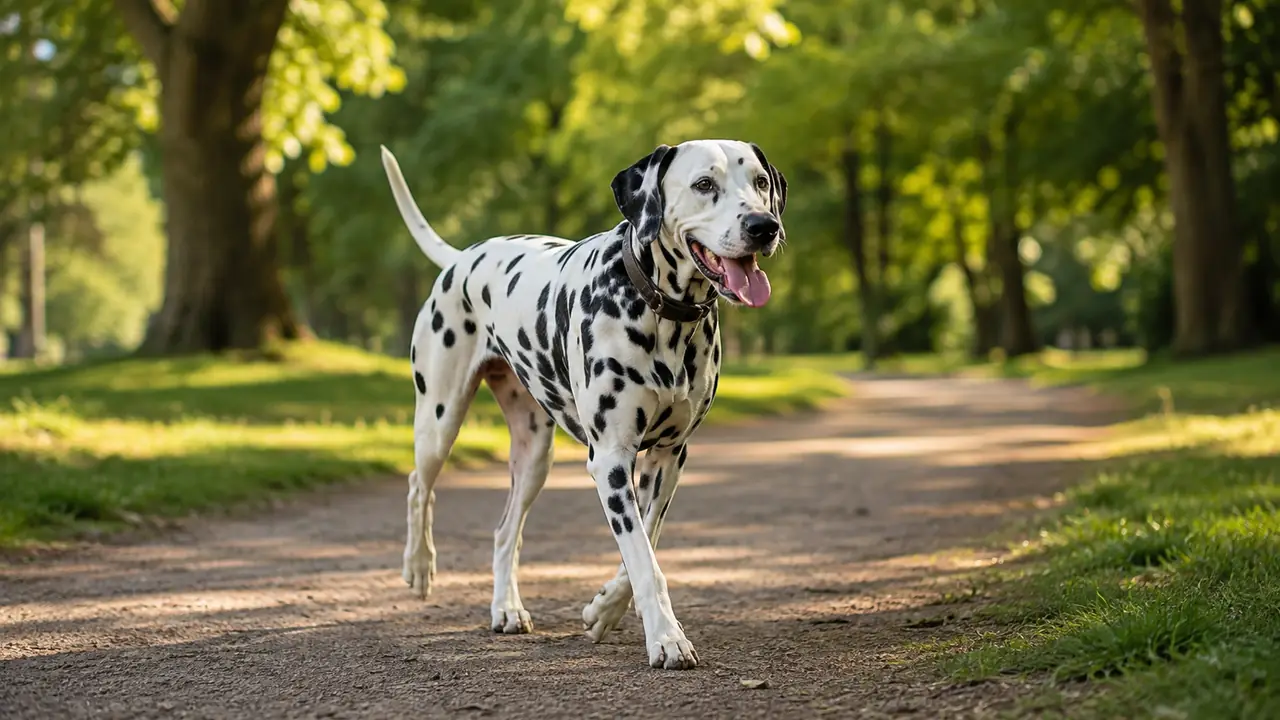
Lean, strong, energetic, and built for active routines.
Dog Breed Guide
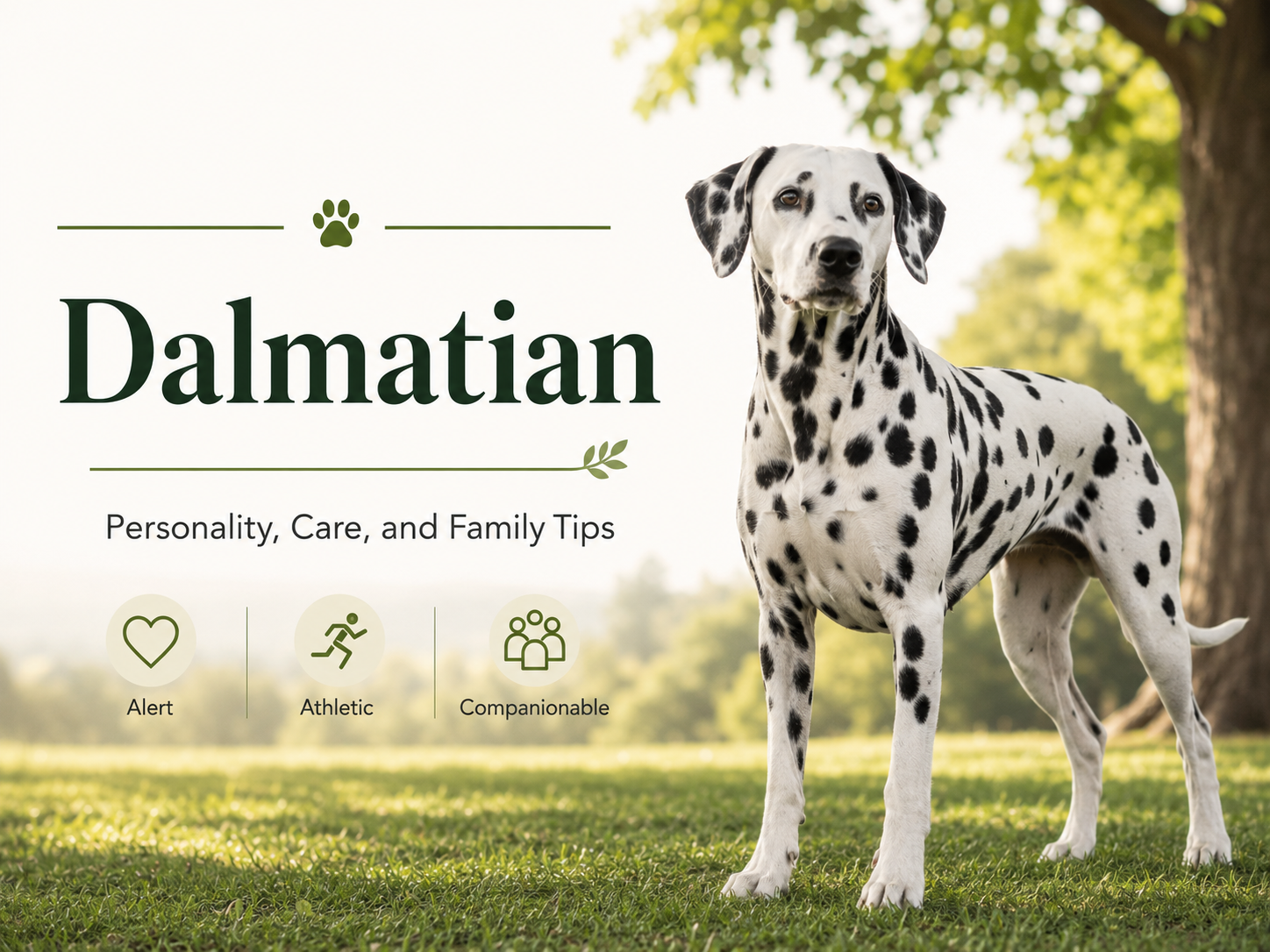
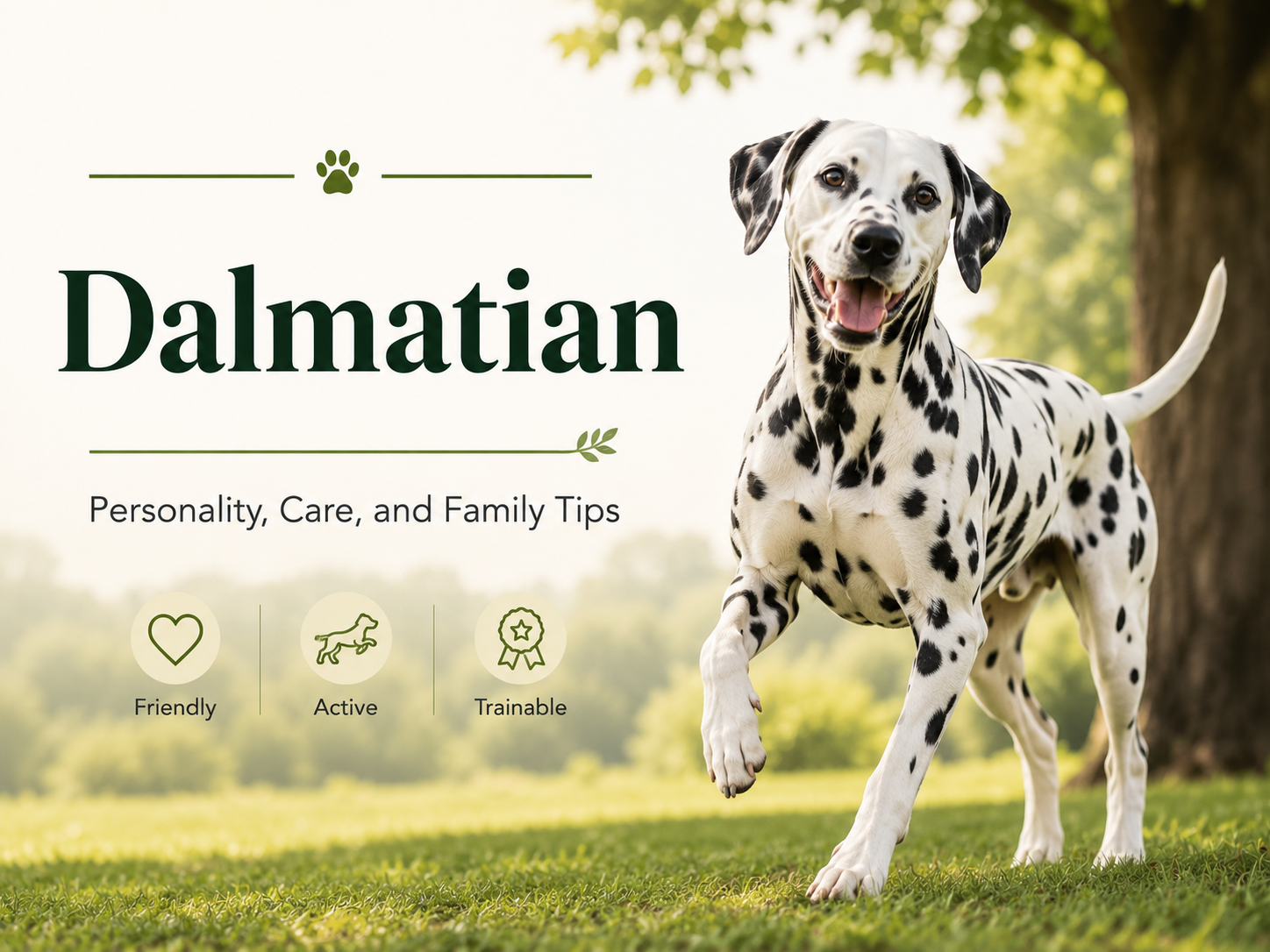
Dalmatian: Personality, Care, and Family Tips
A practical, human-written guide to the Dalmatian’s temperament, daily care, exercise, training, grooming, shedding, health notes, family life, and useful product ideas.
The Dalmatian is one of the most recognizable dog breeds in the world, with its spotted coat, athletic body, alert expression, and energetic personality.
Many people first notice the Dalmatian because of its famous appearance. But living with a Dalmatian is very different from admiring one in a picture.
This breed is usually active, intelligent, curious, and closely connected to family life. A Dalmatian often wants to walk, explore, learn, play, and take part in what is happening around the home.
A Dalmatian is not usually the best match for someone who wants a quiet, low-activity dog that spends most of the day on the sofa. This breed needs movement, training, socialization, mental activity, grooming, health awareness, and daily family involvement.
This detailed guide explains what daily life with a Dalmatian is really like, including personality, family life, children, apartment living, exercise, training, socialization, shedding, water interest, hydration, urinary-health awareness, hearing checks, puppy care, and product ideas for responsible owners.
Often intelligent, people-focused, sensitive, and curious.
Needs walks, exploration, training, mental work, and rest.
Coat care, hydration, hearing checks, and activity planning matter.
01
Breed Overview
The Dalmatian is a medium-sized athletic breed historically associated with the Dalmatia region and well known for its work beside horses, carriages, and active human routines.
This history helps explain one important point: the Dalmatian was not developed to be a sedentary dog. It has stamina, awareness, and a strong desire to be included in daily movement.
The short coat is white with black or liver-colored spots. Dalmatian puppies may look mostly white when very young, with their spots becoming more visible as they grow.
The coat may look easy, but the breed can shed more than many new owners expect. Short white hairs may appear on clothes, furniture, blankets, and car seats throughout the year.
Detailed owner fact
A Dalmatian is beautiful, but it is also active, intelligent, and easily bored. Daily exercise and mental work are not optional extras for this breed.
02
Personality and Temperament
The Dalmatian is often cheerful, alert, energetic, and strongly involved in family life. Many Dalmatians enjoy following people around the home, watching routines, joining walks, and checking what is happening in every room.
Not every Dalmatian has the same personality. Some are friendly with almost everyone. Others are more reserved and prefer to observe before approaching unfamiliar people.
This breed is intelligent and can learn quickly, but it may also have an independent streak. A Dalmatian may understand a cue and still take a moment to decide whether it wants to respond.
Because the breed can be sensitive, harsh treatment, shouting, confusion, or chaotic routines can make behavior worse. Calm training, clear rules, and regular activity usually work better.
- 01Often lively, alert, and closely involved with family.
- 02Can be social or reserved depending on the individual dog.
- 03Usually needs mental activity, not only physical exercise.
- 04Can become noisy or restless if bored.
- 05May be sensitive to harsh handling or unstable routines.
- 06Does best with active, patient, consistent owners.
03
Daily Care Needs
Daily care for a Dalmatian should include measured meals, fresh water, regular walks, mental enrichment, training, grooming checks, calm rest, social contact, and predictable household rules.
A Dalmatian should not be treated as a decorative spotted dog or left alone outside for long hours. Without activity and connection, it may become bored, noisy, destructive, or difficult to manage.
A useful routine includes outdoor movement, sniffing, simple training, quiet time, and family involvement. The dog should learn that life includes both activity and calm.
- 01Provide daily walks and exploration time.
- 02Offer mental games such as scent work and reward searches.
- 03Use short training sessions to build practical manners.
- 04Keep fresh water available and observe drinking and urination changes.
- 05Brush regularly because short hair can still shed heavily.
- 06Teach calm rest after activity.
Practical routine tip
A balanced Dalmatian day may include a morning walk, breakfast, rest, a short training session, scent games, an evening walk, brushing or paw checks, and a calm bedtime routine.
04
Exercise Needs
The Dalmatian is an active breed and usually needs regular movement every day. But movement alone is not enough.
A Dalmatian often benefits from walks, nature routes, recall games, scent work, supervised toy play, simple obstacle tasks, and training exercises. Mental enrichment helps the dog use energy in a more balanced way.
The goal is not to make every day an intense workout. Too much unmanaged excitement can make some dogs harder to calm. A better goal is activity, learning, and rest.
Puppies and young dogs should not be pushed into forced running, repeated jumping, or intense exercise. Their bodies are still developing and need time.
- 01Use regular walks rather than only short toilet breaks.
- 02Add sniffing, recall practice, and training games.
- 03Avoid overworking puppies and growing dogs.
- 04Use long lines for safe recall practice when appropriate.
- 05Balance activity with calm indoor rest.
- 06Adjust exercise for age, health, heat, and fitness.
05
Training Tips
Training should begin early with a Dalmatian. This does not mean demanding too much from a puppy. It means teaching small habits before energy and size make mistakes harder to manage.
Important skills include recall, loose-leash walking, not jumping on people, calm greetings, leaving objects, settling indoors, staying relaxed around guests, and not chasing bicycles, joggers, or moving objects.
The Dalmatian often responds well to positive, clear, short training sessions. Small rewards, calm voice, games, repetition, and fair rules are usually more effective than shouting or pressure.
Socialization should be thoughtful. The dog does not need to meet every person or play with every dog. It needs calm, positive experiences with different places, sounds, surfaces, people, and well-managed dogs.
- 01Teach recall and leash manners from the start.
- 02Reward calm behavior around visitors and outdoor distractions.
- 03Practice “leave it,” “drop,” “wait,” and “settle.”
- 04Prevent chasing habits around bikes, runners, and traffic.
- 05Use short sessions and avoid harsh corrections.
- 06Ask a qualified trainer for help if excitement or recall becomes difficult.
Calm training tip
Teaching a Dalmatian to relax after activity is just as important as teaching movement, recall, and outdoor skills.
06
Grooming Needs
The Dalmatian has a short coat, but short does not mean no grooming. Many Dalmatians shed throughout the year, and the white hair can be very visible on dark clothing and furniture.
Regular brushing helps remove loose hair and gives owners a chance to check the skin, paws, ears, nails, teeth, and body condition.
The white coat also makes dirt, mud, skin marks, or small irritation easier to notice. After outdoor walks, especially in nature, check paws, belly, ears, and skin.
- 01Brush regularly with a short-coat brush or grooming mitt.
- 02Expect year-round shedding in many dogs.
- 03Check skin, paws, nails, ears, teeth, and movement.
- 04Use dog-safe shampoo only when bathing is needed.
- 05Dry the dog well after wet walks, baths, or water play.
- 06Introduce handling of paws, ears, and mouth from puppyhood.
07
Health and Safety Notes
Health and safety for a Dalmatian include hydration, urinary-health awareness, hearing checks, body condition, safe exercise, skin checks, dental care, and regular veterinary visits.
Fresh water should always be available. If a Dalmatian drinks much less than usual, urinates differently, strains to urinate, has blood in the urine, shows pain, or behaves unusually, contact a veterinarian promptly.
Some Dalmatians may need special attention around urinary health. Owners should not improvise special diets or remove major food groups without veterinary guidance.
Hearing is another important topic for the breed. When choosing a puppy, ask about hearing checks such as BAER testing and discuss the results clearly with the breeder or veterinarian.
A dog with hearing difficulty can still live a good life, but it may need different communication, careful safety management, and a family prepared to train with visual cues.
Important safety note: Difficulty urinating, blood in urine, collapse, severe weakness, sudden hearing concerns, painful swelling, repeated vomiting, serious injury, or sudden behavior changes should be discussed with a veterinarian immediately.
08
Is This Breed Good for Families?
The Dalmatian can be a wonderful family dog for active homes that provide time, training, exercise, supervision, and calm rules.
This breed may suit families who enjoy walking, outdoor activity, training games, and including the dog in daily routines. It may be less suitable for homes where the dog is expected to stay alone for long hours with little activity.
With children, adult supervision matters. A Dalmatian may be friendly and playful, but its energy can be too much for small children if there are no rules.
Children should not pull ears or tail, climb on the dog, disturb meals, enter the resting area, chase the dog indoors, or hug too tightly. The dog should learn calm behavior, and children should learn respectful behavior.
- 01Best for active families with time for walks and training.
- 02Needs supervision around young children.
- 03Requires exercise, mental work, and calm rest.
- 04May become bored if left alone too long.
- 05Needs regular grooming despite the short coat.
- 06Can become affectionate, fun, and devoted with good guidance.
09
Best Products for This Breed
The best products for a Dalmatian are practical items that support safe walking, recall practice, coat care, hydration, mental enrichment, rest, and active family routines. Choose products based on your dog’s size, health, chewing habits, training stage, and veterinary advice when needed.
Well-fitted harness and strong leash
Useful for daily walks when combined with loose-leash training.
Long line for recall practice
Allows controlled freedom while building recall skills in safe open areas.
Short-coat grooming mitt
Helps remove loose hair and check the skin during shedding periods.
Travel water bottle or portable bowl
Useful for active walks, outdoor trips, and hydration during warm weather.
Scent-game toys or treat puzzles
Support mental enrichment and help reduce boredom at home.
Large washable bed or mat
A clear rest area supports calm settling after activity.
When adding affiliate links, recommend only products that genuinely help Dalmatian owners. Avoid products that encourage unsafe off-leash habits, overexercising puppies, poor hydration, or constant excitement.
10
Final Thoughts
The Dalmatian is beautiful, athletic, intelligent, lively, and often deeply involved in family life.
But this breed should not be chosen only for its famous spotted coat or elegant appearance. A Dalmatian needs daily movement, mental work, training, socialization, grooming, health awareness, hydration, and family participation.
If it is left without activity, training, or companionship, it may become bored, noisy, or difficult to manage. If it is guided with patience, structure, and regular activity, it can become a fun, affectionate, and enthusiastic companion.
For owners who enjoy an active lifestyle and want a dog that truly takes part in daily life, the Dalmatian can be a special breed.
11
Medical Disclaimer
This article is for general dog-care information only. It is not veterinary advice and does not replace diagnosis, treatment, diet planning, hearing assessment, behavior assessment, or guidance from a qualified veterinarian or certified professional trainer.
If your Dalmatian has difficulty urinating, blood in urine, appetite changes, vomiting, diarrhea, unusual tiredness, pain, limping, skin problems, hearing concerns, injury, or sudden behavior changes, contact a veterinarian.
Important: Always follow your veterinarian’s advice for diet, hydration, urinary health, hearing checks, exercise, medication, vaccines, parasite prevention, and health concerns specific to your dog. For behavior or recall concerns, seek qualified help early.
13
FAQ
Quick answers for people considering or caring for a Dalmatian.
Is the Dalmatian good for families?
Yes, it can be a loving family dog for active homes that provide walks, training, supervision, mental work, and calm structure.
Can a Dalmatian live in an apartment?
It can in some homes, but only with enough daily walks, training, mental activity, and calm rest. Short toilet breaks are not enough.
Does a Dalmatian need a lot of exercise?
Yes. It is an active breed that usually needs regular exercise and mental enrichment, but it also needs rest and calm skills.
Does a Dalmatian shed?
Yes. The coat is short, but many Dalmatians shed throughout the year. Regular brushing helps manage loose hair.
Is the Dalmatian easy to train?
It can learn well, but it needs consistency, positive training, recall practice, and calm handling.
Does the Dalmatian like water?
Some do, but not all. Introduce water gradually, keep the experience safe and positive, and never force a dog to swim.
Can Dalmatians have hearing problems?
Hearing concerns are known in the breed, so puppy buyers should ask about hearing checks such as BAER testing.
What is the biggest mistake with this breed?
Choosing a Dalmatian for its famous spots while underestimating exercise, training, shedding, hydration, health awareness, and family involvement.
Daily Dog Care Guide · Simple tips for a safer, healthier, happier dog.
🐾 Topic-matched picks
Everyday Gear to Compare for This Breed Guide
These are practical grooming, walking, or daily-care examples to compare — not breed-specific prescriptions.
Optional product • paid linkRubber Grooming Brush for Short Coats
A simple coat-care option to compare for short-haired dogs and routine loose-hair removal.
View on Amazon →Optional product • paid linkNo-Pull Adjustable Dog HarnessA walking harness option to compare for fit, comfort, and everyday leash practice.
View on Amazon →Optional product • paid linkDog Paw Cleaner CupA practical cleanup tool for muddy paws after outdoor walks.
View on Amazon →Affiliate disclosure: As an Amazon Associate I earn from qualifying purchases. Always check size, fit, materials, labels, and your dog’s individual needs before buying.
🎨 Color Dogs & Pets
The Big Cute Puppy Coloring BookBig, friendly puppy scenes for relaxed screen-free coloring.View book details →A Creative Break for Dog-Loving Kids
Explore puppy coloring and activity books for screen-free creative time, quiet afternoons, travel, and young dog fans.
See all dog-care products & books →Helpful next steps
Continue with a related guide, tool, or product resource.