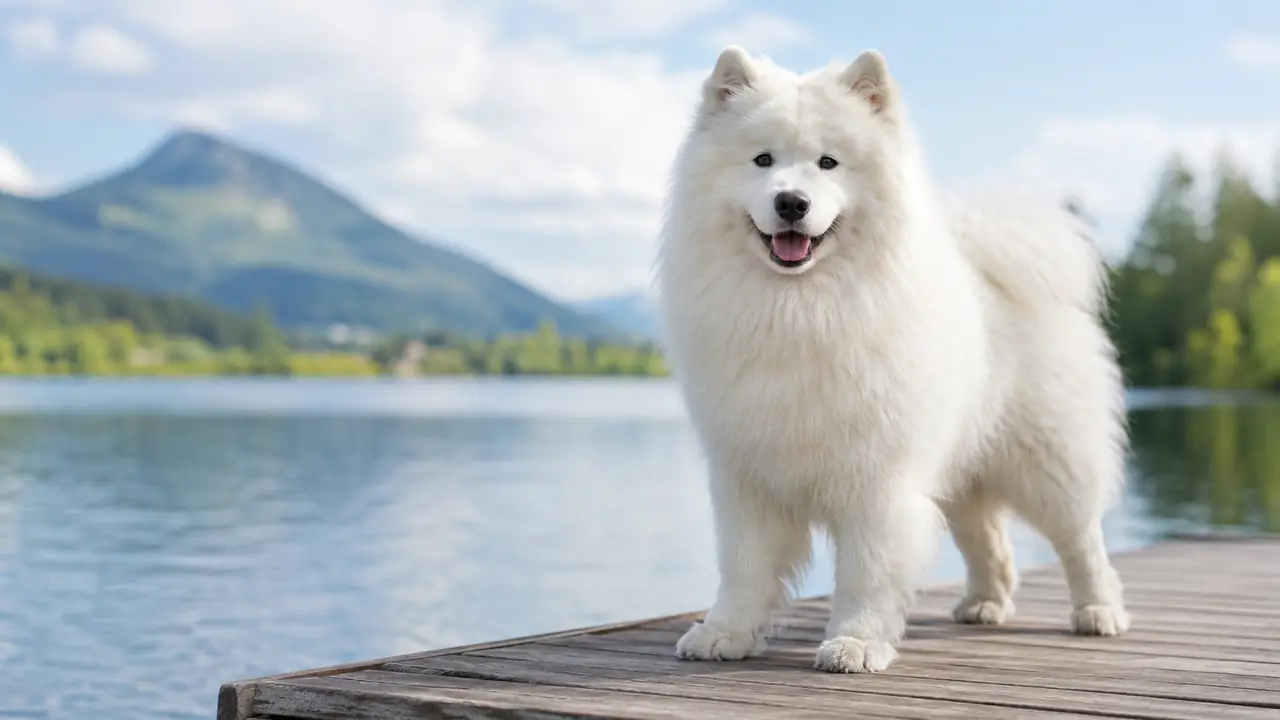
Compact, agile, active, and built for movement.
Dog Breed Guide
Samoyed: Personality, Care, and Family Tips
A practical, human-written guide to the Samoyed’s temperament, daily care, exercise, training, grooming, shedding, heat safety, family life, and useful product ideas.
The Samoyed is famous for its white coat, cheerful expression, dark eyes, and “smiling” face, but this beautiful northern breed is much more than a pretty dog.
Behind the soft coat is an energetic, intelligent, social dog that usually wants to be close to its family and involved in daily life.
A Samoyed may be affectionate, playful, vocal, curious, and full of personality. It can be a wonderful family companion, but it is not a low-effort breed.
This detailed guide explains what daily life with a Samoyed is really like, including personality, family life, children, apartment living, exercise, training, socialization, grooming, heavy shedding, heat safety, weight control, puppy care, health signs, and product ideas for responsible owners.
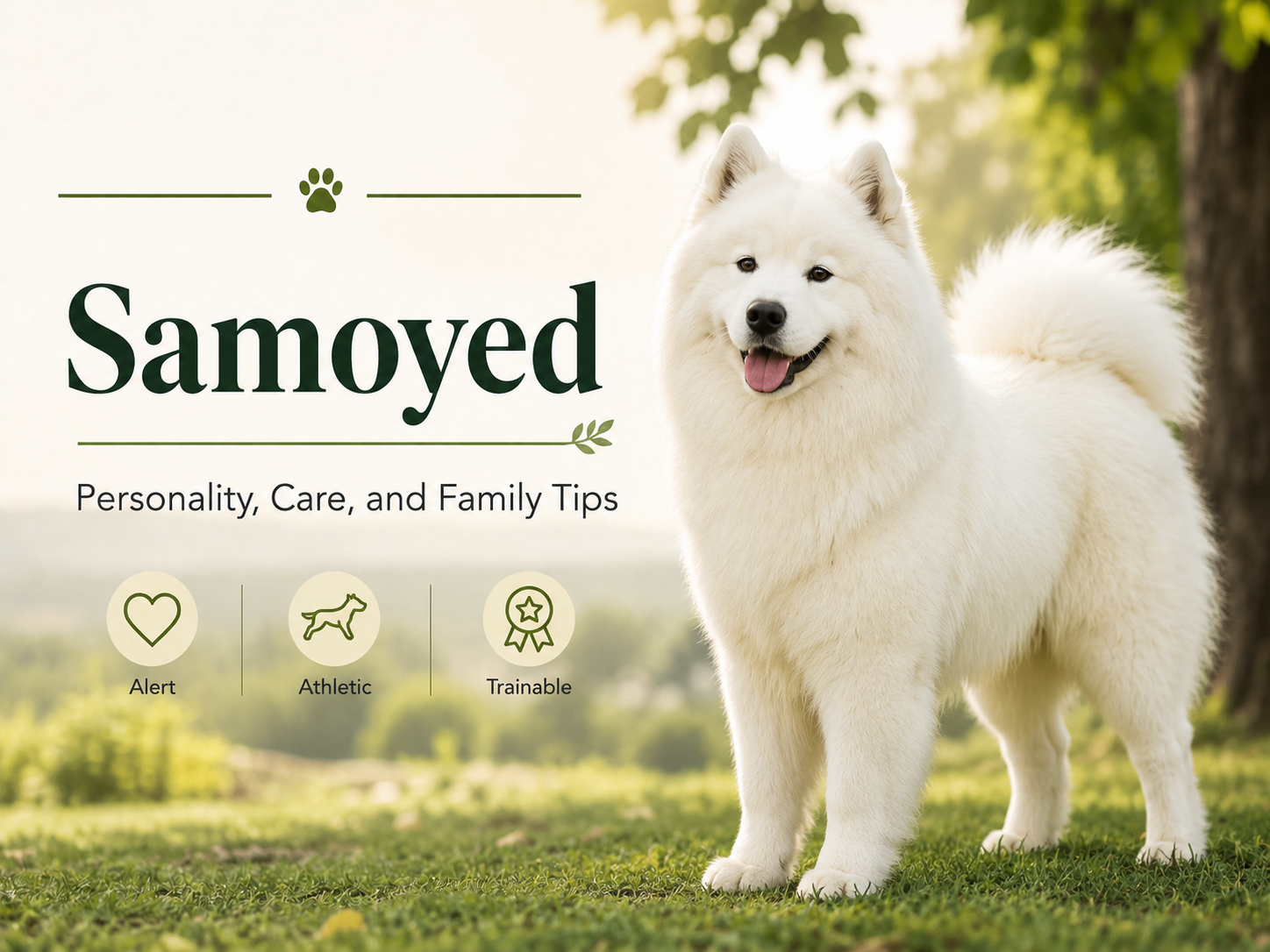
Often affectionate, expressive, vocal, and closely bonded to family.
Beautiful, protective, and high-maintenance during shedding seasons.
Coat care, cool routines, exercise, training, and companionship matter.
01
Breed Overview
The Samoyed is a northern breed historically connected with cold climates, human partnership, sled work, and life close to people.
Its body is strong but elegant, and its dense double coat is one of the breed’s most recognizable features. Most people know the Samoyed for its white coat, although cream or biscuit shading can also appear.
The coat is beautiful, but it is also a responsibility. Regular brushing is not optional, especially during shedding periods when large amounts of undercoat may come out.
The breed’s famous smile is charming, but it should not hide the fact that the Samoyed is an active, social dog with real needs for movement, companionship, and training.
Detailed owner fact
A Samoyed is not a decorative white dog. It is a northern working-type companion that needs activity, grooming, cool rest, social connection, and calm daily structure.
02
Personality and Temperament
The Samoyed is often cheerful, friendly, affectionate, expressive, and strongly connected to family life. Many Samoyeds want to be where the people are.
They may follow family members around the home, lie near busy areas, notice when someone prepares for a walk, and greet returning people with big enthusiasm.
This breed can also be independent. A Samoyed may understand a cue but still decide whether the request feels worth doing. This is not a reason for harshness. It is a reason to train with patience, rewards, and consistency.
Some Samoyeds are quite vocal. They may bark, “talk,” howl, or make expressive sounds when excited, bored, or asking for attention. Families in apartments or close neighborhoods should consider this carefully.
- 01Often affectionate and closely attached to family.
- 02Can be social, expressive, and playful.
- 03May be vocal when excited, bored, or seeking attention.
- 04Needs training that is patient and motivating.
- 05May struggle with long daily isolation.
- 06Does best with present, active, patient owners.
03
Daily Care Needs
Daily care for a Samoyed should include fresh water, measured meals, regular walks, mental activity, training, coat care, calm rest, family contact, and a cool place to relax.
This is not a breed that usually enjoys being forgotten outside or left alone for long hours. A Samoyed often wants shared life and may become noisy, restless, or destructive if bored or isolated.
A useful routine includes movement, grooming checks, short training, family time, and enough rest. The dog should have things to do, but it should also learn how to settle quietly after activity.
- 01Provide daily walks and outdoor time during suitable weather.
- 02Brush the coat regularly and more often during shedding periods.
- 03Keep fresh water available at all times.
- 04Plan cooler rest areas, especially during warm seasons.
- 05Use short training sessions for recall, leash manners, and calm behavior.
- 06Avoid long isolation without preparation and support.
Practical routine tip
A balanced Samoyed day may include a cool morning walk, breakfast, rest, brushing, a short training session, a scent game, an evening walk, and calm family time indoors.
04
Exercise Needs
The Samoyed is an active breed. It usually needs regular exercise, but this does not mean every day must become a hard workout.
Many Samoyeds enjoy long walks, cool-weather outings, nature routes, scent games, recall practice, simple training games, and activities shared with the family.
The goal is not to exhaust the dog until it collapses. The goal is to provide a complete life: movement, exploration, learning, social contact, rest, and comfort.
Exercise should always be adjusted to the dog’s age, health, fitness, and the weather. Puppies should not be forced into intense exercise or repetitive jumping.
- 01Use regular walks rather than random intense bursts.
- 02Add scent games, recall practice, and training tasks.
- 03Plan more activity during cooler parts of the day.
- 04Avoid forced exercise in hot or humid weather.
- 05Balance movement with real rest and recovery.
- 06Adjust activity for puppies, adults, seniors, and health needs.
05
Training Tips
Training a Samoyed should begin early and should be built around trust, motivation, and consistency.
This breed is intelligent, but it can also be independent and easily distracted by smells, people, dogs, sounds, or movement. Recall should be practiced carefully and safely over time.
Important skills include loose-leash walking, recall, waiting at doors, settling on a mat, leaving objects, not jumping on guests, accepting brushing, and staying calm when visitors arrive.
Harsh training is not useful. A Samoyed usually learns better with short sessions, food rewards, toys, praise, calm repetition, and clear expectations.
- 01Practice recall with a long line in safe areas.
- 02Teach leash manners before pulling becomes a habit.
- 03Reward quiet behavior instead of attention barking.
- 04Teach brushing and handling as calm daily routines.
- 05Use short, positive, consistent sessions.
- 06Seek qualified help early if barking, pulling, or recall becomes difficult.
Training safety tip
Many Samoyeds love to explore. In unfenced areas, safety should come before freedom. A long line can support recall practice while reducing risk.
06
Grooming Needs
The Samoyed’s coat is one of its most beautiful features, but it is also one of the biggest responsibilities of the breed.
The double coat includes a dense undercoat and a longer outer coat. During shedding seasons, a Samoyed can lose a very large amount of hair.
Regular brushing helps remove loose undercoat, reduce tangles, check the skin, and keep the dog more comfortable. During heavy shedding, brushing may be needed much more often.
The coat should not be shaved without veterinary or expert grooming advice. The coat has protective functions, and poor clipping choices can create problems.
- 01Brush regularly and more often during coat blow periods.
- 02Check for mats, trapped undercoat, skin irritation, and moisture.
- 03Dry the coat thoroughly after baths or heavy rain.
- 04Check ears, nails, teeth, paws, and skin as part of grooming.
- 05Introduce grooming from puppyhood with rewards and patience.
- 06Use an experienced groomer if the coat becomes difficult to manage.
07
Health and Safety Notes
Health and safety for a Samoyed include heat management, coat care, weight control, skin checks, eye checks, joint comfort, dental care, exercise planning, and regular veterinary visits.
Heat safety is especially important. On warm days, walks should be planned for early morning or evening. Avoid intense activity during the hottest hours, hot pavement, closed cars, and long exercise in direct sun.
Fresh water, shade, ventilation, and a cool place to rest are essential. If a Samoyed slows suddenly, pants heavily, seems distressed, becomes weak, or appears confused, stop activity and seek veterinary guidance promptly.
When choosing a puppy, ask about the parents’ health, temperament, available veterinary records, hip and eye checks, and any breed-relevant screening used by responsible breeders.
Important safety note: Heat distress, collapse, severe weakness, breathing difficulty, painful swelling, repeated vomiting, serious injury, eye problems, or sudden behavior changes should be discussed with a veterinarian immediately.
08
Is This Breed Good for Families?
The Samoyed can be a wonderful family dog for homes that are present, active, patient, and willing to manage grooming and heat safety.
Many Samoyeds are playful and affectionate with family members. They may enjoy children, walks, play, and shared activities. But adult supervision is still important.
Even a friendly Samoyed can knock over a small child by accident when excited. Children should not pull the coat, disturb meals, enter the resting area, climb on the dog, or treat the dog like a white stuffed toy.
The dog should learn calm behavior, and children should learn respectful behavior. A good relationship is built through guidance, not by leaving the dog and children to figure it out alone.
- 01Best for families with time for walks and grooming.
- 02Needs supervision around young children.
- 03May be vocal, especially when bored or excited.
- 04Needs careful heat management in warm climates.
- 05Should not be left alone for long daily isolation.
- 06Can become affectionate, cheerful, and deeply loved with good care.
09
Best Products for This Breed
The best products for a Samoyed are practical items that support coat care, cool rest, safe walking, recall practice, mental enrichment, and daily comfort. Choose products based on your dog’s coat condition, age, size, climate, chewing habits, health, and veterinary or grooming advice when needed.
Double-coat grooming brush and comb
Useful for removing loose undercoat, checking mats, and managing heavy shedding.
High-velocity dryer or grooming towel
Can help dry the thick coat more thoroughly after baths when used safely.
Well-fitted harness and sturdy leash
Helpful for daily walks when combined with loose-leash training.
Long line for recall practice
Allows controlled exploration while building safer recall habits.
Cooling mat or cool rest area
Can support warm-weather comfort, but never replaces shade, water, and heat avoidance.
Scent-game toys or treat puzzles
Support mental enrichment and help reduce boredom indoors.
When adding affiliate links, recommend only products that genuinely help Samoyed owners. Avoid products that encourage unsafe off-leash freedom, poor coat management, overheating, or constant excitement.
10
Final Thoughts
The Samoyed is beautiful, social, energetic, expressive, and often deeply attached to family life.
But this breed should not be chosen only for its smile, white coat, or online popularity. A Samoyed needs regular exercise, grooming, training, heat awareness, companionship, and a family ready for real daily care.
If it is left bored, ungroomed, overheated, isolated, or without rules, it may become noisy, restless, or difficult to manage. If it is guided with patience, structure, and affection, it can become a joyful and unforgettable companion.
For owners who love northern dogs and are ready for coat care, activity, and daily involvement, the Samoyed can be a very special family breed.
11
Medical Disclaimer
This article is for general dog-care information only. It is not veterinary advice and does not replace diagnosis, treatment, diet planning, grooming assessment, behavior assessment, or guidance from a qualified veterinarian, professional groomer, or certified professional trainer.
If your Samoyed has heat distress, breathing difficulty, collapse, unusual tiredness, limping, pain, skin problems under the coat, eye concerns, appetite changes, vomiting, diarrhea, injury, or sudden behavior changes, contact a veterinarian.
Important: Always follow your veterinarian’s advice for diet, weight control, heat safety, coat and skin concerns, exercise, medication, vaccines, parasite prevention, and health concerns specific to your dog. For grooming or behavior concerns, seek qualified help early.
13
FAQ
Quick answers for people considering or caring for a Samoyed.
Is the Samoyed good for families?
Yes, it can be a loving family dog for homes that provide exercise, grooming, supervision, training, companionship, and heat-safe routines.
Can a Samoyed live in an apartment?
It can in some homes, but only with daily walks, mental activity, grooming, family time, and careful management of barking and heat.
Does a Samoyed bark a lot?
Some Samoyeds are vocal. They may bark or make expressive sounds when excited, bored, or seeking attention. Training and routine help.
Does a Samoyed shed?
Yes. Samoyeds have a thick double coat and can shed heavily, especially during coat-blowing periods.
Does a Samoyed struggle with heat?
It can. Hot weather should be managed carefully with cooler walk times, shade, water, ventilation, and avoiding intense activity.
Is the Samoyed easy to train?
It is intelligent and can learn well, but it may be independent. Rewards, patience, short sessions, and consistency work best.
Can a Samoyed stay alone?
It can learn short periods alone, but this social breed is usually not ideal for long daily isolation.
What is the biggest mistake with this breed?
Choosing a Samoyed only for its beauty while underestimating grooming, shedding, heat safety, exercise, barking, and companionship needs.
Daily Dog Care Guide · Simple tips for a safer, healthier, happier dog.
🐾 Topic-matched picks
Everyday Gear to Compare for This Breed Guide
These are practical grooming, walking, or daily-care examples to compare — not breed-specific prescriptions.
Optional product • paid linkUndercoat Rake for Thick Double Coats
Useful to compare for dense double coats during regular coat maintenance and seasonal shedding.
View on Amazon →Optional product • paid linkSelf-Cleaning Slicker BrushA practical brushing option for coats that need regular detangling and loose-hair removal.
View on Amazon →Optional product • paid linkPortable Dog Water BottleUseful for keeping drinking water available during walks, travel, and warm-weather outings.
View on Amazon →Affiliate disclosure: As an Amazon Associate I earn from qualifying purchases. Always check size, fit, materials, labels, and your dog’s individual needs before buying.
🎨 Color Dogs & Pets
Puppy Breed Color-Along Coloring BookDog-breed inspired color-along fun for creative kids.View book details →A Creative Break for Dog-Loving Kids
Explore puppy coloring and activity books for screen-free creative time, quiet afternoons, travel, and young dog fans.
See all dog-care products & books →Helpful next steps
Continue with a related guide, tool, or product resource.