Dog Feeding Schedule: How Often and When to Feed Your Dog
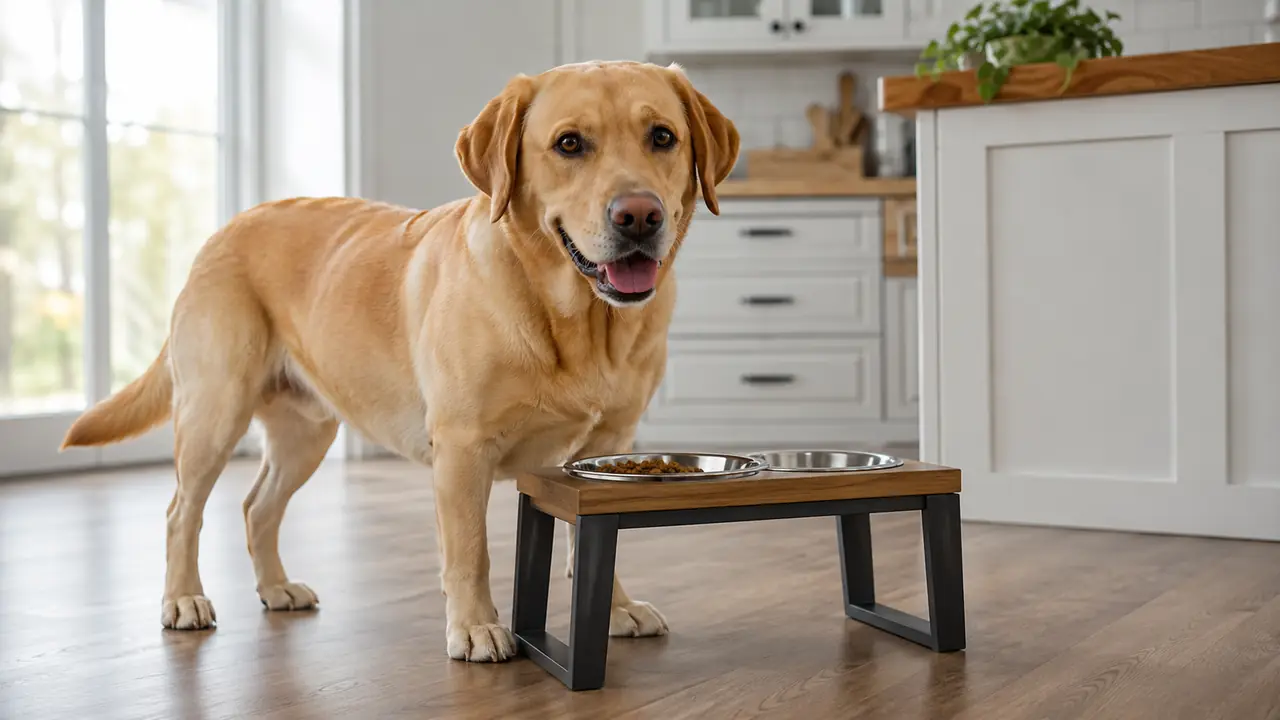
A useful dog feeding schedule is more than choosing breakfast and dinner times. Meal frequency, portion size, life stage, body condition, treats, water, health, and the way food is managed around the home all matter. This guide explains how to build a practical schedule without assuming every dog should eat exactly the same way.
Updated August 13, 2026 · Veterinary nutrition and behavior sources checked
Feeding a dog can look simple: put food in a bowl, let the dog eat, and repeat later.
But a feeding schedule affects much more than the time printed on a clock. It determines how easily you can measure intake, monitor appetite, manage treats, notice digestive changes, coordinate medication when relevant, and keep multiple family members from accidentally feeding the same dog twice.
The best schedule also changes with life stage. A young puppy cannot simply follow the same meal pattern as a healthy adult dog, and a senior dog with medical or dental problems may need another adjustment.
The goal is not to create one rigid rule for every dog. It is to build a feeding pattern that provides appropriate nutrition in measured amounts and makes changes in health easier to notice.
Quick Answer: How Often Should You Feed a Dog?
Healthy adult dogs commonly do well with one or two meals per day, although many households use two measured meals because portion control and intake are easy to monitor.
Puppies need more frequent meals while growing. A commonly used veterinary schedule is approximately four meals per day from 6–12 weeks, three meals from 3–6 months, and two meals from 6–12 months.
These are general starting points, not prescriptions. Breed size, growth rate, health, diet, body condition, medications, and veterinary advice can change the schedule.
Whatever schedule you use, measure the total daily food, include treats and extras in the nutrition plan, keep fresh water available unless your veterinarian gives different medical instructions, and monitor your dog's weight and body condition over time.
Dog Feeding Schedule by Life Stage
Young puppies need frequent access to an appropriate complete and balanced growth diet. Individual recommendations may differ.
As the puppy grows, meals can usually become less frequent while the total daily food remains matched to growth and body condition.
Many puppies move toward an adult-style meal pattern during this stage, but they may still require a growth diet.
Portion-controlled feeding is useful for many adults. Two measured meals are a practical choice for many households, but individual needs vary.
Important: meal frequency and the type of food are not the same decision. Large and giant-breed puppies can reach skeletal maturity later than smaller dogs and may need an appropriate growth diet for longer. Ask your veterinarian when your puppy should transition to adult food.
In This Dog Feeding Schedule Guide
1. Why a Dog Feeding Schedule Matters
Predictable meal times make food intake easier to measure and observe.
If food is constantly added to a bowl without measuring how much was eaten, it becomes harder to know whether appetite has changed or whether the dog is gradually consuming too many calories.
Scheduled feeding can also help the household coordinate care.
2. How Often Should You Feed an Adult Dog?
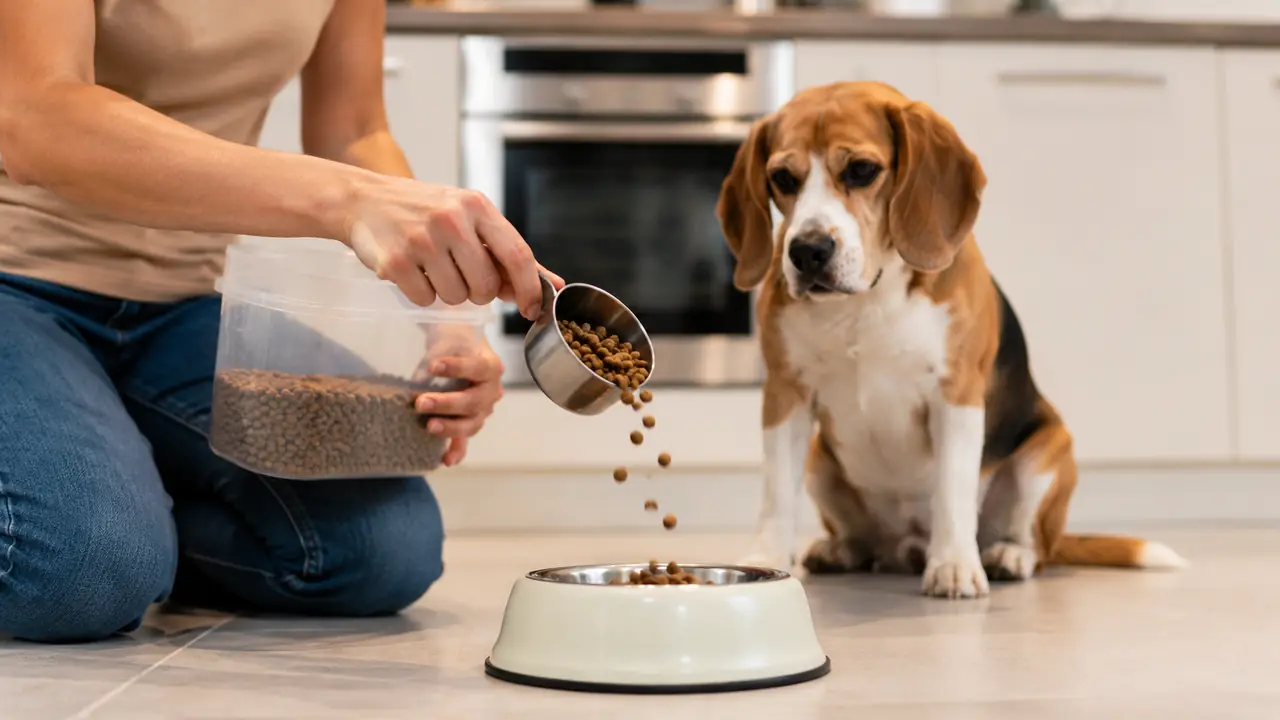
Many healthy adult dogs can be fed once or twice daily.
For many households, dividing the daily allowance into two measured meals is practical because the dog receives food at two predictable points and the owner can easily monitor intake.
One meal per day may be appropriate for some healthy adults, while medical conditions, medications, gastrointestinal issues, activity patterns, or other individual factors may make a different schedule preferable.
Rather than concentrating only on the number of meals, also ask:
- Is the total daily calorie intake appropriate?
- Is the dog maintaining a healthy body condition?
- Does the schedule fit any medical or medication requirements?
- Is the dog digesting the food comfortably?
- Are treats and extras being included?
A veterinarian can help you adjust meal frequency if your dog has a health condition or difficulty maintaining an appropriate weight.
Back to guide3. Puppy Feeding Schedule: Why Young Puppies Need More Meals
Puppies have high nutritional requirements because they are growing, but their feeding plan should support controlled, healthy growth rather than simply providing as much food as they will eat.
General veterinary feeding schedules use more frequent meals in early puppyhood and gradually reduce meal frequency with age.
A practical general schedule is:
- 6–12 weeks: about four meals per day
- 3–6 months: about three meals per day
- 6–12 months: about two meals per day
Small puppies, large or giant breeds, puppies with health conditions, and puppies with unusual growth or nutritional needs may require an adjusted plan.
A complete and balanced diet formulated for growth should generally be used until skeletal maturity. Large and giant-breed puppies require particular attention to appropriate growth nutrition and should not simply be switched to adult food based on a calendar date alone.
Avoid adding calcium, vitamin, mineral, or other supplements to a complete growth diet unless your veterinarian specifically recommends them.
Overfeeding a growing puppy is not a shortcut to healthy development. Growth and body condition should be monitored over time.
Back to guide4. Senior Dogs May Need a Feeding Plan Review
Becoming a senior does not automatically mean every dog needs the same “senior” food or a completely different meal frequency.
Older dogs vary greatly. One senior may remain active and maintain an ideal weight, while another develops dental disease, muscle loss, obesity, kidney disease, gastrointestinal problems, cognitive changes, or medication needs that affect feeding.
Review the feeding plan when you notice:
- weight gain or unexplained weight loss
- muscle loss
- reduced appetite
- difficulty chewing
- changes in thirst or urination
- vomiting, diarrhea, or constipation
- changes in activity or mobility
- new medical conditions or medications
A veterinarian can help determine whether the food, calories, nutrient profile, texture, or meal schedule needs adjustment.
Back to guide5. What Times Should You Feed Your Dog?
There is no universal requirement that breakfast or dinner must happen at one exact clock time.
What matters more is that the schedule is practical, reasonably consistent, and compatible with the dog's health and household routine.
For a healthy adult eating two meals, many owners choose one meal in the morning and another in the evening.
If your dog takes medication with food, has diabetes, gastrointestinal disease, or another condition affected by meal timing, follow the schedule provided by your veterinarian instead of a generic online timetable.
Useful feeding anchors include:
- after the normal morning toilet routine
- before or after activity according to your dog's medical and lifestyle needs
- at a consistent point in the evening routine
- at times when an adult can monitor the meal
Predictable does not have to mean the bowl appears at precisely 7:00 every morning and 6:00 every evening.
Back to guide6. How Much Food Should You Give Your Dog?
Feeding frequency tells you how the daily allowance is divided. It does not tell you how large the total daily allowance should be.
Calorie requirements vary with life stage, reproductive status, body condition, activity, health, environment, and individual metabolism.
Feeding directions on a commercial food package can provide a starting estimate, but they should not replace monitoring the individual dog.
For more precise portioning, a kitchen scale can be more consistent than a household cup, particularly when small differences in food weight matter.
Dogs that are underweight, overweight, growing, pregnant, lactating, working intensely, or medically unwell need individualized guidance.
Back to guide
7. Let Weight and Body Condition Help Guide the Feeding Plan
A feeding amount is only a starting point until you see how the individual dog responds.
Veterinary nutrition assessment commonly considers body weight together with body condition score and muscle condition.
A dog can gain excess fat gradually even while receiving an amount that looked reasonable on the food bag.
Likewise, an older or ill dog may lose muscle even if body weight does not immediately look dramatically different.
Review feeding when you notice:
- steady unwanted weight gain
- unexplained weight loss
- difficulty feeling the ribs because of excess fat
- loss of normal muscle mass
- a major change in activity level
- a new medical condition
Regular veterinary visits are useful for comparing weight and body-condition trends over time.
Back to guide8. Treats Count Toward the Daily Food Plan
Treats are easy to underestimate because each individual piece may seem small.
But training rewards, dental chews, table foods, food used to give medication, and snacks from different family members can add up.
A widely used veterinary nutrition guideline is to keep treats and other foods that are not the dog's main complete and balanced diet to no more than about 10% of total daily calories.
Ways to control treat calories include:
- use very small training rewards
- use part of the dog's normal kibble for training when appropriate
- decide the day's treat allowance in advance
- tell family members what has already been given
- count chews and table foods as extras too
Dogs on medical diets, elimination diets, or diets for food allergy may need stricter rules about treats and extras.
Back to guide9. Fresh Water Is Part of the Feeding Plan
Food schedules receive most of the attention, but hydration is another basic daily need.
Fresh, clean water should generally remain available unless a veterinarian has given specific medical instructions for your dog.
Make water care part of the routine:
- check the bowl several times during the day
- replace dirty or contaminated water
- clean bowls regularly
- provide additional access when weather or activity increases need
- notice meaningful changes in drinking behavior
Markedly increased thirst can accompany many medical conditions. A sudden major decrease in drinking can also be concerning depending on the circumstances.
Do not deliberately restrict normal access to water simply to reduce urination or make housetraining easier.
Back to guide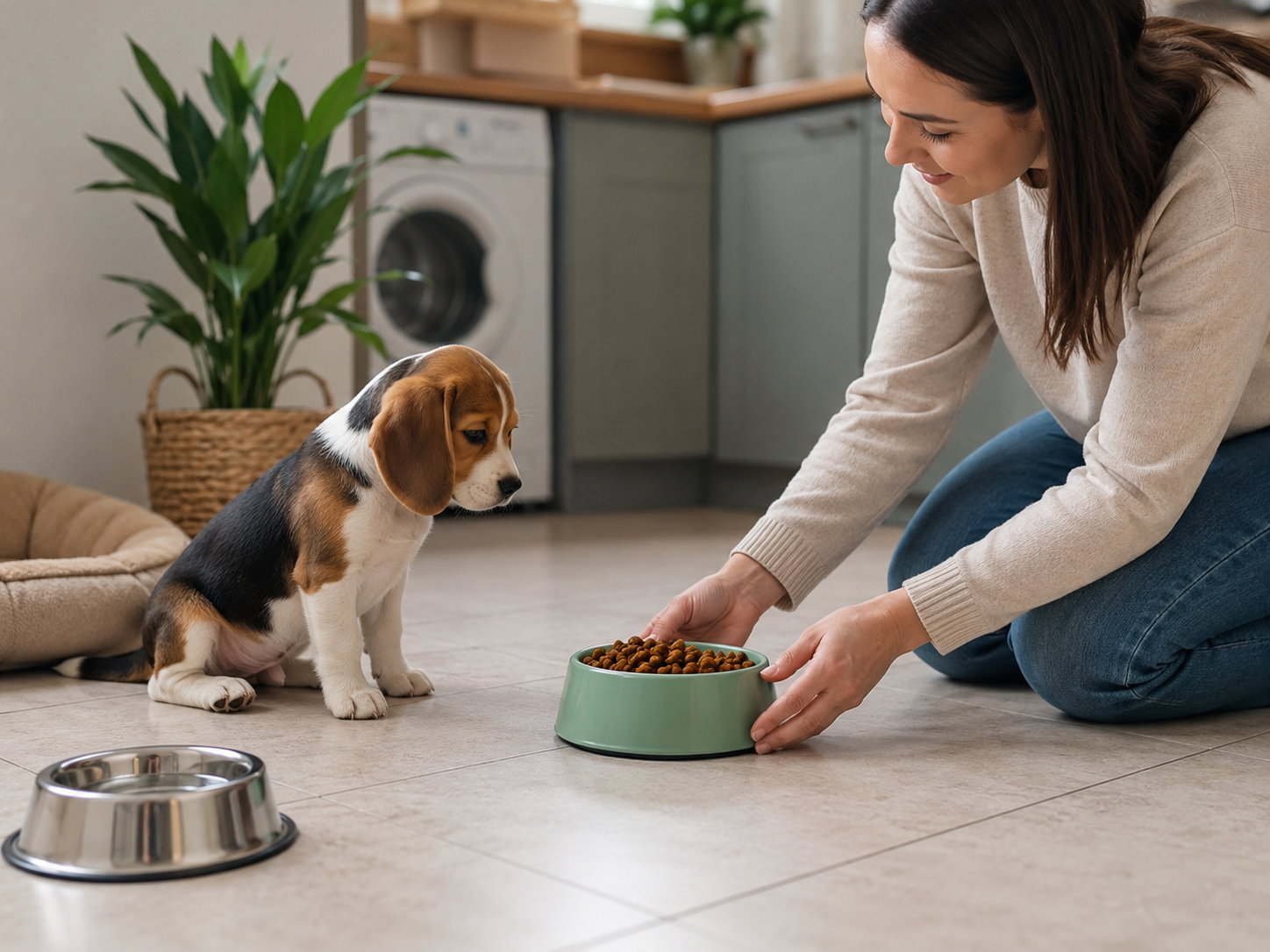
10. Is It Better to Leave Dog Food Out All Day?
Some dogs can regulate intake while grazing, but many adult dogs will overeat when unrestricted food is continuously available.
Free feeding can also make it harder to know exactly how much an individual dog ate, especially in a home with more than one pet.
Portion-controlled meals provide clearer information about daily calorie intake and changes in appetite.
Scheduled meals are especially useful when:
- the dog gains weight easily
- there are several pets
- one pet steals another pet's food
- you need to monitor appetite closely
- medication or a medical diet is involved
- you need accurate calorie control
If your veterinarian has recommended a different feeding method for a medical reason, follow that individualized plan.
Back to guide11. Choose a Quiet, Practical Feeding Place
The feeding area should be safe, easy to clean, and free from unnecessary crowding.
Avoid placing the dog's bowl where people repeatedly step over the dog or where another animal can easily rush in and steal food.
A practical feeding area should be:
- easy for the dog to reach
- easy to keep clean
- away from rough play
- away from constant foot traffic when possible
- separated from competing pets when necessary
Dogs should be allowed to eat without children touching the bowl, hugging them, climbing over them, or testing how they react when food is removed.
Back to guide12. Feeding Multiple Dogs Requires Individual Control
Dogs living together may eat at very different speeds and may need different foods or portions.
One dog can quietly consume part of another dog's meal, making the first dog gain weight while the other receives too little nutrition.
Feeding separately is often the simplest management strategy.
Dogs that have conflict or resource guarding around food may need a more carefully managed behavior plan.
Back to guide13. Begging Is Often Reinforced by What People Do
A dog that receives food after staring, pawing, whining, or sitting beside the table has learned that the behavior sometimes works.
The most important change is often household consistency.
A simple family plan can be:
- do not feed directly from the dining table
- keep human meals out of the dog's reach
- provide the dog's food according to its own schedule
- use reward-based mat or settle training when helpful
- make sure every family member follows the same rule
Avoid shouting at the dog for a behavior people have repeatedly rewarded in the past. Change the reinforcement pattern instead.
Back to guide14. Do Not Create Conflict Around the Food Bowl
Some owners are told to repeatedly take a dog's bowl away to prove that people control the food.
Repeatedly approaching and removing valued food can create unnecessary competition and may worsen defensive behavior in some dogs.
Children should never be asked to practice taking a bowl, chew, or food from a dog.
Take food guarding seriously
Freezing, stiffening, eating faster when approached, hard staring, growling, showing teeth, snapping, or biting around food can indicate resource guarding.
Manage distance and safety. Do not confront or punish the dog around the bowl. Seek help from a veterinarian and an appropriately qualified reward-based behavior professional when guarding creates a safety concern.
15. What If Your Dog Eats Too Fast?
Some dogs finish meals extremely quickly.
First make sure another pet is not creating competition and that the total feeding plan is appropriate.
Depending on the dog, slower feeding can be encouraged with:
- a suitable slow-feeder bowl
- a properly sized food-dispensing puzzle
- safe scatter feeding
- several smaller portions when advised
- separate feeding away from other animals
Supervise unfamiliar feeding devices until you know the dog will not chew or swallow parts of them.
Repeated vomiting, regurgitation, coughing, gagging, swallowing difficulty, abdominal discomfort, or other concerning signs should be discussed with a veterinarian instead of being treated only as a fast-eating habit.
Back to guide16. Change Dog Food Gradually When Appropriate
Sudden diet changes can cause gastrointestinal upset in some dogs.
When there is no medical reason to change immediately, a gradual transition over several days is commonly used by slowly increasing the new food while decreasing the old food.
Some dogs with gastrointestinal disease, food allergy investigations, therapeutic diets, or other medical conditions require a specific veterinarian-directed transition instead.
Do not repeatedly change foods because of advertising trends while ignoring how the individual dog is responding.
During a transition, monitor:
- appetite
- stool quality
- vomiting
- gas or abdominal discomfort
- skin or ear problems when food allergy is relevant
- overall energy and behavior
17. Should Dogs Exercise Immediately Before or After Eating?
Normal household movement and a quiet toilet outing are different from strenuous running, vigorous fetch, rough play, or demanding sport.
Dogs at increased risk of gastric dilatation-volvulus (GDV), often called bloat, deserve particular attention to meal size and activity around feeding.
Veterinary guidance for dogs at increased GDV risk may include dividing the total daily food into two or more smaller meals and avoiding strenuous or highly exciting activity close to meals.
Large and deep-chested dogs are often discussed in relation to GDV risk, but individual risk varies. Ask your veterinarian whether your dog's breed, family history, anatomy, or medical history changes the feeding and exercise plan.
Know the emergency signs of GDV
A suddenly enlarged or painful abdomen, repeated unproductive retching, severe restlessness, excessive drooling, weakness, collapse, or rapidly worsening distress can be an emergency. Seek immediate veterinary care.
18. What If Your Dog Suddenly Refuses Food?
Appetite can change for many reasons, ranging from stress or too many treats to dental pain or systemic illness.
One dog's missed meal cannot be interpreted exactly the same way as another dog's. Age, body size, medical history, medications, and accompanying signs matter.
Puppies, medically fragile dogs, and dogs showing additional signs of illness deserve particular caution.
Contact your veterinarian promptly when appetite loss occurs with:
- repeated vomiting or significant diarrhea
- marked weakness or lethargy
- abdominal pain or swelling
- difficulty chewing or swallowing
- significant drooling
- blood in vomit or stool
- breathing difficulty
- collapse
- a major change in drinking or urination
- another sign that the dog is clearly unwell
Persistent or unexplained appetite loss should not be managed indefinitely by repeatedly offering richer and richer foods without investigating why the dog is not eating normally.
Back to guide19. Constant Hunger or Increased Thirst Can Need Investigation
Some dogs are highly food motivated and learn that looking hungry earns extra snacks.
But a sudden or marked change in hunger can also occur with changes in calorie intake, medications, gastrointestinal disease, endocrine disease, parasites, or other medical conditions.
Before adding food every time the dog asks, check:
- the measured daily food amount
- the food's calorie density
- all treats and chews
- current body condition and weight trend
- activity level
- stool quality
- drinking and urination
- recent medication changes
Marked increased thirst, increased urination, unexplained weight loss, or a sudden major appetite change should be discussed with a veterinarian.
Back to guide20. A Simple Daily Dog Feeding Routine
Puppies eating three or four meals simply divide their daily food into more feeding blocks.
Dogs with diabetes, gastrointestinal disease, therapeutic diets, medications, pregnancy, lactation, high-level work, or another special need should follow the individualized schedule provided by their veterinary team.
Back to guide21. Common Dog Feeding Schedule Mistakes
Watch for these common problems:
- feeding by eye without measuring portions
- allowing several family members to give untracked extras
- ignoring calories from treats and chews
- assuming the food-bag amount is perfect forever
- leaving unlimited food available to a dog that overeats
- switching puppy food to adult food too early
- adding unnecessary supplements to a complete growth diet
- letting dogs compete over bowls
- letting children disturb a dog during meals
- repeatedly taking the bowl away to “test” the dog
- ignoring unexplained weight or appetite changes
- restricting water without veterinary instructions
- changing food repeatedly without a clear reason
- treating every feeding issue as a behavior problem rather than considering health
A feeding schedule works best when it is simple enough for the entire household to follow consistently.
Back to guide22. When to Contact a Veterinarian About Feeding
Feeding behavior provides useful information about health.
Arrange veterinary advice for concerning changes such as:
- persistent or sudden loss of appetite
- unexplained weight loss or rapid weight gain
- repeated vomiting
- persistent or severe diarrhea
- difficulty chewing or swallowing
- marked drooling or mouth pain
- major changes in thirst or urination
- muscle loss
- significant abdominal discomfort
- a painful or swollen abdomen
- weakness, collapse, or severe lethargy
- a sudden major change in food-related behavior
A veterinarian or veterinary nutrition professional should also guide therapeutic diets, significant weight-loss plans, growth concerns, food allergy investigations, home-prepared diets, supplement use, and nutrition for chronic disease.
Back to guideExplore More Daily Dog Care Guides
23. Frequently Asked Questions
How many times a day should I feed my dog?
Healthy adult dogs commonly eat once or twice daily. Many owners use two measured meals because intake and portions are easy to monitor. Puppies generally need more frequent meals, and medical conditions can require a different schedule.
Is feeding a dog twice a day better than once a day?
Two measured meals are a practical option for many healthy adult dogs, but there is no rule that every healthy dog must eat exactly twice. The total daily nutrition, body condition, health, lifestyle, and veterinary advice are more important than following one universal meal number.
What is a good puppy feeding schedule?
A general veterinary schedule is about four daily meals at 6–12 weeks, three meals at 3–6 months, and two meals at 6–12 months. Individual needs can differ, especially with very small puppies, large and giant breeds, or medical conditions.
What times should I feed my dog?
Choose times that fit a reasonably predictable daily routine. For dogs eating twice daily, morning and evening meals are common. Exact clock times are less important than consistency and any medical or medication requirements.
Should I leave dog food out all day?
Free feeding is difficult for many dogs because unrestricted food can encourage overeating and makes exact intake harder to monitor. Portion-controlled scheduled meals are useful for many households, especially when weight control or multiple pets are involved.
How much of my dog's diet can come from treats?
Veterinary nutrition guidance generally recommends that treats and other non-complete foods stay at or below about 10% of total daily calories, so the main complete and balanced diet continues to provide the large majority of nutrition.
Should I take my dog's bowl away while it is eating?
Repeatedly removing valued food is not necessary and can create conflict in some dogs. Let the dog eat without unnecessary disturbance. If the dog freezes, growls, snaps, or guards food, use safe management and seek qualified behavior support rather than confronting the dog.
What can I do if my dog eats too fast?
Feed away from competing pets and consider a suitable slow feeder, food puzzle, safe scatter feeding, or another veterinarian-approved approach. Contact your veterinarian if fast eating is associated with repeated vomiting, regurgitation, swallowing problems, pain, or other symptoms.
Should senior dogs eat more frequently?
Not automatically. Senior feeding should be individualized according to body condition, muscle condition, appetite, dental health, disease, medications, activity, and the food being used. Some seniors may benefit from schedule changes, while others do well on their previous meal pattern.
Why does my dog always act hungry?
Some dogs are naturally food motivated or have learned that begging earns snacks. However, marked or sudden hunger—especially with weight loss, increased thirst, increased urination, diarrhea, or other changes—should be discussed with a veterinarian.
When should loss of appetite worry me?
The importance depends on the individual dog and other symptoms. Contact a veterinarian when appetite loss persists or occurs with vomiting, diarrhea, weakness, pain, swallowing difficulty, abdominal swelling, unusual thirst, collapse, or another significant health change.
24. Veterinary Nutrition & Behavior Sources
This educational guide was prepared with reference to established veterinary nutrition and animal-behavior guidance. Sources checked August 13, 2026.
- American Animal Hospital Association — Feeding Plans for Healthy, Appropriate-Weight Dogs
- American Animal Hospital Association — Prevention of Obesity
- American Animal Hospital Association — Age-Specific and Breed-Specific Diets
- American Animal Hospital Association — How Much to Feed Your Pet
- World Small Animal Veterinary Association — Global Nutrition Guidelines
- Merck Veterinary Manual — Feeding Practices in Small Animals
- Merck Veterinary Manual — Puppy Care and Feeding Schedule
- American Animal Hospital Association — Understanding Canine Bloat (GDV)
- American Veterinary Society of Animal Behavior — Humane Dog Training Position Statement
- American Veterinary Society of Animal Behavior — Preventing Food Guarding
Veterinary Nutrition Disclaimer
Daily Dog Care Guide provides general educational information for dog owners. This article does not replace veterinary examination, diagnosis, treatment, therapeutic nutrition, calorie prescription, weight-management planning, emergency care, or an individualized feeding plan.
Feeding requirements vary with age, growth stage, breed or size, body and muscle condition, reproductive status, activity, environment, medications, medical conditions, and the food being fed. Consult a qualified veterinarian about recommendations specific to your dog.
Final Thoughts
A good dog feeding schedule is not defined by one perfect breakfast time or one universal number of meals.
It begins with the individual dog. Puppies need more frequent meals while growing. Many healthy adults do well with one or two meals. Senior dogs and dogs with medical conditions may need the schedule reviewed again.
Measure the total daily food rather than guessing. Monitor weight and body condition. Keep treats and extras under control. Provide fresh water unless your veterinarian advises otherwise.
Feed pets separately when competition is a problem, let dogs eat without unnecessary interference, and use reward-based behavior strategies rather than creating conflict around food.
Most importantly, notice change. Appetite, thirst, stool, weight, chewing ability, and behavior around meals can all provide useful clues about health.
The best feeding schedule is one that provides appropriate nutrition, supports a healthy body condition, fits the dog's medical needs, and is consistent enough for the household to follow accurately every day.
Back to guideTools for a More Consistent Feeding Routine
These tools can make measuring, serving, and storage easier. They do not determine the right calorie target for an individual dog.
A durable, easy-clean bowl option for everyday food and water routines.
View on Amazon →Optional product • paid linkGraduated Measuring Cup for Dog FoodA simple portion-control tool for keeping meal amounts consistent.
View on Amazon →Optional product • paid linkAirtight Dog Food Container with WheelsA storage option designed to keep dry food organized and easier to move.
View on Amazon →Affiliate disclosure: As an Amazon Associate I earn from qualifying purchases. Always check size, fit, materials, labels, and your dog’s individual needs before buying.
Helpful next steps
Continue with a related guide, tool, or product resource.