Dog Separation Anxiety: How to Help a Dog Stay Calm Home Alone
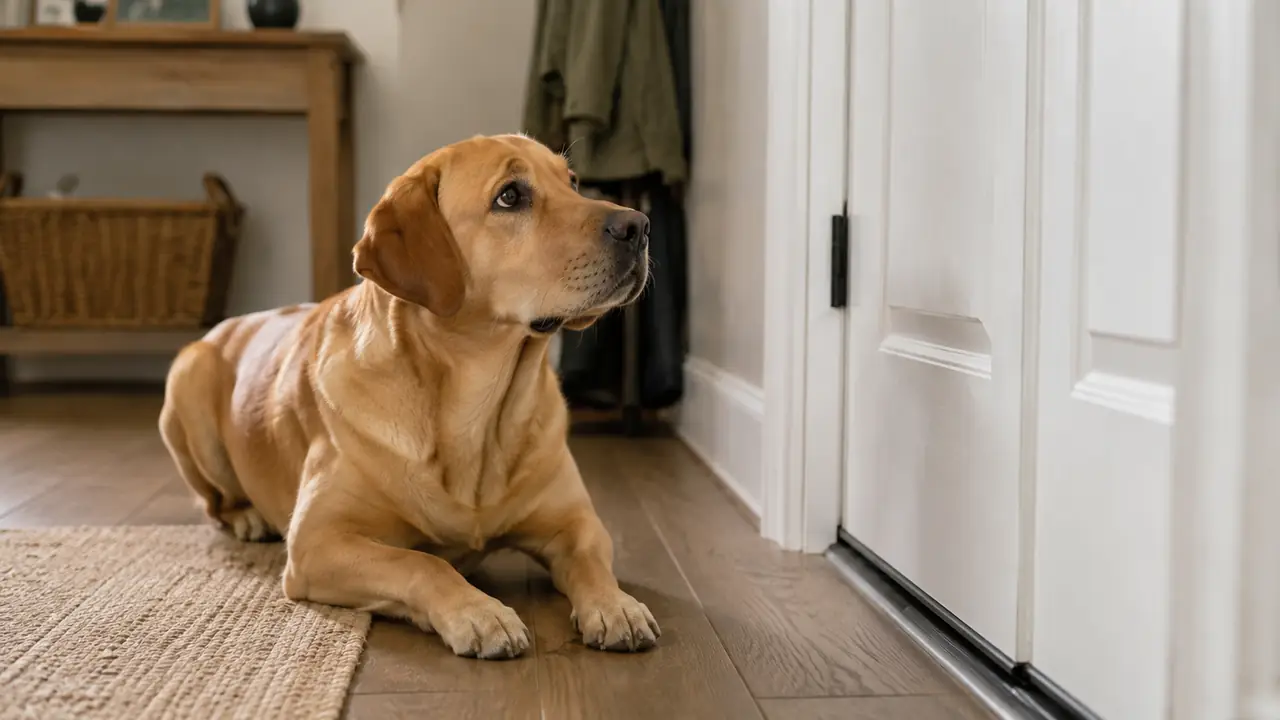
Separation anxiety is more than a dog being bored or unhappy that you left. Dogs with separation-related distress can experience real fear or panic during, or even before, an owner's absence. The safest plan starts by identifying what actually happens when the dog is alone and then building comfortable absences below the dog's anxiety threshold.
Updated August 13, 2026 · Veterinary behavior sources checked
You pick up your bag, move toward the door, and your dog begins to watch every step.
Some dogs remain relaxed when people leave. Others bark, pace, drool, scratch at doors, eliminate indoors, refuse food, or make desperate attempts to escape.
Those signs should not automatically be labelled stubbornness, revenge, or poor obedience.
Separation-related problems have several possible causes. A dog may be reacting to isolation, separation from one particular person, confinement, outside noises, incomplete housetraining, boredom, or an underlying medical problem. Some dogs experience a true fear-and-anxiety disorder.
That distinction matters because the correct response to boredom is not necessarily the correct treatment for panic.
This guide explains how to observe the problem, reduce unnecessary distress, begin safe home-alone training, and recognize when veterinary or professional behavior support is needed.
Quick Answer: How Do You Help a Dog With Separation Anxiety?
Start by recording your dog during a normal absence so you can see when distress begins and what the dog actually does.
Make sure medical problems, housetraining issues, noise triggers, boredom, and confinement distress have not been mistaken for separation anxiety.
When true separation-related distress is present, avoid repeatedly leaving the dog long enough to panic whenever practical. Instead, use very short planned absences that end while the dog is still comfortable, then increase duration gradually.
Mild cases may benefit from relaxation training and positive associations with safe independent activities. Moderate or severe cases often need a veterinarian-guided behavior plan, and medication may be appropriate for some dogs.
Punishment, flooding, forced prolonged absences, or confining a dog in a crate where it panics can make the problem more dangerous.
Common Signs of Separation-Related Distress
No single sign proves separation anxiety. The timing, pattern, context, and dog's medical and behavior history all matter.
In This Separation Anxiety Guide
1. What Is Dog Separation Anxiety?
Separation anxiety is a fear- or anxiety-related problem that occurs during, or in anticipation of, separation from a person or when the dog is left alone.
Not every affected dog has the same pattern.
Some dogs become distressed when one specific caregiver leaves even if another person remains at home. Others are comfortable as long as any person is present but panic when completely alone.
Signs often begin soon after departure. Some dogs start becoming distressed even earlier when they recognize that the owner is preparing to leave.
A dog that follows you from room to room is not automatically a dog with separation anxiety. Diagnosis depends on what happens in the relevant separation context.
Back to guide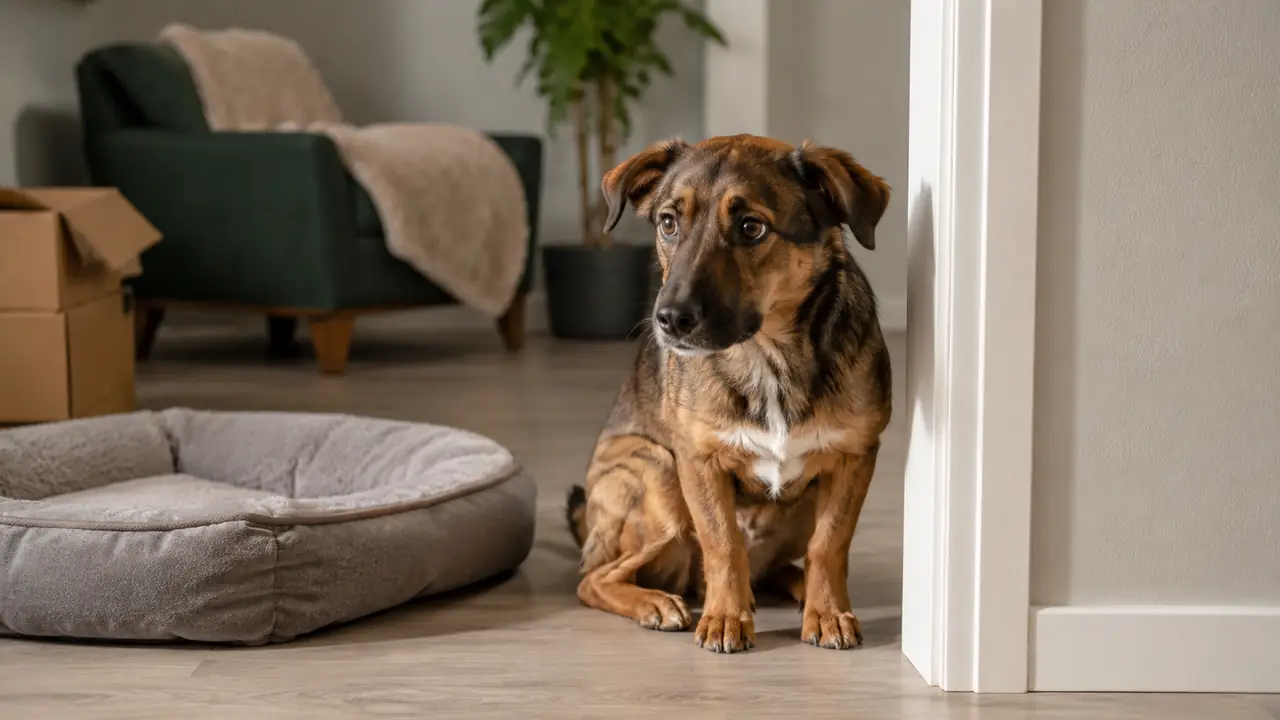
2. Use Video to See What Actually Happens When You Leave
Video is one of the most useful tools for understanding a home-alone behavior problem.
Without it, owners may only see the result: a damaged door, an accident on the floor, or a complaint from a neighbor.
A securely positioned home camera can show:
- how soon signs begin after departure
- whether the dog settles later
- whether vocalizing is persistent or triggered by outside sounds
- whether destruction is concentrated near exits
- whether the dog eats an offered food activity
- whether confinement itself triggers panic
- whether the dog pants, paces, drools, freezes, or scans repeatedly
Video can also help measure treatment progress more accurately than memory alone.
Do not create a long panic episode just to collect video
If you already know your dog becomes severely distressed, ask your veterinarian how to document the behavior safely rather than deliberately leaving for a long period to prove that the problem exists.
3. Separation Anxiety or Something Else?
Destruction, barking, and house soiling do not automatically equal separation anxiety.
This is why sudden onset, severe signs, older age, physical discomfort, or other health changes deserve veterinary evaluation.
Back to guide4. Find the Point Before Anxiety Begins
Safe graduated training works below the level that produces a full anxiety response.
For one dog, distress may begin when the owner touches the door. Another may remain relaxed for several minutes after departure. Another may be comfortable for a much longer period.
Video helps identify that individual threshold.
Early signs can include:
- stopping an activity to watch the door
- increased vigilance or scanning
- pacing
- panting unrelated to temperature
- whining or other vocalization
- salivation
- refusing food
- repeated movement between windows and doors
- inability to lie down and settle
The training departure should end before those signs escalate into panic.
If distress occurs, the next practice should be easier rather than harder.
Back to guide5. Management Matters: Try to Prevent Repeated Panic
A dog cannot practice calm separation while repeatedly experiencing uncontrolled panic.
For a dog with confirmed separation anxiety, reducing unavoidable full-intensity absences is an important part of treatment whenever practical.
Temporary support may include:
- a trusted family member
- a pet sitter
- a suitable dog walker who can break up a longer absence
- day care if the individual dog genuinely enjoys and tolerates it
- bringing the dog along when practical and safe
- adjusting work or household schedules during the treatment period
This is management, not failure.
It helps prevent the training program from being repeatedly undermined by absences that are far beyond what the dog can currently tolerate.
Back to guide6. Build a Resting Area the Dog Already Likes
A safe area can be useful only if the dog actually feels safe there.
Depending on the dog, this could be a quiet room, a gated area, a familiar bed, or another comfortable part of the home.
A useful resting area should have:
- comfortable temperature and airflow
- safe flooring
- fresh water
- comfortable bedding
- no electrical cords, rubbish, toxic plants, or swallowable objects
- appropriate distance from stressful windows or entryways when needed
- enrichment items only when they are proven safe for that dog
Build positive associations with the area while you are home. Let the dog rest there voluntarily instead of using the space only when everybody leaves.
Back to guide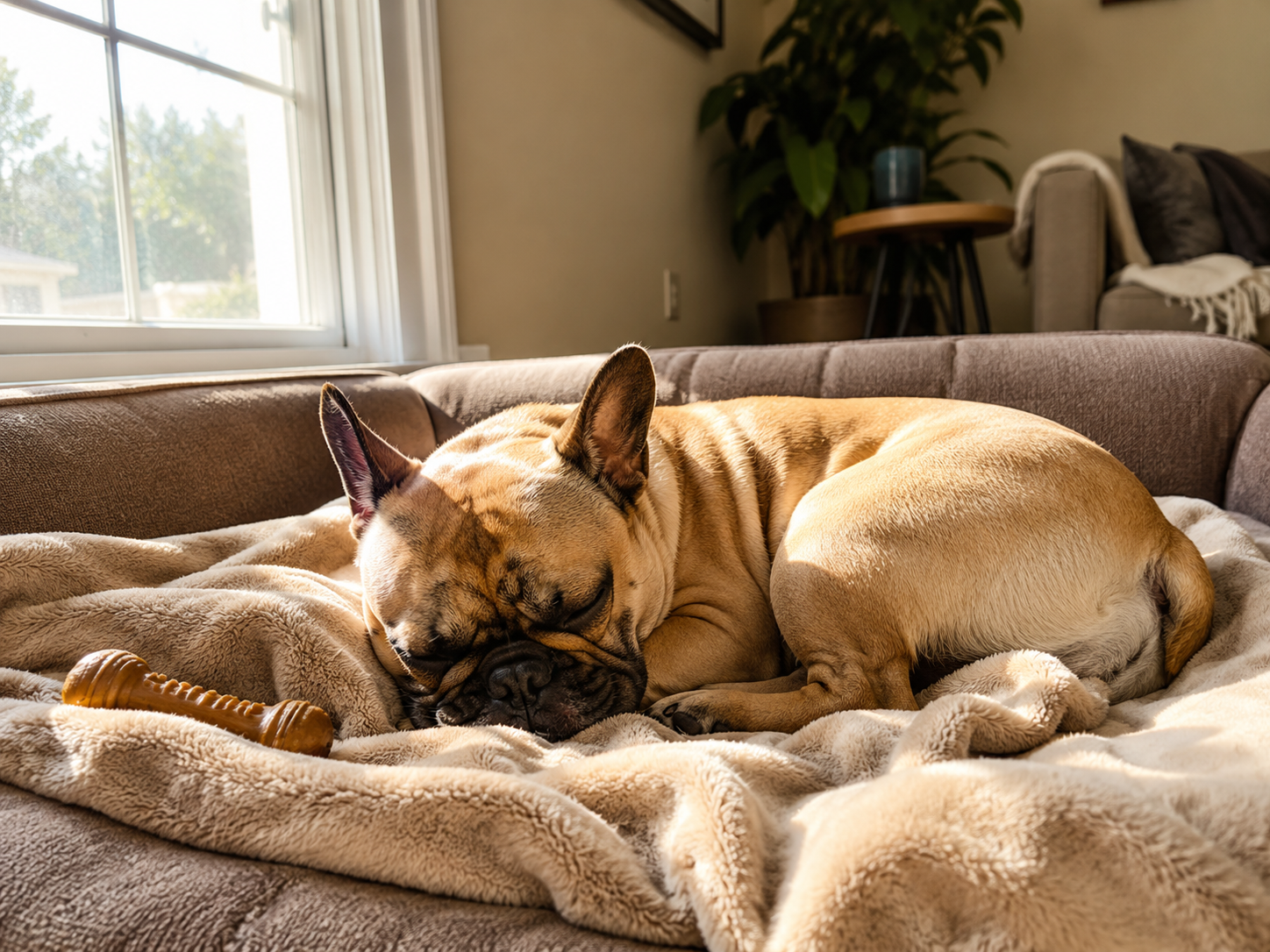
7. A Crate Is Not Automatically the Answer
Some dogs genuinely relax in a crate because they have been gradually and positively trained to use it.
Other dogs experience intense confinement distress.
Do not crate a panicking dog simply to contain the damage
A dog that bends bars, bites the crate, claws frantically, freezes when asked to enter, tries desperately to escape, or injures itself is not demonstrating successful crate training.
In that situation, confinement can add another source of distress and can create a serious injury risk.
Use video and the dog's actual behavior to decide whether confinement is comfortable.
If you are unsure, discuss containment options with your veterinarian or a qualified behavior professional.
Back to guide8. Meet Basic Needs Before a Planned Absence
Training is harder when the dog has an unmet physical need.
Before leaving, consider whether the dog has had:
- an appropriate toilet opportunity
- access to fresh water
- normal scheduled food when relevant
- age- and health-appropriate activity
- opportunities to sniff or engage mentally
- time to recover from activity instead of leaving at peak excitement
- needed medication according to veterinary instructions
- a comfortable and safe environment
Meeting these needs can remove sources of discomfort, but it does not cure a true separation disorder by itself.
A dog in panic may remain anxious even after a long walk or a full day of enrichment.
Back to guide9. Use Graduated Departures That Stay Below the Panic Threshold
Graduated departure training builds the dog's ability to remain comfortable during progressively longer absences.
The most important rule is that the practice absence must be short enough for the dog to remain calm.
Progress is individual and may take substantial time, particularly in moderate or severe cases.
Trying to rush from a few comfortable seconds to a long real-world absence can produce a major setback.
Back to guide10. A Safety Signal Can Make Training Departures More Predictable
In a structured behavior plan, a safety signal is a new cue that predicts a specific kind of practice departure: one that will end before the dog becomes anxious.
The signal might be a particular object or sound that was not previously associated with stressful absences.
It is presented immediately before the controlled training departure.
Over repeated successful sessions, the cue can help distinguish safe training absences from other situations.
The signal only works if the promise stays true
Do not use a carefully trained safety signal and then leave the dog beyond its tolerance. The usefulness of the cue depends on repeated below-threshold experiences.
Moderate or severe cases are best planned with veterinary or qualified behavior guidance.
Back to guide11. What About Keys, Shoes, Coats, and Other Departure Cues?
Dogs can learn that certain events predict an absence. Picking up keys, putting on shoes, carrying a work bag, or moving toward a particular door can become meaningful cues.
For some dogs, those cues contribute to anticipatory anxiety before the owner has actually left.
Work involving departure cues may be useful in an individualized behavior plan, but it should not replace the central goal: teaching the dog to remain comfortable during actual controlled separation.
Current graduated-departure protocols emphasize successful, below-threshold absences and predictability rather than relying only on repeatedly performing departure rituals without leaving.
If touching the keys alone already triggers major distress, discuss the sequence with your veterinarian or behavior professional so the exposure can be adjusted appropriately.
Back to guide12. Food Toys Can Help Some Dogs — but They Are Not a Test of Willpower
Dogs with mild separation-related anxiety may benefit from a high-value food activity that is associated specifically with relaxed independent time.
Suitable options can include an appropriately sized food puzzle or safe chew that the dog has already used successfully while supervised.
Use food enrichment carefully:
- introduce the item while you are home first
- make sure it cannot break into dangerous pieces
- choose a size appropriate for the dog
- include the food in the day's total diet
- avoid leaving unsafe chews unsupervised
- do not use food to force a dog into a feared crate or area
A dog that is highly distressed may be unable to eat at all once the owner leaves.
In that case, repeatedly offering a better treat does not address the underlying panic.
Back to guide13. Exercise and Enrichment Support the Plan — They Do Not Cure Panic
Age- and health-appropriate exercise, sniffing, enrichment, and a consistent daily routine are useful parts of overall behavior care.
A dog whose normal needs are not being met may be restless for reasons that have nothing to do with separation anxiety.
But physically exhausting a fearful dog is not a treatment for a separation disorder.
The goal before a planned absence is a dog that has had appropriate activity and has had time to transition toward rest—not a dog that has been pushed into exhaustion or high arousal.
Choose exercise according to age, fitness, health, weather, and temperament.
Back to guide14. Check Windows, Hallways, Noise, and Other Triggers
A dog may appear to have a separation problem when part of the distress is actually being triggered by the environment after the owner leaves.
Video can reveal whether barking begins when:
- a delivery person approaches
- another dog passes the window
- people move through an apartment hallway
- a lift or garage door operates
- traffic or construction becomes noisy
- thunder or another frightening sound begins
Depending on the dog, environmental management might include moving the resting place away from the front door, limiting visual access to a busy window, or using appropriate background sound.
A dog with a significant noise phobia may need treatment for that problem as well as the separation-related problem.
Back to guide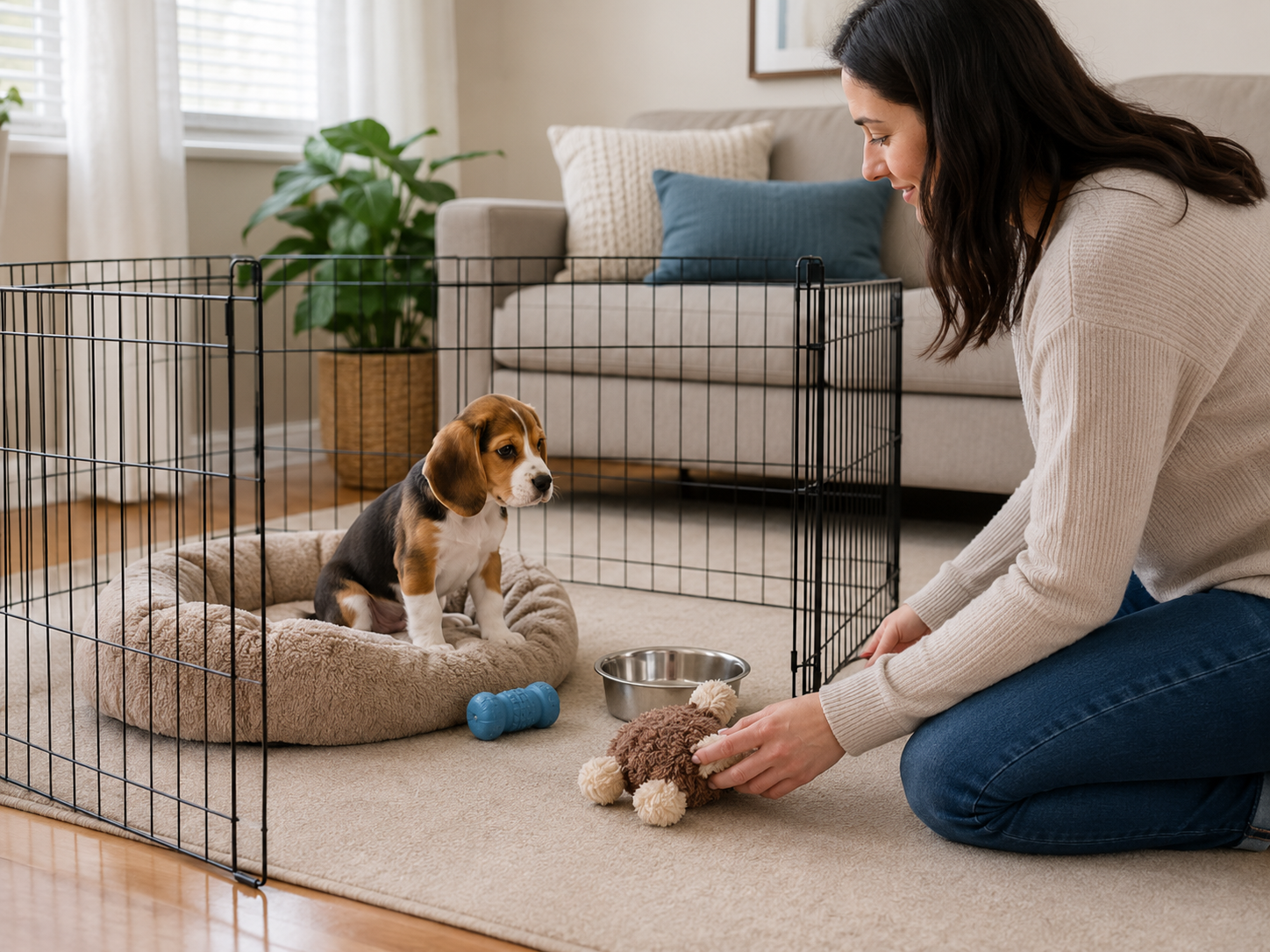
15. You Do Not Have to Ignore Your Dog — Keep Transitions Manageable
Owners sometimes hear that they must completely ignore the dog before leaving and after returning.
There is no need to make normal affection disappear from the relationship.
What is useful is avoiding a departure routine that pushes an already anxious dog into a very high state of arousal.
A simple, normal goodbye is fine if it does not increase distress.
On return, greet your dog safely and calmly rather than punishing, confronting, or deliberately creating an enormous burst of excitement.
The most important treatment work happens in the dog's emotional response to separation and the graduated training plan—not in pretending the dog does not exist.
Back to guide16. Teach Puppies That Comfortable Alone Time Is Normal
Puppyhood is a useful time to build independence gradually.
A puppy that spends every waking moment beside a person and is then suddenly left for a long absence has had little opportunity to learn the skill.
Appropriate early practice can include:
- short comfortable periods resting away from the owner
- settling in a familiar safe area
- brief separations while the owner is elsewhere in the home
- safe independent enrichment
- normal puppy sleep and rest
- gradually increasing separation only while the puppy remains comfortable
Young puppies also need frequent toilet opportunities, regular feeding, supervision, appropriate socialization, and much more frequent care than most healthy adult dogs.
Crying should not automatically be treated as something the puppy must endure. Check toileting, hunger, discomfort, fear, and the difficulty of the current separation exercise.
Back to guide17. New Home-Alone Anxiety in a Senior Dog Deserves a Health Review
A dog that was comfortable alone for years may become less able to cope as it ages.
Older dogs can develop pain, sensory decline, urinary or gastrointestinal disease, changes in sleep, reduced mobility, or cognitive dysfunction.
Make water, bedding, and toilet access easier and avoid difficult or slippery routes.
Hearing or vision loss can change how a dog experiences being alone and responds to environmental events.
Disorientation, altered sleep, house soiling, anxiety, and changes in activity can occur with canine cognitive dysfunction.
Sudden anxiety in an older dog should not simply be labelled a training regression.
Arrange veterinary assessment so medical contributors can be considered.
Back to guide18. How Long Can a Dog Stay Home Alone?
There is no single safe number of hours that applies to every dog.
Age, bladder and bowel needs, health, medication, mobility, exercise, previous training, environment, and emotional comfort all matter.
More importantly, a dog with active separation anxiety cannot be judged by a generic “adult dogs can stay alone for X hours” rule.
If that dog's anxiety threshold is currently measured in minutes, a multi-hour absence is far beyond the level being trained.
Puppies and dogs with medical or age-related needs generally require more frequent care.
When the household schedule requires absences longer than the individual dog can comfortably manage, use appropriate human support while training and treatment continue.
Back to guide19. Measure Progress by Calm Behavior, Not Only by the Clock
Longer time alone is useful only if the dog is actually comfortable.
Positive changes can include:
- remaining relaxed during departure preparation
- lying down after the owner leaves
- reduced pacing or vigilance
- less or no distress vocalization
- being able to eat a familiar activity
- no frantic scratching or escape behavior
- comfortable breathing and body language
- gradually tolerating longer controlled absences
Keep simple notes about the practice duration and what the video shows.
Small objective improvements are more useful than guessing whether the dog “seemed better.”
Back to guide20. What to Do After a Setback
Separation-anxiety progress is not always a straight line.
A dog may struggle after an unusually long absence, frightening noise, illness, schedule change, move, visitor, poor night of sleep, or another stressful event.
A setback does not mean the entire plan has failed.
After a difficult session:
- review the video
- identify when distress first appeared
- consider environmental or health changes
- reduce the next training difficulty
- return to a duration the dog can manage comfortably
- contact your veterinary team if the problem is worsening
Do not respond to a setback by forcing a much longer absence in an attempt to make the dog “get used to it.”
Back to guide21. Common Separation-Anxiety Mistakes
Avoid these common problems:
- assuming every destructive dog has separation anxiety
- punishing destruction or house soiling after returning home
- leaving a worried dog for hours as a training exercise
- using “cry it out” with a dog showing panic
- forcing a dog into a crate where confinement creates distress
- increasing absence duration too quickly
- judging progress without video
- trying to solve severe anxiety only with exercise
- trying to solve severe anxiety only with a food toy
- assuming silence always means the dog is relaxed
- ignoring sudden behavior changes that may have a medical cause
- using aversive collars, corrections, shouting, or intimidation
- repeatedly exposing the dog to panic while waiting for professional help
Anxiety treatment works by creating tolerable learning experiences, not by proving that the dog can survive an overwhelming one.
Back to guide22. Medication Can Be Part of Treatment for Some Dogs
Moderate or severe separation anxiety can be too intense for behavior modification to progress effectively without reducing the underlying anxiety.
In those cases, a veterinarian may recommend prescription anti-anxiety medication as one part of a broader treatment plan.
Medication is not a substitute for graduated behavior work, environmental management, and monitoring.
It can instead help create an emotional state in which learning becomes more possible.
The choice of medication, dose, timing, monitoring, possible interactions, and duration must be determined by a veterinarian.
Do not use human anxiety or sleep medication on your own
Never give prescription or over-the-counter medication simply because it makes a dog sleepy. Sedation and treatment of anxiety are not the same thing, and medications can have important adverse effects or interactions.
23. When to Get Veterinary or Professional Behavior Help
Early help is especially important when the dog is not simply restless but appears frightened, panicked, or physically unsafe.
Contact a veterinarian promptly if your dog:
- injures itself while trying to escape
- destroys doors, windows, or crates in a frantic way
- shows severe or prolonged panic
- cannot eat or settle during absences
- has sudden new home-alone distress
- develops new house soiling after previously being reliable
- shows pain, confusion, weakness, or major health changes
- has significant changes in thirst, urination, appetite, or sleep
- becomes progressively worse despite careful training
Your veterinarian can assess medical contributors and determine whether a behavior disorder and medication should be considered.
Complex or severe cases may benefit from referral to a veterinary behaviorist or another appropriately qualified behavior professional working with reward-based methods.
If there is an immediate risk of self-injury or escape, focus on safety and professional support rather than continuing unsupervised DIY exposure training.
Back to guideA Practical Home-Alone Training Framework
Severe separation distress requires an individualized plan. There is no universal timetable that every dog should be expected to follow.
Explore More Daily Dog Care Guides
24. Frequently Asked Questions
How do I know if my dog has separation anxiety?
Common signs include persistent vocalization, pacing, salivation, inability to settle, house soiling, destruction concentrated around exits, loss of appetite, or frantic escape behavior during an owner's absence. Video recording is extremely useful because other problems can look similar.
How can I help my dog stay calm when home alone?
First identify what happens during the absence. Meet basic needs, use a comfortable environment, reduce panic-level absences when practical, and practice graduated departures short enough that your dog remains calm. Severe cases should be treated with veterinary or professional behavior support.
Should I let my dog cry until it gets used to being alone?
A dog experiencing true panic should not be deliberately kept in an overwhelming absence in the hope that it will simply stop reacting. Graduated separation training is designed to keep the dog below the anxiety threshold and increase duration carefully.
Should I ignore my dog before leaving and after coming home?
You do not need to remove normal affection. Keep departures and returns manageable and avoid deliberately creating very high excitement. The main treatment priority is the dog's emotional response to separation and successful graduated practice.
Can I crate a dog with separation anxiety?
Only if the individual dog is genuinely comfortable in the crate. Some dogs have confinement anxiety and can become more distressed or injure themselves when crated. Video can help determine how the dog actually responds.
Can a camera help with separation anxiety?
Yes. Video allows you and your veterinary team to see when anxiety begins, whether the dog settles, which behaviors occur, whether outside triggers are involved, and whether treatment is improving the dog's response.
Do food toys cure separation anxiety?
No. Food activities can create positive associations and may help dogs with mild distress, but highly anxious dogs may be unable to eat when alone. Food enrichment should be one part of an appropriate plan rather than the only treatment.
Will more exercise cure my dog's separation anxiety?
Appropriate exercise and enrichment support overall wellbeing and can help meet normal behavioral needs, but they do not cure panic-based separation anxiety. A true separation disorder usually requires specific management and behavior modification.
How long should separation-anxiety training sessions be?
There is no fixed duration. The session must remain shorter than the point at which your individual dog becomes anxious. For some dogs the starting absence may be only seconds. Duration should increase gradually according to video-observed comfort.
How long can a dog stay home alone?
There is no universal number for every dog. Age, health, toilet needs, training history, medication, environment, and emotional comfort matter. A dog with active separation anxiety should be guided by its current anxiety threshold rather than a generic hours-per-day rule.
Does separation anxiety need medication?
Not every dog needs medication. However, veterinary-prescribed anti-anxiety medication can be an important part of treatment for some moderate or severe cases, particularly when anxiety prevents behavior modification from progressing.
When should I contact a veterinarian?
Seek veterinary help when distress is severe, your dog injures itself, attempts dangerous escape, cannot settle or eat when alone, develops sudden new anxiety, has new toileting problems, appears painful or confused, or continues to worsen despite careful training.
25. Veterinary & Behavior Sources
This educational guide was prepared with reference to current veterinary behavior guidance. Sources checked August 13, 2026.
- Merck Veterinary Manual — Behavior Problems of Dogs: Separation Distress Disorder
- Merck Veterinary Manual — Behavior Problems in Dogs: Pet Owner Version
- American Animal Hospital Association — Separation Anxiety in Pets: Signs, Causes, and Solutions
- American Animal Hospital Association — Canine Separation Anxiety Case and Treatment Framework
- American Animal Hospital Association — Separation-Related Disorders and Video Diagnosis
- American Veterinary Society of Animal Behavior — Humane Dog Training Position Statement
Veterinary & Behavior Disclaimer
Daily Dog Care Guide provides general educational information for dog owners. This article does not diagnose separation anxiety and does not replace veterinary examination, medical diagnosis, prescription treatment, emergency care, or an individualized behavior-modification plan.
Similar home-alone behaviors can have behavioral, environmental, and medical causes. Contact a qualified veterinarian if your dog develops sudden behavior changes, appears painful or confused, injures itself, attempts dangerous escape, or shows severe or persistent distress.
Prescription behavior medication must be selected, prescribed, and monitored by a veterinarian.
Final Thoughts
Helping a dog with separation anxiety is not about teaching the dog that nobody cares when it cries.
It is about changing what separation means to that individual dog.
Start by observing rather than guessing. Use video. Rule out other causes. Meet normal physical and behavioral needs. Create a safe environment that does not add confinement stress.
When separation anxiety is present, build real absences slowly enough that the dog can remain below its panic threshold. Prevent repeated overwhelming exposures when practical and use qualified professional support when the problem is moderate, severe, or unsafe.
Some dogs improve with environmental management and behavior modification. Others also need veterinary medication so learning can take place without overwhelming anxiety.
Progress may be measured in calm seconds before it becomes calm minutes. What matters is not how quickly the clock increases, but whether the dog is learning that being alone can actually feel safe.
Back to guideSupervised Enrichment Ideas
Choose enrichment that suits your dog’s size and chewing style, supervise use, and remove damaged items.
A supervised enrichment tool that can add mental work to food or treat time.
View on Amazon →Optional product • paid linkDog Lick Mat with Suction CupsA food-enrichment option for supervised licking activities and calm indoor engagement.
View on Amazon →Optional product • paid linkDog Snuffle Mat for Slow FeedingA supervised sniffing and food-search activity for mental enrichment.
View on Amazon →Affiliate disclosure: As an Amazon Associate I earn from qualifying purchases. Always check size, fit, materials, labels, and your dog’s individual needs before buying.
Helpful next steps
Continue with a related guide, tool, or product resource.