Dog Enrichment Activities: Easy Ways to Keep Your Dog Mentally Busy
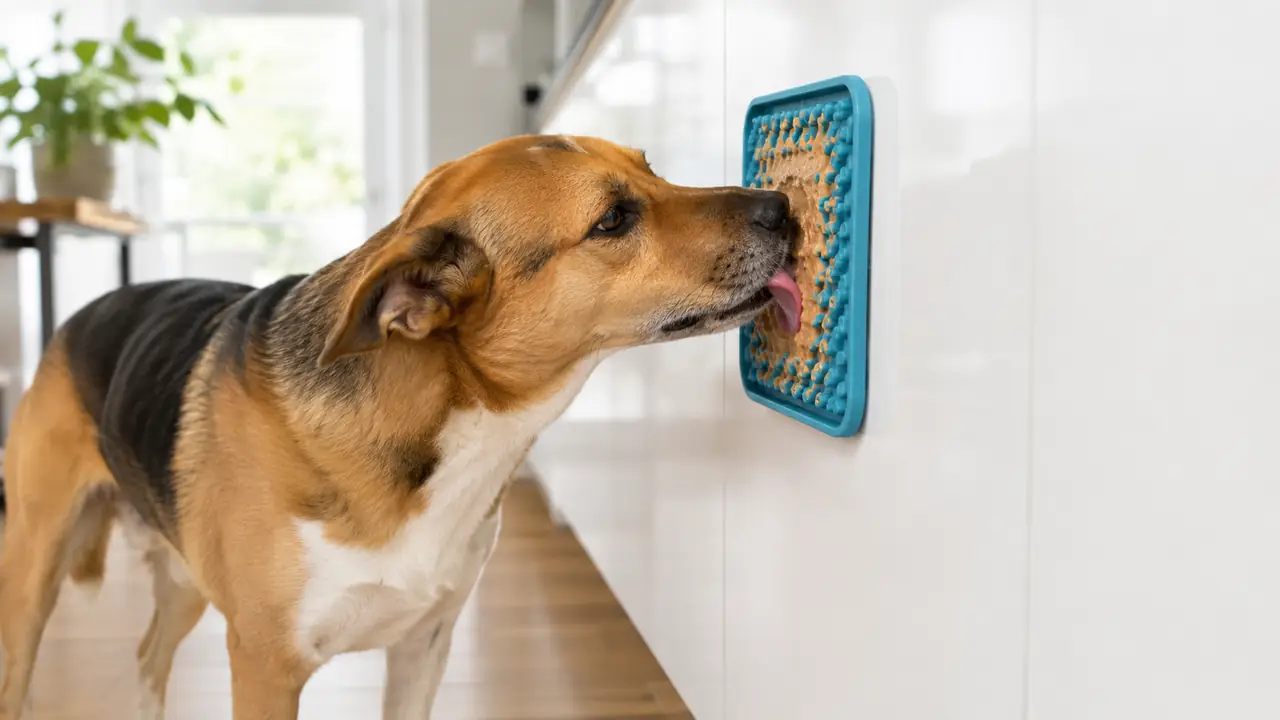
Dog enrichment does not require expensive equipment or hours of entertainment. Sniffing games, simple searches, short reward-based training, safe food puzzles, toy rotation, appropriate chewing, and controlled exploration can give dogs useful ways to think and engage with their environment.
Updated August 13, 2026 · Veterinary and behavior sources checked
Dogs need more than physical movement. They also benefit from opportunities to investigate, sniff, search, learn, manipulate safe objects, interact socially, and make appropriate choices.
This is where enrichment becomes useful.
Enrichment means arranging activities or environments that allow a dog to use normal behaviors and engage mentally or physically in safe, appropriate ways.
It can be particularly useful on rainy days, during extreme weather, in apartments, or whenever outdoor activity must be reduced. But enrichment is not only an indoor substitute for walking. It can be part of normal daily care throughout the year.
The objective is not to keep the dog constantly busy. A balanced routine includes enrichment and genuine opportunities to rest.
Quick Answer: How Can You Keep a Dog Mentally Busy?
Use a variety of safe, manageable activities such as sniffing games, treat or food searches, short reward-based training, food puzzles, toy rotation, hide-and-seek, safe chewing, simple problem-solving activities, and controlled exploration.
Begin with an easy version of each activity. Increase difficulty only when your dog understands the task and remains comfortable.
When food is used, consider it part of the dog's overall daily food intake. When toys, cardboard, towels, or puzzle items are new, supervise them until you know how your dog interacts with them.
Mental enrichment complements appropriate physical exercise, social interaction, training, sleep, and veterinary care. It does not replace those needs.
5 Types of Dog Enrichment
In This Dog Enrichment Guide
1. Why Dog Enrichment Matters
Dogs have behavioral needs in addition to basic food, water, shelter, and physical exercise.
Enrichment provides opportunities to use behaviors such as sniffing, searching, exploring, learning, chewing appropriately, manipulating safe objects, and interacting socially.
A home environment can become very predictable. Meals may arrive in the same bowl, walks may follow the same route, and toys may remain in the same place for weeks.
Thoughtful enrichment adds appropriate variety without requiring constant excitement.
It can also provide dogs with alternatives to creating their own activities, such as raiding rubbish, stealing household items, destructive chewing, or repeatedly demanding attention.
Back to guide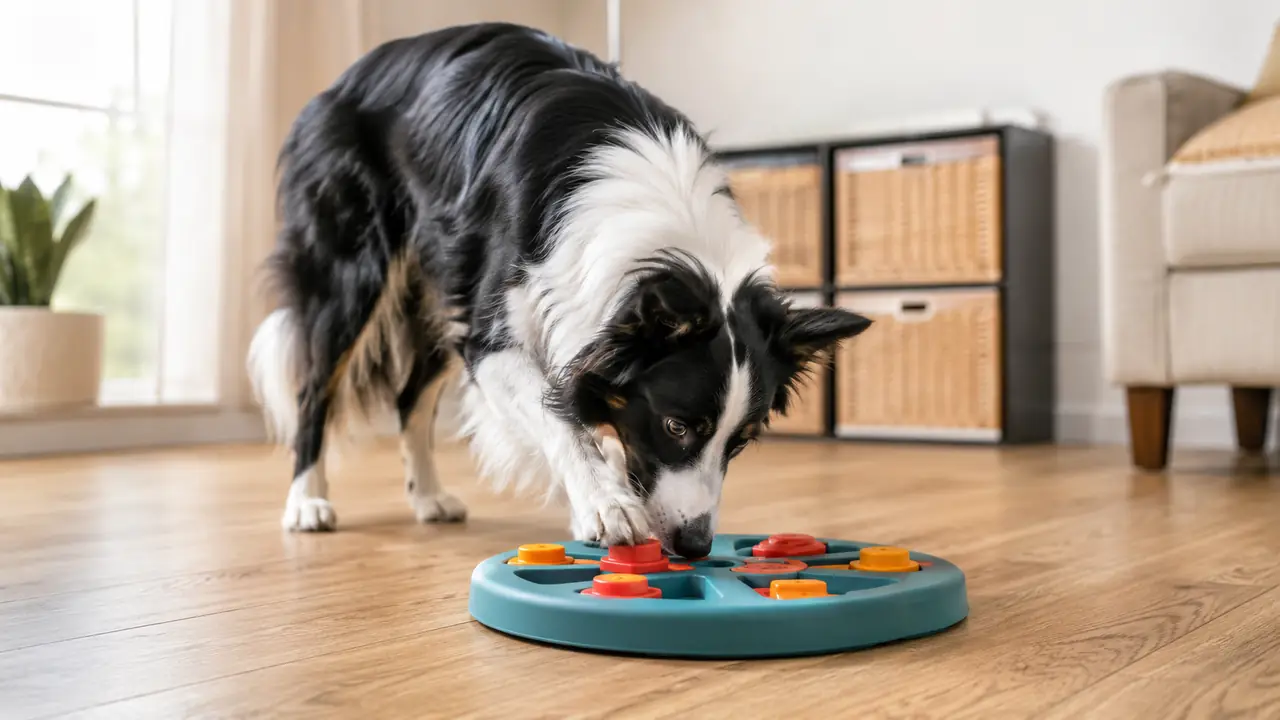
2. Is Your Dog Bored — or Is Something Else Going On?
Owners often describe destructive or demanding behavior as boredom, but behavior alone does not prove that boredom is the cause.
Chewing, barking, pacing, stealing, restlessness, clinginess, or difficulty settling can also occur with anxiety, fear, pain, insufficient physical exercise, separation-related problems, poor sleep, medical illness, or incomplete training.
Review the whole day
- Does the dog receive suitable physical activity?
- Are there opportunities to sniff and explore?
- Does the dog have safe social interaction?
- Is there enough undisturbed rest?
- Does the dog have appropriate chewing or foraging opportunities?
- Did the behavior begin suddenly?
- Are appetite, drinking, toileting, mobility, or sleep also changing?
When a healthy dog has few appropriate outlets, adding enrichment may be useful. Sudden or severe behavior changes should not automatically be treated as boredom.
Back to guide3. Start With Sniffing Games
Scent-based activities are accessible to many dogs and can be adapted from very easy to more challenging.
The first rule is to let the dog succeed.
Do not begin by hiding food in places so difficult that the dog becomes frustrated. Start where the reward is easy to locate and gradually make the search more interesting.
Use the dog's normal food when practical so enrichment calories do not quietly become extra calories.
Back to guide4. Try a Simple Food Scatter
A food scatter is one of the easiest enrichment activities.
If several dogs live together and food competition is possible, run the activity separately rather than creating conflict over scattered food.
Back to guide5. Use a Towel or Blanket Search Carefully
A clean towel or blanket can create a simple foraging activity for dogs that interact gently with fabric.
- Lay the fabric flat.
- Place several pieces of food on top.
- Let the dog search.
- Later, fold the material loosely to create an easy challenge.
This activity is not suitable for every dog.
Stop if your dog begins eating the fabric
Dogs that shred or swallow towels, blankets, stuffing, string, or fabric should use a different enrichment activity. Swallowed material can become a veterinary problem.
Always match the activity to the way your individual dog interacts with objects.
Back to guide6. Create a Supervised Cardboard Box Search
Some dogs enjoy searching through open cardboard boxes for hidden food or a favorite toy.
Before starting:
- remove staples, plastic, tape, string, and other packaging
- choose clean boxes
- start with open boxes
- keep the search easy at first
- supervise the dog
Dogs that tear and swallow cardboard should use another activity.
The objective is searching and problem solving, not encouraging the dog to ingest the materials used to make the game.
Back to guide7. Short Reward-Based Training Is Mental Enrichment
Learning requires attention and problem solving, so short training sessions can be valuable enrichment.
Useful skills to practice include:
- responding to the dog's name
- coming when called
- hand targeting
- settling on a mat
- waiting briefly at a doorway
- leave it or trade
- cooperative handling
- simple tricks the dog physically enjoys
Keep the task achievable. Reward successful behavior and increase difficulty gradually.
Avoid aversive corrections, intimidation, or punishment-based methods.
Stop before the dog becomes frustrated or disengaged. Mental enrichment should create successful learning experiences rather than continuous pressure.
Back to guide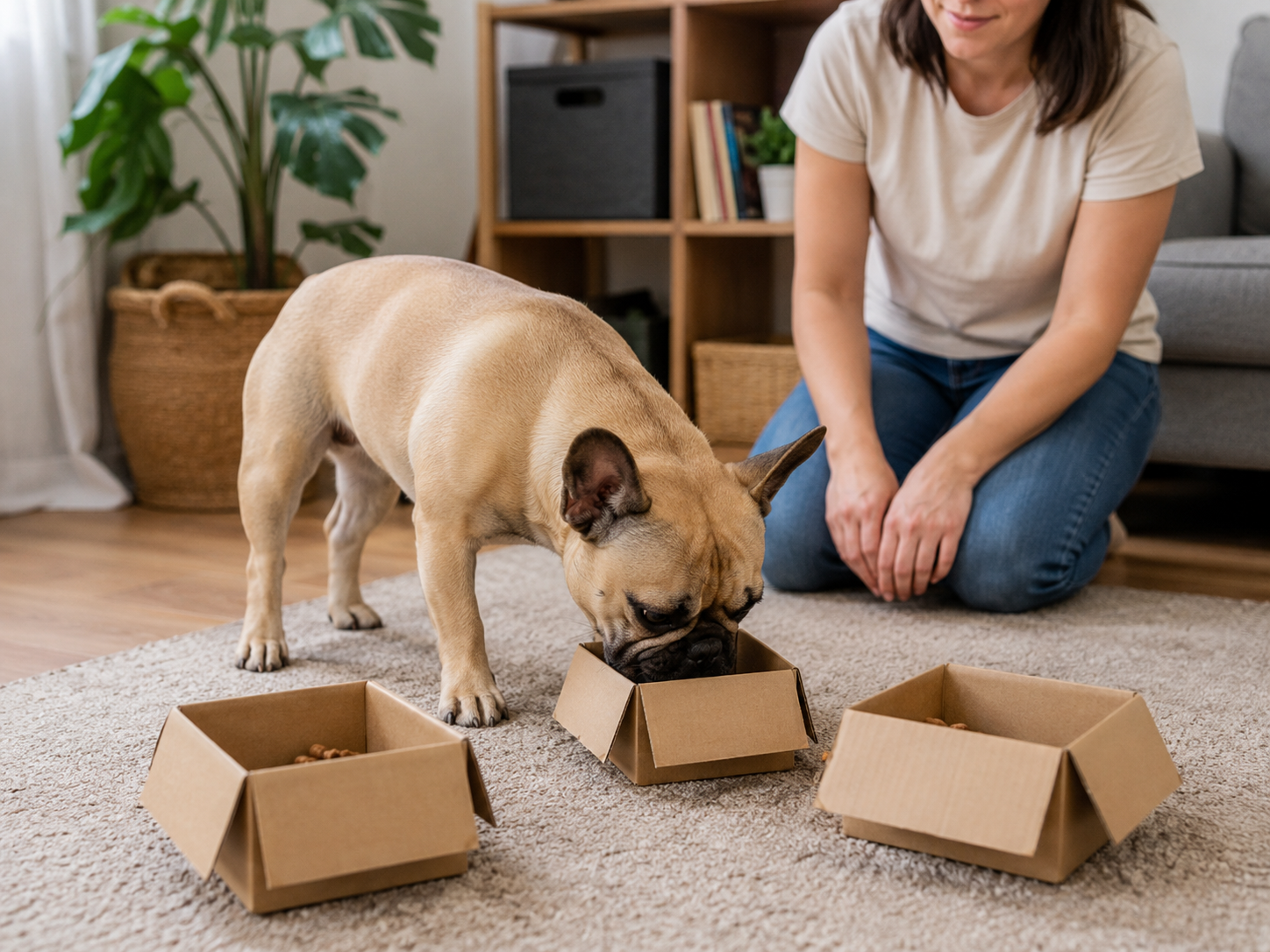
8. Play an Easy “Find Me” Game
Hide-and-seek can combine scent, listening, recall, and social interaction.
Begin where the dog can succeed easily. Have another person remain with the dog if necessary, move behind a nearby doorway, and call once.
Reward or praise the dog when it finds you.
Gradually make the hiding place more difficult only if the dog understands and enjoys the game.
Avoid slippery surfaces, unsafe stairs, frightening hiding locations, or high-speed indoor chasing.
A nervous dog should never be pressured into a game that makes separation or searching stressful.
Back to guide9. Introduce Food Puzzles at an Easy Level
Food puzzles and treat-dispensing toys can provide foraging and problem-solving opportunities.
The best starting puzzle is one the dog can solve without becoming excessively frustrated.
Use food puzzles safely:
- choose the correct size for your dog
- consider the dog's chewing style
- start with an easy setup
- supervise unfamiliar products
- remove damaged toys
- do not allow pieces to become swallowing hazards
- include puzzle food in the dog's overall daily intake
Part of the dog's normal meal can often be used rather than automatically adding extra treats.
Dogs with dietary restrictions should only receive foods appropriate for their veterinary nutrition plan.
Back to guide10. Rotate Toys Instead of Leaving Everything Out
Toy rotation can add novelty without requiring a large collection.
Keep a small number available and store others away. After several days, exchange some of the available toys for stored ones.
Inspect toys every time they return to the rotation.
Discard or repair items when you notice:
- loose pieces
- exposed stuffing
- cracked plastic or rubber
- frayed rope or string
- pieces small enough to swallow
- sharp or damaged edges
Dogs that destroy objects rapidly require more careful toy selection and supervision than gentle chewers.
Back to guide11. Appropriate Chewing Can Be Enrichment Too
Chewing is a normal canine behavior and suitable chew activities can provide an appropriate outlet for some dogs.
However, there is no single chew that is safe for every dog.
Size, hardness, durability, dental health, gastrointestinal health, chewing style, and whether the dog guards resources all matter.
Inspect chew items regularly
Remove items that have become small enough to swallow or are breaking into dangerous pieces. Extremely hard items may also damage teeth in some dogs.
Ask your veterinarian if you are unsure what kind of chew is appropriate for your dog's teeth, health, or diet.
Back to guide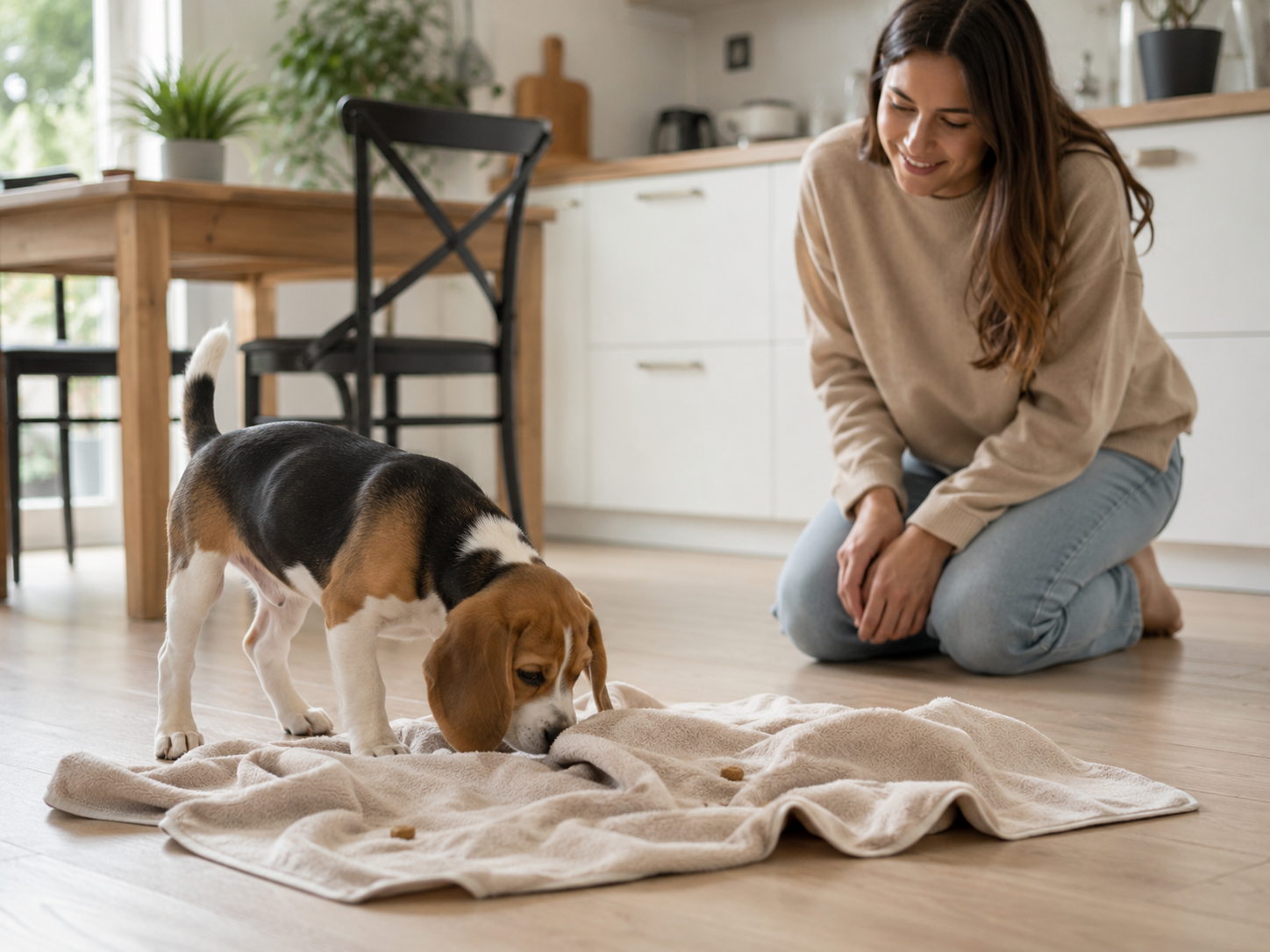
12. Add Safe Indoor Movement When Outdoor Activity Is Limited
Indoor enrichment can involve gentle physical movement as well as thinking.
Depending on the dog, options may include:
- walking calmly between two points in the home
- stepping onto a mat
- walking around a stable object
- following a target or reward for a few steps
- finding a familiar toy
- walking through a low, stable homemade obstacle setup
Use nonslip surfaces and keep obstacles low and stable.
Avoid indoor jumping, fast turning, or obstacle work that is inappropriate for your dog's age, fitness, body structure, or mobility.
Dogs with orthopedic, neurologic, cardiac, respiratory, or other medical limitations may need veterinary advice before adding new physical activities.
Back to guide13. Teach a Calm Settle-on-a-Mat Skill
Enrichment does not always need to create more movement.
A useful mental skill is learning to settle comfortably on a designated mat or bed.
Build the skill gradually:
- place the mat near the dog
- reward interest in the mat
- reward stepping onto it
- reward calm standing, sitting, or lying down
- gradually extend comfortable settling time
Do not push, drag, or force the dog onto the mat.
The goal is to create a predictable place associated with calm, rewarded behavior.
Back to guide14. Adjust Enrichment for Puppies, Adults, and Senior Dogs
Keep activities simple and brief. Use safe exploration, easy sniffing, short reward-based training, appropriate chewing, positive social experiences, and substantial opportunities to rest.
Combine scent work, training, food enrichment, safe exploration, social activities, appropriate play, and physical exercise according to the individual dog's interests and health.
Continue appropriate mental engagement while adapting activities for mobility, vision, hearing, dental health, endurance, pain, or cognitive changes.
Older dogs do not automatically stop benefiting from enrichment. In some cases, environmental and mental enrichment is also part of supporting dogs with age-related cognitive changes.
Activities should remain comfortable and achievable rather than physically demanding for a dog with reduced mobility.
Back to guide15. Enrichment for Nervous or Easily Overwhelmed Dogs
A fearful dog may not benefit from the same activities as a confident dog.
Keep activities predictable and allow the dog to choose whether to participate.
Possible low-pressure options include:
- easy food searches
- gentle sniffing opportunities
- simple hand-target training
- settle-on-a-mat practice
- quiet exploration of safe objects
- short reward-based training sessions
Avoid deliberately startling the dog, forcing interaction with novel objects, or making an activity increasingly difficult when the dog is already showing fear.
Severe fear, panic, aggression, or anxiety needs a broader behavior plan rather than simply more enrichment.
Back to guide16. Indoor Enrichment for Rainy, Hot, or Low-Activity Days
Weather may make the dog's normal outdoor activity unsafe or impractical.
Indoor enrichment can help provide appropriate engagement when outdoor exercise must be shortened.
Indoor enrichment does not justify unsafe outdoor exercise during dangerous heat, storms, flooding, ice, or other hazardous conditions.
Back to guide17. Do Not Turn Enrichment Into Constant Entertainment
More enrichment is not automatically better.
Dogs also need opportunities to sleep, rest, and exist quietly without a new puzzle or game appearing every few minutes.
A balanced pattern can be:
activity → success → calm transition → rest.
If every quiet moment leads to the owner immediately creating another game, the dog has fewer opportunities to practice simply settling.
The amount of stimulation that is comfortable varies between individuals. Watch your dog's response instead of trying to fill the entire day.
Back to guide18. Dog Enrichment Safety Checklist
Before offering an enrichment activity:
- consider your dog's size and chewing style
- remove sharp, toxic, breakable, or swallowable materials
- supervise unfamiliar toys and puzzles
- discard damaged items
- avoid ingredients unsafe for dogs
- include food rewards in the day's overall calorie intake
- avoid slippery floors for movement activities
- adjust physical tasks for age and mobility
- separate dogs if food or toy competition is possible
- stop when the dog appears frightened, frustrated, painful, or exhausted
An enrichment idea that is popular online is not automatically appropriate for every individual dog.
If your dog has dietary restrictions, swallowing problems, dental disease, food allergies, resource guarding, mobility limitations, or another medical concern, ask your veterinarian before choosing activities that may affect that condition.
Back to guide19. A Simple Dog Enrichment Routine
This is only an example. A dog does not require an enrichment activity in every block of every day.
Rotate activities according to your dog's interests, health, environment, and normal physical exercise.
Simple activities used well are more useful than an exhausting schedule of complicated games.
Back to guide20. When Enrichment Is Not Enough
Enrichment can support a dog's wellbeing, but it is not a treatment for every medical or behavior problem.
Contact your veterinarian when your dog develops:
- a sudden major change in normal behavior
- loss of interest in normally enjoyed activities
- significant pain or mobility problems
- marked lethargy or weakness
- important appetite or drinking changes
- persistent vomiting or diarrhea
- confusion or disorientation
- another significant change in health
Behavior support may also be appropriate when your dog:
- guards food puzzles, toys, or chews aggressively
- panics when left alone
- shows severe fear
- cannot disengage from repetitive behaviors
- becomes dangerously overexcited during games
- shows persistent destructive behavior despite appropriate management
- bites or creates a serious safety concern
Behavior changes may have medical as well as environmental causes, so veterinary assessment can be an important starting point.
Back to guideExplore More Daily Dog Care Guides
21. Frequently Asked Questions
What are good enrichment activities for dogs?
Useful options include sniffing and food-search games, short reward-based training, appropriate food puzzles, toy rotation, hide-and-seek, safe chewing, controlled exploration, and physical or social activities suited to the individual dog.
How can I mentally stimulate my dog indoors?
Try an easy food scatter, scent search, short training session, safe puzzle, supervised cardboard search, toy rotation, hide-and-seek, or settle-on-a-mat practice. Start easy and adapt the activity to your dog's physical ability and chewing behavior.
Does sniffing count as enrichment?
Yes. Scent exploration is an important sensory activity for dogs. Sniffing can be incorporated into walks, food searches, scent games, and safe exploration around the home or garden.
Are food puzzles good for dogs?
They can be useful when correctly sized and introduced at an appropriate difficulty. Supervise new puzzle toys, remove damaged items, and count the food used toward the dog's overall daily intake.
How long should dog enrichment sessions last?
There is no single required duration. Keep activities short enough that your dog remains comfortable and successful. Difficulty, age, health, temperament, and the type of activity all affect how much is appropriate.
Can enrichment replace a dog walk?
Mental enrichment can be valuable when outdoor activity is limited, but it does not automatically replace all physical exercise, toilet opportunities, social needs, or environmental exploration. Build a balanced routine around the individual dog.
Can dogs get too much enrichment?
Dogs need rest as well as activity. Constant games or overly difficult tasks can create frustration or excessive stimulation in some dogs. Alternate appropriate enrichment with quiet recovery time.
What enrichment is suitable for a senior dog?
Easy scent searches, familiar reward-based training, gentle exploration, appropriate food puzzles, quiet social interaction, and low-impact activities can be useful. Adapt every activity for mobility, vision, hearing, dental health, and medical conditions.
What if my dog destroys puzzle toys?
Stop using items that your dog tears into swallowable pieces. Choose products suited to the dog's size and chewing style and supervise new items. Ask your veterinarian if your dog repeatedly swallows non-food material.
When should behavior that looks like boredom be checked by a vet?
Seek veterinary advice when behavior changes suddenly or occurs with pain, reduced mobility, appetite or drinking changes, gastrointestinal signs, lethargy, confusion, or another health concern. Not all destructive, restless, or repetitive behavior is caused by boredom.
22. Veterinary & Behavior Sources
This educational guide was prepared with reference to established veterinary and animal-behavior guidance. Sources checked August 13, 2026.
- American Animal Hospital Association — Enrichment: Supporting Your Pet's Mental and Emotional Wellbeing at Home
- American Animal Hospital Association — Boredom Busters: Indoor Enrichment for Dogs
- Merck Veterinary Manual — Preventative Health Care, Husbandry and Environmental Enrichment
- Merck Veterinary Manual — Behavior Problems of Dogs
- American Veterinary Society of Animal Behavior — Humane Dog Training Position Statement
Veterinary & Behavior Disclaimer
Daily Dog Care Guide provides general educational information for dog owners. This article does not replace veterinary examination, diagnosis, treatment, nutrition guidance, emergency care, rehabilitation advice, or an individualized behavior plan.
Enrichment activities should be selected according to your dog's age, health, diet, mobility, temperament, chewing style, and individual behavior. Contact a qualified veterinarian if your dog develops a sudden behavior change, seems painful or unwell, swallows an unsafe object, or has a medical condition that affects activity or diet.
Final Thoughts
Good dog enrichment does not require filling every minute of the day.
It means creating appropriate opportunities for your dog to sniff, search, learn, solve simple problems, chew safely, move, interact, and explore.
Start easy. Use reward-based training. Make food games part of the normal nutrition plan. Supervise unfamiliar toys and puzzles. Choose activities according to the individual dog's size, health, mobility, and chewing style.
Just as importantly, protect quiet time. Dogs need opportunities to recover, sleep, and settle without constant entertainment.
The best enrichment plan is not the most complicated one. It is a varied, safe, manageable routine that gives the dog useful ways to engage with the world while still allowing the home to become calm again afterward.
Back to guideSupervised Enrichment Ideas
Choose enrichment that suits your dog’s size and chewing style, supervise use, and remove damaged items.
A supervised enrichment tool that can add mental work to food or treat time.
View on Amazon →Optional product • paid linkDog Lick Mat with Suction CupsA food-enrichment option for supervised licking activities and calm indoor engagement.
View on Amazon →Optional product • paid linkDog Snuffle Mat for Slow FeedingA supervised sniffing and food-search activity for mental enrichment.
View on Amazon →Affiliate disclosure: As an Amazon Associate I earn from qualifying purchases. Always check size, fit, materials, labels, and your dog’s individual needs before buying.
A Creative Break for Dog-Loving Kids
Explore puppy coloring and activity books for screen-free creative time, quiet afternoons, travel, and young dog fans.
See all dog-care products & books →Helpful next steps
Continue with a related guide, tool, or product resource.