Needs responsible handling, early leash training, and steady rules.

Dog Breed Guide
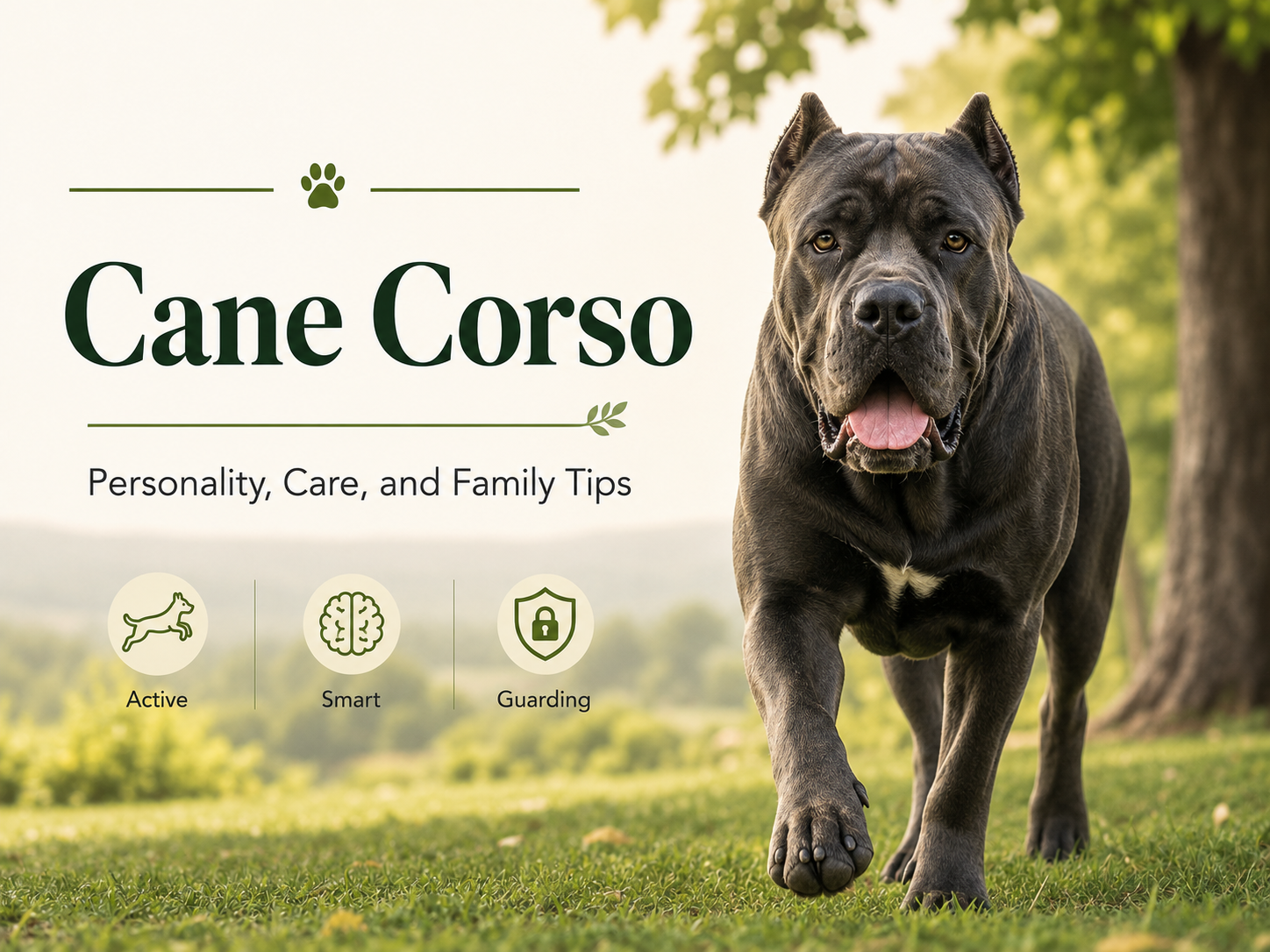
Cane Corso: Personality, Care, and Family Tips
A practical, human-written guide to the Cane Corso’s temperament, daily care, exercise, training, socialization, grooming, family life, and useful product ideas.
The Cane Corso is a strong, impressive Italian dog that often communicates power before it even moves.
Its muscular body, serious expression, alert eyes, and confident presence make many people think of protection, loyalty, and strength.
But the Cane Corso should never be chosen only because it looks powerful or because someone wants a dog that makes an impression.
This breed can be calm, affectionate, loyal, intelligent, and deeply attached to its family. It can also be strong, watchful, sensitive to poor handling, and difficult to manage if raised without training, socialization, and clear guidance.
A Cane Corso should not live isolated in a yard, and it should not be encouraged to bark at every person, dog, or sound. It needs to learn that the family is a safe guide and that normal daily life does not require constant reaction.
This detailed guide explains what daily life with a Cane Corso is really like, including personality, family life, children, apartment living, other dogs, exercise, training, socialization, coat care, weight control, puppy care, health signs, and product ideas for responsible owners.
Often loyal, serious, affectionate at home, and reserved outside.
Clear expectations, positive guidance, and socialization are essential.
Simple grooming, but regular skin, ear, nail, and dental checks matter.
01
Breed Overview
The Cane Corso is an Italian mastiff-type breed with a long history connected to farms, property, livestock, and life close to people.
Its working background helps explain why the breed is strong, observant, confident, and naturally aware of what is happening around the home.
A Cane Corso often notices who enters, who leaves, which sounds are unusual, and when the family routine changes. This awareness can be useful, but it must be guided with calm training.
The breed is usually large, muscular, and athletic. The coat is short, dense, and relatively easy to maintain compared with long-coated breeds.
Because of its size and strength, the Cane Corso is not a casual choice. Owners should be prepared to manage an adult dog with power, confidence, and strong family attachment.
Detailed owner fact
A Cane Corso is not a dog to raise by intimidation or neglect. It needs trust, structure, socialization, and an owner who can guide strength calmly.
02
Personality and Temperament
The Cane Corso can be deeply loyal to its family. Many Corsos want to be near the people at home, rest in the same room, watch the household, and quietly follow daily routines.
At home, a well-raised Cane Corso may be affectionate, calm, and surprisingly gentle with trusted people. Outside the home, it may be more serious and observant.
Many Cane Corsos are not interested in greeting every stranger or playing with every dog. This does not automatically mean aggression. It means owners must manage introductions thoughtfully and avoid forcing the dog into chaotic situations.
A balanced Cane Corso should learn to see people, dogs, traffic, visitors, and daily noises without overreacting. The goal is not to make the dog love everyone. The goal is calm behavior and trust in the owner’s guidance.
- 01Often loyal, watchful, and closely bonded to family.
- 02May be reserved with unfamiliar people.
- 03Can be calm indoors when properly exercised and trained.
- 04Needs careful guidance around visitors and other dogs.
- 05Learns both good and bad habits quickly.
- 06Does best with calm, responsible, consistent owners.
03
Daily Care Needs
Daily care for a Cane Corso should include measured meals, fresh water, daily walks, calm training, controlled social experiences, grooming checks, family time, and enough rest.
A yard can be useful, but a yard is not a complete lifestyle. Leaving a Cane Corso outside alone for hours can increase boredom, barking, fence watching, and overreaction to things passing by.
This breed needs a role inside family life. It should learn how to relax indoors, greet visitors calmly, walk politely on leash, accept handling, and settle when nothing needs to happen.
Predictability helps. A stable routine can support confidence, reduce tension, and make training easier.
- 01Provide daily walks, not only yard access.
- 02Teach calm leash manners from puppyhood.
- 03Use short training sessions for everyday manners.
- 04Manage visitors, doors, and other-dog situations carefully.
- 05Keep meals measured and monitor body condition.
- 06Avoid long isolation without family contact.
Practical routine tip
A balanced Cane Corso day may include a structured morning walk, breakfast, rest, a short training session, calm handling practice, an evening walk, and quiet time near the family.
04
Exercise Needs
The Cane Corso needs regular exercise, but it does not need extreme workouts or rough physical pressure.
Daily walks, calm exploration, sniffing time, recall practice, food-search games, and structured training are often more useful than uncontrolled running or high-arousal games.
Quality matters more than chaos. A calm walk that includes sniffing, attention to the owner, and polite leash behavior can be more valuable than a short session where the dog is allowed to pull, lunge, and become overstimulated.
Puppies should not be pushed into repeated jumping, forced running, or hard exercise. They grow into powerful dogs, but the growing body still needs protection and rest.
- 01Use regular walks and calm exploration.
- 02Add mental work such as scent games and training.
- 03Avoid unmanaged fence running and constant guarding behavior.
- 04Use controlled play instead of rough overexcitement.
- 05Adjust exercise for puppies, adults, seniors, heat, and health.
- 06Teach calm recovery after activity.
05
Training Tips
Training a Cane Corso should begin early, long before the dog is physically difficult to manage.
Training does not mean turning a puppy into an adult guard dog. It means building simple habits that will matter when the dog becomes large and powerful.
Important skills include loose-leash walking, recall, waiting at doors, leaving objects, dropping items, not jumping on people, settling on a mat, calm guest routines, and accepting handling of paws, ears, mouth, and body.
This breed usually needs a calm, predictable owner. Rewards, clear rules, consistent routines, and short sessions are more useful than fear or punishment.
Harsh treatment can create confusion, insecurity, distrust, or defensive behavior. With a powerful breed, trust and control through cooperation are much safer than force.
- 01Teach leash manners before adult strength develops.
- 02Practice recall in safe, controlled places.
- 03Teach “leave it,” “drop,” “wait,” “come,” and “settle.”
- 04Reward calm behavior around visitors, doors, and passing dogs.
- 05Keep sessions short, positive, and consistent.
- 06Seek qualified help early if reactivity, fear, guarding, or pulling becomes difficult.
Training mindset
A Cane Corso should learn to observe, wait, and trust the family. The strongest dog in the room should also be the calmest dog in the room.
06
Grooming Needs
The Cane Corso has a short coat that is usually easier to maintain than long-coated breeds, but grooming should still be part of the routine.
Regular brushing helps remove loose hair, supports skin checks, and keeps the coat neat. Some shedding can happen throughout the year, with heavier periods depending on the individual dog and season.
Routine care should also include ears, nails, teeth, paws, and skin. Because the breed is strong, handling should be introduced early so grooming and veterinary care are not stressful later.
Bathing should be done when needed with dog-safe products. Overbathing is unnecessary unless recommended for a specific skin condition by a veterinarian.
- 01Brush regularly to remove loose hair.
- 02Check skin, ears, paws, nails, teeth, and body condition.
- 03Introduce handling from puppyhood.
- 04Use dog-safe shampoo only when bathing is needed.
- 05Watch for skin irritation, ear odor, or nail overgrowth.
- 06Ask a veterinarian or groomer for help if grooming becomes difficult.

07
Health and Safety Notes
Health and safety for a Cane Corso include weight control, joint comfort, digestive awareness, skin and ear checks, safe exercise, dental care, and regular veterinary visits.
Because this is a large, powerful breed, extra weight can place more stress on joints and make movement more difficult. Treats used during training should be counted as part of daily food intake.
When choosing a puppy, ask about the parents’ health, temperament, veterinary records, joint checks, and any additional screening recommended for the line or breeder’s program.
Contact a veterinarian if your dog shows limping, pain, difficulty rising, appetite changes, repeated vomiting, diarrhea, bloating signs, breathing difficulty, unusual tiredness, injury, or sudden behavior changes.
Important safety note: Severe pain, collapse, breathing difficulty, repeated vomiting, bloating signs, serious wounds, heat distress, or sudden behavior changes should be treated seriously. Seek veterinary care promptly.
08
Is This Breed Good for Families?
The Cane Corso can be a devoted family dog for homes that understand the breed’s strength, sensitivity, and need for guidance.
It may suit adults, couples, or families who want a close companion and are ready to provide training, socialization, daily walks, and calm structure.
With children, supervision is essential. Many Cane Corsos can be affectionate with familiar children, but the dog’s size and strength mean accidents can happen even without bad intention.
Children should not pull ears, climb on the dog, disturb meals, enter the resting area, or treat the dog like a guardian assigned to them. The dog should be a family companion, not a child’s security tool.
The best results come when adults teach the dog calm behavior and teach children respectful behavior.
- 01Best for experienced or highly committed owners.
- 02Needs supervision around children.
- 03Needs calm socialization, not forced greetings.
- 04May be selective around unfamiliar dogs.
- 05Requires early leash manners and visitor routines.
- 06Can become loyal, calm, and deeply bonded with good care.
09
Best Products for This Breed
The best products for a Cane Corso are practical items that support safe walking, calm training, controlled freedom, grooming, weight control, and daily comfort. Choose products based on your dog’s size, strength, age, health, chewing habits, and professional advice when needed.
Strong well-fitted harness and sturdy leash
Useful for daily walks when paired with calm loose-leash training.
Long line for controlled recall practice
Allows safer training in open areas without risky off-leash freedom.
Training pouch and small rewards
Helpful for rewarding calm choices, recall, leash manners, and visitor routines.
Large washable bed or settle mat
A clear rest space helps teach calm indoor behavior and personal space.
Short-coat grooming brush
Supports coat care, loose-hair removal, and regular skin checks.
Slow feeder or measured feeding tools
Can help manage mealtime pace and portion control when appropriate for the dog.
When adding affiliate links, recommend only products that genuinely help Cane Corso owners. Avoid products that encourage harsh control, unsafe off-leash behavior, rough guarding games, or fear-based handling.
10
Final Thoughts
The Cane Corso is powerful, intelligent, loyal, watchful, sensitive, and often deeply attached to its family.
But this breed should not be chosen only for appearance, reputation, or the idea of having a dog that looks intimidating. A Cane Corso needs calm training, socialization, daily walks, weight control, safe management, and a family that understands responsibility.
If it is isolated, poorly socialized, encouraged to react, or treated harshly, it can become difficult to manage. If it is raised with patience, trust, and structure, it can become a calm, present, affectionate, and reliable companion.
For owners who are ready for a serious relationship with a strong dog, the Cane Corso can be a very special breed.
11
Medical Disclaimer
This article is for general dog-care information only. It is not veterinary advice and does not replace diagnosis, treatment, diet planning, exercise planning, behavior assessment, grooming assessment, or guidance from a qualified veterinarian, professional groomer, or certified professional trainer.
If your Cane Corso has pain, limping, difficulty rising, breathing difficulty, appetite changes, vomiting, diarrhea, bloating signs, injury, unusual tiredness, or sudden behavior changes, contact a veterinarian.
Important: Always follow your veterinarian’s advice for diet, growth, weight control, joint comfort, digestive concerns, exercise, medication, vaccines, parasite prevention, and health concerns specific to your dog. For reactivity, guarding, fear, pulling, or behavior concerns, seek qualified help early.
13
FAQ
Quick answers for people considering or caring for a Cane Corso.
Is the Cane Corso aggressive?
No breed should be labeled aggressive automatically. Behavior depends on genetics, early life, socialization, training, health, handling, and environment.
Is the Cane Corso good for families?
It can be a devoted family dog for responsible homes that provide training, supervision, socialization, and calm guidance.
Can a Cane Corso live in an apartment?
It can in some homes, but only with daily walks, training, enough space, family time, and calm routines.
Does the Cane Corso need a lot of exercise?
It needs regular movement, exploration, and mental work, but not extreme exercise or rough pressure.
Can a Cane Corso be off leash?
Only where legal, safe, and after careful recall training. In many places, a leash or long line is safer and more responsible.
Does the Cane Corso shed?
Yes. The coat is short, but regular brushing helps manage loose hair and supports skin checks.
Is the Cane Corso easy to train?
It is intelligent and can learn well, but it needs consistency, patience, socialization, and responsible handling.
What is the biggest mistake with this breed?
Choosing a Cane Corso for intimidation or appearance while underestimating training, socialization, strength, and daily responsibility.
Daily Dog Care Guide · Simple tips for a safer, healthier, happier dog.
🐾 Topic-matched picks
Everyday Gear to Compare for This Breed Guide
These are practical grooming, walking, or daily-care examples to compare — not breed-specific prescriptions.
Optional product • paid linkRubber Grooming Brush for Short Coats
A simple coat-care option to compare for short-haired dogs and routine loose-hair removal.
View on Amazon →Optional product • paid linkNo-Pull Adjustable Dog HarnessA walking harness option to compare for fit, comfort, and everyday leash practice.
View on Amazon →Optional product • paid linkDog Paw Cleaner CupA practical cleanup tool for muddy paws after outdoor walks.
View on Amazon →Affiliate disclosure: As an Amazon Associate I earn from qualifying purchases. Always check size, fit, materials, labels, and your dog’s individual needs before buying.
🎨 Color Dogs & Pets
The Big Cute Puppy Coloring BookBig, friendly puppy scenes for relaxed screen-free coloring.View book details →A Creative Break for Dog-Loving Kids
Explore puppy coloring and activity books for screen-free creative time, quiet afternoons, travel, and young dog fans.
See all dog-care products & books →Helpful next steps
Continue with a related guide, tool, or product resource.