Needs space, safe handling, and early leash training.
Dog Breed Guide
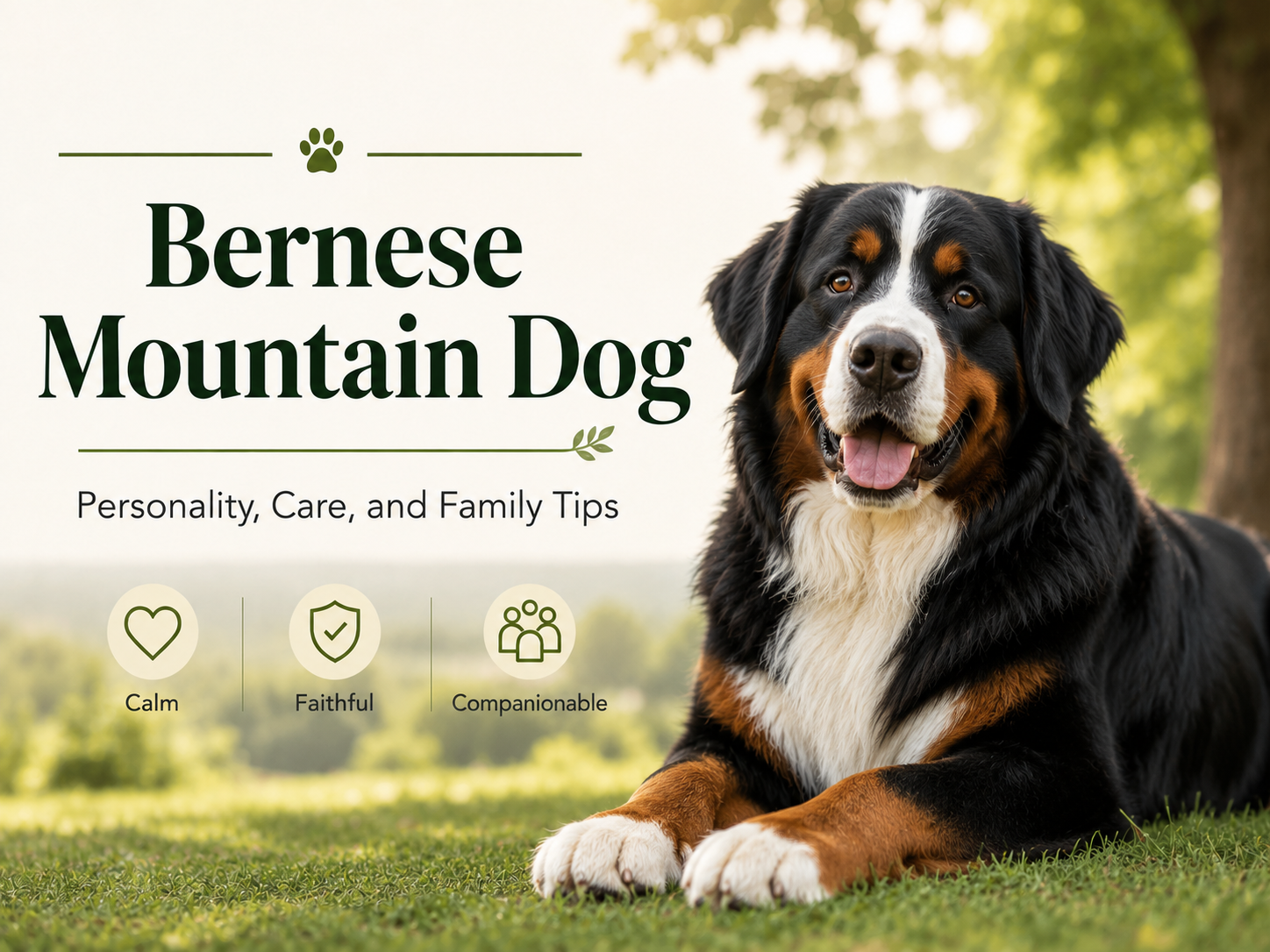
Bernese Mountain Dog: Personality, Care, and Family Tips
A practical, human-written guide to the Bernese Mountain Dog’s temperament, daily care, exercise, training, grooming, heat safety, family life, and useful product ideas.
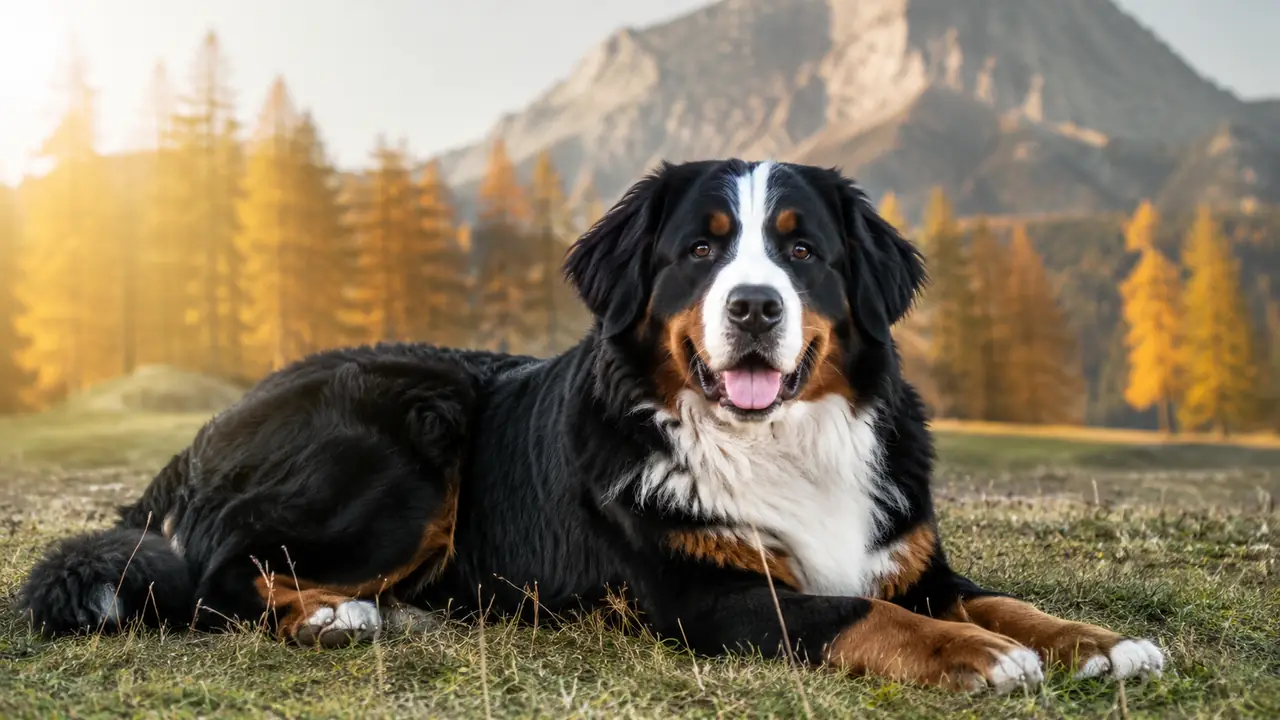
The Bernese Mountain Dog is a large, beautiful, gentle-looking dog with a warm expression and a famous black, white, and rust-colored coat.
Many people see this breed and imagine a calm family dog lying near the door, walking beside children, or resting beside a fireplace. That picture can be true in the right home.
But a Bernese Mountain Dog should not be chosen only because it looks sweet and impressive. This is a giant family companion with real daily needs: space, grooming, training, weight control, heat management, and careful puppy growth.
A young Bernese may be playful, clumsy, and strong before it fully understands its own size. Habits that seem cute in a small puppy can become difficult when the dog becomes large and powerful.
This detailed guide explains what daily life with a Bernese Mountain Dog is really like, including personality, family life, children, apartment living, exercise, training, socialization, grooming, shedding, heat safety, weight control, puppy care, health signs, and product ideas for responsible owners.
Often affectionate, calm, loyal, and closely attached to family.
Beautiful and thick, but it needs regular brushing and shedding care.
Cool routines, steady growth, grooming, and joint-friendly habits matter.
01
Breed Overview
The Bernese Mountain Dog comes from Switzerland and has a background connected with farm work, family life, guarding the property, moving livestock, and pulling small carts.
This history helps explain the breed’s strong body, sturdy build, calm presence, and people-focused nature. The Bernese was not made to live as a decoration or as a dog forgotten outside.
It is a large dog with a thick tricolor coat, usually black with white markings and rust-colored points. The coat is beautiful, but it also brings grooming work and noticeable shedding.
Because the breed is large, owners should think practically before bringing one home. Space in the house, room in the car, food cost, grooming time, vet expenses, strength on leash, and warm-weather management all matter.
Detailed owner fact
A Bernese Mountain Dog may be gentle, but it is still a large working-type breed. Early manners, careful growth, and calm handling make daily life much easier.
02
Personality and Temperament
The Bernese Mountain Dog is often affectionate, steady, sensitive, and strongly attached to the people at home. Many Bernese dogs like to be close without being constantly demanding.
Some follow the family from room to room. Some choose a quiet spot where they can watch what is happening. Some enjoy leaning gently against a person or resting nearby after a walk.
With strangers, some Bernese dogs are friendly, while others are more reserved at first. A balanced dog should be able to meet visitors calmly, but it does not need to greet everyone with excitement.
This breed can be sensitive to harsh treatment. Shouting, confusion, tension, and rough handling can make a Bernese unsure or anxious. Calm guidance and predictable routines are usually much more helpful.
- 01Often gentle, affectionate, and family-focused.
- 02May be sensitive to harsh voices or rough handling.
- 03Usually enjoys being near the family.
- 04Needs early manners because adult size matters.
- 05Can be calm as an adult but playful as a puppy.
- 06Does best with patient, consistent, present owners.
03
Daily Care Needs
Daily care for a Bernese Mountain Dog should include measured meals, fresh water, regular walks, grooming checks, calm training, safe rest, family time, and careful attention to heat.
A yard can be useful, especially in cool weather, but a yard does not replace walks, training, or time with the family. A Bernese left outside alone for long hours may become bored, lonely, or noisy.
Because this is a large breed, daily routines should prevent bad habits early. Jumping on people, pulling on leash, rushing through doors, and mouthing hands may seem manageable in a puppy, but they become harder when the dog grows.
Daily life should be steady rather than chaotic. This breed often enjoys predictable routines, calm family presence, and comfortable resting places.
- 01Provide regular walks and gentle exploration.
- 02Teach leash manners and polite greetings early.
- 03Brush the coat regularly and check for tangles.
- 04Keep water, shade, and cool rest areas available.
- 05Use measured meals and monitor body condition.
- 06Avoid long isolation from the family.
Practical routine tip
A balanced Bernese day may include a cool morning walk, breakfast, rest, brushing, a short training session, a gentle evening walk, and calm time with the family indoors.
04
Exercise Needs
The Bernese Mountain Dog needs regular movement, but it is not a breed that should be pushed into extreme exercise.
Daily walks, calm nature paths, sniffing, simple training, gentle play, and low-impact mental games are usually more suitable than forced running, hard jumping, or rough activity.
Growing puppies need special care. Large-breed puppies should not be treated like adult athletes. Too much repetitive jumping, long forced walks, or intense play can place unnecessary stress on a growing body.
For many Bernese dogs, the best routine combines movement, exploration, social contact, and rest. The goal is not to exhaust the dog, but to support healthy movement and a peaceful daily rhythm.
- 01Use daily walks rather than only yard time.
- 02Choose gentle, low-impact activities.
- 03Avoid forced running and repeated jumping for puppies.
- 04Adjust activity for heat, age, weight, and health.
- 05Add sniffing and simple search games.
- 06Make rest part of the daily routine.
05
Training Tips
Training should begin early with a Bernese Mountain Dog because adult size and strength make manners important.
This breed often responds well to calm voice, rewards, praise, short sessions, and consistent rules. Harsh handling is not useful and may make a sensitive dog less confident.
Important skills include loose-leash walking, recall, waiting at doors, not jumping on people, leaving objects, settling on a mat, calm greetings, accepting grooming, and being handled by a veterinarian.
Family consistency matters. If jumping is allowed one day and punished the next, the dog becomes confused. It is better to choose simple rules and follow them kindly from the beginning.
- 01Teach leash manners before the dog becomes too strong to manage easily.
- 02Reward calm greetings instead of jumping.
- 03Practice “come,” “wait,” “leave it,” and “settle.”
- 04Introduce grooming and handling gently from puppyhood.
- 05Use short, positive, consistent sessions.
- 06Seek qualified help early if fear, pulling, jumping, or overexcitement becomes difficult.
Training mindset
A Bernese Mountain Dog does not need shouting. It needs clear rules, calm repetition, and a family that teaches the same habits every day.
06
Grooming Needs
The Bernese Mountain Dog has a long, thick double coat that requires consistent grooming.
Regular brushing helps remove loose hair, reduce tangles, check the skin, and keep the coat comfortable. Areas behind the ears, under the chest, around the tail, and on the back legs may need extra attention.
During shedding periods, owners should expect more loose hair on floors, clothes, rugs, furniture, and car seats.
Bathing should be done when needed, not constantly. After bathing or heavy rain, the coat should be dried properly, especially in thicker areas.
- 01Brush regularly and more often during shedding seasons.
- 02Check behind ears, chest, legs, tail area, paws, and skin.
- 03Dry the coat well after bathing or wet walks.
- 04Use dog-safe shampoo only when needed.
- 05Check nails, ears, teeth, and body condition regularly.
- 06Ask a groomer for help if mats or heavy shedding become difficult.
07
Health and Safety Notes
Health and safety for a Bernese Mountain Dog include weight control, joint comfort, heat safety, digestive awareness, coat and skin checks, dental care, and regular veterinary visits.
Because this is a large breed, extra weight can place more stress on the joints and make movement harder. Body condition should be checked regularly, not guessed from a distance through the thick coat.
Heat safety is also important. Bernese dogs often prefer cooler conditions. In warm weather, walks should be planned for early morning or evening, with shade, water, and rest available.
When choosing a puppy, ask about the parents’ health, temperament, available veterinary records, hip and elbow checks, and any additional screening recommended for the breed or family line.
Important safety note: Contact a veterinarian promptly if your Bernese Mountain Dog shows limping, pain, unusual tiredness, difficulty rising, breathing difficulty, severe heat stress, repeated vomiting, appetite loss, bloating signs, or sudden behavior changes.
08
Is This Breed Good for Families?
The Bernese Mountain Dog can be a wonderful family dog for homes that are present, patient, and prepared for a large dog’s practical needs.
Many Bernese dogs are affectionate with children and enjoy staying near the family. But adult supervision is always important because size and strength matter, even when the dog has gentle intentions.
A Bernese can accidentally knock over a small child with a happy tail, a playful movement, or a jump. Children should not pull the coat, climb on the dog, disturb meals, enter the resting area, or treat the dog like a giant stuffed toy.
The best family relationship is built with calm rules on both sides: the dog learns polite behavior, and children learn respectful behavior.
- 01Best for families with time, space, and steady routines.
- 02Needs supervision around young children.
- 03Requires early training for jumping and leash manners.
- 04Needs regular brushing and shedding management.
- 05Needs careful heat and weight control.
- 06Can become gentle, loyal, and deeply loved with good care.

09
Best Products for This Breed
The best products for a Bernese Mountain Dog are practical items that support safe walking, coat care, cool rest, joint-friendly routines, training, and daily comfort. Choose products based on your dog’s size, age, coat condition, chewing habits, climate, health, and veterinary or grooming advice when needed.
Large well-fitted harness and sturdy leash
Useful for daily walks when paired with calm loose-leash training.
Double-coat brush and grooming comb
Helpful for managing loose hair, tangles, and regular skin checks.
Large washable orthopedic-style bed
A comfortable rest place supports calm routines and gives the dog enough space.
Cooling mat or cool rest area
Can support warm-weather comfort, but never replaces shade, water, and heat avoidance.
Training pouch and small rewards
Useful for short, positive training sessions and polite manners.
Durable grooming towels
Useful after wet walks, rain, bathing, or muddy outdoor time.
When adding affiliate links, recommend only products that genuinely help Bernese Mountain Dog owners. Avoid products that encourage rough jumping, unsafe heat exposure, poor leash control, overfeeding, or hard exercise for growing puppies.
10
Final Thoughts
The Bernese Mountain Dog is gentle, loyal, impressive, sensitive, and often deeply attached to family life.
But this breed should not be chosen only for its tricolor coat, sweet face, or calm-looking photos. A Bernese Mountain Dog needs space in daily life, early training, coat care, heat safety, weight control, controlled puppy growth, and a family ready for real responsibility.
If it is left without guidance, isolated outside, overfed, overheated, or allowed to develop poor manners, life can become difficult. If it is guided with calm consistency and love, it can become a wonderful family companion.
For owners who have the time, space, patience, and commitment to care for a large gentle dog, the Bernese Mountain Dog can be a very special breed.
11
Medical Disclaimer
This article is for general dog-care information only. It is not veterinary advice and does not replace diagnosis, treatment, diet planning, exercise planning, grooming assessment, behavior assessment, or guidance from a qualified veterinarian, professional groomer, or certified professional trainer.
If your Bernese Mountain Dog has pain, limping, difficulty rising, heat distress, breathing difficulty, appetite changes, vomiting, diarrhea, bloating signs, injury, unusual tiredness, or sudden behavior changes, contact a veterinarian.
Important: Always follow your veterinarian’s advice for diet, growth, weight control, joint comfort, heat safety, exercise, medication, vaccines, parasite prevention, and health concerns specific to your dog. For jumping, pulling, fear, or behavior concerns, seek qualified help early.
13
FAQ
Quick answers for people considering or caring for a Bernese Mountain Dog.
Is the Bernese Mountain Dog good for families?
Yes, it can be a wonderful family dog for homes that provide training, supervision, grooming, space, and steady routines.
Can a Bernese Mountain Dog live in an apartment?
It can in some homes, but it is not the easiest choice. Daily walks, enough space, cool rest, and family time are essential.
Does this breed need a lot of exercise?
It needs regular movement and walks, but not extreme exercise. Gentle, consistent activity is usually best.
Does the Bernese Mountain Dog struggle with heat?
It can. The thick coat and large body mean warm weather should be managed carefully with cool walk times, shade, and water.
Does the Bernese Mountain Dog shed?
Yes. The long double coat can shed heavily, especially during seasonal changes.
Is this breed easy to train?
It can learn well with calm, positive, consistent training. Early manners are important because adult size and strength matter.
Can a Bernese Mountain Dog stay outside in the yard?
A yard can help, but it should not replace family life, walks, training, or shared time indoors.
What is the biggest mistake with this breed?
Choosing it only for its beauty while underestimating size, grooming, heat safety, training, weight control, and large-breed puppy care.
Daily Dog Care Guide · Simple tips for a safer, healthier, happier dog.
🐾 Topic-matched picks
Everyday Gear to Compare for This Breed Guide
These are practical grooming, walking, or daily-care examples to compare — not breed-specific prescriptions.
Optional product • paid linkUndercoat Rake for Thick Double Coats
Useful to compare for dense double coats during regular coat maintenance and seasonal shedding.
View on Amazon →Optional product • paid linkNo-Pull Adjustable Dog HarnessA walking harness option to compare for fit, comfort, and everyday leash practice.
View on Amazon →Optional product • paid linkPortable Dog Water BottleUseful for keeping drinking water available during walks, travel, and warm-weather outings.
View on Amazon →Affiliate disclosure: As an Amazon Associate I earn from qualifying purchases. Always check size, fit, materials, labels, and your dog’s individual needs before buying.
🎨 Color Dogs & Pets
The Big Cute Puppy Coloring BookBig, friendly puppy scenes for relaxed screen-free coloring.View book details →A Creative Break for Dog-Loving Kids
Explore puppy coloring and activity books for screen-free creative time, quiet afternoons, travel, and young dog fans.
See all dog-care products & books →Helpful next steps
Continue with a related guide, tool, or product resource.