Needs space, planning, safe handling, and a home organized for a large body.

Dog Breed Guide
Saint Bernard: Personality, Care, and Family Tips
A practical, human-written guide to the Saint Bernard’s temperament, daily care, exercise, training, grooming, heat safety, family life, and useful product ideas.
The Saint Bernard is one of those dogs that seems large even before it fully enters a room.
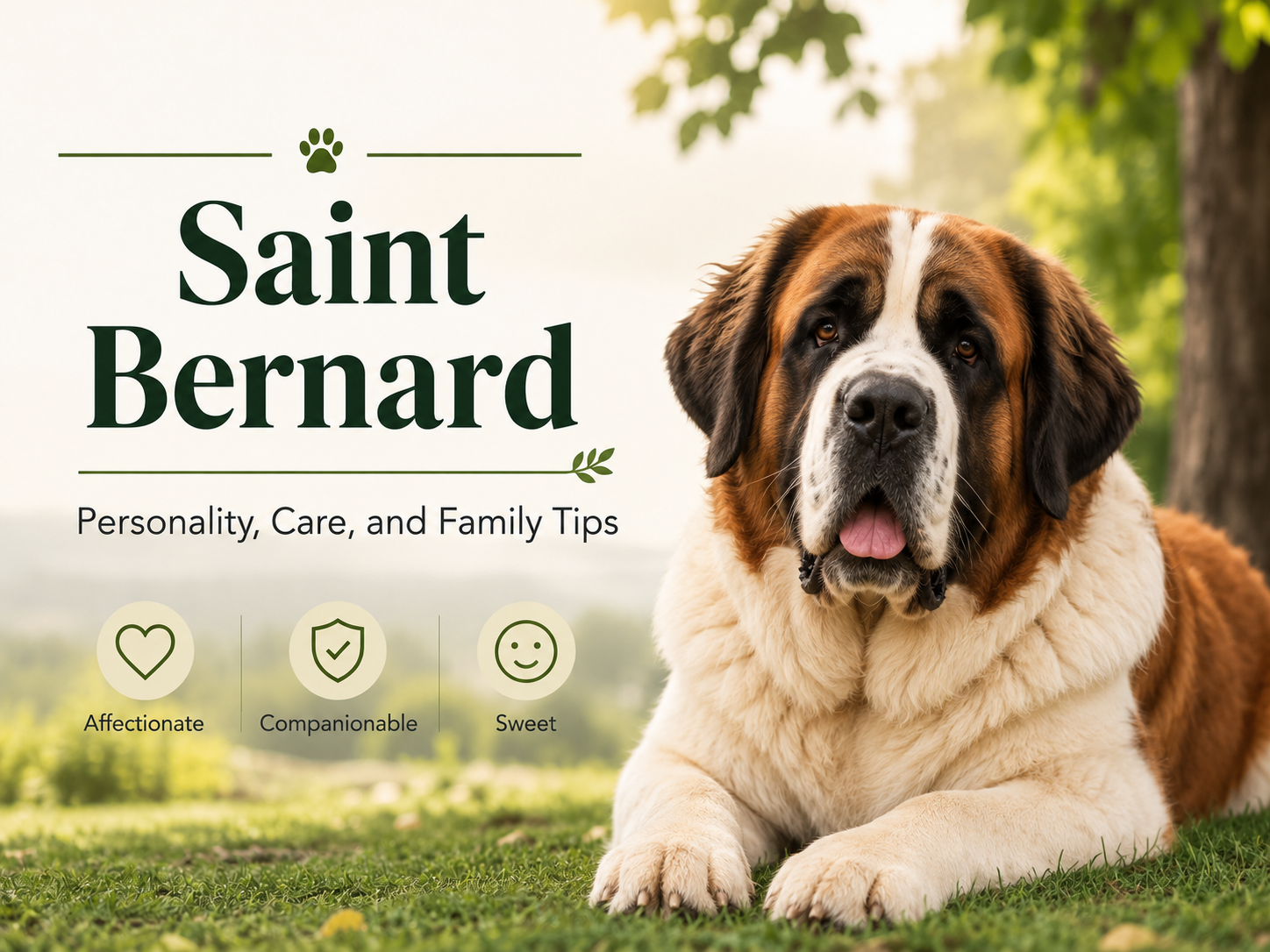
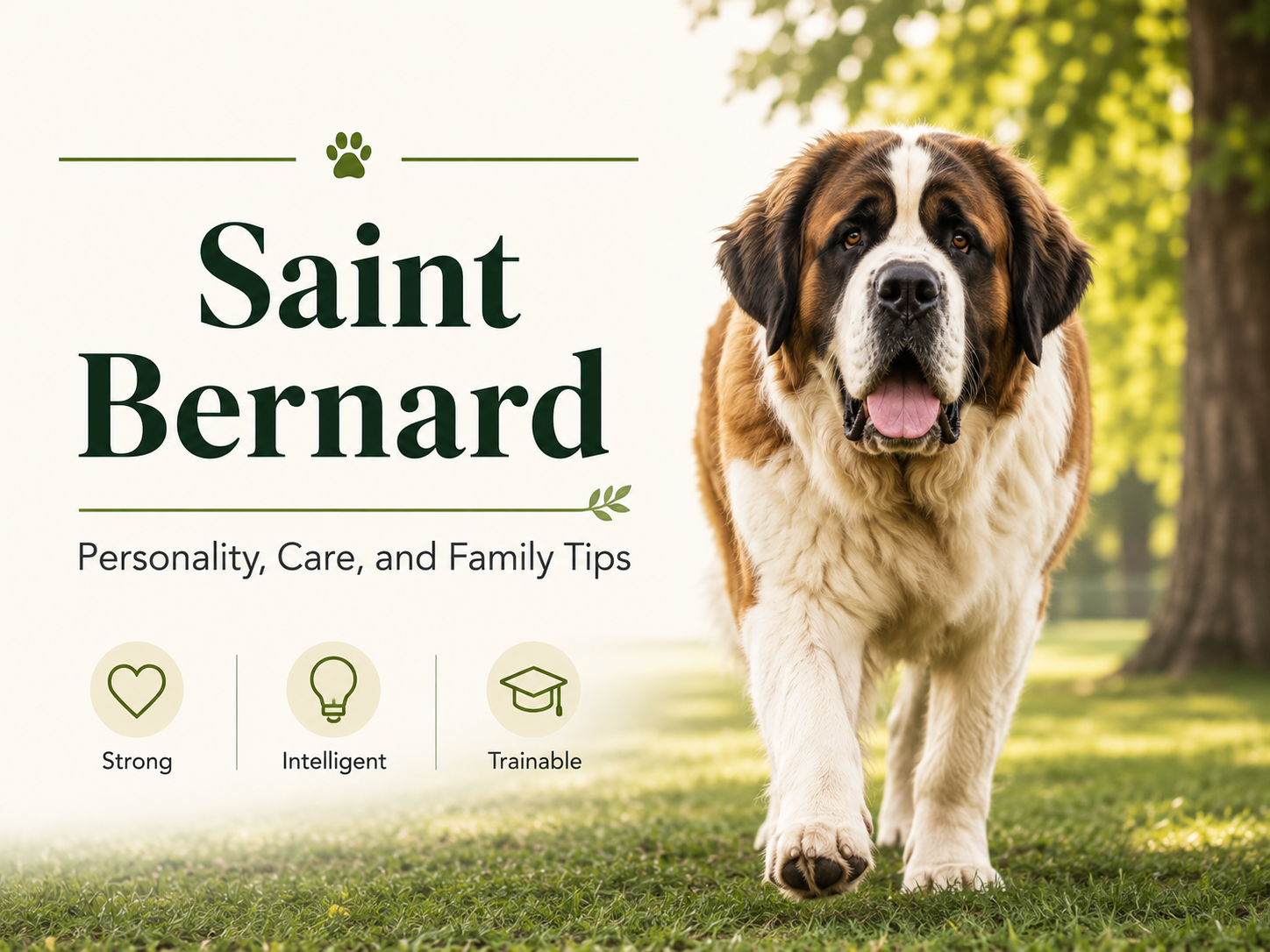
Its massive head, powerful body, soft expression, and calm way of staying near people make it instantly recognizable.
Many people connect the breed with mountains, snow, Alpine rescue history, and the image of a huge but kind family dog.
But choosing a Saint Bernard is not only about welcoming a gentle giant. It means planning daily life around a truly large dog.
A Saint Bernard may be affectionate, patient, loyal, and deeply connected to its family. It may also be heavy, strong, costly to feed, difficult to move in small spaces, sensitive to heat, and hard to manage if training is delayed.
This detailed guide explains what daily life with a Saint Bernard is really like, including personality, children, apartment living, exercise, early training, grooming, drooling, hot weather, feeding, puppy care, health signs, and product ideas for responsible owners.
Often gentle and affectionate, but still needs training and daily care.
Prefers calm walks and gentle activity, not extreme running or jumping.
Hot weather, grooming, drooling, growth, and body condition need attention.
01
Breed Overview
The Saint Bernard is a giant mountain breed with a strong connection to Alpine environments, cold weather, and rescue traditions.
The breed’s size and structure are impressive. A Saint Bernard is not simply a large family dog. It is a giant dog that affects the way a home, car, walking routine, and daily care must be planned.
Saint Bernards may have short or long coats. Both coat types are dense and need regular care, especially during shedding periods.
Many Saint Bernards want to be near their people. They may rest on a cool floor, watch the family quietly, lie close to the sofa, or follow someone slowly from room to room.
This breed may look calm, but calm does not mean low responsibility. Weight, heat, grooming, growth, feeding, training, space, and safe handling all matter.
Detailed owner fact
A Saint Bernard can be quiet and gentle, but every habit becomes bigger because the dog is bigger. Early training makes daily life safer and easier for everyone.
02
Personality and Temperament
The Saint Bernard is often described as gentle, patient, calm, affectionate, and strongly attached to the family.
Many Saint Bernards are not constantly demanding. They may not need to play every minute, bark at every sound, or race around the house.
But they still need involvement. A Saint Bernard left outside alone for much of the day may become bored, isolated, noisy, or unhappy.
Some are social with visitors, while others prefer to observe quietly before engaging. A balanced Saint Bernard should learn to live around ordinary people, sounds, dogs, visitors, and daily events without fear or excessive excitement.
Because of the dog’s size, small behavior problems can become large practical problems. Pulling, jumping, leaning, rushing through doors, or taking food from counters should be addressed early.
- 01Often calm, affectionate, patient, and family-focused.
- 02May be quiet but still deeply present in family life.
- 03Needs socialization without overwhelming experiences.
- 04Can become difficult if training is delayed until adulthood.
- 05Does best with calm, organized, patient owners.
- 06Needs to be included in family life, not isolated outside.
03
Daily Care Needs
Daily care for a Saint Bernard should include measured meals, fresh water, gentle walks, rest, grooming checks, training, cool resting areas, and family time.
Space matters. A Saint Bernard needs room to turn around, lie down comfortably, stand up safely, and rest without being constantly moved out of the way.
The family should also plan for practical details such as a large bed, enough floor space, car transport, strong but comfortable walking equipment, towels for drool, and weather-safe routines.
A yard can be useful in cool weather, but it does not replace walks or family contact. A Saint Bernard left alone outdoors may simply wait for people, bark at sounds, or become disconnected from household life.
- 01Provide calm daily walks and sniffing time.
- 02Keep cool water and a cool resting place available.
- 03Plan space, bedding, car travel, and grooming tools for a giant dog.
- 04Teach leash manners, door manners, and calm greetings early.
- 05Monitor body condition and avoid overfeeding.
- 06Avoid leaving the dog isolated outside for long periods.
Practical routine tip
A balanced Saint Bernard day may include a cool morning walk, breakfast, rest, brushing or body checks, a short training session, an evening walk, and quiet time near the family.
04
Exercise Needs
The Saint Bernard is not a marathon dog. It usually does not need extreme sports, long runs, repeated jumping, or intense exercise.
But it should not live a completely sedentary life either. Calm daily walks, sniffing, gentle exploration, and simple training exercises help support body condition and mental balance.
Quality matters more than speed. A slow, comfortable walk in cool weather can be better than a fast outing in heat or hard exercise that stresses the joints.
Puppies need special care. A fast-growing giant puppy should not be pushed into forced running, repeated stairs, jumping, or heavy physical activity. Growth should be calm and body-safe.
- 01Use calm daily walks instead of high-impact exercise.
- 02Choose cool times of day, especially in warm weather.
- 03Add gentle sniffing, simple search games, and short training.
- 04Avoid forced running, repeated jumping, and unnecessary stairs for puppies.
- 05Adjust exercise for age, weight, heat, fitness, and health.
- 06Make rest and cooling down part of the routine.
05
Training Tips
Training a Saint Bernard should begin early, long before the dog becomes too large to guide easily.
The goal is not to make the dog hard or rigid. The goal is to build calm, safe habits that make life easier for the dog and the family.
Important skills include loose-leash walking, waiting at doors, coming when called, leaving items, not jumping, greeting visitors calmly, resting on a mat, and accepting handling of paws, ears, mouth, and body.
This breed usually does not need shouting or force. Clear expectations, rewards, calm voice, patience, and consistency work better than fear-based handling.
Because the Saint Bernard becomes very strong, every adult in the home should follow the same rules.
- 01Teach leash manners before adult strength develops.
- 02Practice waiting at doors and calm guest routines.
- 03Teach “leave it,” “drop,” “wait,” “come,” and “settle.”
- 04Reward calm behavior and safe movement around people.
- 05Introduce grooming and body handling from puppyhood.
- 06Seek qualified help early if pulling, jumping, fear, guarding, or reactivity appears.
Training mindset
A Saint Bernard puppy does not stay small for long. Teaching gentle manners early is much easier than changing habits after the dog is fully grown.
06
Grooming Needs
The Saint Bernard can have a short coat or a long coat, but both types need regular care.
The dense coat can hold loose hair, moisture, dirt, and small debris. During shedding seasons, the amount of hair in the home can increase noticeably.
Regular brushing helps remove dead hair, supports skin checks, and keeps the coat more comfortable. Long-coated Saint Bernards need extra attention behind the ears, on the chest, around the tail, on the back legs, and under the belly.
Some Saint Bernards drool a lot. Not every dog drools in the same way, but towels, face cleaning, and regular mouth-area care may become normal parts of daily life.
After drinking, eating, or resting, check the face and folds around the mouth when needed. Keep the dog dry and clean enough to avoid irritation.
- 01Brush regularly, especially during shedding periods.
- 02Check ears, nails, paws, skin, teeth, and body condition.
- 03Give long-coated dogs extra attention in areas that tangle.
- 04Use dog-safe shampoo only when bathing is needed.
- 05Keep towels available for drool and wet face areas.
- 06Introduce brushing and handling gently from puppyhood.
07
Health and Safety Notes
Health and safety for a Saint Bernard include weight control, joint comfort, heat safety, digestive awareness, skin and coat care, dental care, safe exercise, and regular veterinary visits.
Because this is a giant breed, excess weight can create extra stress on the body. The dense coat can also make it harder to notice small weight changes by sight alone.
When choosing a puppy, ask about the parents’ health, temperament, growth, veterinary records, and any health screening used by the breeder. For a giant breed, conversations about hips and elbows are especially important.
Deep-chested giant dogs may be at higher risk for bloat or gastric dilatation-volvulus, a sudden emergency. Retching without producing vomit, a swollen abdomen, unusual agitation, heavy drooling, weakness, collapse, or sudden distress should never be ignored.
Meal routines, exercise around meals, and prevention options should be discussed with a veterinarian, especially if there is a known family history or individual risk concern.
Important safety note: Bloat signs, collapse, repeated vomiting, severe pain, breathing difficulty, heat distress, serious injury, or sudden behavior changes should be treated as urgent. Seek veterinary care promptly.
08
Is This Breed Good for Families?
The Saint Bernard can be a wonderful family dog for calm, present, organized homes that understand giant-breed responsibility.
It can suit adults, couples, and families who want a gentle companion and can manage space, cost, grooming, weight, heat, transport, and training.
The right question is not only whether the family loves the dog. It is also whether the family can organize life safely around such a large dog.
With children, supervision is essential. Many Saint Bernards are patient and affectionate, but their size can cause accidental falls, bumps, or injuries even without bad intention.
Children should never climb on the dog, pull the coat, disturb meals, enter the resting area, hug too tightly, or treat the dog like a rideable toy.
- 01Best for calm, organized families with space and time.
- 02Needs adult supervision around children.
- 03Requires early leash, door, and visitor training.
- 04Needs careful heat management in warm weather.
- 05May require higher food, grooming, transport, and veterinary costs.
- 06Can become gentle, loyal, and deeply loved with good care.
09
Best Products for This Breed
The best products for a Saint Bernard are practical items that support safe walking, calm training, giant-dog rest, grooming, cooling, drool management, and weight control. Choose products based on your dog’s size, age, coat type, health, climate, and professional advice when needed.
Strong well-fitted harness and sturdy leash
Useful for daily walks when paired with early loose-leash training.
Giant washable bed or cooling mat
Supports comfortable rest, especially in warm weather or on hard floors.
Large grooming brush and undercoat tools
Helps manage dense coat, shedding, and skin checks.
Large towels and drool cloths
Practical for face cleaning, water bowl areas, car rides, and daily drool.
Measured feeding tools
Helpful for portion control, growth management, and weight monitoring.
Non-slip mats or safe walking surfaces
Can help a giant dog move more confidently on slippery floors.
When adding affiliate links, recommend only products that genuinely help Saint Bernard owners. Avoid items that encourage overfeeding, unsafe heat exposure, rough high-impact exercise, or harsh control.
10
Final Thoughts
The Saint Bernard is gentle, massive, affectionate, patient, and often deeply connected to its family.
But this breed should not be chosen only for the sweet face, mountain-dog image, or soft giant appearance. A Saint Bernard needs space, training, grooming, heat protection, weight control, calm exercise, and a family ready to manage a truly giant dog.
If it is left without training, isolated outside, overfed, overheated, or managed casually because it seems calm, daily life can become difficult for both dog and family.
If it is guided with patience, structure, respect, and realistic planning, it can become a loyal, peaceful, unforgettable companion.
For people who have space, time, and a serious commitment to giant-breed care, the Saint Bernard can be a very special breed.
11
Medical Disclaimer
This article is for general dog-care information only. It is not veterinary advice and does not replace diagnosis, treatment, diet planning, growth planning, exercise planning, grooming assessment, behavior assessment, or guidance from a qualified veterinarian, professional groomer, or certified professional trainer.
If your Saint Bernard has pain, limping, difficulty rising, heat distress, appetite changes, vomiting, retching, bloating signs, diarrhea, injury, unusual tiredness, breathing difficulty, or sudden behavior changes, contact a veterinarian promptly.
Important: Always follow your veterinarian’s advice for diet, growth, weight control, joint comfort, digestive concerns, heat safety, medication, vaccines, parasite prevention, and health concerns specific to your dog. For pulling, jumping, fear, guarding, or behavior concerns, seek qualified help early.
13
FAQ
Quick answers for people considering or caring for a Saint Bernard.
Can a Saint Bernard live in an apartment?
It can in some homes, but it needs enough space to rest and move, daily walks, cool areas, and a family prepared for a giant dog.
Is a Saint Bernard good with children?
It can be gentle with respectful children, but adult supervision is essential because of the breed’s size and strength.
Does a Saint Bernard need a lot of exercise?
It needs regular calm walks and gentle activity, but not extreme exercise, forced running, or repeated jumping.
Does this breed suffer in hot weather?
It can have difficulty in heat. Walks should be planned for cooler times, with shade, water, and a cool resting space available.
Does the Saint Bernard shed?
Yes. Both short and long coats shed, and brushing is especially important during seasonal shedding.
Does a Saint Bernard drool?
Many do drool, though the amount varies by dog. Towels and face cleaning may become normal parts of daily care.
Is a Saint Bernard easy to train?
It can learn well with calm, consistent training. Starting early is important because the adult dog is very large and strong.
What is the biggest mistake with this breed?
Choosing a Saint Bernard for its sweet image while underestimating space, cost, training, grooming, heat safety, and giant-dog management.
Daily Dog Care Guide · Simple tips for a safer, healthier, happier dog.
🐾 Topic-matched picks
Everyday Gear to Compare for This Breed Guide
These are practical grooming, walking, or daily-care examples to compare — not breed-specific prescriptions.
Optional product • paid linkGrooming Gloves for Gentle Deshedding
A gentle handling-friendly grooming option for routine coat care.
View on Amazon →Optional product • paid linkNo-Pull Adjustable Dog HarnessA walking harness option to compare for fit, comfort, and everyday leash practice.
View on Amazon →Optional product • paid linkPortable Dog Water BottleUseful for keeping drinking water available during walks, travel, and warm-weather outings.
View on Amazon →Affiliate disclosure: As an Amazon Associate I earn from qualifying purchases. Always check size, fit, materials, labels, and your dog’s individual needs before buying.
🎨 Color Dogs & Pets
Little Puppy Artists Trace and Color BookTrace, color, and practice with puppy-themed activity pages.View book details →A Creative Break for Dog-Loving Kids
Explore puppy coloring and activity books for screen-free creative time, quiet afternoons, travel, and young dog fans.
See all dog-care products & books →Helpful next steps
Continue with a related guide, tool, or product resource.