Short legs, long back, and a confident attitude.

Dog Breed Guide
Dachshund: Personality, Care, and Family Tips
A practical, human-written guide to the Dachshund’s temperament, daily care, exercise, training, grooming, back safety, family life, and useful product ideas.
The Dachshund is a small dog with a long body, short legs, a strong nose, and a personality that is often much bigger than its size.
Many people choose a Dachshund because it is cute, compact, easy to recognize, and suitable for smaller homes. But this breed is not a tiny decoration for the sofa. It has a working-dog history, a strong hunting instinct, a curious mind, and a very determined character.
A Dachshund can be affectionate, funny, loyal, bold, and clever. It can also be stubborn, vocal, scent-focused, and surprisingly confident around larger dogs or new situations.
This detailed guide explains what daily life with a Dachshund is really like, including personality, apartment life, exercise, back safety, stairs, children, other dogs, training, recall, socialization, coat types, dental care, weight control, health signs, puppy care, and product ideas for responsible owners.
Often affectionate, vocal, independent, and scent-driven.
Needs walks, sniffing, play, and safe movement.
Body condition, safe handling, stairs, and jumping matter.
01
Breed Overview
The Dachshund was originally developed as a hunting dog, especially known for working close to the ground and following scent. Its long body, short legs, strong nose, and determined temperament all connect to that history.
Today, many Dachshunds live as family companions, but their instincts have not disappeared. A Dachshund may stop suddenly on a walk to investigate a scent, dig at a blanket, watch a garden corner carefully, or become very focused on something moving in the distance.
This breed comes in different coat types, including smooth, long-haired, and wire-haired. There are also size differences depending on the standard used in different countries. No matter the size or coat type, the Dachshund personality is usually clear: alert, curious, brave, and very present in the home.
Detailed owner fact
A Dachshund can live well in a small home, but it still needs a real dog life: walks, sniffing, training, safe movement, body checks, and a routine that does not treat it like a toy.
02
Personality and Temperament
The Dachshund is often affectionate, clever, alert, and very loyal to its family. Many Dachshunds choose a favorite person and follow that person closely around the house.
This breed can also be stubborn. A Dachshund may understand a cue and still pause because an interesting smell, a comfortable blanket, or a person with food seems more important.
Many Dachshunds are vocal. They may bark at door sounds, visitors, movement outside the window, other dogs, or simply because barking has worked for them before. This does not make them bad dogs, but it means early guidance matters.
A Dachshund should not be overprotected just because it is small. It needs confidence, socialization, polite rules, and safe chances to explore the world.
- 01Often strongly bonded to the family.
- 02Can be bold, curious, and determined.
- 03May be vocal when excited, alert, or bored.
- 04Often follows scents with intense focus.
- 05Needs gentle rules rather than constant carrying.
- 06Does best with patient, consistent owners.

03
Daily Care Needs
Daily care for a Dachshund should include measured meals, fresh water, short-to-moderate walks, sniffing time, gentle play, safe handling, coat checks, ear checks, dental care, rest, and training.
Because of the Dachshund’s body shape, daily routines should reduce unnecessary stress on the back. This does not mean the dog should live without movement. It means movement should be sensible, regular, and safe.
Daily observation is important. Owners should notice weight changes, reluctance to move, stiffness, limping, unusual barking, appetite changes, ear discomfort, dental issues, or any sign that the dog is not moving normally.
- 01Offer measured meals and avoid too many extras.
- 02Provide daily walks with time to sniff.
- 03Prevent repeated jumping from high furniture.
- 04Check ears, teeth, nails, skin, and coat.
- 05Use calm training to manage barking and recall.
- 06Create safe rest areas that are easy to reach.
Practical routine tip
A balanced Dachshund day may include a calm morning walk, breakfast, rest, a short training game, sniffing enrichment, an evening walk, brushing or ear checks, and a quiet sleep routine.
04
Exercise Needs
The Dachshund does not need marathon-level exercise, but it should not live a completely sedentary life. Regular movement helps body condition, confidence, mental health, and daily behavior.
Good exercise includes calm walks, sniffing routes, gentle games, short training sessions, and safe exploration. Sniffing is especially important because this breed often enjoys using its nose.
High-impact activity should be managed carefully. Repeated jumping, rough play, slippery floors, and sudden twisting can be risky for some dogs, especially if they are overweight or already have mobility concerns.
- 01Use regular walks rather than long forced exercise.
- 02Allow safe sniffing and exploration.
- 03Use low-impact games indoors.
- 04Avoid repeated jumping from beds, sofas, or stairs.
- 05Do not overwork growing puppies.
- 06Ask a veterinarian if movement causes pain or stiffness.
05
Training Tips
The Dachshund is intelligent, but it may not always be eager to obey immediately. Training should be positive, short, practical, and consistent.
This breed often responds well to rewards, praise, food, toys, and sniffing opportunities. But training should not become a negotiation every time. Clear family rules are important.
Recall deserves special attention because the Dachshund’s scent drive can be strong. Practice first indoors, then in safe enclosed spaces, then with a long line and mild distractions.
Barking should also be managed early. The goal is not to punish the dog for being alert, but to teach calmer alternatives and prevent barking from becoming the only way to get attention.
- 01Teach name response and recall early.
- 02Practice loose-leash walking and calm greetings.
- 03Teach “leave it,” “wait,” and “settle.”
- 04Reward quiet attention instead of constant barking.
- 05Practice gentle handling of paws, ears, and mouth.
- 06Use patience, humor, and consistency every day.
Recall safety tip
Do not call your Dachshund only when fun is ending. Call, reward, release back to sniffing, and repeat. This helps the dog learn that returning does not always end exploration.
06
Grooming Needs
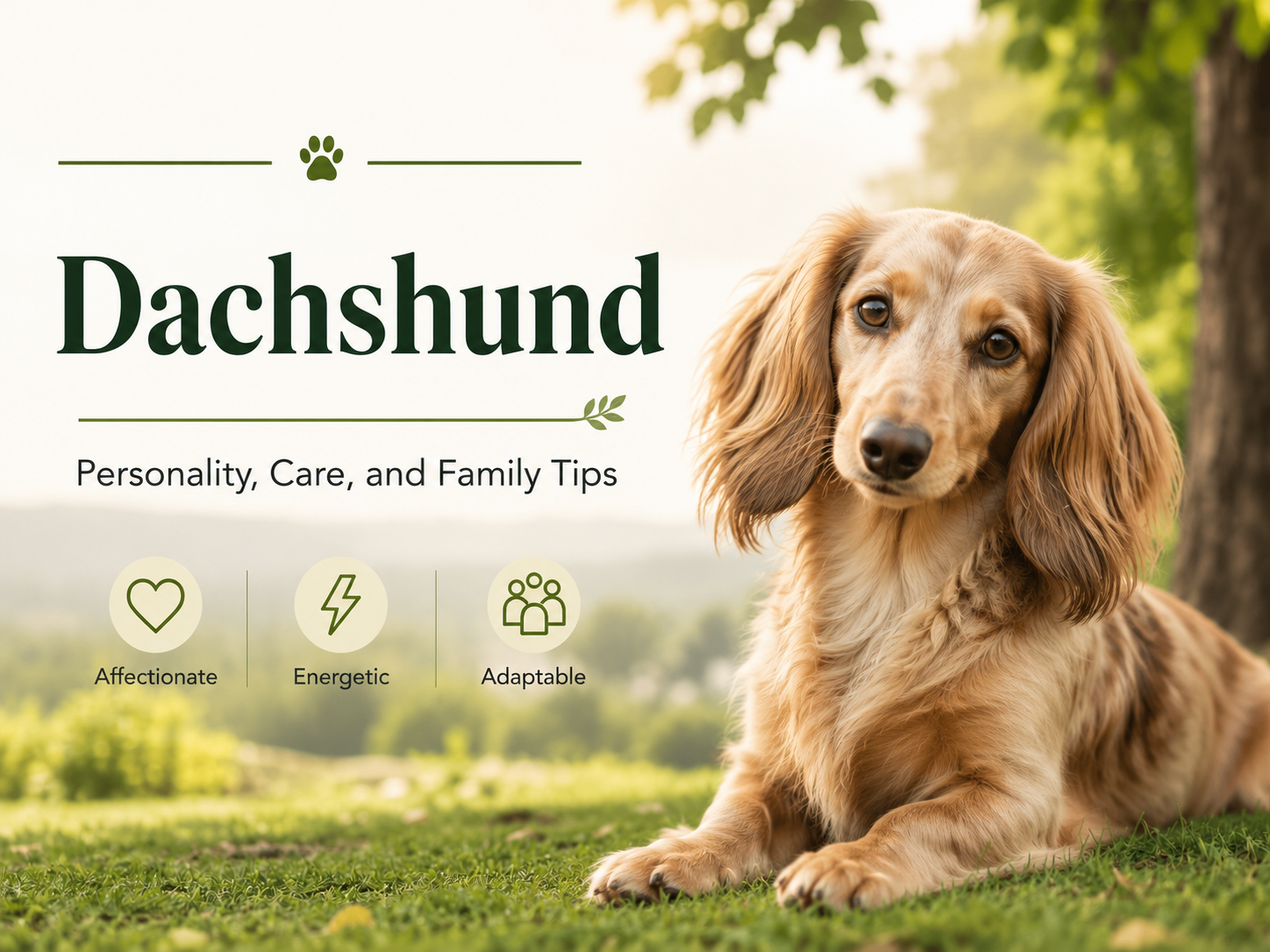
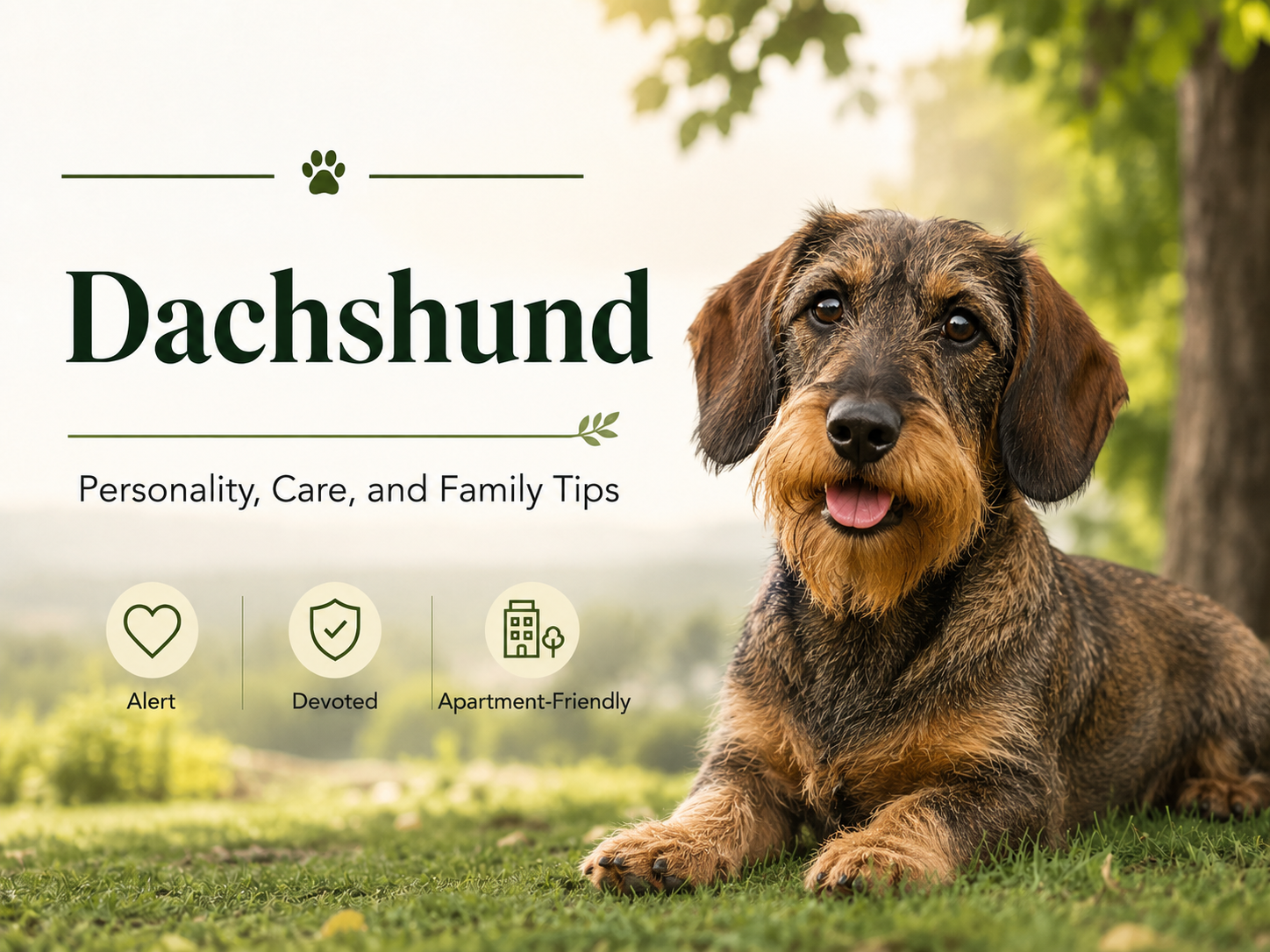
Dachshund grooming depends strongly on coat type. Smooth-coated Dachshunds usually need simple regular brushing. Long-haired Dachshunds need more attention around the ears, chest, legs, and tail. Wire-haired Dachshunds may need more specific coat care and sometimes professional grooming guidance.
All Dachshunds need regular checks of ears, nails, teeth, skin, paws, and coat. Their ears can collect dirt and moisture, so discomfort, odor, scratching, or head shaking should not be ignored.
Dental care matters too. Small dogs can develop dental problems, so gentle mouth handling and veterinary dental guidance should be introduced early.
- 01Brush according to coat type.
- 02Check long-haired dogs for tangles.
- 03Ask a groomer about wire-haired coat care if needed.
- 04Check ears after outdoor walks.
- 05Trim nails or ask a professional for help.
- 06Introduce dental care gently and consistently.
07
Health and Safety Notes
Health and safety for the Dachshund should focus on back comfort, body weight, safe movement, dental care, ear health, and regular veterinary checkups.
The Dachshund’s long back deserves serious attention. This does not mean the dog should be kept still or prevented from enjoying life. It means owners should reduce unnecessary risks such as repeated jumping, rough handling, slippery floors, and excess weight.
Weight control is especially important. Extra weight can add stress to the body and make movement more difficult.
Contact a veterinarian promptly if your dog suddenly refuses to walk, cries when touched, holds the back in an unusual position, drags the rear legs, seems weak, becomes wobbly, loses control of urination or stool, or shows sudden pain.
Important safety note: Back pain, rear-leg weakness, dragging, collapse, or loss of bladder or bowel control should be treated as urgent. Do not wait or try home remedies when serious movement signs appear.
- 01Keep body weight healthy.
- 02Reduce repeated jumping from high furniture.
- 03Use non-slip surfaces where helpful.
- 04Support the body properly when lifting.
- 05Watch for pain, stiffness, or changed movement.
- 06Follow veterinary guidance for stairs and furniture access.
08
Is This Breed Good for Families?
The Dachshund can be a good family dog for homes that understand respectful handling, clear rules, daily walks, and back safety.
With children, supervision is important. Children should not lift the dog roughly, drop it, pull the ears or tail, climb over it, disturb sleep, or chase it around the house.
The Dachshund’s long body means rough handling matters. Even a loving child can accidentally hurt the dog if lifting or play is not supervised.
This breed often does best in families that respect personality and boundaries. It does not need to be carried constantly, teased, or treated like a small toy.
- 01Good for families that are gentle and consistent.
- 02Best with supervised child-dog interaction.
- 03Needs safe handling because of the long back.
- 04May bark if overexcited or under-guided.
- 05Benefits from calm spaces and clear routines.
- 06Does best when everyone follows the same rules.
09
Best Products for This Breed
The best products for a Dachshund are practical items that support safe walking, back safety, controlled exploration, grooming, dental care, and comfortable rest. Choose products based on your dog’s size, coat type, health, chewing habits, and veterinary advice when needed.
Well-fitting harness and leash
A comfortable harness can support safe walks when fitted correctly and used with calm leash training.
Pet ramp or safe steps
May help reduce repeated jumping from furniture when used safely and introduced gradually.
Non-slip rugs or mats
Useful on slippery floors to help the dog move with more confidence.
Long line for recall practice
Allows safe sniffing and exploration while recall is still being built.
Coat-specific grooming brush
Smooth, long-haired, and wire-haired Dachshunds may need different grooming tools.
Small-dog dental kit
Can support mouth care when introduced gently and used with veterinary guidance.
When adding affiliate links, recommend only products that genuinely help Dachshund owners. Avoid products that encourage unsafe jumping, rough play, or uncontrolled off-leash behavior.
10
Final Thoughts
The Dachshund is small, clever, affectionate, curious, and full of character. It can become a wonderful companion for the right home.
But this breed should not be chosen only because it is cute, compact, or funny-looking. A Dachshund needs walks, scent time, training, careful handling, back safety, weight control, grooming, dental care, and family respect.
If it is overfed, left without rules, allowed to jump constantly, or treated like a toy, life can become harder for both the dog and the family. If it is guided with patience, safety, and understanding, it can become confident, funny, loyal, and deeply loved.
For owners who want a small dog with a strong personality and are ready to manage its body and behavior responsibly, the Dachshund can be a very special breed.
11
Medical Disclaimer
This article is for general dog-care information only. It is not veterinary advice and does not replace diagnosis, treatment, or guidance from a qualified veterinarian.
If your Dachshund has back pain, limping, rear-leg weakness, dragging, sudden stiffness, appetite changes, vomiting, diarrhea, ear pain, dental pain, unusual tiredness, or sudden behavior changes, contact a veterinarian.
Urgent warning: If your dog cannot walk normally, drags the back legs, cries in pain, collapses, or loses bladder or bowel control, seek emergency veterinary care immediately.
13
FAQ
Quick answers for people considering or caring for a Dachshund.
Is the Dachshund good for families?
Yes, it can be a good family dog for homes that provide gentle handling, supervision, daily walks, training, and back safety.
Can a Dachshund live in an apartment?
Yes. It can live well in an apartment, but it still needs daily walks, sniffing, training, and family time.
Does a Dachshund bark a lot?
Some Dachshunds are vocal. Barking can be managed with routine, training, exercise, and teaching calmer alternatives.
Does a Dachshund need much exercise?
It needs regular movement and sniffing, but not extreme exercise. Low-impact activity is usually better than rough or high-jump play.
Can a Dachshund be off leash?
Only in safe areas with reliable recall. Many Dachshunds become very focused on scents, so a long line can be safer in open spaces.
Should Dachshunds avoid stairs and jumping?
Risk depends on the individual dog, health, age, and home setup. Reducing repeated high jumps and using veterinary guidance is wise.
What products are useful for a Dachshund?
A good harness, leash, pet ramp, non-slip mats, long line, coat-specific grooming brush, and dental kit can be useful.
What is the biggest mistake with this breed?
Thinking small size means easy care. Dachshunds need training, back safety, weight control, exercise, grooming, and respectful handling.
Daily Dog Care Guide · Simple tips for a safer, healthier, happier dog.
🐾 Topic-matched picks
Everyday Gear to Compare for This Breed Guide
These are practical grooming, walking, or daily-care examples to compare — not breed-specific prescriptions.
Optional product • paid linkRubber Grooming Brush for Short Coats
A simple coat-care option to compare for short-haired dogs and routine loose-hair removal.
View on Amazon →Optional product • paid linkReflective Adjustable Dog CollarA visibility-focused collar option for routine walks; always check fit and ID-tag security.
View on Amazon →Optional product • paid linkDog Paw Cleaner CupA practical cleanup tool for muddy paws after outdoor walks.
View on Amazon →Affiliate disclosure: As an Amazon Associate I earn from qualifying purchases. Always check size, fit, materials, labels, and your dog’s individual needs before buying.
🎨 Color Dogs & Pets
The Big Cute Puppy Coloring BookBig, friendly puppy scenes for relaxed screen-free coloring.View book details →A Creative Break for Dog-Loving Kids
Explore puppy coloring and activity books for screen-free creative time, quiet afternoons, travel, and young dog fans.
See all dog-care products & books →Helpful next steps
Continue with a related guide, tool, or product resource.