Puppy Crying at Night: How to Help a New Puppy Sleep

A puppy crying at night is often adjusting to a completely new sleeping environment while also learning a new toilet routine. This guide explains how to respond calmly, create a safe sleeping setup, handle nighttime potty breaks, introduce a crate positively if you use one, and recognize signs that need veterinary attention.
Updated August 13, 2026 · Veterinary and behavior sources checked
The first few nights with a new puppy can be harder than many owners expect. During the day, your puppy may explore, play, follow you around, and fall asleep easily. Then the house becomes quiet and the puppy begins to whine, bark, or cry.
That does not automatically mean you have created a bad habit or that your puppy is being difficult. Your puppy may have recently left familiar people, littermates, smells, sounds, and sleeping arrangements.
Night also creates practical challenges. A young puppy may wake because a toilet break is needed, because the sleeping setup still feels unfamiliar, or because the puppy has not yet learned that short periods without direct contact are safe.
The goal is not to force silence. The goal is to meet genuine needs, keep nighttime predictable, avoid punishment, and gradually help your puppy become comfortable resting in the new home.
Quick Answer: What Should You Do When a Puppy Cries at Night?
When your new puppy cries at night, stay calm and first consider whether a toilet break or another genuine need may be involved.
If a toilet break is needed, keep it quiet and simple. Take the puppy to the designated toilet area, allow an opportunity to eliminate, reinforce success calmly, and return to the sleeping area without starting a play session.
If basic needs are met but your puppy is distressed by the new sleeping environment, calm reassurance and temporary proximity can be appropriate. You do not need to punish the puppy or leave a frightened puppy to cry indefinitely.
Build independence gradually during the daytime and create positive associations with the puppy's bed, pen, or crate rather than forcing confinement.
A Simple Puppy Bedtime Plan
In This Puppy Sleep Guide
1. Why Does a New Puppy Cry at Night?
Night crying can have several possible explanations, and more than one may be happening at the same time.
Instead of assuming every sound is "attention seeking," consider the whole situation: when the puppy last toileted, how the puppy behaves physically, whether there are illness signs, and whether the sleeping environment is still very new.
Back to guide
2. Choose a Safe Sleeping Place Before Bedtime
Decide where your puppy will sleep before everyone is tired and the puppy is already distressed.
Depending on your household and training plan, the setup might involve a crate, puppy pen, gated area, or another small puppy-safe sleeping space.
A practical sleeping area should be
- free from electrical cords and other chewing hazards
- free from medicines, cleaners, rubbish, and unsafe objects
- comfortable enough for normal resting positions
- protected from unsafe access to stairs, balconies, or exits
- easy for an owner to reach when a nighttime toilet trip is needed
- associated with calm experiences rather than punishment
Keep the setup relatively simple. The goal is a clear resting environment, not a room full of exciting toys.
Use bedding only when it is appropriate for the individual puppy and the puppy does not chew or swallow it.
Back to guide3. Should a New Puppy Sleep Near You?
Keeping a new puppy's sleeping area close to you during the first nights can make monitoring easier and may help the puppy feel less isolated.
If you use a crate at night, placing it near your bed initially can allow the puppy to sense your presence while also helping you notice when the puppy wakes and may need to toilet.
This does not mean the sleeping location must stay beside your bed forever. If your long-term plan involves another location, you can make changes gradually after the puppy has developed more confidence with the sleeping routine.
There is no benefit in making the first night unnecessarily frightening simply to prove that the puppy can be independent.
Back to guide4. If You Use a Crate at Night, Build Comfort First
A crate can be useful for management, transport, veterinary situations, and house-training routines, but the puppy first needs to learn that the crate is a safe place.
During the day, allow your puppy to explore the crate voluntarily. Keep the door open initially and create positive associations with calm rest and appropriate rewards.
Do not force a frightened puppy into the crate or use the crate as punishment.
Avoid the “cry it out” approach with a frightened new puppy
A puppy who is highly distressed by confinement has not yet learned that the crate is safe. Increase crate duration gradually according to the puppy's comfort instead of suddenly expecting a long period of isolation.
If a puppy repeatedly panics in the crate, attempts to escape, bites the crate, or cannot settle despite gradual positive introduction, discuss the problem with your veterinarian or an appropriately qualified reward-based behavior professional.
Back to guide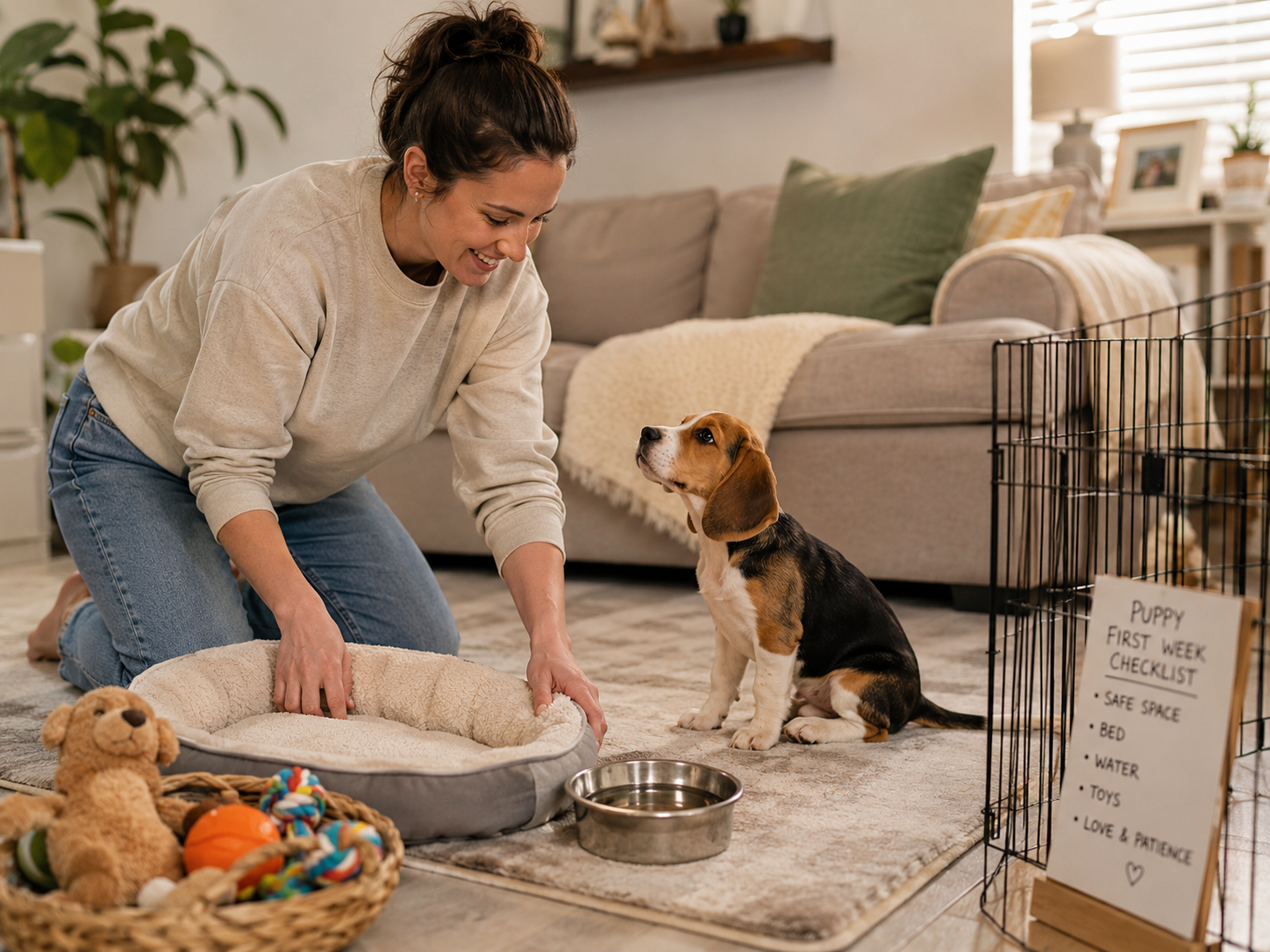
5. Build a Calm Evening Routine Before Bedtime
Bedtime problems can begin before bedtime. A puppy who has spent the evening in continuous high-energy play may find it difficult to transition immediately into quiet rest.
Gradually lower the activity level as bedtime approaches.
A simple sequence may include
- the normal evening meal according to the puppy's feeding plan
- a toilet opportunity after eating when needed
- appropriate play or interaction
- lower-energy activity
- a final toilet opportunity
- the usual sleeping area
- low household activity
The schedule does not have to run to the exact minute. What helps is a predictable sequence that tells the puppy the active part of the day is ending.
Protect the puppy from repeated late-evening interruptions by visitors or children when the puppy is already trying to rest.
Back to guide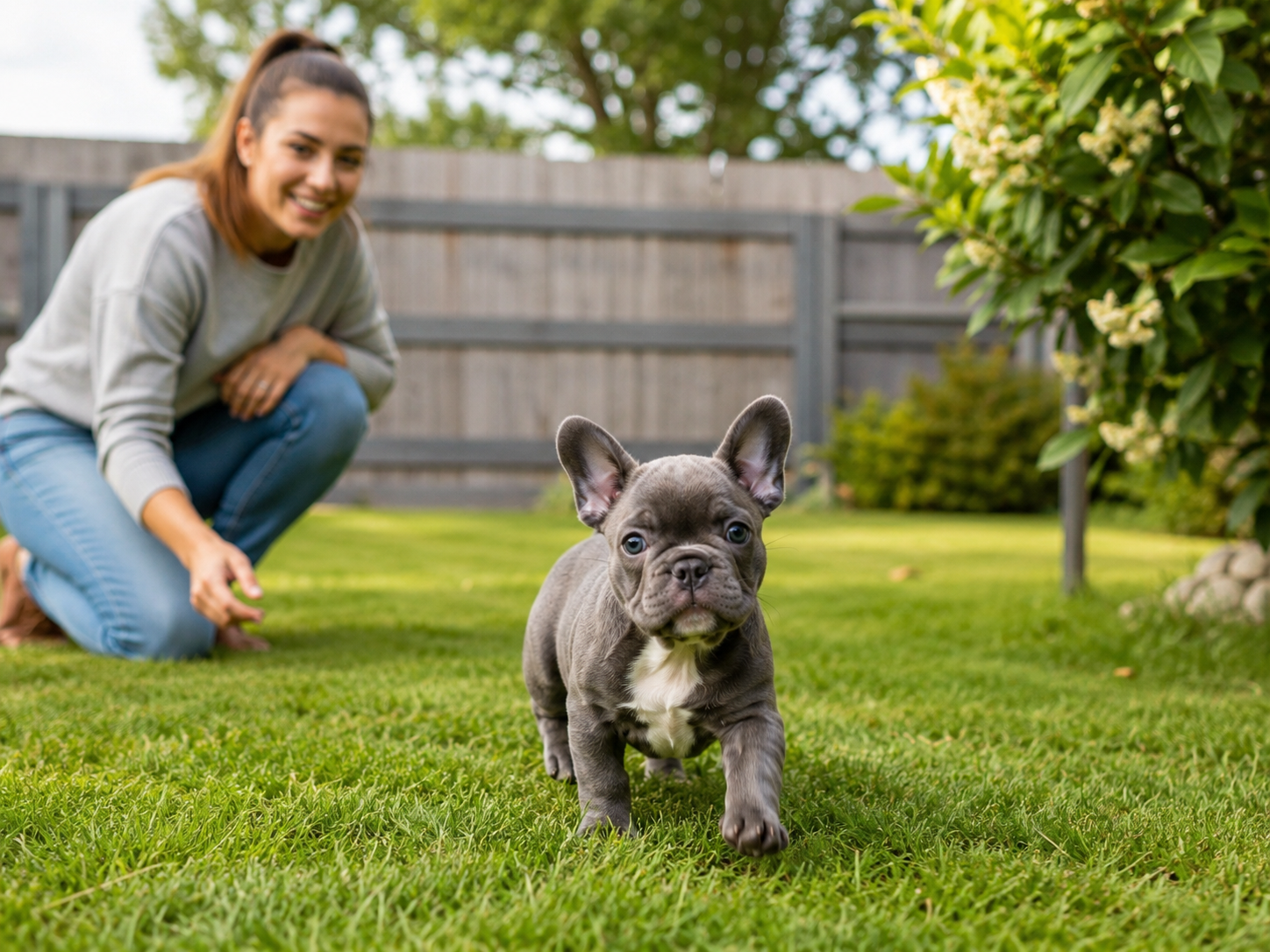
6. Give Your Puppy a Final Toilet Opportunity
Take your puppy to the normal toilet area before settling for the night.
Keep this trip focused on toileting rather than beginning another energetic play session.
If your puppy eliminates in the correct location, reinforce the behavior calmly, then return indoors and continue the bedtime routine.
A young puppy's nighttime toilet needs vary with age, size, health, routine, and the individual dog. Avoid relying on a rigid online formula to decide exactly how long your puppy should be able to wait.
Back to guide7. What to Do When Your Puppy Starts Crying
First, listen and observe rather than reacting with frustration.
A puppy who has been asleep and suddenly wakes may need to toilet. A puppy who has just been placed in a completely unfamiliar sleeping environment may need calm reassurance while learning the new routine.
Use this sequence
- Stay calm.
- Check whether there are signs of illness, pain, or another urgent problem.
- Consider whether a toilet opportunity is needed.
- Keep necessary nighttime care quiet and low-key.
- Return the puppy to the normal sleeping setup.
- Provide calm proximity or reassurance when appropriate.
- Avoid shouting, frightening, or physically punishing the puppy.
Responding calmly to genuine distress does not require turning nighttime into an hour of play and entertainment.
Your objective is to help the puppy settle while making sleep and nighttime routines increasingly predictable.
Back to guide8. Keep Nighttime Potty Breaks Quiet and Simple
Some young puppies need one or more nighttime toilet opportunities. Individual needs vary, so watch your puppy's pattern rather than comparing every puppy to the same schedule.
During a nighttime toilet trip:
- use enough light for safety without making the house highly stimulating
- take the puppy directly to the designated toilet area
- keep conversation minimal and calm
- avoid games and exciting activities
- reinforce successful toileting calmly
- return to the sleeping area afterward
If your puppy regularly wakes at a similar time, that pattern can help you anticipate toilet needs and plan more effectively.
Back to guide9. If Your Puppy Has an Accident During the Night
Nighttime accidents can happen during the early stages of house training. Punishment does not teach the puppy where you wanted them to eliminate.
Clean the area thoroughly and use the accident as information about your current routine.
Ask what may need adjusting
- Did the puppy receive a toilet opportunity before bedtime?
- Was the nighttime interval too long for this individual puppy?
- Did you miss signs that the puppy was awake and restless?
- Is the sleeping setup making supervision difficult?
- Are accidents becoming unusually frequent?
- Are there diarrhea, urinary, or other health concerns?
If frequent urination, difficulty urinating, diarrhea, or another abnormal pattern is involved, discuss it with your veterinarian rather than treating it only as a training problem.
Back to guide10. Night Confidence Starts With Gentle Daytime Independence
If your puppy becomes distressed whenever you move away, do not wait until bedtime to practice independence.
During the day, begin with very small separations that your puppy can manage. For example, allow the puppy to settle safely while you briefly increase distance or move out of view.
Return calmly and increase difficulty gradually rather than beginning with a long absence.
If the puppy is panicking, repeatedly trying to escape, or becoming more distressed rather than learning to settle, reduce the difficulty and seek professional guidance when needed.
The aim is to teach that short separations are safe—not to repeatedly push the puppy beyond what they can cope with.
Back to guide11. Common Mistakes That Can Make Puppy Bedtime Harder
Avoid these common problems
- forcing a frightened puppy into an unfamiliar crate
- using the crate or sleeping area as punishment
- leaving a highly distressed new puppy to cry indefinitely
- shouting at or frightening the puppy for vocalizing
- turning every nighttime wake-up into playtime
- allowing rough, stimulating play immediately before sleep
- changing the sleeping location repeatedly without a clear plan
- expecting every young puppy to sleep through the night immediately
- punishing nighttime toilet accidents
- ignoring signs that crying may be associated with illness or pain
Consistency does not mean refusing to respond to genuine needs. It means keeping your response calm, predictable, and appropriate to the situation.
Back to guide12. Food and Water Before Bedtime
Keep your puppy's meals on an age-appropriate feeding plan recommended for the individual puppy. Avoid making major feeding changes simply to solve a sleep problem.
Fresh water is important for puppies. Do not routinely restrict water just to prevent nighttime accidents unless your veterinarian has advised a specific plan for your puppy.
If excessive thirst, unusually frequent urination, vomiting, diarrhea, poor appetite, or another change appears, contact your veterinary team rather than treating the issue only as a bedtime-training problem.
Back to guide13. How Long Does Puppy Crying at Night Last?
There is no exact number of nights that applies to every puppy.
Some puppies begin settling more comfortably relatively quickly. Others need more time because of age, previous experience, temperament, toilet needs, confinement experience, or the sleeping setup.
Progress may also be uneven. One night can be easier and the next night more difficult.
Focus on the overall trend. Is the puppy gradually becoming more familiar with the sleeping area? Are toilet needs becoming easier to predict? Can the puppy settle more readily after appropriate nighttime care?
If distress remains intense, increases, or is accompanied by concerning behavior or health signs, do not assume you simply need to wait longer.
Back to guide14. When Night Crying Needs Veterinary Attention
Vocalization can sometimes be related to pain, illness, gastrointestinal problems, breathing difficulty, or another medical issue rather than normal adjustment.
Seek prompt veterinary advice for concerning signs such as:
- repeated or persistent vomiting
- severe or persistent diarrhea, especially with blood
- marked weakness or unusual unresponsiveness
- difficulty breathing
- collapse or seizures
- significant pain
- sudden abdominal swelling or a painful-looking abdomen
- pale, blue, grey, or otherwise abnormal-looking gums
- difficulty urinating or repeated attempts without normal urination
- possible poisoning or swallowing a dangerous object
- a sudden major behavior change together with signs of illness
If your puppy appears to have a medical emergency, contact a veterinarian or emergency veterinary service promptly rather than waiting for the next night to see whether the crying improves.
Back to guide15. When to Ask for Behavior or Training Help
Some puppies need more support than a general bedtime routine can provide.
Consider discussing the problem with your veterinarian and an appropriately qualified reward-based behavior professional if your puppy:
- shows intense panic whenever confined
- repeatedly attempts to escape the sleeping area
- cannot tolerate even very brief age-appropriate separations
- shows worsening fear rather than gradual adjustment
- injures themselves during attempts to escape
- shows serious fear or aggression associated with bedtime handling
A veterinary assessment is particularly important when behavior changes are sudden or when pain or illness may be contributing.
Back to guideExplore More Daily Dog Care Guides
16. Frequently Asked Questions
Should I ignore my puppy crying at night?
Do not automatically ignore a new puppy who is crying. First consider whether the puppy needs to toilet, is distressed by an unfamiliar sleeping setup, or is showing signs of illness or pain. Keep necessary nighttime care calm and low-key, then help the puppy return to rest.
Should I let my new puppy cry it out in the crate?
A crate should be introduced through positive association rather than forcing a frightened puppy inside and expecting prolonged crying to solve the problem. Build crate comfort gradually and seek professional guidance if confinement causes significant panic.
Should my puppy sleep near my bed?
Keeping the sleeping area near you initially can make it easier to monitor a new puppy and notice toilet needs. If you want the puppy to sleep elsewhere long-term, the location can be changed gradually as the puppy becomes more comfortable.
How often does a puppy need to go potty at night?
There is no single interval that fits every puppy. Nighttime toilet needs vary with age, size, health, routine, and the individual puppy. Monitor your puppy's pattern and ask your veterinarian if you are unsure what is appropriate.
What if my puppy cries again immediately after a potty break?
Return to the normal sleeping area calmly and consider whether the puppy is distressed by the unfamiliar environment or confinement. Avoid turning the wake-up into a play session. Calm proximity may help some new puppies while they learn the routine.
Is a crate necessary for a puppy to sleep at night?
No single sleeping arrangement is required for every household. Some families use a crate, while others use a puppy pen or another safe, controlled area. Whatever setup you choose should be secure, appropriate for the puppy, and introduced without punishment or fear.
Should I remove my puppy's water at night?
Do not routinely restrict water simply to prevent accidents unless your veterinarian has recommended a specific plan. Puppies need appropriate hydration, and unusual thirst or frequent urination should be discussed with a veterinarian.
Why does my puppy sleep well one night and cry the next?
Adjustment is not always linear. Activity level, toilet needs, household changes, unfamiliar sounds, overtiredness, and many other factors can affect an individual night. Return to the same calm routine while watching for health or behavior concerns.
When should I worry about puppy crying at night?
Contact a veterinarian if crying appears painful or is accompanied by repeated vomiting or diarrhea, breathing difficulty, marked weakness, collapse, seizures, abdominal swelling, abnormal gum color, difficulty urinating, or another significant health concern.
17. Veterinary & Behavior Sources
This educational article was prepared with reference to established veterinary and animal-behavior guidance.
- American Animal Hospital Association — What to Do When You First Bring Home a New Puppy
- American Animal Hospital Association — New Dog Checklist
- American Animal Hospital Association — Canine Life Stage Checklist
- American Veterinary Society of Animal Behavior — Humane Training and Puppy Socialization Position Statements
- American Animal Hospital Association — Signs of a Pet Emergency
Veterinary & Behavior Disclaimer
Daily Dog Care Guide provides general educational information for dog owners. This article does not replace veterinary examination, diagnosis, treatment, emergency care, prescription advice, or an individualized behavior plan.
Puppy sleep, toilet needs, feeding, health, and behavior vary according to age, size, breed, development, medical history, previous experience, and individual temperament. Consult a qualified veterinarian about concerns specific to your puppy.
Final Thoughts
A puppy crying at night is not automatically a puppy behaving badly.
The first nights combine several new lessons at once: sleeping in an unfamiliar environment, learning a toilet routine, becoming comfortable with a bed or crate, and discovering that the people in the new home remain safe and predictable.
Keep your response simple. Meet genuine needs. Give calm nighttime toilet opportunities. Avoid punishment. Build positive associations with the sleeping area and practice manageable independence during the day.
Do not measure success by whether your puppy is perfectly silent on the first night. Look for gradual progress: easier settling, more predictable toilet needs, growing confidence, and a sleeping routine that becomes familiar.
And when crying looks different from normal adjustment—especially when pain, illness, panic, or injury may be involved—get professional help rather than trying to solve everything as a training problem.
Back to guideSimple Calm-Routine Tools
Night crying can reflect potty needs, fear, discomfort, or illness. Products should support the routine, not mask a problem.
A food-enrichment option for supervised licking activities and calm indoor engagement.
View on Amazon →Optional product • paid linkDog Treat Pouch for TrainingKeeps small rewards easy to reach during short training sessions and walks.
View on Amazon →Affiliate disclosure: As an Amazon Associate I earn from qualifying purchases. Always check size, fit, materials, labels, and your dog’s individual needs before buying.
A Creative Break for Dog-Loving Kids
Explore puppy coloring and activity books for screen-free creative time, quiet afternoons, travel, and young dog fans.
See all dog-care products & books →Helpful next steps
Continue with a related guide, tool, or product resource.