Puppy Chewing: How to Stop Destructive Chewing Without Fear
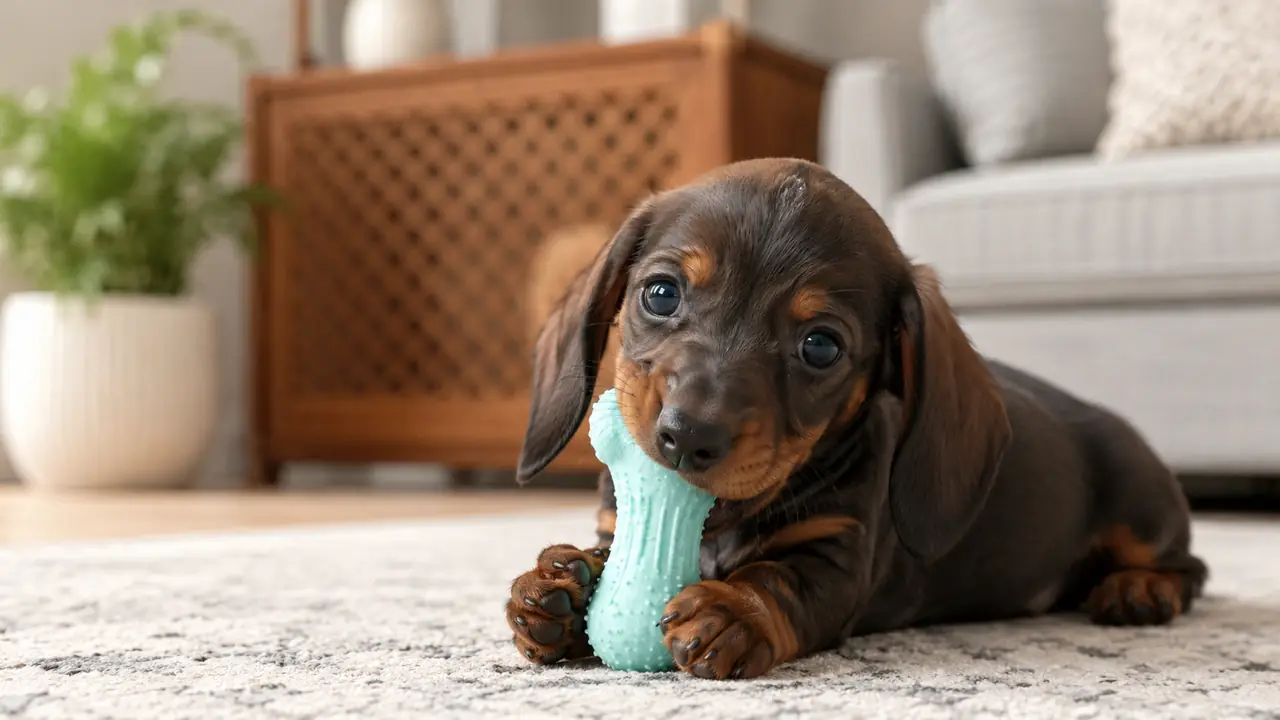
Puppy chewing is normal, but destructive chewing does not have to take over your home. The practical approach is to manage the environment, provide appropriate chew choices, redirect calmly, teach useful trades, protect rest, and recognize when chewing or biting may need veterinary or behavior support.
Updated August 13, 2026 · Veterinary and behavior sources checked
There is a stage of puppyhood when almost everything seems interesting enough to put in the mouth: slippers, socks, hands, clothing, chair legs, paper, rugs, and objects you were certain the puppy would never notice.
This can be frustrating, but chewing itself is not evidence that your puppy is bad or deliberately destructive. Puppies use their mouths to explore and interact with the environment, and chewing may also increase during teething.
The goal is therefore not to eliminate every chewing behavior. It is to direct normal chewing toward safer, appropriate choices while preventing access to dangerous or valuable household objects.
A successful plan combines management, supervision, reward-based teaching, appropriate chew options, adequate rest, and veterinary help when pain, dental injury, or swallowed objects may be involved.
Quick Answer: How Do You Stop a Puppy Chewing Everything?
Start by reducing access to the things you do not want your puppy to chew. Put away shoes, laundry, children's toys, electrical cords, rubbish, small objects, and other tempting or dangerous items.
Provide appropriate chew choices and supervise your puppy while learning which items are safe. If the puppy begins chewing the wrong object, interrupt calmly and redirect toward an appropriate alternative.
Avoid shouting, hitting, frightening, or repeatedly chasing the puppy. Reward useful choices, teach a calm trade for stolen objects, and reduce stimulation when biting becomes intense because the puppy is tired or overexcited.
If a puppy swallows part of a toy or household object, develops gagging, repeated swallowing, vomiting, significant pain, difficulty eating, or another concerning symptom, contact a veterinarian.
In This Puppy Chewing Guide
1. Why Do Puppies Chew So Much?
Chewing is a normal behavior. Puppies investigate objects with their mouths in much the same way people use their hands to examine things.
Teething can also increase the desire to chew because pressure on the gums may feel soothing.
This is why simply telling a puppy “no” is rarely a complete solution. The puppy needs both fewer opportunities to make unsafe choices and clear, appropriate alternatives.
Back to guide
2. Stop Destructive Chewing With Management First
One of the biggest mistakes is giving a young puppy more freedom than the puppy is ready to handle.
If shoes, socks, cables, rubbish, children's toys, bags, and furniture are all within reach, your puppy has many chances to rehearse unwanted chewing.
Training works more efficiently when the environment also supports the behavior you want.
Make success easier
- supervise the puppy when loose in the home
- use doors, gates, or a puppy-safe area when direct supervision is not possible
- keep tempting household objects off the floor
- provide a small selection of appropriate chew choices
- rotate suitable toys rather than leaving every toy available all day
- protect rest periods so the puppy is not constantly overstimulated
Management is not cheating. It prevents the puppy from practicing a habit repeatedly while you are still teaching a better one.
Back to guide3. Puppy-Proof the Home From Puppy Height
Look at the home from floor level. Items that seem uninteresting from adult height may be directly beside a puppy's face.
Recheck the environment as your puppy grows. A puppy who could not reach a shelf or table last week may be able to reach it later.
Back to guide4. Choose Chew Items With Safety in Mind
Not every product sold as a chew is appropriate for every puppy. Size, hardness, durability, and the individual dog's chewing style matter.
Before giving a new chew item
- choose a size that is difficult for your puppy to swallow whole
- make sure the item is not breaking into easily swallowed pieces
- avoid extremely hard items that may damage teeth
- supervise your puppy with unfamiliar chew products
- remove damaged toys when pieces begin to come loose
- select products appropriate for your puppy's size and chewing style
Harder is not automatically safer
Extremely hard chews can damage or fracture teeth. A puppy also should not be given a chew simply because another dog in the household uses it safely.
If you are unsure which chews are appropriate for your puppy's teeth, size, or health, ask your veterinarian.
Back to guide5. Use Calm Redirection Instead of Repeated Punishment
Redirection teaches the puppy what to do instead of only communicating that one particular choice was wrong.
If the puppy repeatedly returns to the same rug, chair, shoe rack, or other object, block access temporarily instead of repeating the same confrontation all day.
Back to guide6. What to Do When a Puppy Bites Hands
Mouthing hands is common in puppies. Hands move, touch toys, deliver food, and often become part of exciting play.
Avoid encouraging rough games in which the puppy is expected to chase, grab, or wrestle directly with hands.
If teeth contact skin during play, calmly pause the interaction and offer an appropriate toy when possible.
If the puppy continues escalating, end the interaction briefly and consider whether the puppy needs a toilet break, lower stimulation, or rest.
Avoid hitting the puppy, holding the mouth shut, frightening the puppy, or using other painful or intimidating corrections.
Back to guide7. When Your Puppy Bites Clothes or Shoelaces
Moving trousers, sleeves, dresses, socks, and shoelaces can be especially exciting to puppies.
Running away or pulling clothing back and forth may accidentally turn the behavior into a tug or chase game.
Try this instead
- Reduce your movement where it is safe to do so.
- Stay calm.
- Redirect toward an appropriate toy.
- Move away once the puppy has disengaged.
- Reduce stimulation if biting continues to escalate.
Look for patterns. Clothing biting that appears most often late in the day may be connected with excitement or fatigue rather than a lack of training.
Back to guide
8. What to Do When Your Puppy Steals Something
Puppies often discover that picking up a sock, shoe, tissue, or other household item makes people move very quickly.
Repeated chasing can therefore make stealing more entertaining.
When the item is not creating an immediate emergency, stay as calm as possible and use a prepared trade rather than turning the situation into a pursuit around the house.
Once you recover the item, prevent access to it. Do not put it back on the floor and expect the puppy to make a different decision immediately.
Dangerous objects are different
Sharp objects, batteries, medicines, toxic materials, electrical items, string-like objects, and items small enough to swallow require immediate safety attention. If your puppy may have swallowed something dangerous, contact a veterinarian promptly.
9. Teach Your Puppy a Calm “Trade”
A trade exercise can teach a puppy that releasing an object can lead to something worthwhile rather than always meaning that a person approaches to take things away.
Practice first with safe, low-value items
- Allow the puppy to hold a safe toy.
- Present an appropriate reward.
- Use a consistent cue such as “trade.”
- When the puppy releases the toy, provide the reward.
- When appropriate, return the safe toy.
Practice when everyone is calm. Do not wait until the puppy has a dangerous object before teaching the skill for the first time.
Avoid repeatedly prying ordinary objects from the puppy's mouth when a voluntary exchange can be used safely.
Back to guide10. Puppy Chewing During Teething
Chewing often becomes particularly noticeable during teething because pressure from chewing may help with mouth discomfort.
Provide suitable chew options instead of allowing the puppy to find their own alternatives around the home.
Inspect toys regularly. A chew that was safe when new may become unsafe when torn, cracked, or reduced to a size that can be swallowed.
Avoid assuming that the hardest possible chew is best. Very hard objects can damage teeth.
Contact your veterinarian if you notice
- a broken or damaged tooth
- significant mouth pain
- persistent bleeding that concerns you
- facial or gum swelling
- difficulty eating
- persistent reluctance to use the mouth normally
11. Why Puppy Biting Can Become Worse When the Puppy Is Tired
Some puppies become increasingly mouthy, frantic, or difficult to redirect after prolonged activity.
Owners sometimes respond by adding even more play. In some situations, lowering stimulation and providing an opportunity to rest is more useful.
Signs your puppy may need a calmer period include
- rapid escalation from play into hard mouthing
- repeated grabbing of clothes
- difficulty responding to familiar cues
- frantic running or jumping
- chewing everything within reach
- difficulty settling despite being active for a long period
Pause exciting play, offer a toilet opportunity if needed, provide water, and help the puppy settle in a safe, calm area.
Rest is part of puppy care, not a punishment for biting.
Back to guide
12. Children and Puppy Biting
Children and puppies can easily increase each other's excitement. Running, squealing, waving hands, pulling toys, or chasing can make mouthing more intense.
Teach children simple rules
- use toys rather than hands for puppy play
- do not run away while encouraging the puppy to chase
- do not pull objects from the puppy's mouth
- do not tease the puppy with toys or food
- do not wake a sleeping puppy to play
- give the puppy space when the puppy is tired or overexcited
- call an adult if the puppy grabs clothing or an unsafe object
Young children and puppies should be actively supervised. Children should not be expected to solve difficult biting behavior themselves.
Back to guide13. What If Your Puppy Chews When Left Alone?
A puppy left unsupervised with access to the whole home may simply have too many unsafe choices.
Use an appropriately puppy-proofed area when direct supervision is not possible, and make sure any item left with the puppy is suitable for that puppy.
Introduce short periods of independence gradually rather than suddenly expecting a new puppy to cope with a long absence.
Chewing during separation can have different causes. If it is accompanied by intense vocalization, frantic escape attempts, heavy drooling, injury, or severe distress, discuss the behavior with your veterinarian and an appropriately qualified behavior professional.
Back to guide14. Common Mistakes That Make Puppy Chewing Harder
Avoid these common problems
- giving the puppy unrestricted access to the whole home too soon
- leaving dangerous or valuable objects within easy reach
- using hands for rough wrestling games
- chasing the puppy every time an object is stolen
- shouting or physically punishing chewing mistakes
- giving extremely hard chew objects without considering dental risk
- leaving damaged toys available after pieces begin breaking off
- ignoring fatigue and overstimulation
- expecting one redirection to permanently teach the behavior
- assuming all biting is “aggression” without looking at the context
Consistent management prevents many problems before a correction is ever needed.
Back to guide15. When Chewing Becomes a Veterinary Safety Problem
Chewing is normal. Swallowing inappropriate objects is not something to ignore.
Pieces of toys, fabric, wood, rawhide-type products, household objects, and other materials can become lodged in the digestive tract or cause other injuries.
Contact a veterinarian promptly if your puppy may have swallowed an unsafe object or develops signs such as:
- gagging or repeated attempts to swallow
- repeated regurgitation or vomiting
- difficulty swallowing
- significant drooling
- loss of appetite
- marked lethargy or weakness
- abdominal pain or swelling
- difficulty breathing
- obvious mouth injury or a broken tooth
Do not wait for a swallowed object to become a major obstruction before asking for veterinary advice.
Back to guide16. When to Ask for Professional Help With Puppy Biting
Most puppy mouthing and chewing can be improved through management, appropriate outlets, rest, and reward-based training.
Ask your veterinarian and an appropriately qualified reward-based behavior professional for help if your puppy:
- repeatedly bites with an intensity that creates a serious safety concern
- shows stiff, escalating guarding around food or objects
- becomes highly distressed when a person approaches an item
- shows persistent fear associated with handling
- cannot settle despite appropriate management and rest
- shows a sudden major change in behavior
- injures people or animals
- causes you to feel unsafe managing the situation
Veterinary assessment is particularly important when pain, dental problems, illness, or sudden behavior change may be contributing.
Back to guideExplore More Daily Dog Care Guides
17. Frequently Asked Questions
Why is my puppy chewing everything?
Puppies naturally explore with their mouths, and chewing may also increase during teething. Management, supervision, appropriate chew choices, rest, and reward-based redirection can help keep normal chewing away from unsafe household objects.
How do I stop my puppy chewing shoes?
Begin by keeping shoes out of reach rather than repeatedly testing your puppy. Provide appropriate chew alternatives and reinforce your puppy when those alternatives are chosen.
Is puppy hand biting normal?
Mouthing is common in puppies during play and exploration. Avoid rough hand games, redirect toward toys, pause interactions when biting escalates, and make sure the puppy has adequate opportunities to rest.
Should I punish my puppy for destructive chewing?
Punishment-based methods are not necessary for teaching appropriate chewing. Manage access, provide better options, redirect calmly, and reward the behaviors you want the puppy to repeat.
Why does my puppy bite more in the evening?
Some puppies become increasingly mouthy when tired or overstimulated. Reduce high-energy activity, offer an appropriate toilet opportunity and chew activity when needed, and provide a quiet place to settle.
What should I do if my puppy steals a sock?
Avoid automatically turning the situation into a chase. Use a calm trade when it is safe to do so, recover the object, and then prevent access to similar items. If the puppy may have swallowed fabric, contact your veterinarian.
What kind of chew toy is safest for a puppy?
There is no single toy that is safest for every puppy. Choose an appropriate size and durability for your puppy's chewing style, avoid extremely hard items that may damage teeth, supervise unfamiliar chews, and remove toys that break into swallowable pieces.
Should I chase my puppy when it steals something?
Chasing can make stealing more exciting. When there is no immediate emergency, a practiced trade is usually a calmer approach. Dangerous objects should be handled as a safety issue, and possible ingestion may require veterinary advice.
When should I worry about puppy chewing?
Contact a veterinarian if your puppy swallows an unsafe object, develops gagging or repeated swallowing, vomits repeatedly, has significant drooling or difficulty eating, appears painful, breaks a tooth, or becomes weak or unwell.
18. Veterinary & Behavior Sources
This educational article was prepared with reference to established veterinary and animal-behavior guidance.
- American Animal Hospital Association — Don't Chew On This!
- American Animal Hospital Association — What to Do Before You Bring Home a New Puppy
- American Animal Hospital Association — What to Do When You First Bring Home a New Puppy
- American Veterinary Society of Animal Behavior — Humane Dog Training Position Statement
- Merck Veterinary Manual — Esophageal Foreign Bodies in Small Animals
Veterinary & Behavior Disclaimer
Daily Dog Care Guide provides general educational information for dog owners. This article does not replace veterinary examination, diagnosis, treatment, emergency care, dental evaluation, prescription guidance, or an individualized behavior plan.
Contact a qualified veterinarian if your puppy may have swallowed a dangerous object, has a mouth or dental injury, appears in pain, develops concerning digestive signs, or shows another sudden health change.
Final Thoughts
Puppy chewing is normal. Destructive chewing, however, becomes much easier to manage when you stop expecting a young puppy to make adult choices in an environment full of temptation.
Start with management. Put unsafe objects away. Supervise closely. Provide suitable chewing options and teach your puppy what works through calm redirection and rewards.
Trade instead of chasing when it is safe. Protect rest when mouthing escalates. Teach children how to interact appropriately. Avoid fear, physical punishment, and unnecessarily confrontational training.
Most importantly, separate normal puppy behavior from genuine safety problems. A chewed slipper is frustrating. A swallowed object, broken tooth, or puppy in pain is a veterinary concern.
The tiny-teeth stage will pass, but the habits you build now can help your puppy learn safer choices while protecting trust between you.
Back to guideSupervised Enrichment Ideas
Choose enrichment that suits your dog’s size and chewing style, supervise use, and remove damaged items.
A supervised enrichment tool that can add mental work to food or treat time.
View on Amazon →Optional product • paid linkDog Lick Mat with Suction CupsA food-enrichment option for supervised licking activities and calm indoor engagement.
View on Amazon →Optional product • paid linkDog Snuffle Mat for Slow FeedingA supervised sniffing and food-search activity for mental enrichment.
View on Amazon →Affiliate disclosure: As an Amazon Associate I earn from qualifying purchases. Always check size, fit, materials, labels, and your dog’s individual needs before buying.
A Creative Break for Dog-Loving Kids
Explore puppy coloring and activity books for screen-free creative time, quiet afternoons, travel, and young dog fans.
See all dog-care products & books →Helpful next steps
Continue with a related guide, tool, or product resource.