Puppy Potty Training: A Step-by-Step House Training Guide
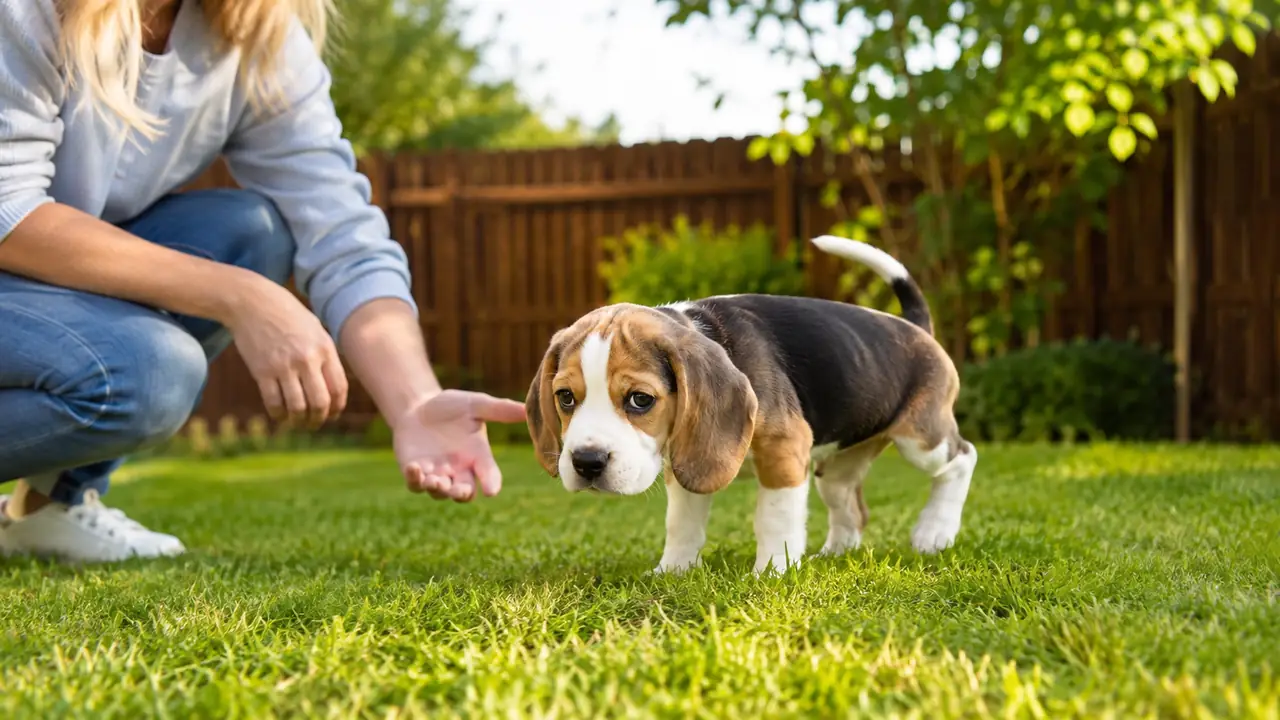
Puppy potty training becomes easier when you stop waiting for accidents and start creating predictable opportunities for success. This step-by-step guide covers supervision, timing, toilet signals, rewards, nighttime breaks, accidents, cleaning, and the health signs that should be discussed with a veterinarian.
Updated August 13, 2026 · Veterinary and behavior sources checked
Puppy potty training can look easy before the puppy comes home. Then real life begins: the puppy toilets shortly after coming indoors, misses the signal you were watching for, or wakes at night when you are unsure whether another bathroom trip is needed.
These early accidents do not mean your puppy is stubborn or deliberately breaking a rule. A young puppy is learning both physical control and a new household habit: which location or surface should be used for elimination.
The most effective approach is highly practical. Supervise closely, provide frequent opportunities in the correct place, learn your puppy's signals, reward successful toileting immediately, and prevent as many indoor accidents as reasonably possible.
When an accident happens, use it to adjust the plan rather than punish the puppy.
Quick Answer: How Do You Potty Train a Puppy?
Take your puppy to the chosen toilet area frequently, especially after waking, meals, drinking, active play, and before bedtime.
Closely supervise the puppy indoors and watch for signs such as sniffing, circling, suddenly stopping an activity, wandering away, or becoming restless.
When your puppy toilets in the correct place, reward immediately after finishing so the connection between the location and the reward is clear.
If an accident occurs indoors, clean it thoroughly and adjust supervision or timing. Do not shout, hit, rub the puppy's nose in the accident, or punish after the event.
Puppy Potty Training in 6 Steps
In This Puppy Potty Training Guide
1. Understand What Your Puppy Is Learning
House training involves more than teaching a puppy to hold urine or stool. The puppy also needs to develop a preference for an appropriate elimination location or surface.
That preference develops through repetition. Each successful toilet trip in the desired location helps strengthen the pattern.
Indoor accidents work in the opposite direction because they give the puppy another opportunity to practice eliminating on a different surface.
This is why prevention and supervision matter so much during the early stage.
Your job is not to wait until the puppy makes a mistake. Your job is to create enough correct opportunities that the preferred habit becomes easier and more familiar.
Back to guide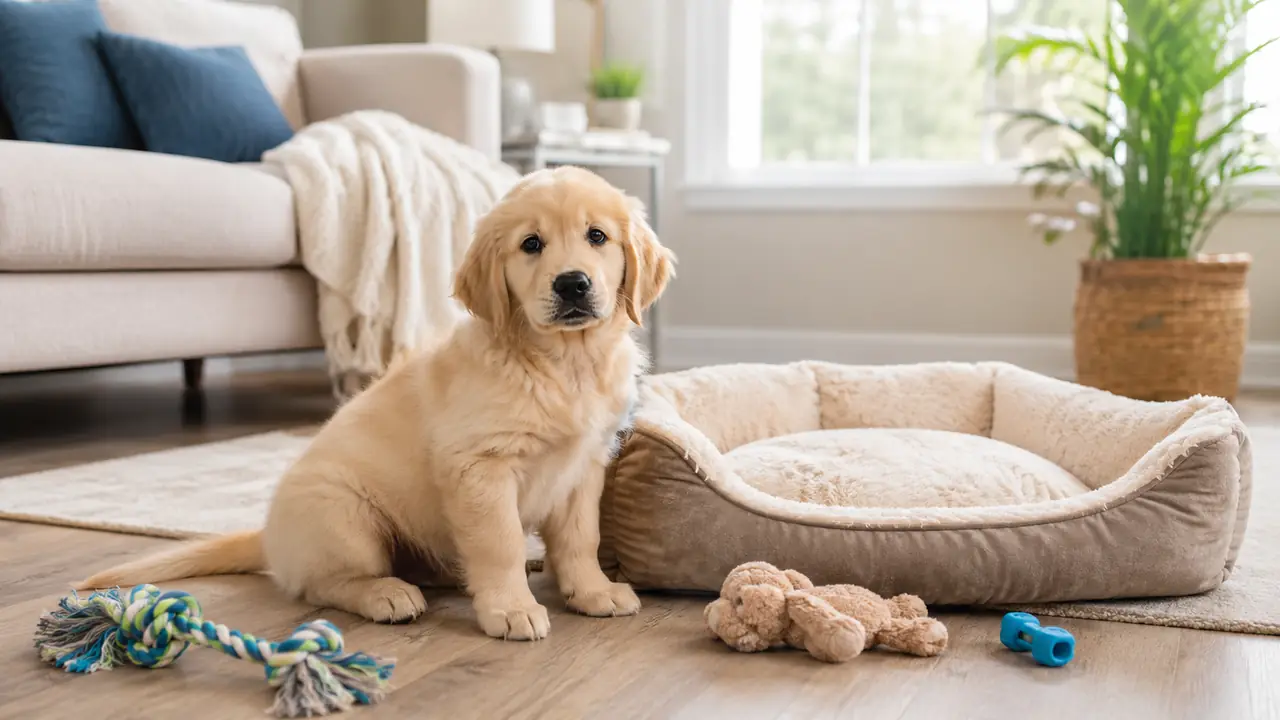
2. Choose a Consistent Potty Area
A consistent location helps make the purpose of the trip clearer.
When practical, lead your puppy through the same route to the same general toilet area.
The location should be safe, accessible, and suitable for your puppy's health and vaccination status.
When disease exposure is a concern, especially before the puppy has completed the recommended vaccination series, ask your veterinarian which outdoor locations are appropriate in your area.
If an indoor toilet surface is part of your plan, consistency matters there too. Avoid repeatedly moving it to unrelated locations.
Back to guide3. Take Your Puppy Out at the Most Important Times
Timing is one of the strongest tools in puppy potty training.
Offer a toilet opportunity:
- immediately or very soon after waking
- after meals
- after drinking, especially when the puppy drinks more than usual
- after active play
- after exciting interaction or training
- before bedtime
- during the night when the individual puppy still needs it
- whenever you notice likely toilet signals
Do not rely on one rigid hourly formula. Puppies vary with age, size, health, routine, activity, and development.
If your puppy is having frequent accidents, increase supervision and offer toilet opportunities sooner rather than assuming the puppy should already be able to wait longer.
Back to guide4. Learn Your Puppy’s Potty Signals
New puppies do not always walk to the door or bark when they need to eliminate. Early signals can be much less obvious.
Signals vary between puppies. Use them together with predictable timing instead of waiting for the puppy to develop a perfect way of asking.
Back to guide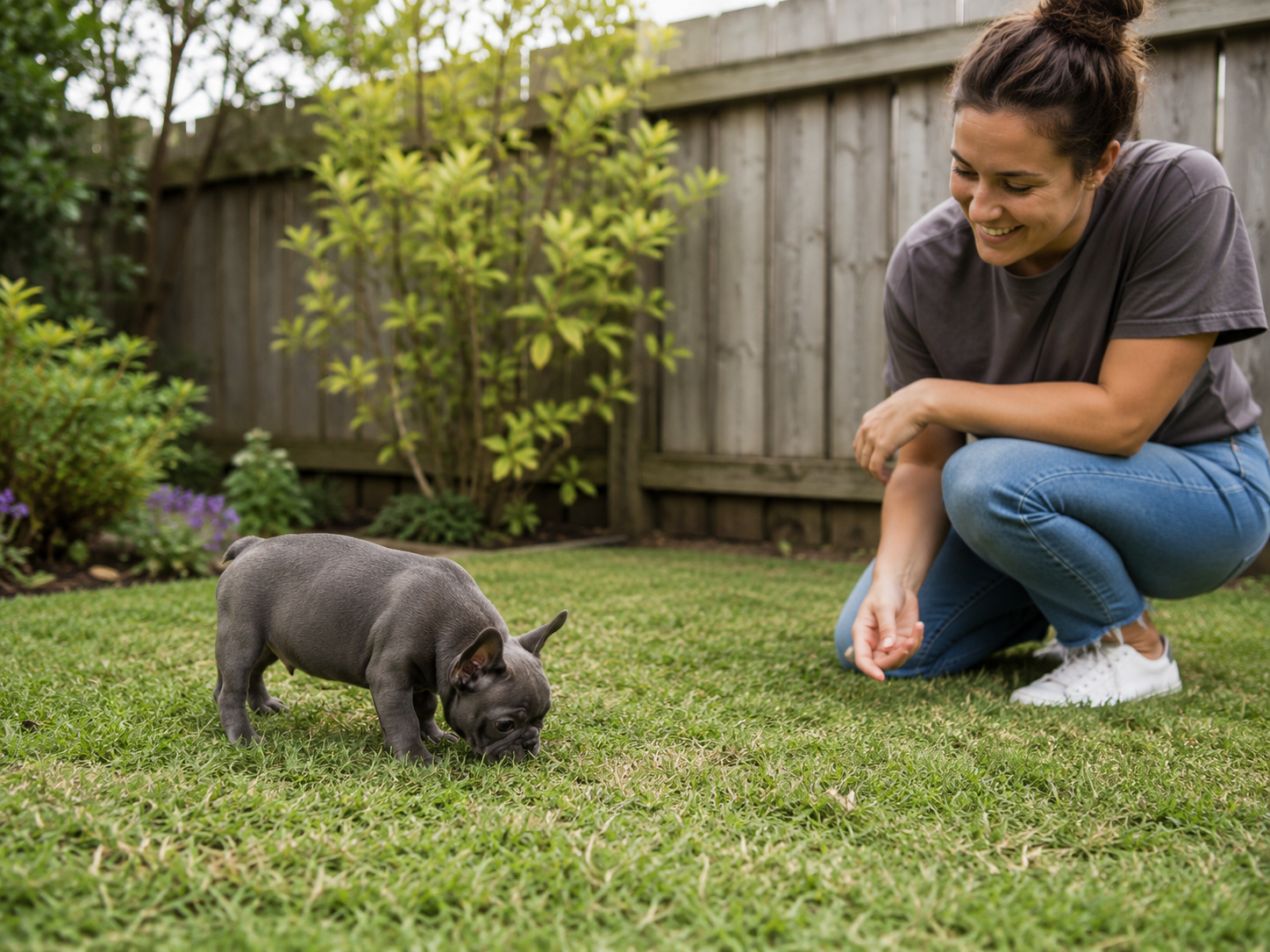
5. Close Supervision Is More Important Than Giving More Freedom
A puppy who disappears behind furniture or walks into another room can have an accident before you notice the early signals.
During early house training, keep the puppy in areas where an adult can actually observe what is happening.
Doors, puppy gates, pens, crates introduced positively, and other safe management tools can reduce unsupervised access when appropriate.
Increase household freedom gradually as your puppy becomes more reliable.
Freedom should follow success rather than being used as a test to see whether the puppy fails.
Back to guide6. Keep the Beginning of the Potty Trip Focused
Some puppies become distracted outdoors by grass, leaves, noises, people, smells, and movement.
Take your puppy to the designated area and give enough time to eliminate before making the trip highly exciting.
You may use a simple consistent cue, but the cue is optional. The important lesson is the repeated connection between the location and elimination.
Once your puppy finishes, a little sniffing, movement, or another safe activity can follow when appropriate.
This can prevent a pattern in which the puppy becomes distracted outside, returns indoors without eliminating, and then toilets on the floor.
Back to guide7. Reward Successful Toileting Immediately
Reinforcement works best when the puppy can clearly connect it with the behavior that just occurred.
Wait until your puppy has finished eliminating, then calmly praise and, if you use food rewards, provide one promptly.
Do not wait until you have walked back into the kitchen to deliver the reward. At that point the puppy may connect the reward with following you indoors rather than toileting outside.
Keep the reinforcement positive but not so exciting that you repeatedly interrupt the puppy before elimination is complete.
Back to guide8. What to Do When Your Puppy Has an Accident Indoors
An accident is information about the current training plan.
Ask yourself:
- Was the puppy unsupervised?
- Had too much time passed since the last toilet opportunity?
- Did the puppy just wake, eat, drink, or play?
- Were early signals missed?
- Did the puppy become distracted outside and fail to eliminate?
- Has the puppy repeatedly returned to the same indoor location?
- Could illness or gastrointestinal or urinary symptoms be involved?
Clean the area thoroughly and adjust the plan so the same situation is less likely to happen again.
Do not punish accidents
Shouting, hitting, rubbing the puppy's nose in an accident, or punishing after the event does not clearly teach the desired toilet location and can create fear around eliminating near people.
9. What If You Catch Your Puppy Starting to Potty Indoors?
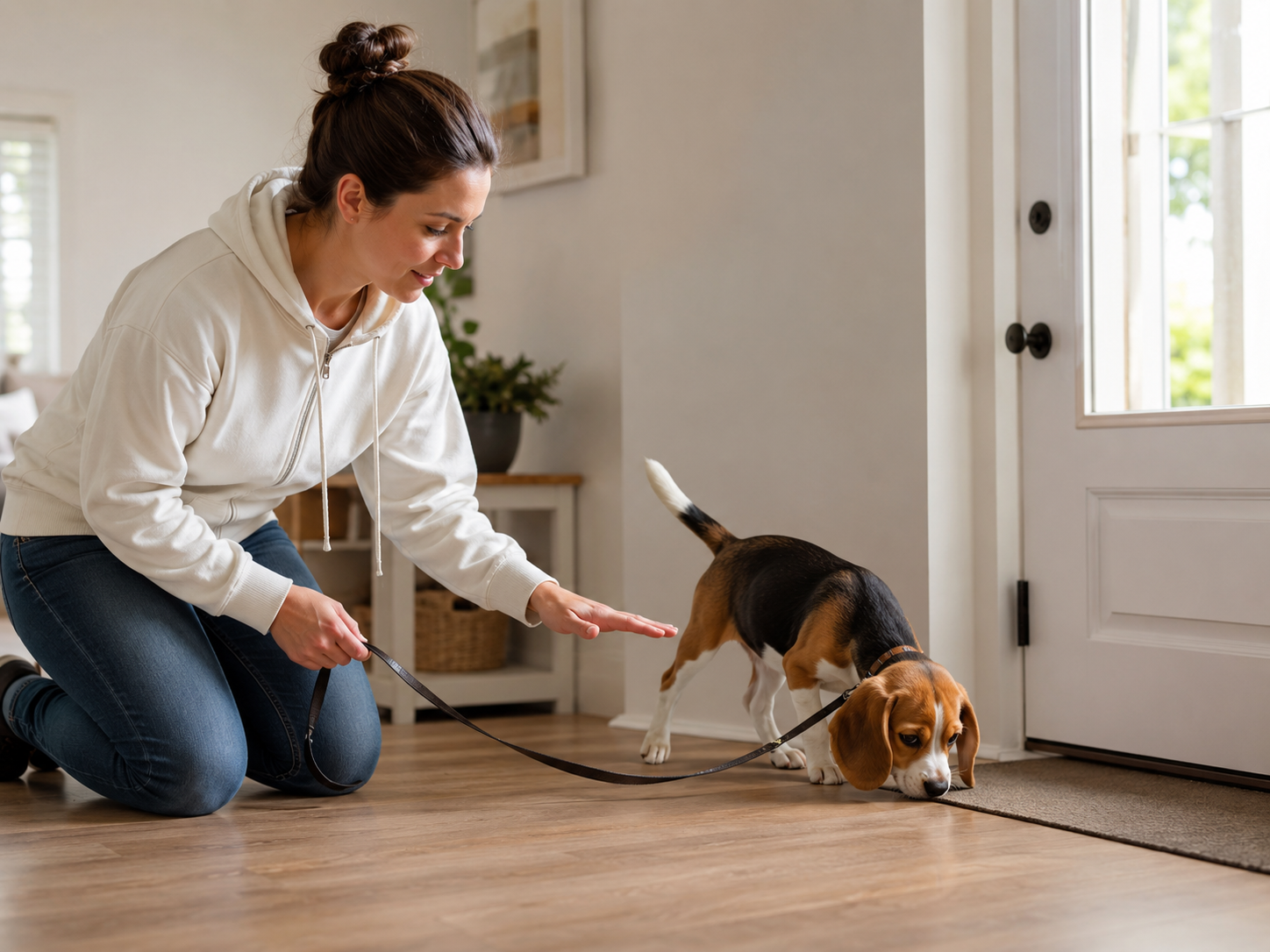
Stay calm.
If it is practical and safe, interrupt neutrally and guide the puppy toward the appropriate toilet location.
If the puppy finishes in the correct place, reinforce that success.
Avoid frightening interruptions. The puppy should not learn that eliminating in front of you is dangerous.
If you discover the accident after it happened, there is no useful reason to bring the puppy back to the location for punishment.
Back to guide10. Nighttime Potty Training
Some young puppies still require toilet opportunities during the night.
Individual needs vary, so avoid assuming every puppy of the same age should last exactly the same number of hours.
Keep nighttime toilet trips simple:
- use enough light for safety
- go directly to the toilet area
- keep conversation calm and minimal
- allow the puppy an opportunity to eliminate
- reinforce success calmly
- return to the sleeping area
Nighttime toilet trips should not become extended play sessions.
As the puppy develops, the nighttime pattern should gradually be adjusted according to the individual dog's needs.
Back to guide11. Food, Water, and Potty Timing
Consistent meal routines can make elimination patterns easier to observe.
Puppies commonly need an opportunity to eliminate after meals and after significant drinking.
Feed an age-appropriate growth diet according to your puppy's individual plan and veterinary guidance.
Do not make major diet or hydration changes simply to solve a house-training problem.
Fresh water remains important. Unusual thirst, unusually frequent urination, or sudden changes in elimination should be discussed with your veterinarian.
Back to guide12. Why Does My Puppy Pee Inside Right After Going Outside?
This is a common early training problem.
Your puppy may have become distracted outside and never actually finished toileting.
Try this approach:
- Go to the usual toilet area.
- Keep the first part of the trip calm and focused.
- Give the puppy enough time to eliminate.
- Reward after successful toileting.
- If the puppy does not go, supervise closely after returning indoors.
- Offer another toilet opportunity soon.
Do not assume that simply spending time outdoors means the puppy emptied the bladder or bowels.
Back to guide13. Puppy Potty Training in an Apartment
Apartment living can make timing more complicated because the puppy may need to travel through hallways, lifts, stairs, or shared areas before reaching the toilet location.
Plan earlier rather than waiting until the puppy appears desperate.
Keep necessary supplies near the exit and use a predictable route when possible.
Very young puppies may need help getting to the designated area quickly, depending on size, building layout, and safety.
Ask your veterinarian which shared outdoor areas are appropriate while your puppy's vaccination series is still in progress, because disease exposure varies by location.
Back to guide14. Should You Use Puppy Pads?
Indoor toilet surfaces can be useful in some households and circumstances, but they create a specific location and surface preference just as outdoor training does.
If you choose an indoor toilet setup, keep its location predictable rather than moving it throughout the home.
Decide whether your long-term goal is indoor toileting, outdoor toileting, or a transition from one to the other.
When your long-term goal differs from the current setup, consistency in the transition plan becomes important.
If you are unsure which approach fits your home or puppy, discuss it with your veterinarian or a qualified reward-based trainer.
Back to guide15. Potty Training During Rain, Cold, Heat, or Other Bad Weather
Weather can change how willing a puppy is to remain outdoors long enough to eliminate.
A puppy may become distracted by rain, wind, unusual sounds, wet ground, or uncomfortable temperatures.
Keep the routine as consistent as safety allows. Go to the normal toilet area, give the puppy a reasonable opportunity, reinforce success, and return indoors.
Do not force prolonged exposure during genuinely unsafe temperatures, storms, or hazardous conditions.
If weather repeatedly creates a major training barrier, discuss safe alternatives with your veterinary team.
Back to guide16. Everyone in the Family Should Follow the Same Potty Plan
House training becomes harder when different people use completely different routines.
Children can alert an adult when they notice a possible signal, but a young child should not carry the responsibility for the house-training plan.
Back to guide17. How Long Does Puppy Potty Training Take?
There is no single timetable that applies to every puppy.
Age, physical development, previous environment, health, supervision, household routine, and consistency can all influence progress.
Look for trends rather than one perfect day:
- fewer indoor accidents
- more successful elimination in the desired location
- better recognition of toilet signals
- more predictable patterns
- gradually longer appropriate intervals as the puppy matures
A puppy can make progress and still have an occasional accident during excitement, schedule changes, illness, travel, or a new environment.
If accidents suddenly become much more frequent after the puppy had been doing well, consider a medical cause as well as a training issue.
Back to guide18. When Potty Problems May Be a Health Problem
Not every elimination problem is caused by incomplete house training.
Urinary, gastrointestinal, parasitic, metabolic, and other medical problems can change how often or where a puppy urinates or defecates.
Contact a veterinarian if your puppy develops signs such as:
- suddenly needing to urinate much more frequently
- straining or appearing painful while urinating
- repeated attempts to urinate with little or no urine produced
- blood in urine or stool
- persistent or severe diarrhea
- repeated vomiting
- marked increase in thirst
- weakness or unusual lethargy
- pain while defecating
- a sudden major increase in accidents after previous improvement
- another change that makes you concerned about your puppy's health
Difficulty producing urine can be urgent. If your puppy repeatedly strains and cannot pass urine normally, seek veterinary advice promptly.
Back to guideA Simple Puppy Potty Training Routine
This is a framework rather than a clock-based prescription. Adjust the frequency to your puppy's age, health, development, feeding schedule, and actual elimination pattern.
Explore More Daily Dog Care Guides
19. Frequently Asked Questions
How often should I take my puppy out to potty?
There is no single interval that fits every puppy. Provide toilet opportunities after waking, meals, significant drinking, play, and before bedtime, and whenever you notice likely signals. If accidents are frequent, increase opportunities and supervision.
Should I punish my puppy for peeing in the house?
No. Punishment can create fear and does not clearly teach the correct location. Clean the accident thoroughly, review what led to it, and make the next correct opportunity easier.
Why does my puppy pee indoors right after being outside?
The puppy may have been distracted and not finished eliminating outside. Keep the initial potty trip focused, wait for elimination, reward success, and supervise closely if the puppy returns indoors without toileting.
Should I reward my puppy every time it goes potty outside?
During early training, immediate positive reinforcement after successful elimination can make the desired behavior clearer. Give the reward after the puppy finishes and while you are still close to the toilet location.
Should my puppy use the same potty spot every time?
A consistent general location or surface can help establish a clear elimination preference. Exact circumstances vary, but consistency is useful during early learning.
Should I use puppy pads?
Puppy pads or other indoor toilet surfaces can be useful in certain circumstances. If you use one, keep the location consistent and consider your long-term toilet-training goal when planning any later transition.
How long does puppy potty training take?
Progress varies. Some puppies develop the habit more quickly than others, and reliable bladder and bowel control also changes as puppies mature. Look for fewer accidents and more predictable successful toileting rather than expecting one universal deadline.
Does my puppy need to go potty during the night?
Some young puppies still require nighttime toilet opportunities. The need depends on the individual puppy's development, size, health, and routine. Keep nighttime trips calm and return the puppy to rest afterward.
Why has my puppy suddenly started having more accidents?
Changes in supervision or routine can contribute, but medical problems can also cause inappropriate elimination. If accidents increase suddenly, especially with frequent urination, pain, diarrhea, vomiting, unusual thirst, blood, or illness signs, contact your veterinarian.
When should potty problems be checked by a veterinarian?
Veterinary assessment is important when your puppy has painful or difficult urination, blood in urine or stool, repeated vomiting, persistent diarrhea, marked thirst, sudden frequent accidents, weakness, or another significant change in health or elimination.
20. Veterinary & Behavior Sources
This educational article was prepared with reference to established veterinary and animal-behavior guidance.
Veterinary & Training Disclaimer
Daily Dog Care Guide provides general educational information for dog owners. This article does not replace veterinary examination, diagnosis, treatment, emergency care, prescription guidance, or an individualized behavior or training plan.
Puppies differ in age, physical development, health, feeding routine, previous environment, and elimination needs. Contact a qualified veterinarian if you are concerned about urinary or gastrointestinal symptoms, pain, unusual thirst, sudden changes in elimination, or other health problems.
Final Thoughts
Puppy potty training is less about correcting mistakes and more about arranging enough successful repetitions that the correct location becomes a familiar habit.
Supervise closely. Take your puppy out at predictable times. Learn the signals. Keep toilet trips focused. Reward success immediately and calmly.
When an accident happens, clean it thoroughly and ask what could be changed in the routine. Do not turn a normal learning mistake into a frightening experience.
Increase freedom gradually as reliability grows, and remember that sudden or unusual changes in elimination deserve attention because not every accident is a training problem.
Your puppy does not need a perfect first week. What matters is a clear, repeatable system that teaches where toileting should happen while protecting trust between you and your puppy.
Back to guidePotty-Training Walk Basics
Frequent outdoor trips, supervision, timing, and reinforcement matter more than any product.
Keeps small rewards easy to reach during short training sessions and walks.
View on Amazon →Optional product • paid linkStrong Dog Waste BagsA practical cleanup supply for frequent puppy potty trips and everyday walks.
View on Amazon →Optional product • paid linkReflective Dog Leash with AccessoryA practical everyday leash option with added visibility for outdoor walks.
View on Amazon →Affiliate disclosure: As an Amazon Associate I earn from qualifying purchases. Always check size, fit, materials, labels, and your dog’s individual needs before buying.
A Creative Break for Dog-Loving Kids
Explore puppy coloring and activity books for screen-free creative time, quiet afternoons, travel, and young dog fans.
See all dog-care products & books →Helpful next steps
Continue with a related guide, tool, or product resource.