How to Help a Rescue Dog Adjust to a New Home: The First 30 Days
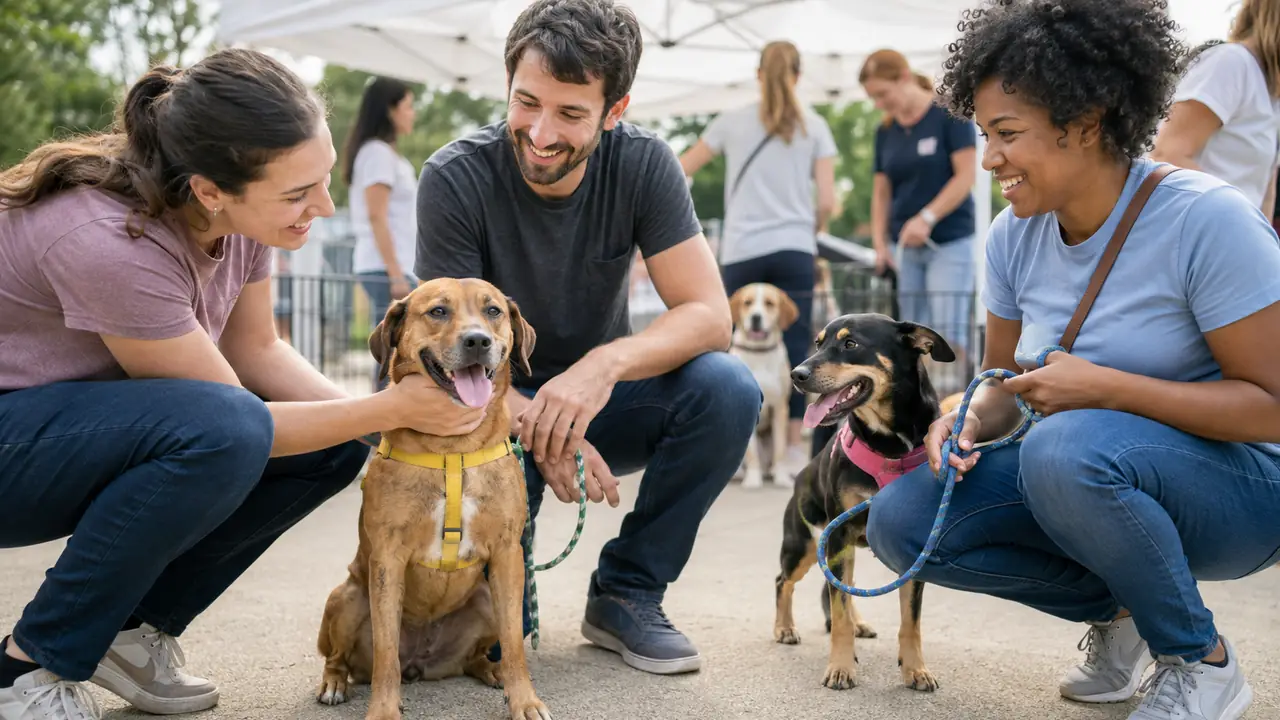
A newly adopted dog does not need to meet everyone, explore everywhere, master obedience and become comfortable alone during the first few days. The early job is simpler: prevent escape, meet basic health needs, establish predictable routines and give the dog enough choice and quiet time to learn that the new home is safe.
Updated August 13, 2026 · Veterinary and behavior guidance checked
Thirty days is a planning window, not a behavioral deadline. Some dogs feel comfortable quickly; others require substantially more time.
Adoption changes almost everything in a dog's environment at once.
The dog may have a new home, new people, unfamiliar flooring, new sounds, different food, another walking route, different sleeping arrangements and completely new household expectations.
Even when the change is positive, it can still be stressful.
Some rescue dogs explore immediately.
Others hide, sleep, pace, eat less, stay unusually quiet or follow one person constantly.
None of those early patterns tells you the dog's complete future personality.
The purpose of the first month is to observe, protect, build communication and gradually discover what the individual dog needs.
Quick Answer: How Do You Help a Rescue Dog Adjust to a New Home?
Keep the first days calm and predictable. Give the dog a quiet resting area, consistent meals and bathroom opportunities, secure leash handling, limited visitors and plenty of time to observe the new environment without being forced to interact.
Let affection happen at the dog's pace. Begin short reward-based training around practical skills such as name response, toileting, leash handling and settling.
Do not immediately take the dog to crowded parks, dog parks, busy social events or a long series of introductions.
Avoid suddenly leaving a newly arrived dog alone for long periods. Once the dog is settling and can remain relaxed, introduce very brief alone-time practice and increase it gradually without deliberately pushing the dog into panic.
Arrange a veterinary appointment early after adoption, ideally within the first week, and make sure collar identification and microchip contact information are current.
The Four Foundations of the First Month
In This Rescue Dog First-Month Guide
1. Your Rescue Dog Does Not Have an Adjustment Deadline
Dogs vary enormously in how quickly they feel comfortable after adoption.
One dog may sleep openly in the living room during the first evening.
Another may spend days observing the household from a quiet corner.
Neither dog is following a better schedule.
Temperament, age, previous experiences, health, environment and the predictability of the new household all influence adjustment.
Do not measure progress by whether the dog has reached a particular personality milestone on day 3, day 7 or day 30.
Instead, look for practical signs of growing security:
- more normal eating and drinking
- ability to sleep and rest
- predictable bathroom habits
- comfortable exploration
- ability to disengage and relax
- increasing communication with family members
2. Prepare the House Before the Dog Walks Through the Door
Preparation prevents you from trying to solve every safety problem while the dog is already overwhelmed.
Before arrival:
- secure doors, windows and gates
- remove accessible medicines and household chemicals
- move toxic foods out of reach
- secure electrical cords and dangerous chewable items
- choose a quiet resting area
- prepare food and water bowls
- have an appropriate leash, collar and/or harness ready
- agree on household rules before the dog arrives
Decide who is responsible for meals, bathroom breaks and walks.
Consistency becomes much easier when the people in the house have already agreed on the basic routine.
Back to guide3. Treat Escape Prevention as a First-Day Priority
A newly adopted dog may not yet recognize the new home, new family or neighborhood as familiar.
A frightened dog can also react suddenly to traffic, another dog, a loud noise or an unfamiliar doorway.
Before opening an exterior door:
- make sure leash equipment fits securely
- check that gates are closed
- avoid off-leash activity in unsecured areas
- use current visible identification
- confirm microchip registration details
If the dog already has a microchip, verify that the registry contains your current phone number and other contact information.
A microchip cannot help reunite a lost dog efficiently if the registration still points to outdated contact details.
Collar identification and a registered microchip provide complementary forms of identification.
Back to guide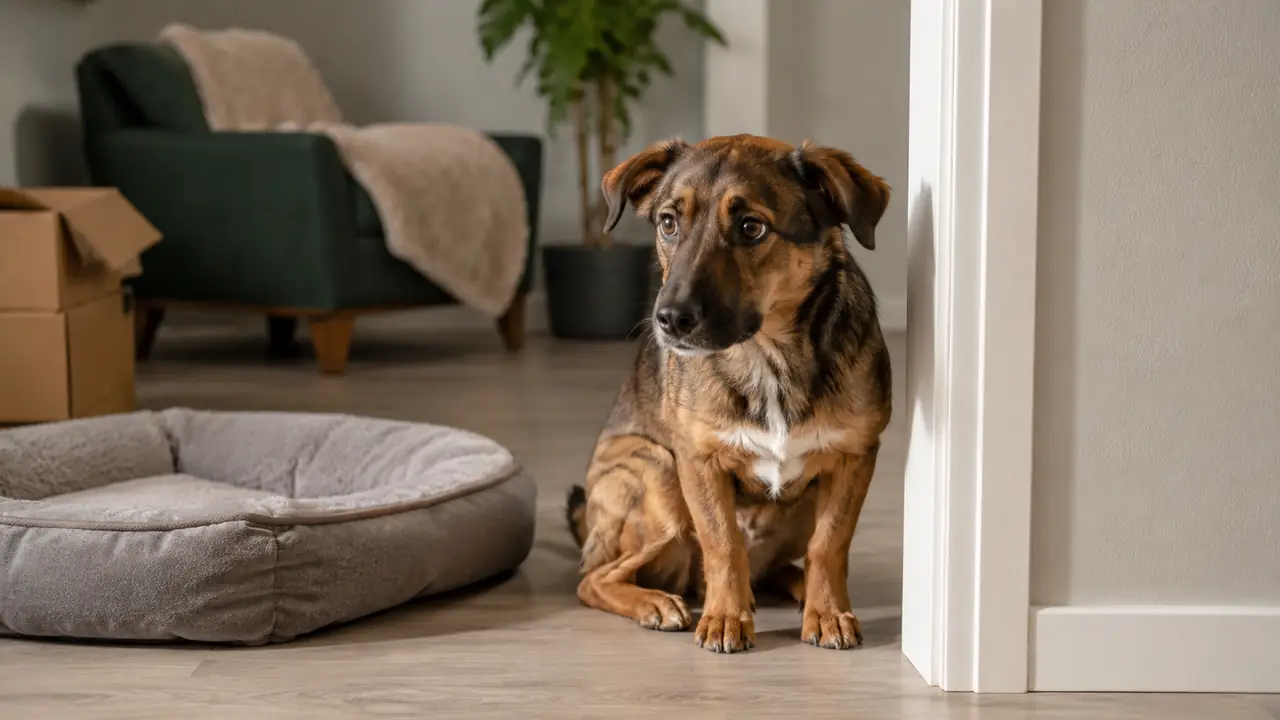
4. Make the First Day Boring in the Best Possible Way
The first day does not need a celebration.
Bring the dog home calmly.
Give an appropriate bathroom opportunity, provide water and allow access to a limited safe area of the home.
Show the resting space and then allow the dog to observe.
Avoid immediately adding:
- a large group of visitors
- a trip to a dog park
- a busy pet store
- a neighborhood meet-and-greet
- multiple training sessions
- forced cuddling
- access to every room at once
The dog may sniff, pace, follow you, stay still or sleep.
Observe rather than trying to make the dog perform a particular emotional response.
Back to guide5. Create a Resting Area the Dog Can Use Without Social Pressure
A safe area can be a bed, mat, quiet room, gated space or an open crate when the dog is already comfortable with crates.
The important feature is not the specific object.
It is the dog's ability to rest there without being continually approached.
Household rules should include:
- do not pull the dog out for affection
- do not allow children to enter the dog's resting space
- do not wake the dog unnecessarily
- do not use the resting area as punishment
- keep activity around the area reasonably calm
A dog that repeatedly chooses distance is providing useful information.
Respecting that choice can help build trust.
Back to guide6. An Extremely Quiet Dog Is Not Necessarily a Fully Relaxed Dog
Some newly adopted dogs appear almost unusually easy during the first days.
They may remain very still, sleep extensively, avoid exploration or show little interest in play.
Quiet behavior can occur during adjustment and should not automatically be interpreted as perfect confidence.
“Rescue dog” does not automatically mean a dog was abused or traumatized.
Avoid inventing a past history to explain every behavior.
Respond to what the individual dog is showing now.
Back to guide7. Keep Feeding Predictable While You Learn the Dog's Normal
When possible, begin with the food and feeding information supplied by the shelter, foster home, rescue or previous veterinary team.
Avoid introducing many rich foods and new treats during the first few days.
If a diet change is needed, ask your veterinarian how quickly it should be made for the individual dog.
Monitor:
- appetite
- water intake
- vomiting
- stool quality
- abdominal discomfort
- difficulty chewing
- food guarding
Stress can influence appetite and gastrointestinal function, but illness can cause similar signs.
Persistent poor appetite, repeated vomiting, significant diarrhea, weakness, pain or another concerning change requires veterinary advice.
Back to guide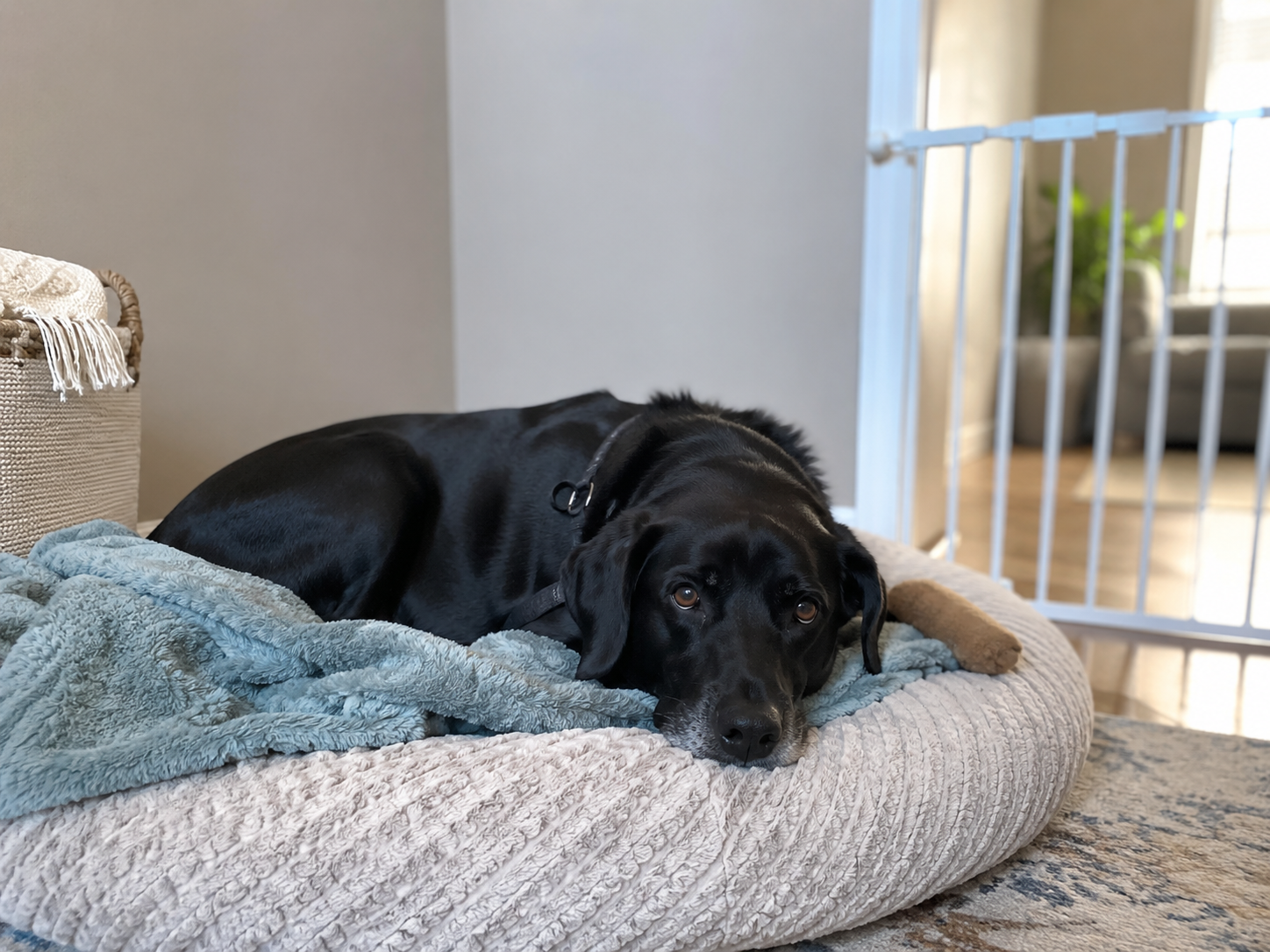
8. Assume the Dog Needs to Learn Your Bathroom Routine
Even a previously house-trained adult dog can have accidents after moving to a new environment.
The dog does not automatically know which door to use, where you want elimination to happen or when the next outdoor opportunity will occur.
Offer bathroom opportunities:
- after waking
- after meals
- after significant drinking
- after play or activity
- before bedtime
- when the dog shows possible elimination signals
Reward successful outdoor toileting.
Supervise indoors and limit access to areas you cannot monitor during the early settling period.
Do not punish accidents.
If house soiling is frequent, sudden or associated with increased thirst, straining, diarrhea or another medical sign, contact the veterinarian.
Back to guide9. Protect Sleep and Quiet Recovery
A new environment requires constant information processing.
Dogs need uninterrupted rest as well as exercise and enrichment.
Keep bedtime reasonably predictable.
Provide an appropriate bathroom opportunity before settling for the night.
Reduce unnecessary late-night excitement.
Some dogs initially choose to sleep near people.
Others prefer more distance.
There is no universal requirement that every newly adopted dog must sleep in a particular room.
Choose a safe arrangement that allows the dog to settle and that your household can maintain consistently.
Back to guide10. Trust Building Does Not Require Constant Touch
Many owners understandably want to reassure a rescue dog with affection.
But some dogs find hugging, leaning over, face-to-face contact or repeated reaching uncomfortable.
Trust can grow through:
- predictable meals
- calm walks
- sitting nearby without touching
- tossing or delivering rewards
- reward-based training
- allowing the dog to approach first
- respecting withdrawal and rest
Watch what happens after you stop petting.
If the dog moves closer and seeks more contact, continue gently.
If the dog moves away, let the interaction end.
Listening to small signals gives the dog less reason to escalate to stronger warnings.
Back to guide11. Children Need Rules Before They Interact With the New Dog
A newly adopted dog and a child should not be expected to negotiate safe interactions without adult management.
Teach children not to:
- hug or climb on the dog
- put their face close to the dog's face
- disturb a sleeping dog
- reach into the food bowl
- take away chews or toys
- chase a dog that moves away
- corner the dog
Use active adult supervision or physical separation.
A dog that retreats from a child needs more space, not encouragement for the child to follow.
Back to guide12. The New Dog Does Not Need to Meet the Whole Social Circle
Keep visitors limited during the early settling period.
When a visitor does come, do not require the dog to greet them.
Depending on the dog, a useful setup may include:
- more distance
- a secure gate
- the dog staying on its resting mat
- the visitor ignoring the dog initially
- rewards for calm observation
Avoid forcing a fearful dog toward a stranger because you want the dog to “get used to people.”
Exposure should remain manageable enough that the dog can learn rather than simply endure.
Back to guide13. Keep Early Walks Secure, Familiar and Low Pressure
A new dog does not need an immediate tour of every stimulating location in the area.
Begin with manageable routes.
Let the dog sniff and learn the immediate neighborhood.
Watch responses to:
- traffic
- other dogs
- bicycles
- children
- construction noise
- stairs and elevators
- unfamiliar surfaces
Do not automatically take the dog to a dog park during the first settling period.
You may not yet know the dog's play style, recall, dog-to-dog communication or response under stress.
A short walk from which the dog recovers well can be more useful than a long outing that leaves the dog overwhelmed.
Back to guide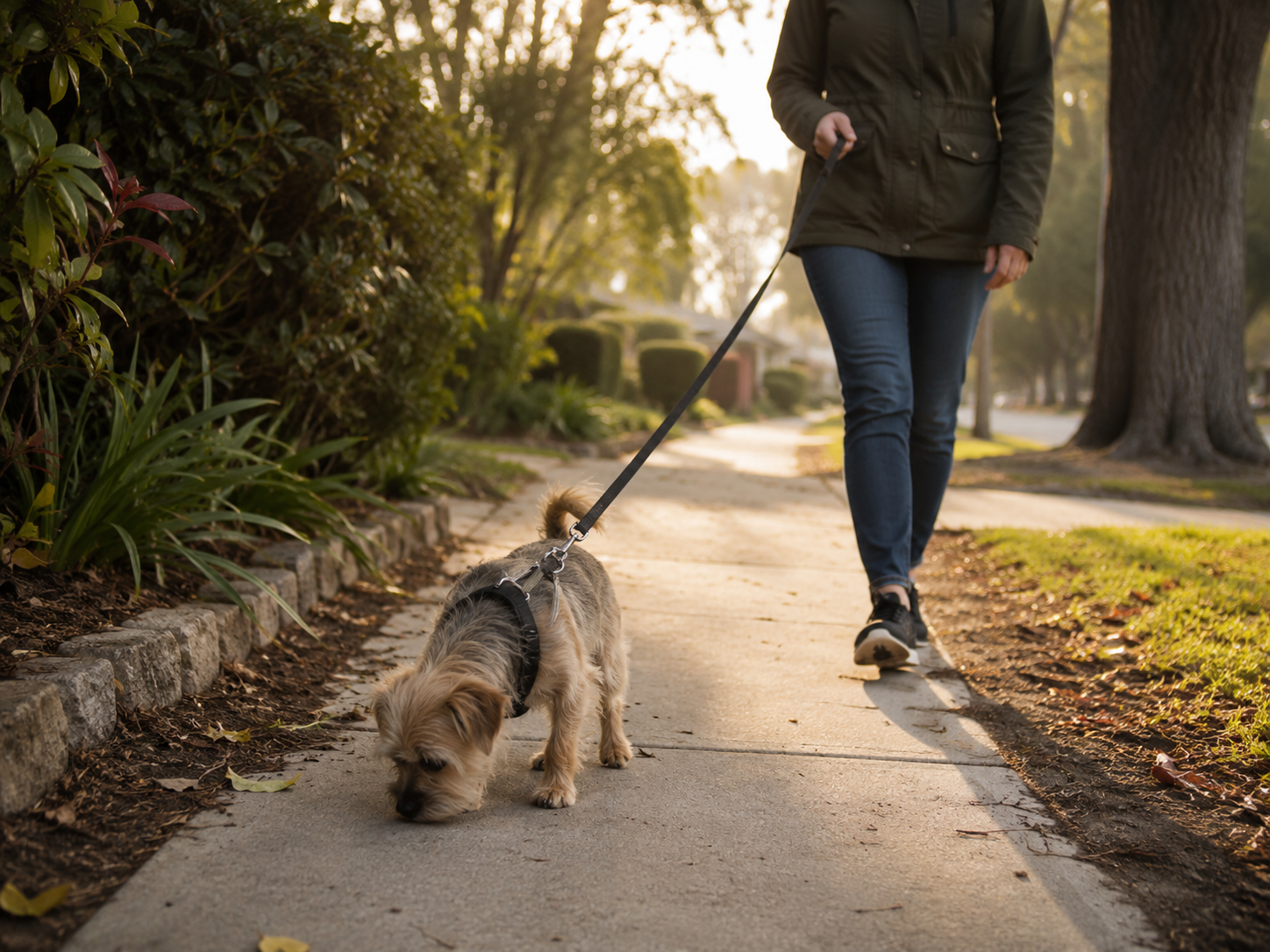
14. Introduce Resident Dogs Gradually
Do not assume a friendly shelter dog and a friendly resident dog will automatically feel comfortable sharing a home.
When possible, begin with a controlled meeting in a neutral outdoor area.
Use enough distance for both dogs to move and observe without sustained tension.
Inside the home:
- feed separately
- provide separate resting areas
- manage high-value chews and toys
- supervise interactions
- give each dog individual time
Do not rush unsupervised time together.
Current AAHA guidance recommends waiting several weeks before allowing a new dog and resident dog to remain together unsupervised.
Dogs showing guarding, fear or conflict may need longer-term management and professional guidance.
Back to guide15. Begin Training With Communication, Not a Long Obedience Checklist
Training can begin immediately when “training” means teaching the dog how everyday life works.
Useful early skills include:
- responding to the new name
- coming a short distance indoors
- going to a mat
- comfortable leash handling
- waiting briefly at doors
- trading an object
- gentle cooperative handling
Keep sessions short and use rewards such as food, play or access to something the dog values.
Avoid choke, prong or electronic shock collars and punishment-based methods.
A dog that is still learning whether the environment is safe does not benefit from training built around intimidation.
Back to guide16. A Crate Is Useful Only When the Dog Can Cope With It
A crate can be useful for transport, recovery, short-term confinement and management.
But it should not automatically become the new dog's safe place simply because a crate is available.
Some dogs already feel comfortable in one.
Others find confinement frightening.
For gradual crate introduction:
- leave the door open initially
- allow voluntary investigation
- place comfortable bedding inside when safe
- use food or toys to build positive associations
- close the door only after earlier steps are comfortable
Do not force the dog inside and leave it to panic.
If confinement causes intense scratching, biting at the crate, salivation, escape attempts or panic, stop treating the problem as simple crate stubbornness and seek guidance.
Back to guide17. Build Alone Time Gradually Instead of Testing the Dog With a Long Absence
A newly adopted dog has not yet learned what your departures mean.
When practical, avoid suddenly making the first major separation a full workday.
Once the dog is beginning to settle, practice very brief separations that remain below the point of obvious distress.
A camera can help show what the dog actually does after you leave.
Do not assume that following you around the home means the dog will develop separation anxiety.
Back to guide18. Know the Difference Between Adjustment and Separation Distress
Separation-related distress can include:
These signs can have other causes, so video and veterinary assessment can help distinguish separation distress from incomplete house training, confinement anxiety, outside triggers or medical problems.
Do not use “cry it out” as treatment for panic
Repeated exposure to absences that consistently trigger severe distress is not a gradual training plan. Moderate or severe separation problems may require veterinary behavior treatment and carefully graduated departures.
19. Resource Guarding Should Be Managed Early
A new dog may guard food, chews, toys, beds or stolen objects.
Do not deliberately take valuable items away repeatedly to prove that you are in control.
Instead:
- give the dog space while eating
- feed household dogs separately
- avoid disturbing high-value chews
- teach voluntary trades with rewards
- prevent children from approaching guarded resources
Growling is a warning that the dog is uncomfortable.
Punishing the growl does not resolve the reason for guarding and can make the situation less predictable.
Snapping, biting or escalating guarding warrants qualified professional support.
Back to guide20. More Behavior Appearing Later Does Not Necessarily Mean the Adoption Is Failing
Some dogs reveal more activity, vocal behavior, play, fear responses or resource concerns as they become more comfortable in the home.
Early quietness may have reflected uncertainty rather than the dog's complete behavioral profile.
However, avoid dismissing every new problem as “the dog finally showing its true personality.”
Take new problems seriously when you see:
- growling, snapping or biting
- severe fear or panic
- resource guarding
- separation distress
- repeated inability to settle
- sudden irritability
- pain-related behavior changes
Early veterinary and behavior support can prevent owners from accidentally rehearsing a problem for months before seeking help.
Back to guide21. Arrange the First Veterinary Visit Early After Adoption
AAHA recommends taking a newly adopted dog to a veterinarian within the first week.
Bring all records provided by the shelter, foster organization, rescue or previous owner.
Discuss:
- vaccination history and future boosters
- parasite prevention
- current medications
- diet and body condition
- microchip status and registration
- dental health
- skin, ear or gastrointestinal concerns
- mobility or pain
- behavior concerns already observed
Tell the clinic in advance if the dog is highly fearful of handling, strangers, cars or other dogs.
This allows the veterinary team to plan a lower-stress visit where possible.
Back to guide22. The “3-3-3 Rule” Is Better Used as a Guideline Than a Countdown
Adoption organizations commonly use the 3-3-3 framework to remind owners that adjustment happens over time:
- the first few days may be overwhelming
- the following weeks often reveal more normal routine and behavior
- deeper adjustment can continue for months
This can be useful for setting realistic expectations.
Do not treat it as a diagnostic rule
A dog does not automatically become settled on day 3, week 3 or month 3. AAHA also emphasizes that dogs decompress at different rates. Use the framework to encourage patience—not to decide that a dog is behind schedule.
Behavior and comfort should determine your pace.
Back to guide23. A Practical First 30-Day Rescue Dog Plan
Use this as a flexible planning framework rather than a deadline.
A slower dog is not failing the plan.
The plan should adapt to the dog.
Back to guide24. Common First-Month Mistakes
Avoid these common problems:
- giving unrestricted access to the whole home immediately
- leaving exterior doors or gates unsecured
- forgetting to update identification and microchip details
- inviting many visitors during the first days
- forcing physical affection
- taking the dog directly to a crowded dog park
- forcing introductions to unfamiliar dogs
- punishing house-training accidents
- forcing a frightened dog into a crate
- leaving the dog alone for a long period as a “test”
- allowing separation panic to continue as a cry-it-out exercise
- punishing growling or resource guarding warnings
- using choke, prong or shock collars
- assuming all rescue dogs were abused
- assuming every behavior change is psychological rather than checking for pain or illness
- treating the 3-3-3 guideline as an exact behavioral clock
- waiting months to seek help for serious fear or aggression
25. When to Ask for Veterinary or Behavior Help
Contact your veterinarian if the new dog develops:
- persistent poor appetite
- repeated vomiting or significant diarrhea
- coughing or breathing problems
- limping or pain
- marked weakness or lethargy
- skin or ear problems
- abnormal thirst or urination
- another significant health change
Seek qualified behavior support when you see:
- growling, snapping or biting
- severe stranger fear
- serious dog-to-dog reactivity
- resource guarding
- separation panic
- confinement panic
- repeated escape behavior
- fear that prevents normal daily care
Urgent problems should not wait for the dog to “settle in”
Breathing difficulty, collapse, severe weakness, significant injury, repeated seizures, suspected poisoning or another emergency needs prompt veterinary care regardless of how recently the dog was adopted.
For behavior help, choose a professional using humane, evidence-informed, reward-based methods.
Back to guideExplore More Daily Dog Care Guides
26. Frequently Asked Questions
How long does it take a rescue dog to adjust to a new home?
There is no universal timeline. Some dogs become comfortable relatively quickly while others need weeks or months. Use eating, resting, toileting, exploration, recovery from stress and overall behavior to guide the pace rather than expecting a fixed date.
What should I do during the first 24 hours with a rescue dog?
Keep the day simple. Provide water, an appropriate meal according to the dog's feeding plan, bathroom opportunities, a quiet resting area and a secure environment. Limit visitors and avoid overwhelming outings.
Should I leave my rescue dog alone on the first day?
Avoid a long first-day absence when practical. Let the dog begin learning the home and relationship first. Later, introduce very brief alone-time practice and increase duration gradually while the dog remains calm.
Should I let my rescue dog follow me around the house?
Following you does not automatically cause separation anxiety. During adjustment, staying near a new caregiver can be part of learning the household. Independence can be built gradually as the dog becomes more secure.
What if my rescue dog hides?
Provide a safe area and avoid repeatedly pulling the dog out. Make food, water and bathroom opportunities accessible. Contact your veterinarian if hiding is accompanied by illness, pain, significant weakness or failure to meet normal basic needs.
Why is my rescue dog so quiet?
Some dogs become withdrawn or unusually quiet in a new environment. Do not assume this represents the dog's final personality or complete relaxation. Continue monitoring eating, drinking, elimination, comfort and health.
What is the 3-3-3 rule for rescue dogs?
It is a commonly used adoption framework describing the first few days, weeks and months of adjustment. It can encourage patience, but it is not an exact behavioral schedule. Individual dogs decompress at different rates.
Should I take my new rescue dog to a dog park?
Avoid rushing into dog parks during the early settling period. You may not yet know the dog's dog-to-dog behavior, recall or response to crowded, high-arousal situations.
When should my adopted dog see a veterinarian?
AAHA recommends a veterinary visit within the first week after bringing a new dog home. Bring available medical records and discuss vaccinations, parasite prevention, diet, microchip registration and any behavior or health concerns.
Should I change my rescue dog's food immediately?
Not automatically. When practical, begin with the food information provided by the shelter, foster home or rescue. If a diet change is needed, ask your veterinarian about an appropriate transition for the individual dog.
Should I crate my rescue dog?
A crate can be useful when the dog is comfortable with it. Introduce it positively and do not force a frightened dog into prolonged confinement. Some dogs need a different safe-space arrangement.
What if my rescue dog cries when I leave?
Record the dog when possible and look for other distress signs such as pacing, escape attempts, salivation or inability to settle. Repeated panic warrants veterinary or qualified behavior help rather than simply leaving the dog to cry for progressively longer periods.
Why did my rescue dog's behavior change after two or three weeks?
More behavior may become visible as the dog grows comfortable enough to interact normally with the environment. However, growing fear, aggression, resource guarding or separation distress should still be addressed rather than dismissed as normal adjustment.
Can I introduce my rescue dog to my resident dog immediately?
Use a controlled gradual introduction rather than simply placing both dogs together indoors. Begin with appropriate neutral-space interaction when possible, feed separately, manage high-value resources and supervise shared time.
Should I punish growling from a newly adopted dog?
No. Growling communicates discomfort. Increase safety, identify the trigger and seek qualified help when guarding, fear or aggression is developing.
27. Veterinary, Adoption & Behavior Sources
This educational guide was prepared with reference to current guidance on new-dog adjustment, veterinary care after adoption, identification, separation distress, household management and humane reward-based training. Sources checked August 13, 2026.
- American Animal Hospital Association — New Dog Checklist: Your Step-by-Step Guide to a Successful Start
- American Animal Hospital Association — Adopting a Rescue Dog: What to Expect
- American Animal Hospital Association — Updating Microchip Details and Lost-Pet Prevention
- ASPCA — Adoption Tips and Preparing the Home
- Merck Veterinary Manual — Fear, Separation Distress and Behavior Problems of Dogs
- Merck Veterinary Manual — Social Behavior, Communication and Reward-Based Training
- American Veterinary Society of Animal Behavior — Humane Dog Training Position Statement
- American Animal Hospital Association — Animal Identification and Microchipping
Veterinary & Behavior Disclaimer
Daily Dog Care Guide provides general educational information for dog owners. This article does not replace veterinary examination, diagnosis, treatment, emergency care, an individualized behavior plan or professional assessment of aggression or separation problems.
Recently adopted dogs can have medical conditions that resemble stress or behavior problems. Contact a veterinarian when appetite, gastrointestinal signs, pain, mobility, breathing, energy, urination or another health function is concerning.
Severe fear, escape behavior, aggression, biting, resource guarding, separation panic or confinement panic may require coordinated veterinary and qualified reward-based behavior support.
Final Thoughts
The first month with a rescue dog is not a race to prove that the adoption has worked.
It is a period of learning.
Your dog is learning where food appears, where bathroom trips happen, which doors lead outside, where sleep is protected, what your voice predicts and whether people respect small signals of discomfort.
You are learning too.
You are discovering what frightens the dog, what motivates the dog, how much activity is comfortable, how the dog communicates and which routines create security.
Keep identification current and prevent escape.
Protect rest. Keep early social pressure low. Use reward-based training. Introduce alone time gradually and do not treat panic as something a dog simply has to endure.
Arrange veterinary care early and do not explain away illness or pain as “just decompression.”
Most importantly, do not compare your dog with a calendar.
Day 30 does not end the adjustment period.
The useful question is not, “Should my rescue dog be settled by now?”
It is, “What is this dog telling me today, and what can I do to make the next step safe and understandable?”
Back to guidePractical Gear for a Newly Adopted Dog
Newly adopted dogs may be flight risks. Prioritize secure fit, ID, calm routines, and gradual exposure.
A walking harness option to compare for fit, comfort, and everyday leash practice.
View on Amazon →Optional product • paid linkReflective Dog Leash with AccessoryA practical everyday leash option with added visibility for outdoor walks.
View on Amazon →Optional product • paid linkDog Treat Pouch for TrainingKeeps small rewards easy to reach during short training sessions and walks.
View on Amazon →Affiliate disclosure: As an Amazon Associate I earn from qualifying purchases. Always check size, fit, materials, labels, and your dog’s individual needs before buying.
A Creative Break for Dog-Loving Kids
Explore puppy coloring and activity books for screen-free creative time, quiet afternoons, travel, and young dog fans.
See all dog-care products & books →Helpful next steps
Continue with a related guide, tool, or product resource.