How to Introduce Dogs: Helping Two or More Dogs Live Together
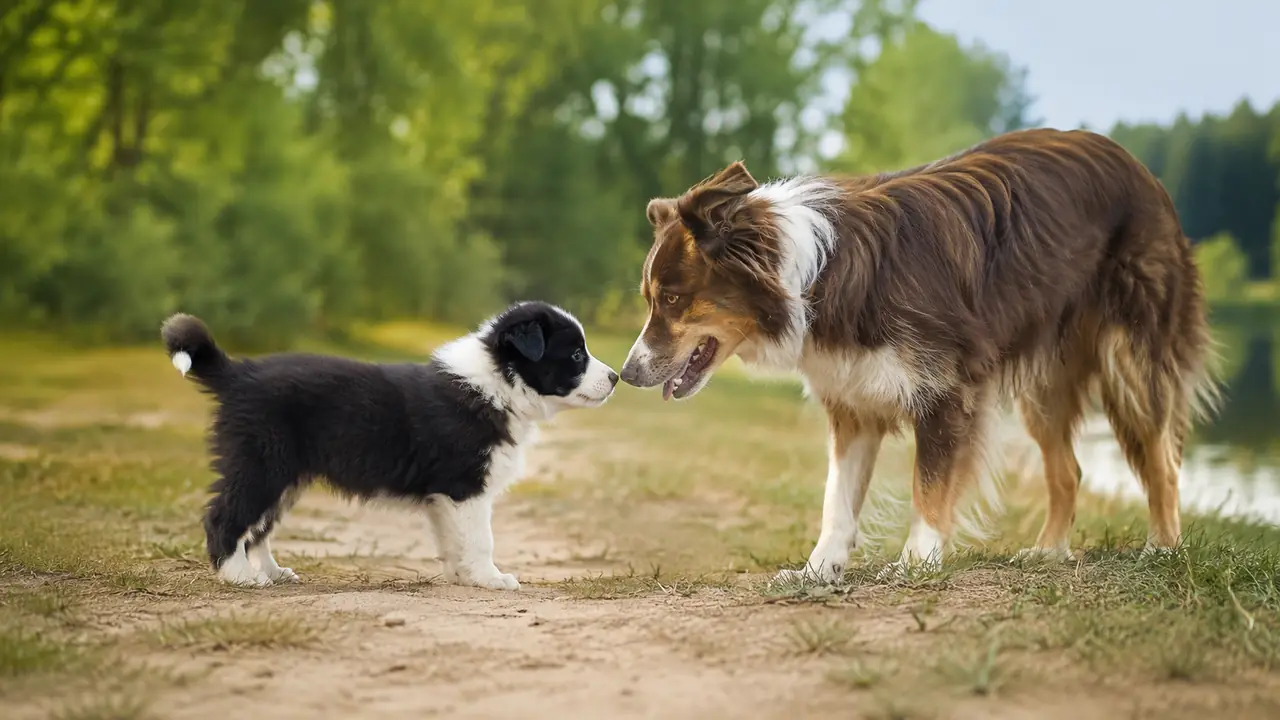
Bringing two dogs together is not a test of which dog is dominant. Successful introductions depend on distance, body language, access to resources, individual temperament, health, previous experience and the owner's ability to prevent conflict while the dogs learn about each other.
Updated August 13, 2026 · Veterinary behavior guidance checked
The first goal is calm coexistence—not immediate play, shared beds or instant friendship.
Two dogs can become close companions.
They can also live successfully in the same home without wanting to share every meal, toy, bed or moment of attention.
Both outcomes can be normal.
Trouble often begins when people ask the dogs to handle more social pressure than they are ready for.
A new dog arrives, food is left out, toys cover the floor, both dogs are excited, visitors gather around, and everyone waits to see whether the dogs “work it out.”
A safer introduction does the opposite.
It reduces pressure, protects resources, allows distance and gives the dogs time to communicate without forcing closeness.
Quick Answer: How Should You Introduce Two Dogs?
Begin in a neutral outdoor area with one capable handler for each dog.
Start far enough apart that both dogs can walk and observe each other without becoming highly tense or reactive. Use loose leashes and move in the same general direction rather than forcing an immediate nose-to-nose greeting.
If both dogs remain relaxed, gradually allow closer parallel movement and brief interaction. Keep the first sessions short.
Before entering the home, remove high-value food, chews and toys that could create competition. Feed separately and provide separate resting areas.
Continue supervising interactions and increase freedom gradually. AAHA recommends waiting several weeks before allowing a newly introduced dog pair unsupervised together.
If either dog repeatedly freezes, stares, blocks, growls, lunges, snaps, hides, tries to escape or cannot settle, increase distance and change the plan rather than forcing more contact.
Four Principles Matter More Than Making Dogs “Be Friends”
In This Dog Introduction Guide
1. Prepare Before the Dogs Meet
Do not make the first meeting the moment when you discover that you have no way to separate the dogs.
Before bringing the new dog home, prepare:
- separate food bowls
- separate feeding areas
- separate beds or resting areas
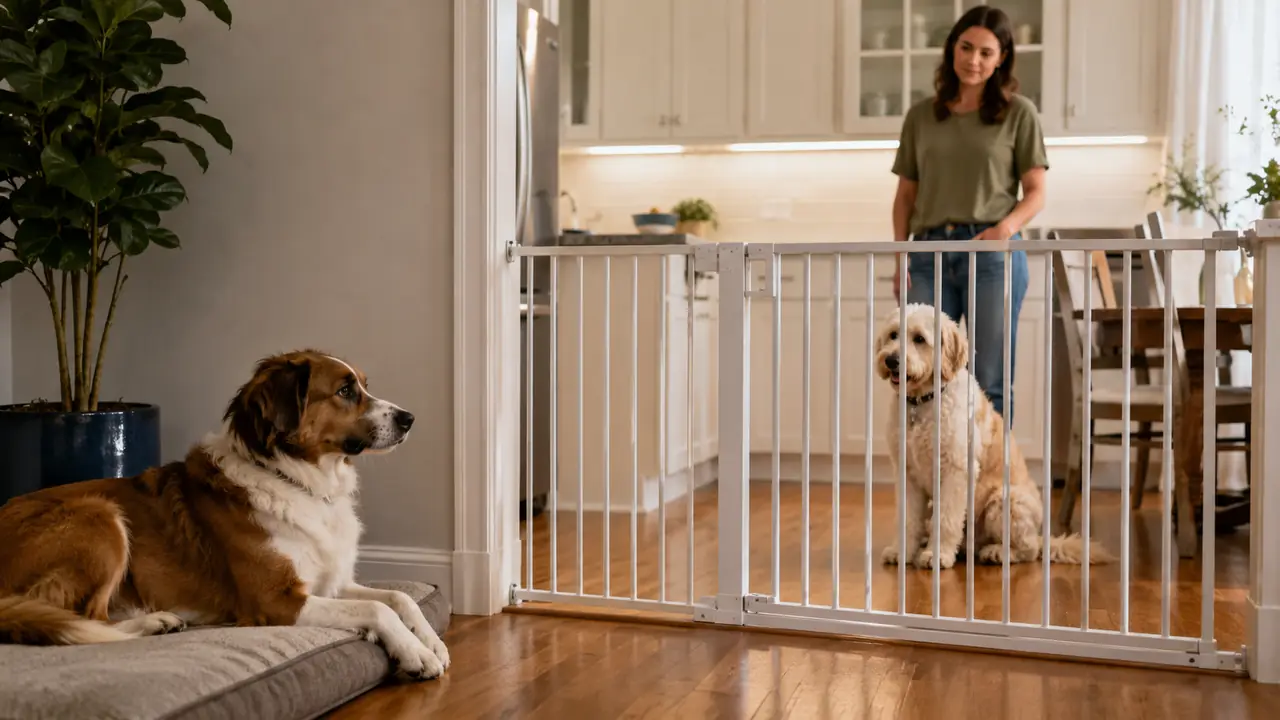
- doors or secure gates for temporary separation
- safe leash equipment for each dog
- a plan for individual walks and training
Remove high-value chews, food-filled toys and other items likely to create immediate competition.
Consider the resident dog's health, age, history with other dogs, activity level and temperament before adding another dog.
A dog that already has serious dog-directed aggression may need professional assessment before a new household dog is introduced.
Back to guide2. Let the First Meeting Happen on Neutral Territory
A first meeting is often easier away from the resident dog's most valued home territory.
Choose a quiet outdoor location where both dogs have room to move away.
Avoid:
- a narrow doorway
- a crowded dog park
- a small enclosed room
- an area full of loose food or toys
- a place where either dog is already highly aroused
One responsible adult should handle each dog when possible.
Keep enough distance that both dogs can still walk, sniff and respond to their handlers.
Back to guide3. Begin With Parallel Movement Instead of Forced Face-to-Face Contact
Start by walking in the same general direction with comfortable distance between the dogs.
Allow them to notice each other without requiring immediate interaction.
Keep the leashes loose enough to allow normal body movement while still maintaining safety.
Constantly pulling the dogs tightly toward each other can add frustration and restrict normal communication.
Back to guide4. A Successful First Meeting Does Not Require a Long Greeting
If both dogs remain loose and comfortable as distance decreases, allow a brief greeting.
Then encourage movement again.
Short contact followed by separation gives both dogs time to process the interaction.
It is also completely acceptable for the dogs to ignore each other during early meetings.
Indifference can be a very useful beginning.
Do not force contact
If one dog keeps moving away, hiding behind the handler or avoiding interaction, do not repeatedly bring the other dog closer.
5. Learn the Difference Between Comfortable Interaction and Rising Pressure
Canine communication uses body posture, movement, facial expression, tail and ear position, vocalization and distance.
Do not evaluate the interaction from the tail alone.
Read the entire body and the context.
Back to guide6. Prepare the Home Before Both Dogs Enter
The home contains many resources the neutral meeting area did not.
Before bringing the dogs inside, put away:
- food bowls containing food
- high-value chews
- favorite bones
- food-filled toys
- items either dog is known to guard
Make sure each dog has access to a separate rest space.
Use secure gates, doors or other management options so the dogs can take breaks without having to defend personal space.
Keep the first indoor period calm.
There is no need to invite visitors over to celebrate the introduction.
Back to guide7. Keep the First Days Predictable and Lower Pressure
The new dog is also adjusting to unfamiliar people, rooms, sounds, smells and routines.
Keep interactions shorter than you think they need to be.
Build in separation and rest.
A simple early routine can include:
- separate meals
- individual bathroom breaks when useful
- short supervised time together
- separate rest
- individual owner attention
- short reward-based training
- low-pressure parallel walks
Do not interpret a quiet first day as proof that every future interaction will be easy.
Behavior can change as a new dog becomes more comfortable in the home.
Back to guide8. Do Not Rush Unsupervised Time
Two dogs behaving well while an owner is present does not automatically mean they are ready to be left together.
Current AAHA guidance advises waiting several weeks before allowing a new dog and household dog unsupervised together.
The individual relationship still matters.
Dogs with guarding, fear, high arousal or previous conflict may need a much longer management period—or may require ongoing separation when nobody is supervising.
When you are not confident that the dogs can remain safe, separate them with secure doors, gates or other appropriate management.
Back to guide9. Feed Household Dogs in Separate Spaces
Food creates unnecessary competition when dogs can approach each other's bowls.
One dog may eat quickly and move toward the second bowl.
Another may become tense and eat faster because another dog is nearby.
Use:
- different rooms
- secure gates
- separate crates when both dogs are comfortably crate-trained
- another setup that reliably prevents bowl stealing
Pick up bowls when meals are finished if leaving them down creates guarding or conflict.
Do not test whether dogs “should be able to share.”
There is no welfare benefit in creating food competition that can easily be prevented.
Back to guide10. Manage High-Value Toys, Chews and Other Resources
Dogs can guard more than food bowls.
Valued resources can include:
- chews
- balls
- food-stuffed toys
- stolen household objects
- beds
- favorite resting places
- doorways
- access to a preferred person
During early introduction periods, remove the highest-value shared items.
Give long-lasting chews separately.
Add toys gradually only after observing how both dogs behave around them.
Management is not failure
Preventing access to a known conflict trigger is one of the core safety strategies used in household inter-dog aggression management.
11. Human Attention Can Also Become a Valued Resource
One dog may push between the owner and another dog, block access, bark, climb onto the owner or become tense during petting.
Calling this simply “jealousy” can hide what is actually happening.
Look at the behavior and context.
If access to the person reliably produces tension, manage the situation just as you would another valued resource.
Useful strategies include:
- giving individual attention separately
- teaching each dog a separate mat or place cue
- rewarding calm waiting
- avoiding simultaneous high-arousal petting sessions
- using distance before competition escalates
Fair care does not require both dogs to receive every interaction at exactly the same second.
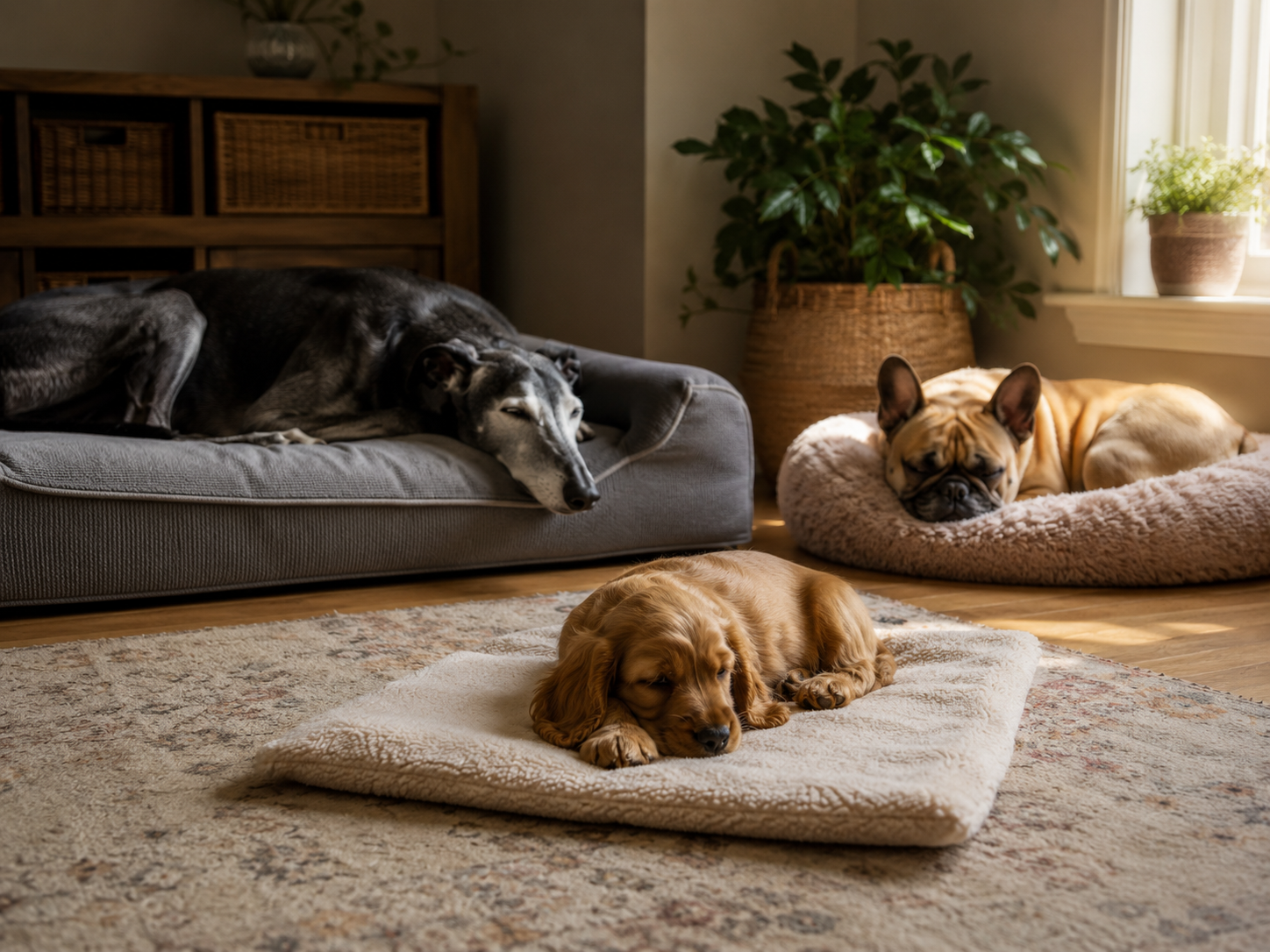
Back to guide12. Every Dog Needs a Place Where Rest Is Protected
Dogs living together still need opportunities to be apart.
A dog should not have to guard a bed simply to get uninterrupted sleep.
Separate beds, mats, rooms or positively trained crates can provide needed recovery time.
Teach people and other dogs to leave a resting dog alone.
This matters especially when:
- a puppy lives with an adult dog
- a senior dog needs more sleep
- one dog has pain
- one dog becomes overstimulated easily
- the dogs have very different energy levels
13. Play Should Contain Choice — Not Continuous Social Pressure
Dog play can look energetic and noisy.
Do not judge it only by volume.
Instead, look at whether both dogs remain willing participants.
More reassuring patterns include:
- loose rather than rigid movement
- natural pauses
- both dogs choosing to re-engage
- ability to move away
- switching between activity and brief recovery
Interrupt and reassess if:
- one dog repeatedly tries to escape
- one dog hides behind people or furniture
- one dog repeatedly pins or corners the other
- the body becomes increasingly rigid
- growling or snapping escalates
- one dog does not return after a break
Periodic calm breaks help prevent high arousal from continuing until one dog becomes overwhelmed.
Back to guide14. Teach Important Skills to Each Dog Separately Before Expecting Group Success
Two dogs can make simple training more difficult because each dog adds distraction and competition.
First teach each dog individually:
- name response
- come when called
- go to mat or place
- leave it
- drop or trade
- wait briefly
- loose-leash walking
Once each dog understands the skill, introduce easy group practice.
For example, one dog can remain on a separate mat while the other performs a simple cue, then the dogs switch.
If food creates competition, increase separation or train one dog at a time.
Use reward-based methods rather than corrections, intimidation or physical punishment.
Back to guide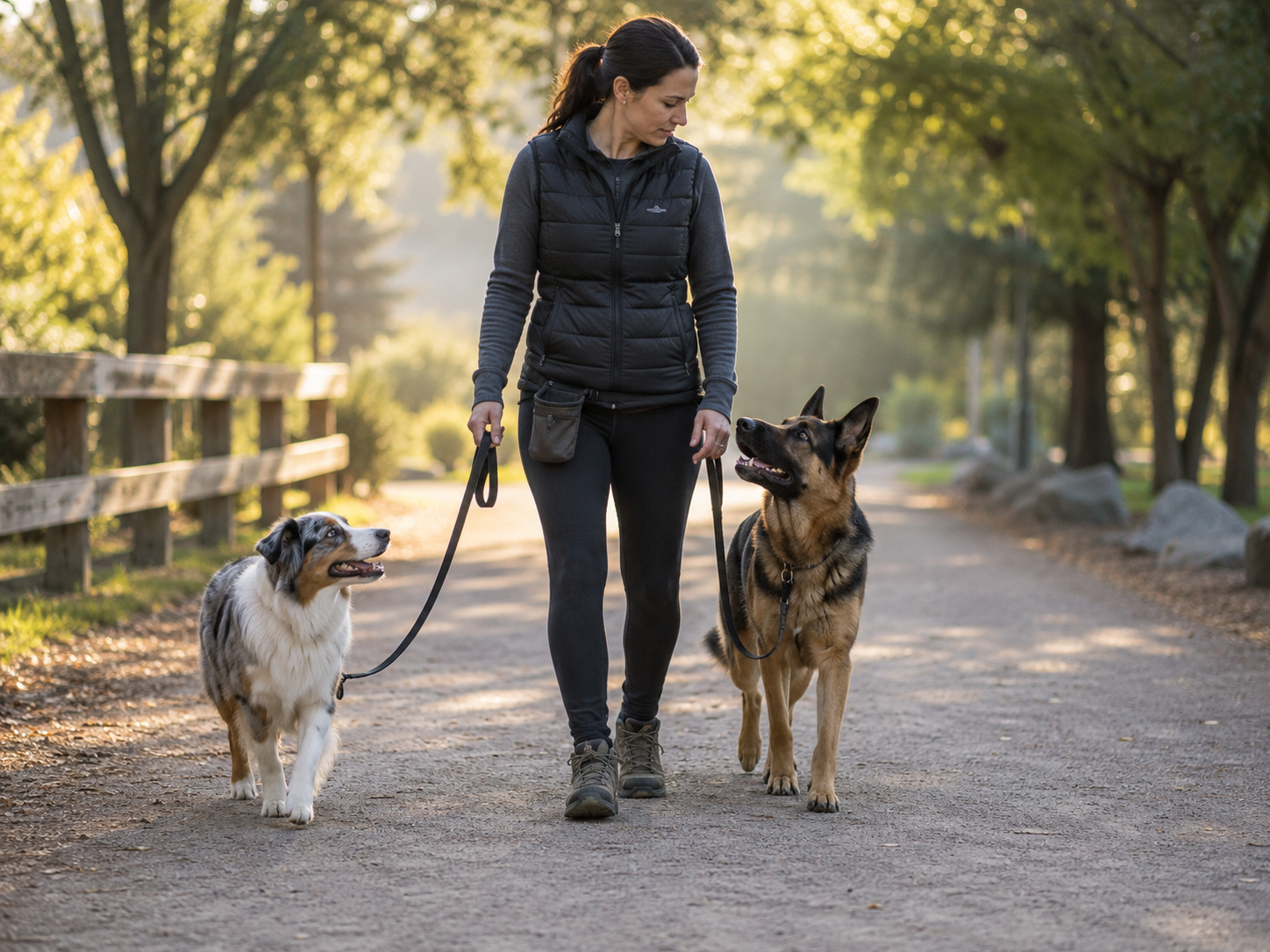
15. Walking Together Should Come After Each Dog Can Be Managed Individually
One dog pulling can increase the other dog's arousal.
Two dogs reacting at the same time can become difficult or unsafe for one handler.
Teach basic leash skills separately first.
Then begin short, low-distraction walks together.
Do not walk more dogs than the handler can physically and behaviorally manage.
Separate walks remain completely appropriate when:
- one dog is reactive
- one dog requires slower mobility
- the dogs have very different exercise needs
- one dog needs focused training
- handling both together is unsafe
16. Manage Doorways, Visitors and Other High-Arousal Moments
Household conflict does not happen only around food.
High arousal can increase risk when:
- the owner arrives home
- a visitor enters
- both dogs rush through a doorway
- leashes come out for a walk
- food is being prepared
- both dogs become excited by something outside
Use gates, separate place cues, individual leashing or temporary separation to prevent the dogs from competing in a narrow space.
If the dogs redirect excitement or frustration toward each other, separate them before the next predictable high-arousal event.
Back to guide17. Do Not Make the Adult Dog Responsible for Raising the Puppy
Puppies can be socially exhausting.
They bite, chase, jump, climb and repeatedly restart play.
An adult dog's tolerance is not unlimited.
Protect the adult dog by providing:
- puppy-free rest time
- separate beds
- supervised play
- puppy training and enrichment away from the adult dog
- regular interruptions before play becomes excessive
Do not repeatedly allow the puppy to harass the adult dog and wait for the adult to “teach a lesson.”
The owner should manage the puppy's behavior before the older dog feels forced to escalate.
Back to guide18. A Senior Dog May Need More Protection From a Young New Housemate
Older dogs may have arthritis, sensory changes, reduced mobility or a lower tolerance for physical play.
They may also require more uninterrupted sleep.
A young dog that constantly bumps, climbs on or chases the senior can create discomfort and conflict.
Provide:
- senior-only rest areas
- nonslip flooring where needed
- separate walking routines when appropriate
- protection from rough play
- individual owner time
New irritability in an older dog should not automatically be blamed on the new dog.
Pain or illness can reduce tolerance for social interaction and deserves veterinary assessment.
Back to guide19. Resource Guarding Needs Management Before Training Experiments
A guarding dog may become stiff, hover over an item, stare, growl, show teeth, snap or bite when another dog approaches a valued resource.
If guarding occurs between household dogs:
- identify the triggering resources
- remove those resources when the dogs are together
- feed separately
- give high-value chews separately
- avoid leaving valued items where conflict repeatedly occurs
- teach trade and place skills individually using rewards
Do not repeatedly stage guarding situations to see whether the dog has “improved.”
Behavior modification should be planned below the level at which aggression occurs.
Repeated or severe guarding between dogs is a good reason to involve a veterinarian and qualified behavior professional.
Back to guide20. Do Not Punish the Warning Signal
Growling communicates that a dog is uncomfortable enough to warn.
Respond by reducing pressure and identifying the trigger.
Yelling, hitting, leash corrections, alpha rolls or other confrontational methods can increase fear and make aggressive behavior worse.
Change the situation instead
Increase distance, remove the competing resource when it can be done safely, separate the dogs and decide what management change is needed before the situation happens again.
Suppressing a growl does not necessarily remove the emotional reason the dog growled.
Back to guide21. If a Fight Happens, Protect People as Well as Dogs
Dog fights can cause redirected bites to people who reach between the dogs or grab them while arousal is extremely high.
Do not put your hands between fighting dogs
Do not reach toward mouths or grab collars with bare hands in the middle of an active fight.
If it can be done without placing a person at bite risk, use environmental barriers such as a door, secure gate or another solid separation method.
Once separated, prevent immediate re-engagement.
Dogs may remain highly aroused after the physical fight ends.
Examine both dogs for injuries and contact a veterinarian after bites, punctures, significant pain or other injuries.
After a serious household fight, do not simply place the dogs together again to see whether it was “just a one-time thing.”
Use secure separation and obtain professional assessment before another risky interaction.
Back to guide22. Sudden Conflict Can Have a Medical Component
Pain can change behavior.
A dog with arthritis, dental pain, an injury, skin pain or another medical problem may become less tolerant of being bumped, approached or touched.
Age-related sensory or cognitive changes can also alter social responses.
Arrange a veterinary examination when:
- household conflict starts suddenly
- a previously social dog becomes irritable
- aggression occurs when one area of the body is approached
- mobility or activity changes
- the dog appears painful
- an older dog's behavior changes noticeably
Behavior treatment works better when underlying medical problems are not overlooked.
Back to guide23. Household Conflict Is Not Solved by Choosing an “Alpha Dog”
Domestic dog social relationships are flexible and context-dependent.
A simple fixed hierarchy does not explain every interaction or conflict over food, toys, beds or people.
Do not:
- alpha-roll one dog
- force one dog into a submissive posture
- punish the dog you assume is “challenging rank”
- allow fighting so the dogs can establish dominance
- force one dog to surrender every valued resource to the other
Instead, identify the actual trigger, manage the environment and use reinforcement-based behavior work.
The practical goal is safe coexistence—not assigning a social title.
Back to guide24. Use Progress, Not a Fixed Number of Days, to Guide the Introduction
There is no reliable universal “three days, three weeks, three months” rule that tells you exactly when two dogs are ready for the next stage.
Move forward according to behavior and safety.
Move backward whenever tension increases.
A slower successful introduction is better than a fast introduction that creates repeated conflict.
Back to guide25. When to Get Professional Help
Contact your veterinarian and a qualified reward-based behavior professional when:
- the dogs have fought
- one dog has injured the other
- growling, snapping or lunging is increasing
- one dog repeatedly guards food, toys, beds or people
- one dog appears unable to relax around the other
- one dog repeatedly stalks, blocks or corners the other
- the dogs cannot safely share ordinary household space
- aggression begins suddenly
- pain or illness may be contributing
- you are afraid to manage the situation yourself
Some dogs may require long-term separation
Severe household aggression is not always solved by more exposure. Depending on the case, professional recommendations can include strict resource management, basket-muzzle training, structured behavior modification, medication prescribed by a veterinarian, long-term separation or another individualized safety plan.
Do not place people or dogs at repeated injury risk while waiting for the relationship to improve on its own.
Back to guideExplore More Daily Dog Care Guides
26. Frequently Asked Questions
What is the best way to introduce two dogs?
Begin on neutral territory with one handler per dog. Start with comfortable distance and loose-leash parallel movement. Allow closer interaction only while both dogs remain relaxed, and keep early meetings short.
Should dogs meet face-to-face immediately?
No. Forced nose-to-nose contact is unnecessary. Walking in the same direction with room to observe and disengage can create a lower-pressure beginning.
Should I introduce a new dog inside my house?
A neutral outdoor meeting is generally preferable first. Before entering the home, remove high-value resources and prepare separate resting and feeding areas.
Should my dogs eat together?
They do not need to. Separate feeding is a straightforward way to prevent competition and bowl stealing, and current veterinary behavior guidance recommends separating dogs during meals when household conflict is a concern.
When can I leave a new dog alone with my resident dog?
Do not rush this step. AAHA's 2026 new-dog guidance advises waiting several weeks before unsupervised dog-to-dog time. Dogs with guarding, fear or conflict may need longer or ongoing separation when unsupervised.
Should I let two dogs fight it out?
No. Repeated aggression can cause injury and strengthen negative associations. Manage triggers, separate the dogs before escalation and seek qualified professional help when conflict is recurring.
Is growling between dogs always bad?
Growling is communication that one dog is uncomfortable. Do not punish the warning. Increase safety and identify what triggered it, especially when food, toys, space or attention are involved.
How do I know if my dogs are playing or fighting?
Look at the whole interaction. Loose movement, pauses, ability to disengage and both dogs choosing to return are more reassuring. Repeated escape attempts, rigid posture, cornering, sustained pressure, escalating growling or snapping are reasons to interrupt and reassess.
What if one dog keeps taking the other's toys?
Remove high-value items from shared access, give special chews separately, supervise toy sessions and teach trade or drop skills individually with rewards.
Are two dogs fighting because one is trying to be alpha?
Household conflict is more usefully assessed in terms of specific resources, fear, anxiety, arousal, learning, communication and medical factors. A simple fixed “alpha dog” explanation does not accurately describe most household aggression.
What if my older dog hates the new puppy?
Protect the older dog from constant puppy pressure. Give the adult dog puppy-free rest, supervise play and manage the puppy's exercise, training and chewing needs separately. New irritability in a senior dog should also prompt consideration of pain or illness.
Should both dogs receive attention at exactly the same time?
No. Individual attention can reduce competition and helps each dog receive care appropriate to its needs. If owner attention triggers conflict, use separate place cues or give attention with the dogs safely separated.
What should I do if my dogs actually fight?
Protect yourself first. Do not put your hands between fighting dogs or reach toward their mouths. Separate them using a safe environmental barrier when possible, prevent immediate re-engagement, check for injuries and seek veterinary or behavior help after a serious incident.
Can pain cause dogs in the same home to start fighting?
Yes. Pain and other medical changes can alter a dog's tolerance and social responses. Sudden aggression or irritability deserves veterinary assessment.
How long does it take two dogs to adjust to each other?
There is no universal timeline. Some relationships progress quickly and others need much longer. Use behavior, recovery, resource safety and ability to relax—not a fixed calendar—to decide when to increase freedom.
27. Veterinary & Behavior Sources
This educational guide was prepared with reference to current veterinary guidance on dog introductions, household inter-dog aggression, resource guarding, canine communication, environmental management and humane reward-based training. Sources checked August 13, 2026.
- American Animal Hospital Association — New Dog Checklist and Introduction Safety
- Merck Veterinary Manual — Behavior Problems of Dogs and Household Inter-Dog Aggression
- Merck Veterinary Manual — Social Behavior and Communication of Dogs
- Merck Veterinary Manual — Pet Owner Guide to Aggression and Behavior Problems
- American Animal Hospital Association — Common Signs of Anxiety and Distress
- AAHA Canine and Feline Behavior Management Guidelines
- American Veterinary Society of Animal Behavior — Humane Dog Training Position Statement
Veterinary & Behavior Disclaimer
Daily Dog Care Guide provides general educational information for dog owners. This article does not replace veterinary diagnosis, treatment, emergency care, an individualized aggression-risk assessment or a professional behavior-modification plan.
Household dog aggression can result in serious injury to dogs and people. Dogs with a bite history, repeated fights, severe resource guarding, escalating aggression or inability to coexist safely should be securely managed while professional veterinary and behavior guidance is obtained.
Sudden behavior changes can have a medical component. Arrange veterinary evaluation when pain, illness, neurologic change or age-related problems may be contributing.
Final Thoughts
A successful multi-dog home is not created by forcing dogs to share everything.
It is created by making conflict less necessary.
Start introductions with space. Use neutral territory. Let the dogs move rather than forcing long face-to-face greetings.
Inside the home, protect food, chews, beds and rest.
Teach each dog separately before asking them to perform together. Watch body language and respond to early tension instead of waiting for a fight.
Do not punish growling and do not rely on dominance techniques.
When the dogs need distance, give them distance.
When they need separate meals, feed separately.
When pain, fear or repeated aggression appears, involve veterinary and behavior professionals early.
Two dogs do not need to become inseparable best friends to have a successful life together.
The real goal is simpler and more important:
each dog can eat, sleep, move, interact and relax in the home without repeatedly feeling the need to compete, escape or defend itself.
Back to guideMulti-Dog Household Basics
Feed and manage high-value resources separately when needed to reduce competition and conflict.
A durable, easy-clean bowl option for everyday food and water routines.
View on Amazon →Optional product • paid linkDog Treat Pouch for TrainingKeeps small rewards easy to reach during short training sessions and walks.
View on Amazon →Optional product • paid linkInteractive Dog Puzzle FeederA supervised enrichment tool that can add mental work to food or treat time.
View on Amazon →Affiliate disclosure: As an Amazon Associate I earn from qualifying purchases. Always check size, fit, materials, labels, and your dog’s individual needs before buying.
A Creative Break for Dog-Loving Kids
Explore puppy coloring and activity books for screen-free creative time, quiet afternoons, travel, and young dog fans.
See all dog-care products & books →Helpful next steps
Continue with a related guide, tool, or product resource.