Dog Dental Care: How to Brush Your Dog’s Teeth and Protect Oral Health
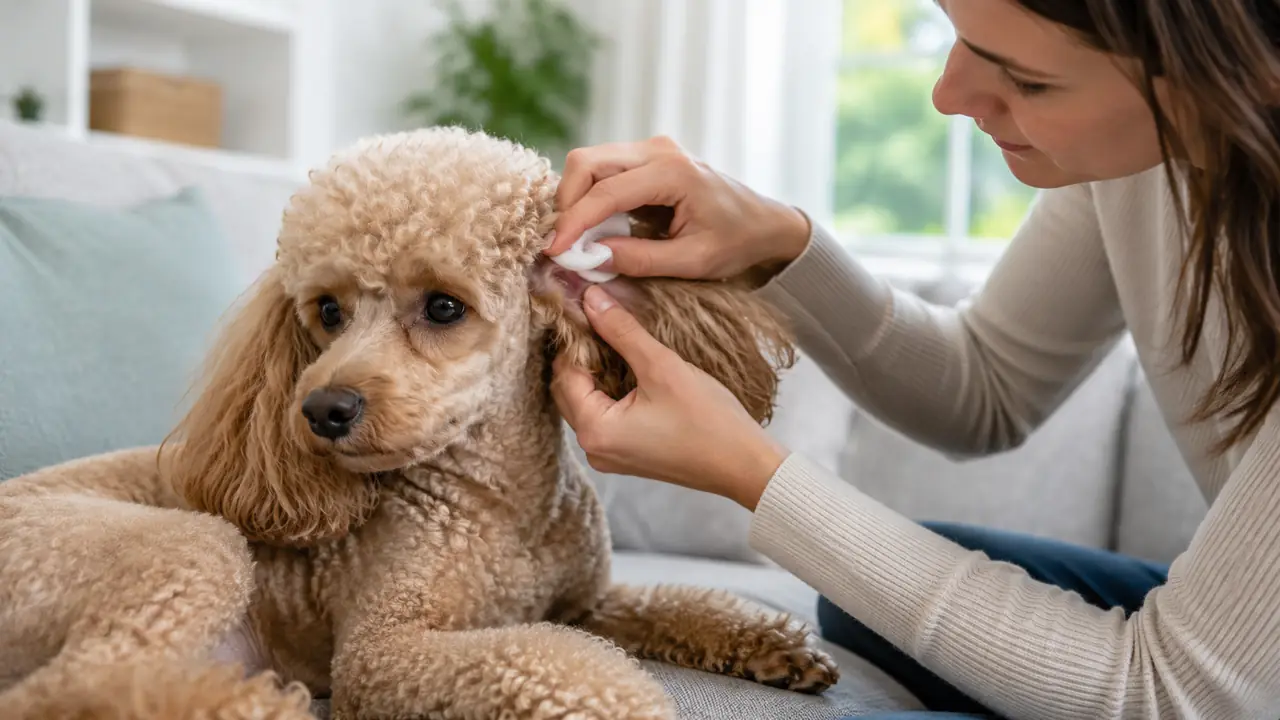
Good dog dental care is not about scraping teeth until they look white. The main home-care goal is controlling soft dental plaque before it mineralizes into tartar, while veterinary examinations identify disease above and below the gumline. Daily brushing is the most effective home plaque-control habit for dogs that can tolerate it.
Updated August 13, 2026 · Veterinary dental guidance checked
Brushing removes plaque. It does not remove established calculus or treat periodontal disease already present below the gumline.
Dental disease can be easy to underestimate because much of the important anatomy is hidden below the gumline.
A dog may continue eating even when a tooth or gum is painful.
Bad breath, a brown tooth surface or a little gum redness may be the first change an owner notices, but a complete dental assessment sometimes reveals more than can be seen during a quick look at home.
Home dental care and professional veterinary dentistry therefore have different jobs.
Home care helps slow plaque accumulation.
Veterinary dental care diagnoses and treats established disease.
Quick Answer: What Is the Best Dental Care Routine for a Dog?
For dogs that tolerate it, brush the teeth daily using a soft toothbrush and pet-specific toothpaste.
Concentrate on the outside surfaces of the teeth near the gumline, where plaque commonly accumulates and which are generally the most practical surfaces to reach.
If brushing is not yet possible, build tolerance gradually and ask your veterinarian about evidence-supported alternatives such as appropriate VOHC-accepted dental products.
Do not try to scrape established tartar from the teeth at home.
Bad breath, red or bleeding gums, broken or loose teeth, facial swelling, mouth pain, drooling or difficulty eating require veterinary assessment.
Home dental care complements professional veterinary dental examinations; it does not replace them.
Understand the Four Parts of Dental Care
In This Dog Dental Care Guide
1. Dental Care Is About Comfort and Function — Not Cosmetic White Teeth
Dogs use their mouths to eat, drink, chew, play, carry objects and interact with the environment.
Dental and oral disease can cause pain, inflammation, infection, tooth loss and difficulty using the mouth normally.
Dogs do not always stop eating when their mouths hurt.
Some adapt by chewing differently, swallowing food with less chewing, choosing softer food or simply tolerating discomfort.
This is why normal appetite alone does not prove that the mouth is healthy.
Back to guide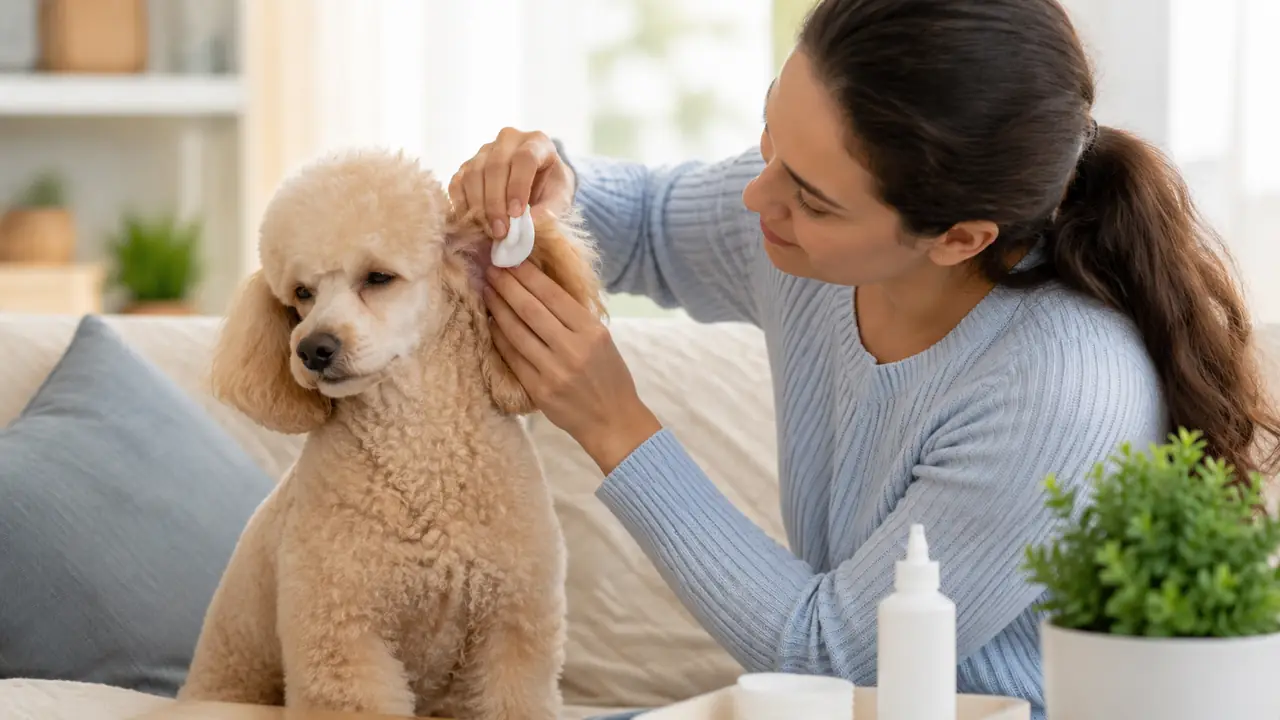
2. Plaque and Tartar Are Not the Same Thing
This distinction explains why daily brushing is preventive.
It works best before large amounts of calculus accumulate.
A toothbrush is therefore excellent for controlling fresh plaque but is not a home scaling tool.
Back to guide3. Periodontal Disease Begins Around the Tooth-Supporting Tissues
Plaque accumulation at and below the gumline can trigger inflammation.
Gingivitis involves inflammation of the gums.
As periodontal disease progresses, deeper supporting tissues around the teeth can become damaged.
The extent of periodontal disease cannot always be judged by looking at the visible tooth crown.
This is one reason veterinary periodontal probing and dental radiography are important during comprehensive dental procedures.
Back to guide4. Persistent Bad Breath Should Not Be Dismissed as Normal “Dog Breath”
Food can temporarily change breath odor.
Persistent strong bad breath, however, is a common reason to have the mouth examined.
Look for accompanying signs such as:
- red or swollen gums
- bleeding around the gums
- visible yellow or brown calculus
- loose or damaged teeth
- excessive drooling
- difficulty eating
- facial swelling
- pain around the mouth
Bad breath can have more than one cause, so do not attempt to diagnose the source from odor alone.
Back to guide5. Keep Home Mouth Checks Brief and Low Pressure
You do not need to force the jaws wide open to perform a useful home check.
When the dog is relaxed, gently lift a lip and look at the visible teeth and gums.
Notice:
- gum redness or swelling
- bleeding
- visible plaque or calculus
- fractured or unusually colored teeth
- loose teeth
- facial or gum swelling
- pain or withdrawal when touched
- unusual oral masses or sores
Stop if the dog appears painful or begins showing defensive behavior.
A painful mouth needs veterinary evaluation rather than more handling practice.
Back to guide6. Dental Pain Can Change Eating and Behavior
Dogs can continue eating despite painful dental disease, so do not wait for complete food refusal before contacting a veterinarian.
Back to guide7. Do Not Start Aggressive Brushing on an Already Painful Mouth
Brushing inflamed or painful gums can hurt and can teach the dog that the toothbrush predicts discomfort.
Ask your veterinarian before starting if you see:
- significant gum redness or swelling
- active bleeding
- loose teeth
- broken teeth
- facial swelling
- obvious mouth pain
- heavy established calculus
Home brushing works best as plaque prevention after painful disease has been appropriately evaluated and treated.
Back to guide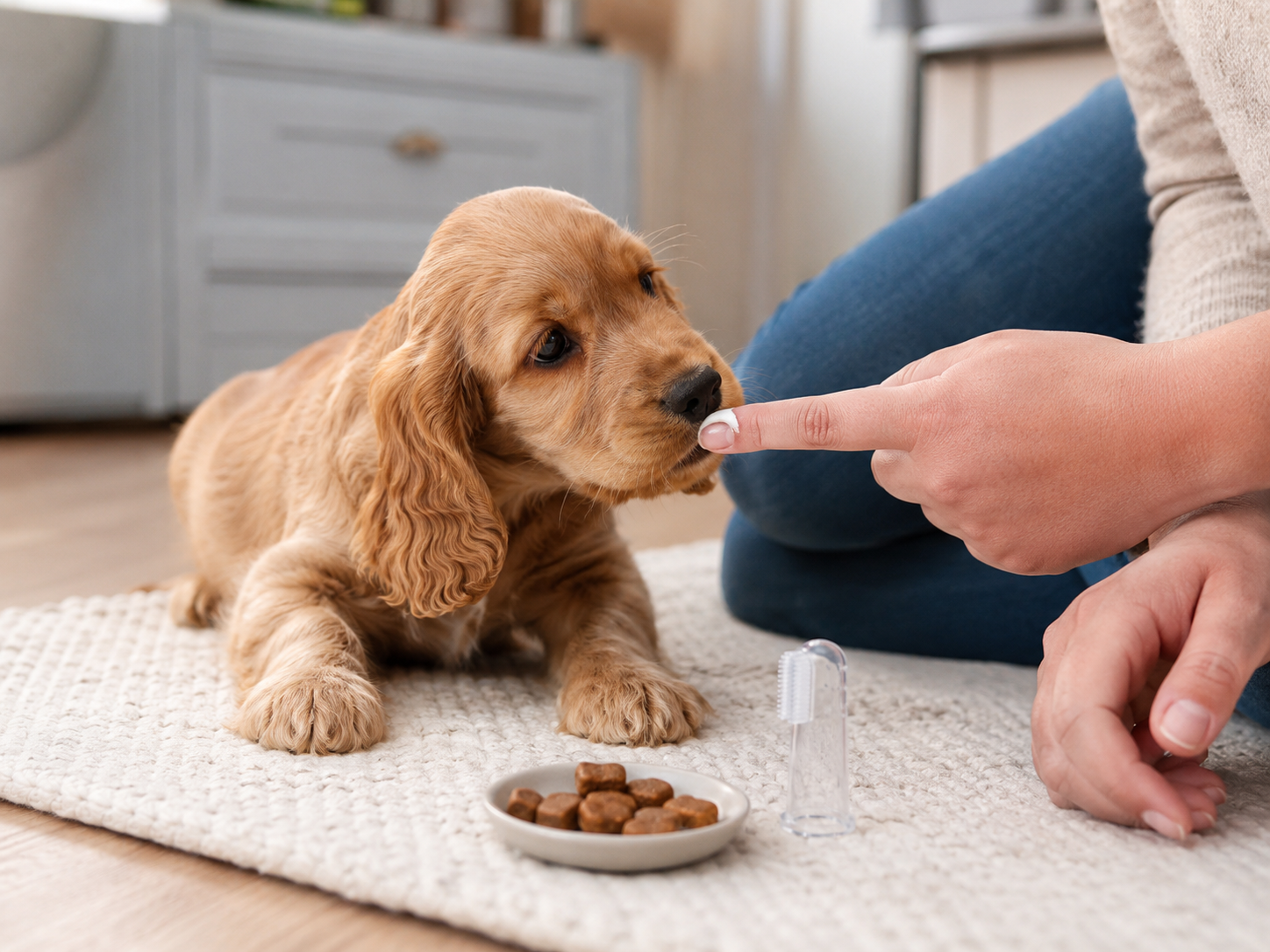
8. Use Toothpaste Made for Pets — Not Human Toothpaste
Dogs swallow toothpaste rather than rinsing and spitting it out.
Use a toothpaste intended for dogs or pets and follow its label directions.
Human toothpaste can create a poisoning risk
Some human dental products can contain xylitol, a sweetener that is toxic to dogs.
If your dog consumes a product containing xylitol, contact a veterinarian, emergency veterinary clinic or appropriate animal poison-control service immediately.
Do not assume a human toothpaste is safe simply because the amount used is small.
Back to guide9. Choose a Soft Brush That Fits the Dog's Mouth
A soft-bristled toothbrush is appropriate for routine plaque removal.
The brush should be small enough to reach the dog's teeth comfortably without requiring the mouth to be forced open.
Some owners begin with gauze or another veterinarian-recommended dental wipe while teaching mouth handling.
Finger brushes can work for some dogs, but keep fingers away from a mouth when there is bite risk or significant pain.
The goal is safe mechanical plaque removal—not strong scrubbing pressure.
Back to guide10. How to Brush Your Dog's Teeth
For many dogs, the outer cheek-facing surfaces are the most practical surfaces to brush and are the main home-care target.
Back to guide11. Use a Brushing Ladder Instead of a Seven-Day Deadline
Some dogs accept tooth brushing quickly.
Others need weeks of gradual training.
If the dog freezes, repeatedly avoids the brush, growls or appears painful, reduce difficulty or stop.
Do not punish warning signals.
Back to guide12. Daily Brushing Provides the Best Plaque-Control Benefit
Dental plaque continually reforms.
Veterinary dental guidelines therefore recommend daily brushing as the preferred home-care frequency when the dog tolerates it.
A missed day does not mean the entire routine has failed.
Return to the habit at the next practical opportunity.
If daily brushing is not currently possible, discuss additional home-care options with your veterinarian while continuing gradual cooperative brushing practice.
Do not assume occasional brushing can remove months or years of established calculus.
Back to guide13. Dental Products Can Support Brushing — Choose Evidence-Supported Options
Dental chews, dental diets, water additives, oral gels, toothpastes and wipes vary in their evidence and intended effect.
The Veterinary Oral Health Council evaluates products for specific plaque and/or tartar-control claims.
Look for the VOHC Seal
A VOHC Seal can help owners identify products that have met the council's standards for the plaque-control or tartar-control claim shown for that product.
A product accepted for tartar control is not automatically the same as one accepted for plaque control, so read the specific claim.
Dental products should complement—not replace—regular veterinary assessment and brushing when brushing is feasible.
Back to guide
14. A Chew That Is Too Hard Can Fracture Teeth
Chewing can provide enrichment and some dental benefit, but harder does not mean better.
Very hard materials such as antlers, natural bones and some rigid synthetic chews can damage or fracture teeth.
Choose chews that:
- are appropriate for the dog's size
- are not excessively hard
- cannot easily become a choking hazard
- do not break into dangerous swallowable pieces
- fit the dog's dietary needs
Supervise new chew products until you understand how the individual dog uses them.
If a tooth fractures or the dog suddenly stops chewing, arrange veterinary assessment.
Back to guide15. Ordinary Dry Food Is Not Automatically a Dental-Cleaning System
Some specially formulated dental diets have designs and evidence intended to reduce plaque or calculus.
That does not mean every dry kibble provides the same dental effect.
If your veterinarian recommends a dental diet, make sure it is appropriate for the dog's overall nutritional and medical needs.
Dental diets and treats can add useful support, but they do not diagnose or treat painful teeth, advanced periodontal disease or oral masses.
Back to guide16. Established Tartar Should Not Be Scraped Off at Home
Once plaque mineralizes into calculus, routine brushing cannot remove it.
Do not use household or sharp metal tools to scale the teeth
A moving dog can be injured, tooth surfaces can be damaged, and removing only visible material does not address disease beneath the gumline.
Heavy calculus, inflamed gums or oral pain should prompt a veterinary dental evaluation.
After professional treatment, your veterinary team can tell you when home brushing should resume.
Back to guide17. Professional Dental Care Does More Than Polish Visible Teeth
A comprehensive veterinary dental procedure may include:
- a pre-anesthetic evaluation
- general anesthesia with monitoring
- a detailed oral examination
- periodontal probing
- dental radiographs
- scaling above and below the gumline
- polishing
- treatment or extraction of diseased teeth when indicated
The exact plan depends on the individual dog's examination and dental findings.
A cosmetic change in tooth color is not the main objective.
Diagnosis and treatment of disease are.
Back to guide18. Dental X-Rays Show What Cannot Be Seen Above the Gumline
A substantial portion of each tooth lies beneath the gumline.
Dental radiographs help veterinarians assess roots, surrounding bone and disease that cannot be fully evaluated by looking at the visible crown.
A tooth that looks relatively normal from above can sometimes have important pathology below the gumline.
This is why complete veterinary dentistry is not simply surface cleaning.
Back to guide19. Why General Anesthesia Is Used for Comprehensive Veterinary Dentistry
Dental radiographs, periodontal probing and cleaning beneath the gumline require a patient that remains still while instruments are used inside the mouth.
General anesthesia allows the veterinary team to protect the airway, perform a complete examination and treatment, and monitor the dog throughout the procedure.
Anesthesia is not completely risk-free.
Veterinary teams assess each dog's health and design an anesthetic and monitoring plan appropriate for the individual patient.
Age alone does not tell you whether a dog can or cannot undergo anesthesia; overall health and individual risk assessment matter.
Back to guide20. Anesthesia-Free Dental Scaling Is Not Equivalent to a Complete Veterinary Dental Procedure
Removing visible calculus from the tooth crown while the dog is awake can make the teeth appear cleaner.
But appearance is not the same as periodontal treatment.
Important limitation
Without anesthesia, a complete periodontal examination, dental radiographs and thorough cleaning below the gumline cannot be performed safely and effectively in the same way as during comprehensive veterinary dentistry.
Do not choose a cosmetic surface cleaning as a substitute for veterinary diagnosis when dental disease is suspected.
Back to guide21. Puppyhood Is a Good Time to Teach Mouth Handling
Early practice can make lifelong dental care easier.
Keep puppy sessions extremely short.
Practice:
- touching the cheek
- lifting the lip
- brief toothbrush exposure
- accepting pet toothpaste
- standing or sitting calmly for a mouth check
Puppies also go through normal tooth development and teething.
Ask your veterinarian about retained baby teeth, broken teeth, abnormal bite development or another concern noticed during growth.
Avoid extremely hard chews that can damage developing or adult teeth.
Back to guide22. Senior and Small Dogs May Need Especially Close Dental Monitoring
Periodontal disease becomes more common with age, and smaller dogs can be particularly prone to significant periodontal problems.
Senior dogs may also have:
- missing teeth
- advanced periodontal disease
- fractured teeth
- oral masses
- medical conditions that affect anesthetic planning
Do not assume bad breath, dropping food or reluctance to chew is simply part of getting older.
Senior patients benefit from regular veterinary oral assessment and an individualized dental-care plan.
Back to guide23. If Your Dog Hates Mouth Handling, First Ask Whether the Mouth Hurts
Resistance can come from lack of practice or fear.
It can also come from dental pain.
A dog that previously tolerated face handling but suddenly growls, flinches or moves away deserves veterinary assessment.
For a healthy mouth with behavior-based resistance, return to an easier cooperative-care step.
Reward brief cheek touch, then brief lip lifting, then toothbrush introduction.
Do not hold the dog's mouth shut, punish growling or pin the dog down for routine tooth brushing.
Back to guide24. Common Dog Dental Care Mistakes
Avoid these common problems:
- using human toothpaste
- waiting for complete food refusal before considering dental pain
- assuming bad breath is always normal
- trying to scrape established tartar with home tools
- brushing severely inflamed or painful gums without veterinary advice
- using antlers, bones or other extremely hard chews
- assuming every dental chew has proven plaque-control benefits
- assuming ordinary dry kibble automatically cleans the teeth
- using dental treats without counting their calories
- forcing brushing until the dog panics or becomes defensive
- assuming visible white teeth prove the tissues below the gumline are healthy
- treating anesthesia-free cosmetic scaling as equivalent to comprehensive veterinary dentistry
- skipping veterinary dental examinations because brushing is performed at home
25. When Your Dog Needs a Veterinary Dental Examination
Arrange veterinary assessment for:
- persistent strong bad breath
- red, swollen or bleeding gums
- broken or loose teeth
- heavy calculus buildup
- facial or jaw swelling
- oral bleeding
- excessive drooling
- difficulty eating
- food repeatedly falling from the mouth
- one-sided chewing
- pawing at the mouth
- visible oral masses or sores
- new pain or aggression during face handling
Severe facial swelling, significant trauma, uncontrolled oral bleeding or another rapidly worsening problem may require urgent veterinary care.
Do not give human pain medication for suspected dental pain unless a veterinarian specifically directs you.
Back to guideExplore More Daily Dog Care Guides
26. Frequently Asked Questions
How often should I brush my dog's teeth?
Daily brushing is the preferred home-care goal because dental plaque continually reforms. Build up gradually if your dog is not yet comfortable with full brushing.
Can I use human toothpaste on my dog?
No. Use toothpaste intended for pets. Some human toothpastes and oral-care products may contain ingredients such as xylitol that can be toxic to dogs.
What is the difference between plaque and tartar?
Plaque is a soft bacterial biofilm that can be mechanically removed with brushing. Tartar, also called calculus, is mineralized plaque and cannot be removed by routine brushing once firmly established.
Can brushing remove the brown tartar already on my dog's teeth?
No. Tooth brushing is for plaque control and prevention. Established calculus requires professional scaling when veterinary assessment indicates it is needed.
Do I need to brush the inside of every tooth?
For most dogs, the accessible outer cheek- and lip-facing surfaces are the main practical home-brushing target. Your veterinarian can demonstrate a technique appropriate for your dog's mouth.
Do dental chews replace tooth brushing?
No. Appropriate dental chews can support plaque or tartar control, but brushing remains the preferred mechanical home-care method when the dog tolerates it.
What does the VOHC Seal mean?
The Veterinary Oral Health Council awards its seal to products that meet its standards for the specific plaque-control and/or tartar-control claim listed for that product.
Are bones and antlers good for cleaning dog teeth?
Very hard chews such as bones and antlers can fracture teeth. Choose dental products and chew items that are appropriate for your dog's size, chewing style and dental health.
Is dry dog food enough to keep teeth clean?
Ordinary dry food should not automatically be considered a dental-cleaning product. Special dental diets are designed differently and some have evidence for plaque or tartar control.
Why does my dog still have bad breath after brushing?
Persistent bad breath can occur with established dental disease or another oral or medical problem. Brushing cannot treat every cause, so arrange a veterinary examination if odor remains strong or is worsening.
Does my dog need anesthesia for a professional dental cleaning?
Comprehensive veterinary dentistry uses general anesthesia so the team can safely examine the entire mouth, take dental radiographs, clean beneath the gumline and provide treatment when required.
Is anesthesia-free dental cleaning the same as a veterinary dental cleaning?
No. Awake scaling can remove some visible material from tooth surfaces but does not provide the same complete periodontal examination, dental radiographs or subgingival treatment available during an anesthetized veterinary dental procedure.
Is anesthesia too dangerous for a senior dog?
Age alone does not determine anesthetic suitability. Veterinarians assess the individual dog's health, dental problem and anesthetic risks and benefits before recommending a procedure.
What if my dog growls when I try to brush the teeth?
Stop forcing the procedure. Growling can indicate fear or pain. If the behavior is new or the mouth appears abnormal, arrange a veterinary dental examination. If the mouth is healthy, return to easier cooperative-care training steps.
Should I start brushing if my dog's gums are already red and bleeding?
Ask your veterinarian first. Brushing inflamed painful gums can cause discomfort and make the dog more resistant to future dental care.
27. Veterinary Dental & Safety Sources
This educational guide was prepared with reference to current veterinary guidance on plaque control, periodontal disease, tooth brushing, professional dental procedures, dental radiography, anesthesia, home-care products and toothpaste safety. Sources checked August 13, 2026.
- American Animal Hospital Association — Dog & Cat Dental Disease, Professional Cleanings and Home Care
- AAHA Dental Care Guidelines — Home Oral Hygiene and Products
- AAHA Dental Care Guidelines — Essential Steps of Dental Cleaning and Therapy
- Merck Veterinary Manual — Periodontal Disease in Small Animals
- Veterinary Oral Health Council — VOHC Accepted Products
- AAHA Dental Care Guidelines — Dental Diets, Treats and Hard-Chew Safety
- AAHA Senior Care Guidelines — Dentistry in Senior Dogs and Cats
- American Veterinary Dental College — Veterinary Dentistry, Anesthesia and Daily Home Care
- U.S. FDA — Xylitol Is Dangerous for Dogs
Veterinary & Dental Disclaimer
Daily Dog Care Guide provides general educational information for dog owners. This article does not diagnose dental disease and does not replace veterinary oral examination, dental radiographs, anesthesia planning, professional dental cleaning, treatment or emergency care.
Contact a veterinarian if your dog has oral pain, facial swelling, bleeding, loose or fractured teeth, difficulty eating, significant drooling, persistent bad breath, an oral mass or another concerning mouth problem.
Do not give human medication for dental pain, use human toothpaste, or attempt to perform dental scaling or tooth extraction at home.
Final Thoughts
Good dog dental care is built from two parts that work together.
The first is prevention at home.
Daily brushing removes soft plaque before it has the chance to mineralize. Pet-safe toothpaste, gentle handling and appropriately selected dental products can support that routine.
The second part is veterinary dentistry.
A toothbrush cannot diagnose disease beneath the gumline, take a dental X-ray, remove established calculus safely, treat a fractured tooth or restore damaged periodontal tissues.
Start brushing slowly.
Do not make a painful mouth fight through a home-care routine.
Avoid excessively hard chews and human toothpaste. Use evidence-supported products where appropriate and keep regular veterinary oral examinations.
The goal is not perfectly white teeth.
It is a mouth that is comfortable enough for your dog to eat, play, chew and live normally.
Back to guideDog Dental Care Tools
Use dog-specific oral-care products. Bad breath with pain, bleeding, loose teeth, swelling, or trouble eating needs veterinary dental care.
A starter option for building a regular tooth-brushing routine.
View on Amazon →Optional product • paid linkEnzymatic Dog ToothpasteA dog-specific toothpaste option to compare for daily oral-care routines.
View on Amazon →Optional product • paid linkDog Dental Finger WipesA simpler oral-care option for dogs still learning to accept a toothbrush.
View on Amazon →Affiliate disclosure: As an Amazon Associate I earn from qualifying purchases. Always check size, fit, materials, labels, and your dog’s individual needs before buying.
Helpful next steps
Continue with a related guide, tool, or product resource.