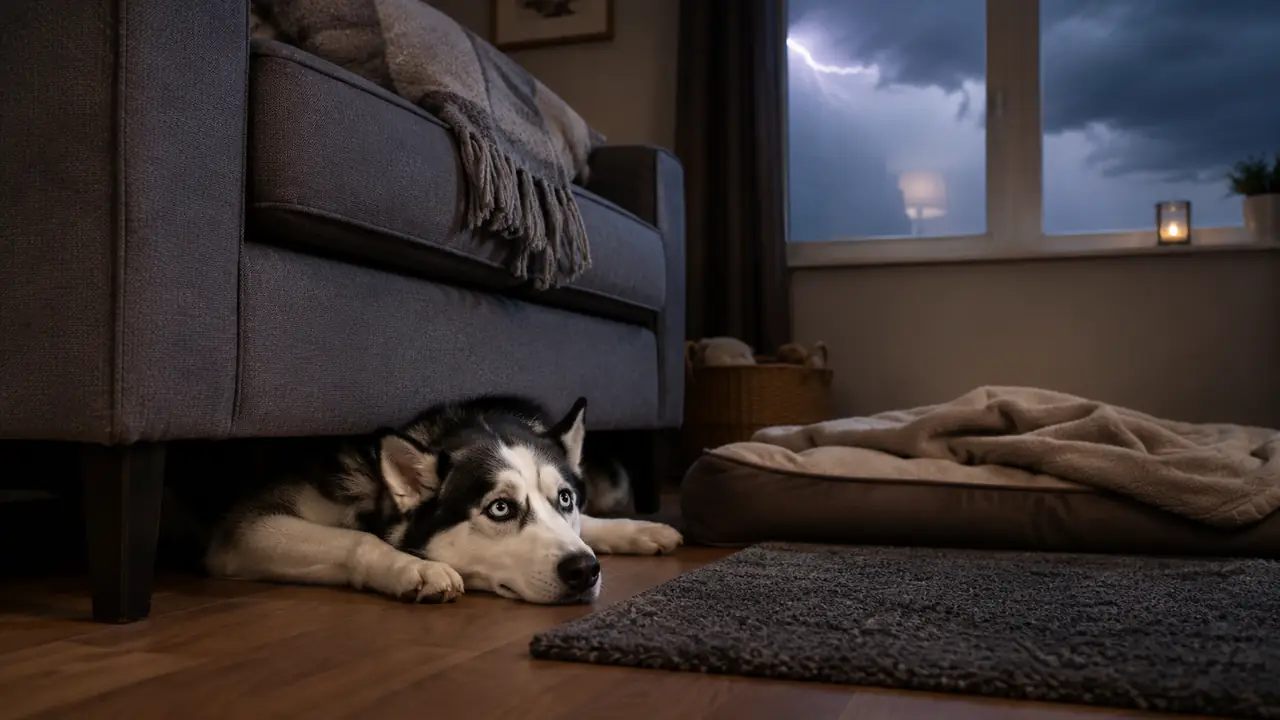
If your dog is scared of fireworks or thunder, the priority is safety—not forcing your dog to “get used to it.” This guide explains how to prepare a familiar safe space, reduce escape risk, support your dog calmly during loud events, and recognize when veterinary help may be needed.
Updated August 13, 2026 · Educational guidance reviewed against veterinary sources
A dog scared of fireworks or thunder may begin reacting before the loudest sound even arrives. Some dogs notice wind, rain, flashes, changes in the environment, or the first distant bangs and become increasingly unsettled.
Signs of noise-related fear can include hiding, panting, trembling, pacing, vocalizing, drooling, refusing food, clinging to a person, freezing, trying to escape, destructive behavior, or losing bladder or bowel control.
These are fear responses. Punishment does not teach a frightened dog to feel safe and can add more stress to an already difficult situation.
The most useful plan has two parts: protect your dog during unavoidable loud events, and work on the underlying fear between events when your dog is calm.
Quick Answer: What Should You Do If Your Dog Is Scared of Fireworks?
Bring your dog indoors before fireworks or severe storm noise begins. Close doors, windows, and curtains; prepare a familiar quiet space; provide water and familiar bedding; use gentle background sound if it helps; and make sure doors, gates, collars, harnesses, ID tags, and microchip information are secure and current.
Let your dog choose whether to stay near you or retreat to a safe hiding place. Calm reassurance is appropriate if your dog seeks it. Do not punish, drag your dog out of hiding, or deliberately expose your dog to full-volume frightening sounds.
If your dog panics, tries to escape, injures themselves, cannot recover normally, or becomes increasingly fearful from one event to the next, talk with your veterinarian before the next predictable noise event.
In This Guide
1. Signs Your Dog Is Scared of Fireworks or Thunder
Noise fear does not look the same in every dog. Some dogs run and hide. Others remain close to their owner but show smaller signs of distress.
Common signs can include:
- panting when the room is not hot
- trembling or shaking
- pacing or inability to settle
- hiding behind furniture or in small rooms
- whining, barking, or howling
- drooling
- ears held back, tucked tail, or tense posture
- refusing food or treats
- seeking unusually close contact
- scratching or chewing at doors, windows, or crates
- attempting to escape
- urinating or defecating because of distress
Severe noise aversion can involve panic and dangerous escape behavior. Earlier intervention is preferable to waiting until the fear becomes extreme.
Back to guide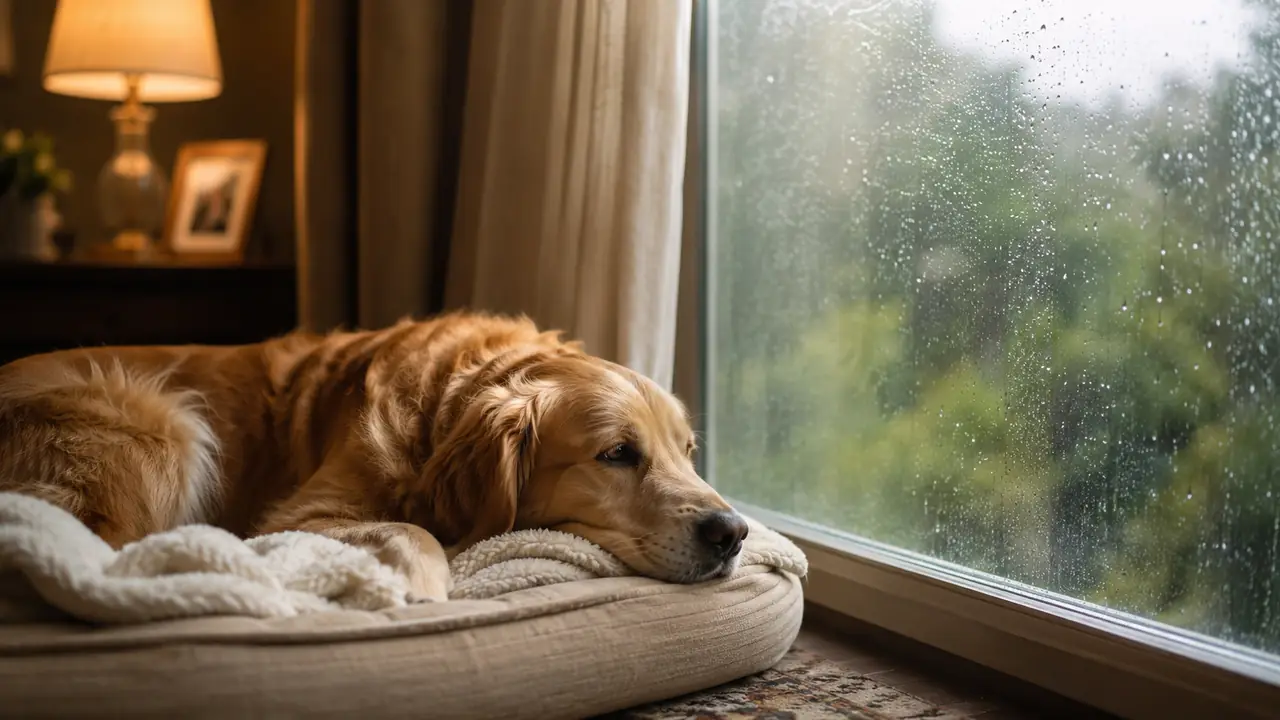
2. Create a Safe Place Before the Noise Begins
A safe haven can help some dogs cope with predictable noise such as public fireworks or thunderstorms. The important part is familiarity: do not wait until your dog is panicking to introduce a completely new place.
A useful safe space may be an interior bedroom, quiet hallway, finished basement, comfortable bathroom, open closet with adequate ventilation, or another secure area away from windows.
A crate can be appropriate only for a dog who already chooses the crate comfortably. A panicking dog should not be forced into confinement that makes escape attempts worse.
Set Up the Space With Familiar Things
- the dog's normal bed, mat, or blanket
- fresh drinking water
- favorite safe toys
- curtains or blinds closed where practical
- white noise, a fan, television, or calm music if your dog finds it helpful
- clear access so your dog can reach the space before becoming distressed
Practice relaxing in this area on ordinary quiet days. Offer treats, chews, rest, or calm interaction there without closing your dog in.
Back to guide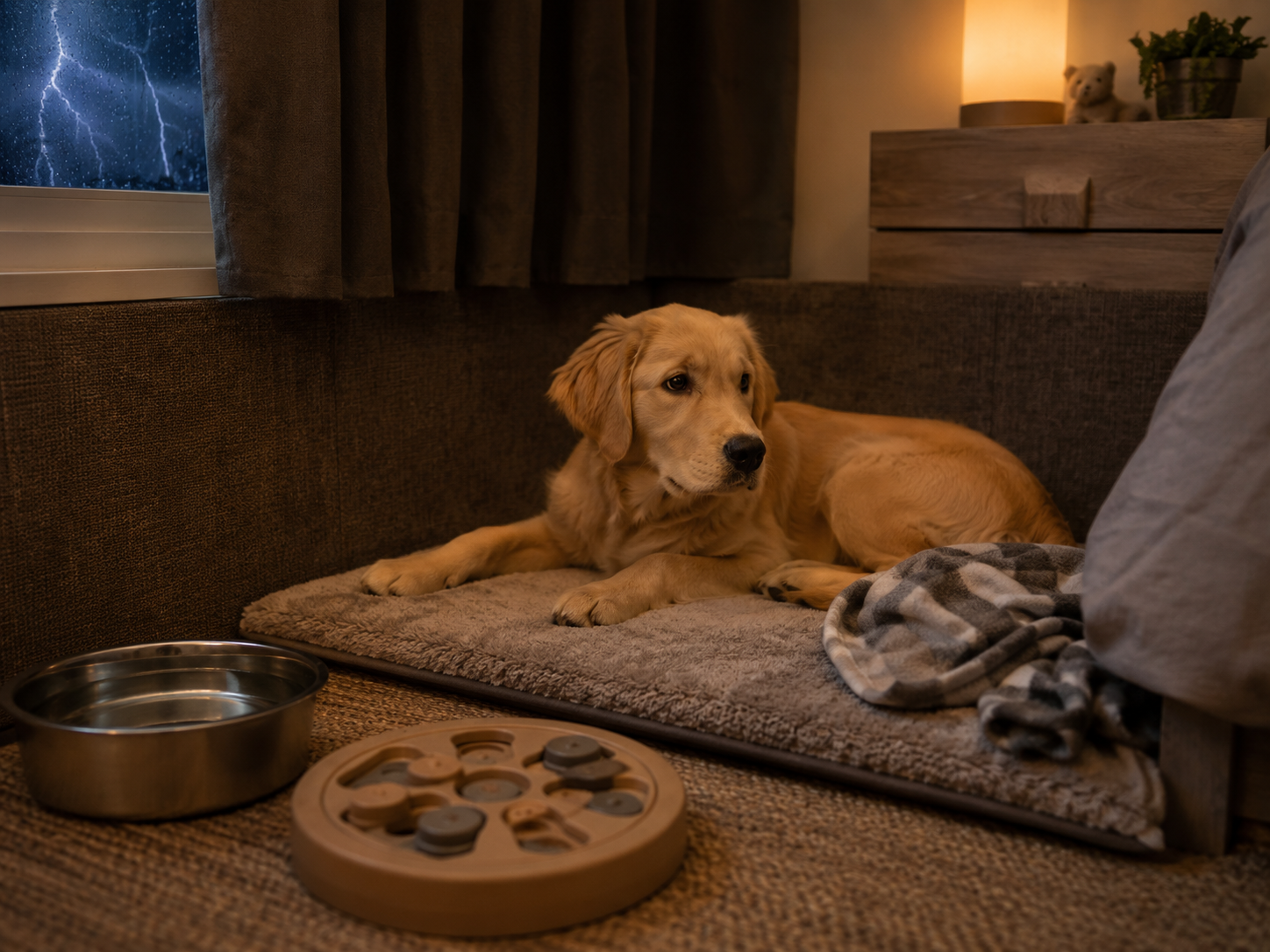
3. Prepare Before Fireworks or Thunderstorms
Predictable events give you an important advantage: you can prepare while your dog is still calm.
Give normal age-appropriate activity well before fireworks or a storm, rather than waiting until noise has begun.
Take your dog outside before the loudest period and use a secure leash.
Check doors, windows, garden gates, fences, screens, and balcony access.
Set out water, bedding, and familiar enrichment before your dog needs it.
Make sure your dog's collar tag and registered microchip details are current.
Close curtains or blinds and use normal household background sound if it helps your dog.
Avoid taking a noise-sensitive dog to a fireworks display. The objective is not exposure—it is preventing unnecessary distress and keeping the dog safe.
Back to guide4. Reduce Escape and Injury Risk
A frightened dog may behave very differently from normal. Dogs experiencing intense noise fear can try to push through doors, escape yards, damage barriers, or injure themselves while trying to get away.
Keep your dog indoors during active fireworks whenever possible. Before any necessary outdoor trip, check the fit of the collar or harness and use a secure leash.
Do not assume that a normally reliable recall will overcome panic. Preventing an escape is safer than testing obedience during a frightening event.
Back to guide5. What to Do While Fireworks or Thunder Are Happening
Keep the environment as predictable as possible. Move normally, avoid shouting, and let your dog use the safe area you prepared.
- keep outside doors and windows secure
- close curtains or blinds where practical
- use background sound if your dog finds it helpful
- leave fresh water available
- allow safe hiding rather than repeatedly pulling the dog out
- stay nearby if your presence helps your dog settle
- offer food only if your dog is comfortable enough to eat
The goal during the event is not obedience practice. It is lowering unnecessary stress and preventing injury or escape.
Back to guide
6. Should You Comfort a Dog Who Is Scared of Fireworks?
You do not need to ignore a frightened dog. Calm reassurance can be useful when your dog seeks contact.
Sit nearby, speak normally and softly, or pet your dog gently if your dog actively wants touch. Some dogs prefer leaning against a person; others prefer a dark, quiet hiding place.
Avoid frantic reassurance, restraining a dog who wants space, or repeatedly moving the dog toward the frightening sound.
Fear is an emotional response. The important question is not whether you are rewarding it, but whether your response helps your dog remain safer and calmer.
Back to guide7. Treats, Chews, and Enrichment During Noisy Events
If your dog is still relaxed enough to eat, familiar food enrichment can provide a positive activity during mild noise.
Examples include:
- a familiar food-stuffed toy
- a safe chew that your dog already uses successfully
- a lick mat
- small treat-search games in the safe room
- easy cues your dog already enjoys
A dog who refuses food may be too distressed for food-based distraction at that moment. Do not withhold normal safety support because a dog will not take a treat.
Back to guide8. What Not to Do With a Dog Scared of Fireworks or Thunder
Avoid These Common Mistakes
- do not punish barking, hiding, trembling, or other fear responses
- do not force a frightened dog out of a safe hiding place
- do not take a fearful dog to a fireworks display
- do not leave a severely noise-sensitive dog outside alone
- do not deliberately expose the dog to frighteningly loud recordings
- do not use flooding or force the dog to remain near a fear trigger
- do not give human anti-anxiety or sedating medication on your own
- do not use another pet's prescription medication
Full-intensity forced exposure can worsen fear rather than cure it. Behavior work should keep the dog below the point at which the dog becomes frightened or panicked.
Back to guide9. What to Do After the Fireworks or Storm Ends
Some dogs remain aroused after the last obvious noise. Give your dog time to recover rather than expecting an immediate return to normal.
- continue the quiet indoor routine for a while
- offer fresh water
- check paws, nails, mouth, and body if an escape attempt occurred
- check the yard and gates before a later toilet break
- use a leash outside if additional fireworks may occur
- note which parts of your plan appeared to help
If your dog was injured, appears unwell, or continues to show severe distress, contact a veterinarian.
Back to guide10. Work on Noise Fear Between Events, Not During Panic
Long-term behavior modification is different from emergency management during fireworks.
Controlled desensitization uses a recording or another controlled version of the sound at an intensity low enough that the dog remains relaxed. Counterconditioning pairs that low-level trigger with something the dog enjoys.
Progress must remain gradual. If the dog becomes frightened, the exercise is too difficult at that moment.
Real thunderstorms and fireworks involve more than sound alone, so recorded sound practice may not completely reproduce the real event. Dogs with moderate or severe fear benefit from a plan designed with a veterinarian or qualified behavior professional.
Avoid flooding—keeping a frightened dog exposed to the full trigger in the hope that the dog will eventually stop reacting.
Back to guide11. When Fireworks Anxiety Becomes Severe
Some dogs experience more than mild uneasiness. Severe noise aversion can seriously affect welfare and safety.
Contact your veterinarian if your dog:
- repeatedly attempts to escape
- damages doors, windows, walls, crates, or furniture while panicking
- injures nails, teeth, paws, or other body parts
- cannot settle for a prolonged period after the noise ends
- shows intense trembling, panting, pacing, or destructive behavior
- stops eating or cannot rest because of repeated noise events
- shows fear that is becoming worse over time
- becomes aggressive when approached during panic
Veterinary treatment may combine environmental management, behavior modification, and—when appropriate—prescription medication.
If medication may be needed for a predictable holiday or storm season, talk to your veterinarian in advance rather than waiting until your dog is already in severe distress.
Back to guide12. Puppies, Senior Dogs, and Newly Adopted Dogs
Puppies
Early experiences should be gentle and controlled. Do not take a puppy to a fireworks display as a way of socializing the puppy to loud noise.
Senior Dogs
New or worsening fear in an older dog deserves veterinary attention. Physical discomfort, sensory changes, or cognitive changes may affect how a senior dog responds to stressful situations.
Newly Adopted or Rescue Dogs
You may not know the dog's previous experiences with thunderstorms, fireworks, confinement, or escape. Begin with conservative safety management and allow the dog to choose a secure retreat.
Back to guide13. A Simple 7-Day Safe-Space Practice Plan
Use this on ordinary quiet days. It is designed to make the safe space familiar—not to expose your dog to frightening sounds.
This is safe-space familiarization, not a full noise-desensitization protocol. If you want to use recordings of fireworks or thunder for behavior modification, work at a level that does not trigger fear and consider professional guidance.
Back to guide14. When to Ask Your Veterinarian for Help
Do not wait for a dangerous escape attempt before discussing noise aversion with your veterinarian.
A veterinarian can help rule out health factors that may contribute to behavior changes and can recommend an individualized management and treatment plan.
Prescription options for canine noise aversion exist, but drug choice, timing, dosage, contraindications, and possible side effects require veterinary guidance.
Seek urgent veterinary care if your dog is injured, collapses, has trouble breathing, experiences a seizure, has significant bleeding, or develops another medical emergency during an episode.
Back to guideExplore More Dog Care Guides
15. Frequently Asked Questions
Should I comfort my dog during fireworks?
Yes. Calm reassurance is appropriate if your dog seeks contact. Sit nearby, speak calmly, or offer gentle touch if your dog wants it. Do not force physical contact if your dog prefers to hide.
Should I crate my dog during fireworks?
Only if your dog is already comfortable and relaxed in the crate. A dog who panics in confinement should not be forced into a crate simply because fireworks are occurring.
Why does my dog hide in the bathroom during thunderstorms?
Some dogs select enclosed interior areas that feel quieter or farther from windows. If the bathroom is safe and your dog chooses it voluntarily, you can make the area more comfortable with familiar bedding and access to water.
Can I walk my dog while fireworks are going off?
It is safer to plan walks and toilet breaks before active fireworks whenever possible. If an outdoor break is unavoidable, use secure equipment and keep the trip brief.
Can thunderstorm or fireworks fear get worse over time?
Yes. Repeated frightening experiences can strengthen fear and dogs may begin reacting to cues associated with the event, such as wind, rain, or environmental changes. Early management and treatment are preferable.
Can I play fireworks sounds to make my dog get used to them?
Controlled sound desensitization can be part of a behavior plan, but the recording must begin at an intensity low enough that your dog remains relaxed. Full-volume exposure or flooding can worsen fear.
Can I give my dog medication for fireworks anxiety?
Only under veterinary guidance. Prescription treatments for canine noise aversion exist, but the correct treatment depends on the individual dog. Do not give human medication or another animal's medication unless your veterinarian specifically instructs you to do so.
When should I contact a veterinarian?
Contact your veterinarian when fear is intense, getting worse, interfering with normal eating or rest, causing destructive escape attempts, or creating a risk of injury. Seek urgent veterinary care for an actual medical emergency or injury.
16. Veterinary Sources & Further Reading
This educational guide was prepared with reference to established veterinary and animal-health information. Readers can use the sources below for further detail.
Medical & Behavior Disclaimer
Daily Dog Care Guide provides general educational information for dog owners. This article does not replace veterinary diagnosis, treatment, prescription guidance, emergency care, or an individualized behavior plan.
If your dog has severe panic, repeated escape attempts, self-injury, breathing difficulty, collapse, seizures, significant injury, aggression associated with extreme distress, or another urgent medical problem, contact a veterinarian or emergency veterinary service.
Final Thoughts
If your dog is scared of fireworks or thunder, you do not need to make the fear disappear in one night.
Start with safety. Prepare before the noise begins. Give your dog a familiar place to retreat, reduce escape opportunities, remain calm, and avoid punishment or forced exposure.
Between noisy events, gradual behavior work may help. When fear is intense or worsening, involve your veterinarian early.
A thoughtful plan cannot control the storm or the fireworks—but it can make your dog's environment safer, more predictable, and easier to cope with.
Back to guideSupervised Enrichment Ideas
Choose enrichment that suits your dog’s size and chewing style, supervise use, and remove damaged items.
A supervised enrichment tool that can add mental work to food or treat time.
View on Amazon →Optional product • paid linkDog Lick Mat with Suction CupsA food-enrichment option for supervised licking activities and calm indoor engagement.
View on Amazon →Optional product • paid linkDog Snuffle Mat for Slow FeedingA supervised sniffing and food-search activity for mental enrichment.
View on Amazon →Affiliate disclosure: As an Amazon Associate I earn from qualifying purchases. Always check size, fit, materials, labels, and your dog’s individual needs before buying.
Helpful next steps
Continue with a related guide, tool, or product resource.